
Fly Fishing Gear for Beginners: Essentials for Your First Trip
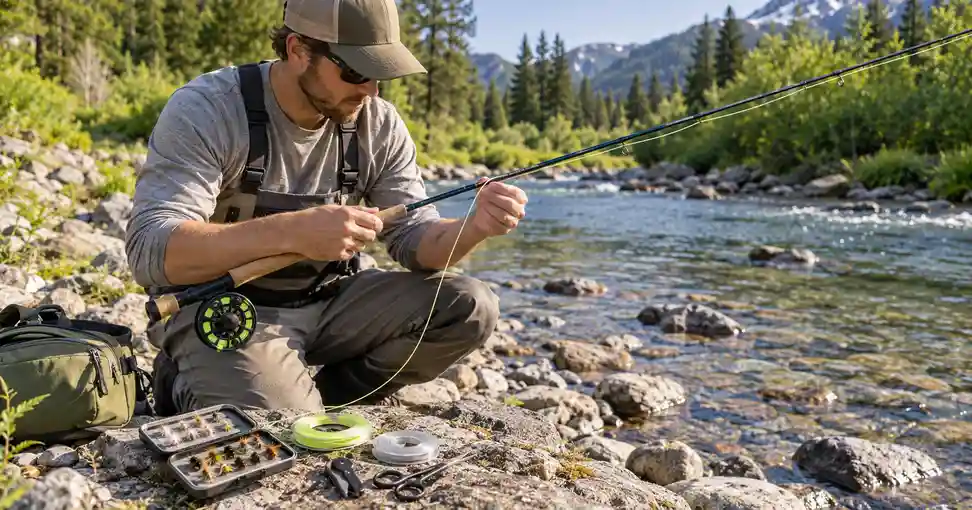
Fly fishing gear for beginners does not need to fill a garage or cost a small fortune. For a first trip, you need a compatible rod, reel, fly line, leader, tippet, a small selection of flies, a couple of simple tools, polarized sunglasses, and the personal gear required for the weather and water you plan to fish.
The easiest way to choose fly fishing gear for beginners is to separate everything into three groups:
Need now → Depends on your water → Can wait
Think of beginner fly fishing gear as a first-trip system, not a lifetime collection. Start with a basic outfit that works as one system. Add waders, boots, a pack, a net, or specialty tackle only when your fishing situation gives you a reason.
Table of Contents
Fly Fishing Gear for Beginners: The Must-Have Setup
The core of fly fishing gear for beginners is the rod-to-fly system:
Rod → Reel → Backing → Fly line → Leader → Tippet → Fly
These components must work together. A premium reel does not help if the line is wrong for the rod, and a large box of flies is not useful if the leader and tippet do not match the presentation.
Rod, Reel, Backing, and Fly Line
For general freshwater fishing, a 9-foot 5-weight is a common and versatile starting point. Orvis’ current beginner gear guidance recommends that configuration as a starting setup because it can cover a broad range of trout fishing and still has enough versatility for some bass and windy conditions.
That is a starting point, not a universal rule. A small creek, bass pond, saltwater flat, salmon river, or specialized nymphing setup may call for something different.
For many beginners, a matched rod-and-reel outfit is the simplest way to begin because the rod, reel, and fly line are already selected to work together. You can still build a setup component by component, but you must check compatibility carefully.
If trout will be your main target, our complete fly fishing setup for trout shows how the rod, reel, backing, line, leader, tippet, and fly connect as one system.
Backing sits behind the fly line on the reel and provides reserve line. Beginners usually do not need to obsess over backing specifications for an ordinary freshwater setup; follow the reel or outfit manufacturer’s capacity guidance.
Leader and Tippet
The leader connects the fly line to the fine material near the fly. Tippet is the level-diameter material used at the end of the leader and is also used to rebuild or extend the terminal section as you change flies.
A fresh tapered leader already has a fine terminal section, so you do not always need to add new tippet immediately.
Do not buy a dozen tippet sizes for a first trip. Carry the sizes that suit your flies, target fish, and local conditions. If you are learning with a guide or local shop, ask which two or three sizes they recommend for that water.
Small Fly Selection
A beginner does not need hundreds of flies.
A small fly box should cover the situations you are likely to encounter. For trout, that may mean a few dry flies, nymphs, and streamers in useful local sizes. For bass or panfish, the mix will be different.
If trout are your main target, our guide to the best flies for trout fishing can help you choose a practical mix of dry flies, nymphs, and streamers.
The best first fly selection is usually the one that matches your local water, not the largest assortment sold online.
Fly Fishing Gear for Beginners: Simple Tools You Actually Need
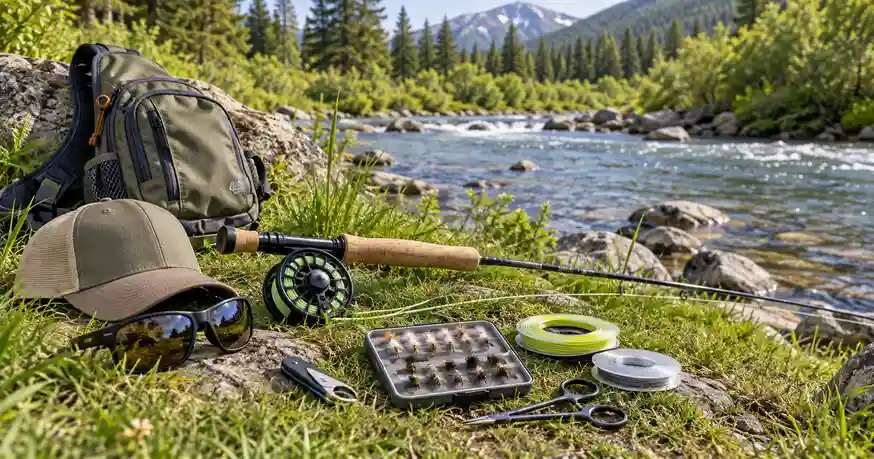
Fly fishing gear for beginners should stay simple. Once the basic outfit is ready, only a few small tools are genuinely useful on almost every trip.
Nippers
Nippers cut leader and tippet cleanly after you tie a knot or change flies.
You do not need an elaborate multi-tool for this job. A basic pair of fishing nippers works, and Orvis’ beginner guidance also identifies a simple cutting tool as one of the basic items to carry.
Avoid using your teeth to cut fishing line.
Forceps or Hemostats
Forceps help remove hooks, pinch barbs where appropriate, and handle small flies.
For beginners, a basic pair is usually enough. More specialized pliers and tools can come later if the species or fishing style requires them.
Fly Box
A small fly box keeps hooks organized and reduces the chance of loose flies ending up in pockets or bags.
Choose a box sized to your actual fly selection. A huge box full of empty space is not an upgrade.
Polarized Sunglasses
Polarized sunglasses are one of the few accessories worth treating as essential. They reduce surface glare, help you see into the water, and provide a physical barrier between your eyes and hooks. Orvis includes polarized sunglasses in its current beginner essentials.
Even when you are not sight-fishing, eye protection matters when a fly is moving through the air during casting.
Fly Fishing Gear for Beginners: Waders and Boots
Waders and boots are not automatically required fly fishing gear for beginners.
Whether you need them depends on water temperature, depth, access, current, bottom conditions, and whether you actually need to enter the water.
When You Need Waders
Waders become useful when you regularly fish cold water, need to stand in the water for extended periods, or need protection from wet conditions.
If you use stockingfoot waders, they end in waterproof neoprene booties and are worn with separate wading boots.
Wear a properly secured wading belt with waders, and evaluate current, depth, and footing before entering moving water. Orvis’ current safe-wading guidance emphasizes wearing and tightening a wading belt because it can slow water entering the lower part of the waders after a fall.
When You Can Skip Waders
You may not need waders if you can fish effectively from the bank, from a boat, or by wet-wading in suitable warm conditions.
Orvis’ beginner learning material specifically notes that new anglers can fish from shore or wet-wade where appropriate instead of buying waders immediately.
Skipping waders on your first trip can save money while you learn whether your local fishing actually requires them.
Choosing Wading Boots
If your water does require dedicated footwear, fit and traction matter more than appearance.
Wading boots should fit over the neoprene booties of stockingfoot waders without crushing your toes or allowing excessive movement. Sole choice depends on terrain and local rules.
Our guide to fly fishing wading boots explains fit, rubber vs felt, traction, studs, and stockingfoot compatibility in detail.
Do not assume felt is allowed everywhere. Orvis notes that felt soles are restricted in some locations because of invasive-species concerns, so check the current rules for the exact place you intend to fish before buying a sole type.
Fly Fishing Gear for Beginners: Carrying Your Equipment
You do not need a vest covered with tools to start fishing.
The best carrying system is the smallest one that comfortably holds your flies, tippet, tools, phone, license, and other essentials.
Sling, Chest Pack, or Vest
A small sling, chest pack, waist pack, or vest can all work.
Choose based on comfort and access rather than the number of pockets. Too much storage often encourages beginners to carry equipment they never use.
Keep frequently used items—flies, tippet, nippers, and forceps—easy to reach.
When a Larger Gear Bag Makes Sense
A larger gear bag becomes useful when you need to transport extra clothing, spare reels or lines, wet waders and boots, boat gear, or equipment for travel.
It usually stays in the vehicle, boat, lodge, or base area instead of being carried while you cast.
If you need more than a simple on-body pack, our fly fishing gear bag guide explains storage, waterproofing, wader transport, boat bags, and travel options.
For a first local outing, however, do not buy a large bag simply because you have empty space to fill.
Fly Fishing Gear for Beginners: Personal and Safety Essentials
The best fly fishing gear for beginners includes items that have nothing to do with casting.
Before leaving home, check the weather, water conditions, access rules, and current fishing regulations. Make sure you have the required fishing license or permit for the water you plan to fish. Orvis’ current first-trip guidance similarly includes licensing, access, conditions, water, and a safe entry-and-exit plan among basic trip preparation.
Pack drinking water, weather-appropriate layers, rain protection when needed, sunscreen, a hat, and basic first-aid supplies appropriate to the trip.
Polarized sunglasses should already be part of your fishing kit, but their eye protection is especially important for beginners who are still developing casting control.
If you will wade, identify a safe entry and exit point before stepping into moving water. Move slowly, avoid water that exceeds your ability, and do not assume expensive boots or a wading staff make a crossing safe.
A first trip is also easier when you know where you are allowed to fish. Check the relevant state fish and wildlife agency, land manager, or other responsible authority rather than relying only on an old forum post or map.
What Fly Fishing Gear for Beginners Can Wait?
One of the easiest ways to overspend is buying gear for fishing you have not started doing yet.
Most fly fishing gear for beginners can remain simple until experience shows what you actually need.
Items that can often wait include:
- multiple rods
- several specialty fly lines
- a premium reel with drag intended for much larger fish
- large collections of flies
- multiple packs
- specialty nymphing equipment
- dedicated streamer systems
- numerous gadgets
- expensive fly tying equipment
- several spare spools
- a large boat or travel bag
That does not mean these items are useless. It means they solve specific problems.
Once you know which categories belong in your setup and are ready to compare upgrades, our guide to the best fly fishing gear covers rods, reels, lines, wading gear, packs, nets, and essential tools.
A good upgrade should answer a sentence such as, “I need this because my current setup cannot comfortably do X.” If you cannot identify the problem, the purchase can probably wait.
Beginner Fly Fishing Checklist for Your First Trip
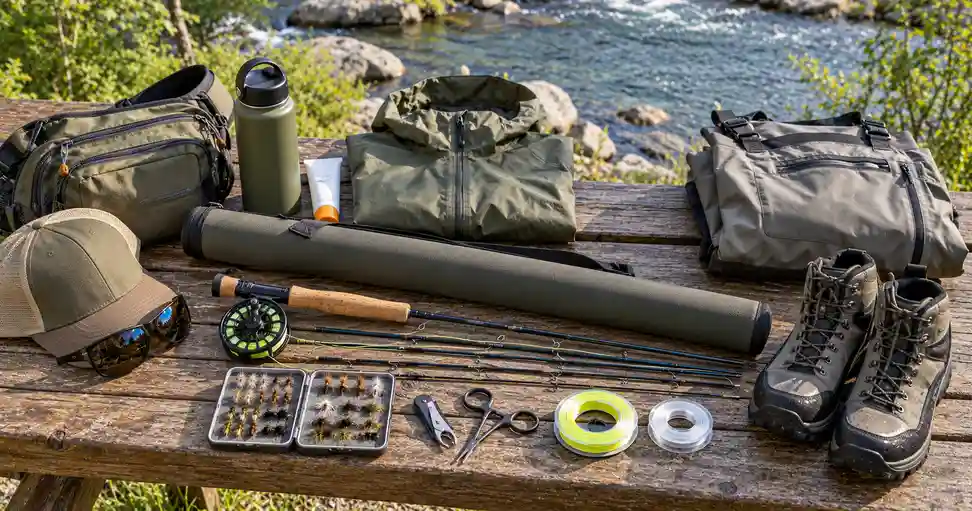
Use this beginner fly fishing checklist as a starting point, then adjust it to your water and target species. This fly fishing gear checklist is deliberately short so the essentials remain easy to see. For most first trips, fly fishing gear for beginners should still fit into a small, manageable system.
Must Pack
- compatible fly rod and reel
- fly line and backing
- leader
- appropriate tippet
- small fly box
- nippers
- forceps or hemostats
- polarized sunglasses
- fishing license or permit where required
- drinking water
- weather-appropriate clothing
- sun or rain protection as conditions require
- phone or other practical communication/navigation option for the location
Pack If Your Water Requires It
- waders
- wading belt
- wading boots
- wading staff
- landing net
- strike indicators
- added weight where legal and appropriate
- extra layers
- insect protection
- larger carrying pack
- spare reel spool or fly line
Nice to Have
- extra fly boxes
- specialized tools
- multiple rods
- several specialty lines
- large gear storage system
- advanced accessories
If you are fishing with a guide, ask what equipment is supplied before packing. That can prevent bringing duplicate rods, flies, nets, or other gear. Orvis gives the same practical advice in its current first-trip beginner guidance.
How Much Fly Fishing Gear Should a Beginner Buy?
Buy enough fly fishing gear for beginners to fish the water directly in front of you.
Do not try to build a setup for every species and destination at once.
A matched beginner outfit can be useful because it reduces compatibility decisions. The rod, reel, and line are selected as a system, allowing you to focus on learning how to cast, manage line, present a fly, and land fish.
Buying components separately makes sense when you already know the exact rod, line, and reel characteristics you want. For a first purchase, however, more choices are not automatically better.
Your first fly fishing setup should answer three questions:
- What species am I targeting?
- Where will I fish most often?
- Which techniques will I realistically use first?
For general freshwater trout fishing, a versatile 9-foot 5-weight may answer those questions well. For bass, saltwater, salmon, tiny creeks, or specialized techniques, a different setup may be more appropriate.
Spend first on compatibility and basic function. Add specialized equipment after the fishing—not the product catalog—shows you what is missing.
Fly Fishing Gear for Beginners: Common Buying Mistakes
A first setup becomes expensive quickly when every accessory looks essential.
Buying Before Choosing Your Water
A rod or pair of wading boots cannot be judged in isolation.
Know the target species, water size, access, temperature, and likely fishing methods before shopping.
Buying Rod, Reel, and Line Without Checking Compatibility
The rod, reel, and line are one casting system.
Check the rod’s line weight, make sure the reel is sized appropriately, and make sure the fly line matches the intended setup.
Assuming Waders Are Mandatory
They are not.
If you can fish from shore, a boat, or by safely wet-wading in suitable conditions, you may be able to postpone that purchase.
Buying Too Many Flies
A small, locally relevant selection is more useful than a huge assortment of patterns you do not understand.
Ask a local fly shop, guide, or experienced angler what actually works in the water you will fish.
Buying Too Many Accessories
Nippers and forceps cover a surprising amount of beginner tool work.
Add gadgets only when you know what problem they solve. Orvis’ current basic-tools guidance similarly emphasizes that a new angler does not need a large collection of accessories.
Ignoring Polarized Sunglasses
Sunglasses are not only for spotting fish. They help protect your eyes from hooks while casting.
Ignoring Weather and Hydration
Fishing equipment is only part of the trip.
Carry adequate water, suitable clothing, and protection for the weather and exposure you expect.
Buying Premium Specialized Gear Too Early
A specialized rod, reel, line, or pack can be excellent at one job and unnecessary for another.
Learn what kind of fishing you enjoy before investing heavily in specialized equipment.
Forgetting the License and Regulations
A complete tackle setup does not make a trip legal.
Check current licensing, seasons, access, tackle restrictions, and special regulations for the exact water you plan to fish.
Fly Fishing Gear for Beginners FAQs
What Do You Actually Need to Start Fly Fishing?
At minimum, you need a compatible rod, reel, fly line, leader, tippet, a small selection of flies, a cutting tool, and basic personal protection such as polarized sunglasses. Add waders, boots, packs, nets, and other equipment when your water and fishing style require them.
What Size Fly Rod Is Best for a Beginner?
For general freshwater and trout fishing, a 9-foot 5-weight is a common and versatile starting point. It is not universal. The best rod depends on species, water size, fly size, wind, and fishing technique.
Do Beginners Need Waders?
No. Waders are useful when you need to enter cold or deeper water, but beginners can often fish from shore, from a boat, or by wet-wading in suitable warm conditions.
If you do use waders, use a properly secured wading belt and make conservative decisions in moving water.
Should a Beginner Buy a Fly Fishing Combo?
A matched outfit can be a practical option because it reduces rod, reel, and fly-line compatibility decisions. It can let a beginner focus on learning to cast and fish before deciding which components deserve future upgrades.
How Many Flies Should a Beginner Carry?
There is no universal number. Carry a small selection suited to your target species, season, and local water. Functional variety is more useful than a large box of flies you do not know how to fish.
Do You Need a Net for Fly Fishing?
Not for every situation, but a suitable landing net can make fish handling easier, especially when fishing for trout or other species you plan to release. Whether you need to carry one on your first trip depends on the fish, access, and fishing method.
Final Thoughts on Fly Fishing Gear for Beginners
The smartest way to buy fly fishing gear for beginners is to keep the first setup focused on the next trip.
Start with the essential fly fishing gear: a compatible rod, reel, line, leader, tippet, flies, nippers, forceps, and polarized sunglasses. Add waders and boots only if your water requires them. Choose a carrying system that fits the amount of gear you actually use, and pack the weather, safety, license, and hydration essentials that make the trip workable.
Use this rule:
Need now → Depends on your water → Can wait
Learn with the simple setup first. Then add equipment when a real fishing situation gives you a clear reason to own it.
Sources Used
Orvis — Beginner Fly Fishing Gear
Used to verify the current beginner essentials, the 9-foot 5-weight starting recommendation, matched-outfit guidance, conditional wader use, first-trip tools, sunglasses, personal gear, licensing, and trip preparation.
Orvis Learning Center — What Do You Really Need to Get Started?
Used to verify the minimalist beginner approach: rod, reel, line, leader, cutting tool, flies, and tippet, with waders treated as optional when bank fishing, boating, or appropriate wet-wading is possible.
Orvis Learning Center — The Fly-Fishing Outfit
Used to verify the relationship between rod, reel, fly line, leader, and the basic role of the reel and floating fly line.
Orvis Learning Center — Basic Tools
Used to verify that beginners can keep accessories simple and that nippers and forceps cover core on-water tasks.
Orvis Learning Center — Tips for Safe Wading
Used to verify current wading-belt and conservative wading guidance.
Orvis — Fly Fishing Wading Boots
Used to verify current guidance on stockingfoot boot fit, terrain-dependent sole choice, and the need to check local felt restrictions.