
Best Fly Fishing Gear: Top Picks for Every Part of Your Setup
The best fly fishing gear is not simply the most expensive rod, reel, waders, and accessories you can buy. A good setup works as a system. Your rod needs to match your line, your reel needs to hold that line and enough backing, and your wading and carrying gear should fit the water you actually fish.
When comparing the best fly fishing gear, start with compatibility before brand or price. This guide focuses on a versatile freshwater setup that makes sense for many trout and general-purpose anglers. It is not meant to cover specialized saltwater, Spey, Euro-nymphing, or heavy-streamer systems in depth.
Below, you will find our current picks for the main parts of a setup, why each one is worth considering, the main trade-off, and when a different choice may make more sense.
Table of Contents
How We Chose the Best Fly Fishing Gear
We evaluated the best fly fishing gear using practical buying criteria rather than brand reputation alone.
For major products, we looked at compatibility, versatility, construction, current specifications, useful features, manufacturer support, and value for the intended use. We also considered whether a product fits a broad freshwater setup rather than a highly specialized technique.
Just as important, every recommendation needs a limitation. A great 5-weight rod is still a poor choice for large saltwater species. Premium waterproof waders may be unnecessary if you mostly fish from a boat or wet-wade in summer.
FlyFishingScout did not personally test the products in this guide. Product specifications and warranty details were checked against current manufacturer information, and the recommendations below are editorial choices based on those verified details and the use cases described.
Why There Is No Universal Best Setup
Fly fishing equipment changes with the fish, flies, water, and technique.
A small-stream trout angler may value a lighter rod and delicate line. Someone fishing large weighted streamers may need more line mass and a heavier rod. Saltwater anglers have different reel, line, corrosion-resistance, and capacity needs. Euro nymphing uses another set of priorities.
That is why this guide uses a general-purpose freshwater baseline instead of pretending one setup can do everything.
Our General-Purpose Setup Baseline
For many recreational freshwater anglers, a 9-foot 5-weight outfit is a useful reference point. It can handle a broad range of trout fishing, dry flies, many nymph rigs, and smaller streamers while remaining approachable for newer anglers.
That does not make a 5-weight the best choice for every river or species. It simply gives us a practical baseline for comparing the rest of the setup.
Best Fly Fishing Gear: Rod, Reel, and Fly Line Picks
The rod, reel, and fly line form the casting system. If you spend time getting one part of the best fly fishing gear setup right, start here.
Best General-Purpose Fly Rod: Orvis Clearwater 9′ 5-Weight
The Orvis Clearwater 9-foot 5-weight is our general-purpose rod pick because its current configuration sits in the middle of the freshwater range without forcing the angler into a specialty setup.
Orvis currently lists this rod as a 9-foot 5-weight with a four-piece design, aluminum reel seat, ceramic insert in the stripping guide, rod tube, and a 25-year guarantee. Orvis describes the freshwater Clearwater actions as medium-fast.
Who it suits: Anglers who want one rod for general trout fishing, dries, many nymph rigs, and modest streamers.
Main trade-off: A 5-weight is not ideal for every job. A lighter rod can be more enjoyable on tiny creeks, while heavier flies, strong wind, bass bugs, or larger fish can justify a 6-weight, 7-weight, 8-weight, or more specialized setup.
Before buying by brand, learn how line weight, length, and action change the job a rod can do. Our guide to how to choose the right fly rod explains those choices in more detail.
Best General-Purpose Fly Reel: Orvis Hydros II
For the same general 5-weight setup, the Orvis Hydros II is a strong reel match when you want a light reel with a sealed drag rather than a basic line-storage reel.
The current Hydros II is rated by Orvis for 3- to 5-weight setups. The company specifies a fully sealed carbon-and-stainless disc drag, Type II anodized aluminum frame and spool, large arbor, and tool-free left/right retrieve conversion.
Who it suits: Anglers who want a more refined reel for a 5-weight setup and value sealed drag construction, quick line pickup, and current manufacturer repair support.
Main trade-off: The Hydros II is more reel than some trout anglers need. On many small and medium trout, the reel primarily stores line and backing. A simpler, less expensive reel can still work well if it fits the rod and line.
If backing capacity is a bigger priority, note that the current Hydros III also supports 5-weight line while extending into the 5- to 7-weight range. That can make more sense for anglers who want additional capacity or a reel that may move to a heavier rod later.
For more detail on reel sizing, drag, capacity, and construction, see our guide to choosing the right fly fishing reel.
Best Versatile Freshwater Fly Line: Scientific Anglers Amplitude Smooth Infinity
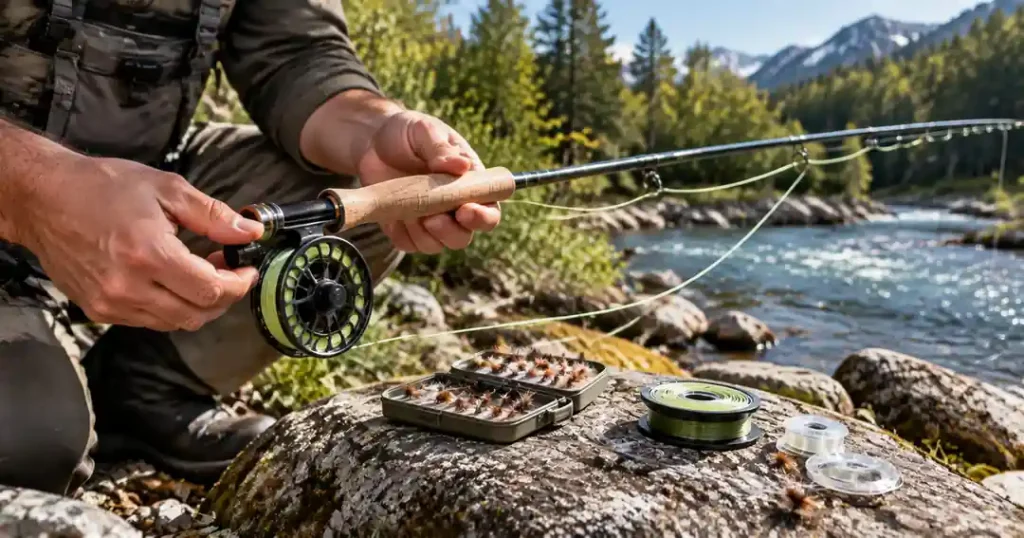
Fly line can change how a rod feels more than many beginners expect. Our best fly fishing gear pick for a premium, versatile freshwater line is the Scientific Anglers Amplitude Smooth Infinity in the line weight that matches your setup.
For a 5-weight baseline, that means WF5F. Scientific Anglers describes the current Amplitude Smooth Infinity as a half-size-heavy, general-purpose freshwater line with a long head and substantial front taper. The company lists it for dry flies, nymphs, and streamers and for moderate and cold climates.
Who it suits: Anglers who want one premium floating line for mixed freshwater techniques and whose rod works well with a slightly heavier taper.
Main trade-off: “Half-size heavy” matters. You should not assume every 5-weight rod or caster will prefer that extra mass. Some anglers may prefer a true-to-weight line, a more delicate trout taper, or a more aggressive streamer-oriented design.
If you are not sure what WF5F means or when a heavier taper is useful, our guide to choosing the right fly fishing line breaks the decision into rod weight, depth, taper, and conditions.
Best Fly Fishing Gear for Wading: Waders and Boots
Wading gear can be one of the largest expenses in a setup, so the best fly fishing gear here depends heavily on how often you actually stand in cold or deep water.
Best Premium All-Around Waders: Simms G3 Guide Stockingfoot
For anglers who spend a lot of time wading and want a premium option, the Simms G3 Guide Stockingfoot remains a serious current choice.
Simms lists the current men’s G3 Guide with a three-layer GORE-TEX upper and four-layer GORE-TEX Pro lower section, built-in gravel guards, neoprene stockingfeet, adjustable suspenders, a wading belt, and multiple storage pockets. The company also offers many body and stockingfoot size combinations.
Who it suits: Frequent waders who value a durable premium construction, broad sizing options, and a manufacturer-backed repair program.
Main trade-off: Cost. These are premium waders, and many casual anglers do not need to spend this much. If you only wade occasionally, fish mainly in warm weather, or stay in shallow water, a simpler stockingfoot wader may provide better value.
Simms currently advertises a 60-day replacement policy for leaks and a repair period beyond that, but warranty terms can change. Check the current policy before buying.
Best Rubber-Sole Wading Boot Pick: Orvis PRO Wading Boots
For a general-purpose rubber-sole option, the Orvis PRO Wading Boots remain our pick.
The PRO boot uses a Michelin-developed rubber outsole and provides locations for optional studs. That makes it a flexible choice for anglers who want rubber soles but may need extra traction on certain rivers. Orvis describes the outsole as a fly-fishing-specific collaboration with Michelin; that traction positioning is a manufacturer claim rather than an independent FlyFishingScout test result.
Who it suits: Anglers looking for a supportive rubber-sole boot that can be adapted with studs when conditions require more grip.
Main trade-off: No boot sole is best on every bottom. Smooth rock, mud, algae, snow, long hikes, and local invasive-species rules can change what makes sense. Studs can improve grip in some conditions but can also be noisy, hard on some surfaces, or inappropriate in boats.
A dedicated wading-boot guide should be used for detailed decisions about felt versus rubber, sizing, and traction. Those questions deserve more space than a general best fly fishing equipment roundup can provide.
When You Can Skip Waders
Waders are not automatically essential fly fishing gear.
You may not need chest waders if you fish from a drift boat, stay on the bank, fish warm shallow water, or wet-wade safely in suitable conditions. In those situations, good footwear, sun protection, and clothing that dries quickly may matter more.
Do not wade simply because you own waders. Current, depth, cold water, slippery footing, and changing weather can turn an easy crossing into a dangerous one. Check conditions and turn around when the water exceeds your ability or equipment.
Best Fly Fishing Gear for Carrying, Landing, and Tools
Once the casting and wading systems are sorted, the best fly fishing gear becomes more personal. Some anglers prefer a vest, others a sling, and minimalist anglers may carry little more than a small box and a few tools.
Best Waterproof Sling Pack: Fishpond Thunderhead Submersible Sling
The Fishpond Thunderhead Submersible Sling is our premium carrying pick for anglers who prioritize waterproof main storage.
Fishpond currently specifies a 13-liter capacity, 900D TPU-coated NewStream fabric, a waterproof TRU Zip closure on the main compartment, an integrated net slot, and attachment points for tools and accessories.
Who it suits: Wade anglers who carry enough gear for a full session and want better protection for items that should stay dry.
Main trade-off: It is more pack than a minimalist needs. If you carry one small fly box, tippet, floatant, and tools, a compact chest pack, waist pack, or vest may be simpler and less expensive.
Also remember that “waterproof main compartment” does not mean every exterior pocket is equally protected. Fishpond describes the front pocket as water resistant rather than fully waterproof.
Best General Freshwater Landing Net: Fishpond Nomad Emerger Net 2.0
A landing net is useful when it helps you control and release fish efficiently without dragging them onto dry ground.
The Fishpond Nomad Emerger Net 2.0 uses a carbon-fiber-and-fiberglass composite frame and a PVC-free TPU net bag. Fishpond also designed the slim frame to ride in common net slots on slings, hip packs, backpacks, and vests.
Who it suits: Trout and general freshwater anglers who want a light net that pairs naturally with a pack or vest.
Main trade-off: Net size should match the fish. Anglers regularly targeting larger species may need a bigger hoop, deeper bag, or longer handle. Do not select a net only because it is easy to carry.
Best Simple Tool Kit: Loon Essentials Kit
Small tools are where a best fly fishing setup can become unnecessarily complicated.
The Loon Essentials Kit keeps the basic list short. The current kit includes Rogue Forceps, Rogue Nippers, and a Rogue Zinger.
That covers three common needs: handling hooks and small tackle, cutting leader or tippet, and keeping a frequently used tool attached where you can reach it.
Who it suits: Beginners or anglers who want a simple starting kit instead of buying many specialty accessories.
Main trade-off: It is intentionally basic. Depending on your fishing, you may later want a hook file, fly floatant, split-shot tool, leader straightener, thermometer, or another specialty item. Buy those when a real need appears.
What Essential Fly Fishing Gear Do You Actually Need?
Not every part of the best fly fishing gear needs a named “winner.” Backing, leaders, tippet, flies, and personal protection depend too much on the specific setup or fishing situation for one product to be best for everyone.
Backing
Backing sits behind the fly line on the reel. It fills spool space and provides extra line if a fish runs beyond the fly line.
The correct amount depends on reel capacity, line size, backing diameter, and the species you target. Use the reel manufacturer’s capacity chart rather than forcing a generic amount onto every setup.
Backing is part of the best fly fishing gear system even though it rarely deserves a premium upgrade. For many ordinary trout situations, backing may spend most of its life on the spool. That does not mean you should omit it; it means you should size it correctly instead of treating it as an expensive upgrade category.
Leader and Tippet
A typical setup runs:
Backing → Fly line → Leader → Tippet → Fly
Leader and tippet choice depends on fly size, fly weight, water clarity, presentation, abrasion, and expected fish.
A small dry fly and a weighted streamer do not ask the same thing from the terminal connection. That is why this guide does not name one universal tippet as part of the best fly fishing gear.
If you need a starting method, our guide to choosing fly fishing tippet explains X sizes, nylon versus fluorocarbon, fly-size matching, and common mistakes.
Flies and Fly Box
A useful fly box is built around the fish, water, season, and food sources you expect to encounter.
For a general trout angler, that usually means carrying a manageable mix of dry flies, nymphs, and streamers rather than filling a large box with random patterns. The exact flies are a separate buying decision and deserve their own guide.
More flies do not automatically make a better setup. A smaller selection that you understand is often more useful than dozens of patterns you cannot identify or fish confidently.
Polarized Sunglasses and Basic Personal Protection
Polarized sunglasses deserve a place on an essential fly fishing equipment list because they reduce surface glare and can help you see obstacles, depth changes, and fish more clearly. More importantly, suitable eye protection creates a physical barrier between your eyes and moving hooks.
Add sun protection, weather-appropriate layers, water, and any safety equipment appropriate to the water you fish. A gear list should support the trip, not distract from basic judgment.
How to Build a Fly Fishing Setup Without Overspending
Buying the best fly fishing gear does not require buying every premium product at once.
Spend First on Compatibility
Start with the casting system.
A rod, reel, and line need to work together. A premium reel on the wrong line-weight setup is still the wrong reel. An expensive fly line with a taper that fights your rod or fishing style is not an upgrade.
For a general freshwater setup, choose the rod first, match the line weight, then choose a reel with the correct line range and enough backing capacity.
Buy Wading Gear for the Water You Actually Fish
Waders and boots can cost as much as the rod-and-reel setup, but not every angler needs premium versions immediately.
If you frequently hike and wade cold rivers, fit, durability, traction, and repair support may justify spending more. If you fish warm shallow water a few weekends each summer, your priorities can be very different.
Keep Accessories Simple at First
For many beginners, the best fly fishing gear is a small set of tools they understand rather than a large collection of accessories. A new angler can fish effectively with a fly box, leaders, tippet, forceps, nippers, and a practical way to carry them.
Add specialty tools after you understand why you need them.
This approach also makes it easier to recognize which upgrades will actually improve your fishing instead of collecting gear that stays at home.
Upgrade After Your Fishing Style Becomes Clear
Your first general-purpose setup teaches you what to buy next.
If you start fishing tiny creeks, you may eventually want a lighter, shorter rod. If streamers become your main technique, a heavier rod and different fly line may be useful. If you begin fishing lakes, saltwater, steelhead, or technical nymphing, the system can change again.
That is a better reason to upgrade than simply replacing functional equipment because a newer model exists.
Best Fly Fishing Gear FAQs
What fly fishing gear does a beginner actually need?
A beginner generally needs a suitable rod, compatible reel, matching fly line, backing, leader, tippet, a small selection of flies, nippers, forceps, eye protection, and a practical way to carry the gear. Waders, boots, and a landing net depend on where and how you fish.
For many freshwater beginners, a 9-foot 5-weight system is a useful starting reference, but it is not universal.
How much should you spend on a fly fishing setup?
There is no single correct budget. When budgeting for the best fly fishing gear, spend first on compatibility and equipment that solves problems you will actually encounter.
A lower-cost rod-and-reel setup with the correct line can be more useful than premium individual components that do not match. Waders, boots, waterproof packs, and specialty tools can be added according to your fishing conditions.
Is a 5-weight fly rod the best all-around choice?
A 5-weight is one of the most versatile freshwater starting points, especially for trout, but “all-around” depends on the flies, fish, and water.
Small-creek anglers may prefer lighter tackle. Large streamers, bass bugs, strong wind, or larger fish can justify a heavier setup.
Do you need waders to fly fish?
No. Waders are useful when you need to stand in cold or deeper water while staying dry, but you can fly fish from shore, a boat, docks, or while wet-wading in suitable warm conditions.
Choose wading equipment from the water you actually fish rather than assuming it is mandatory.
Is expensive fly fishing gear really better?
Higher prices can buy different materials, more refined construction, lower weight, longer warranties, or specialized features, but price alone does not determine whether a product is right for you.
The best fly fishing gear is equipment that fits your setup and fishing conditions. Paying for features you do not need does not improve compatibility.
Final Thoughts on the Best Fly Fishing Gear
The best fly fishing gear works together.
Start with a rod suited to your fish, flies, and water. Match the line to the rod and choose a reel that supports both. Add waders and boots only when your fishing requires them, then choose a pack, net, and tools that solve real problems without adding unnecessary bulk.
For a versatile freshwater baseline, the products in this guide give you useful reference points rather than a rigid shopping list. Your next upgrade should come from experience: identify the limitation in your current setup, then buy the piece of gear that solves it.
Sources Used — Not Part of the Article:
- Orvis — Clearwater Fly Rod / Clearwater Fly Fishing Rods. Current 9-foot 5-weight configuration, construction details, action description, and 25-year guarantee. Orvis Clearwater Fly Rod
- Orvis — Hydros Reel. Current Hydros II and Hydros III line-weight ranges, sealed drag, materials, retrieve conversion, and reel specifications. Orvis Hydros Reel
- Scientific Anglers — Amplitude Smooth Infinity. Current line weights, half-size-heavy taper, freshwater use, fly types, and temperature range. Scientific Anglers Amplitude Smooth Infinity
- Simms Fishing — Men’s G3 Guide Waders, Stockingfoot. Current fabric construction, fit configurations, stockingfeet, features, weight, and warranty information. Simms G3 Guide Stockingfoot
- Orvis — PRO Wading Boot official product/technical information. Michelin outsole collaboration and optional-stud configuration. Orvis PRO Wading Boots
- Fishpond — Thunderhead Submersible Sling. Current 13-liter capacity, 900D TPU-coated fabric, waterproof main closure, and net slot. Fishpond Thunderhead Submersible Sling
- Fishpond — Nomad Emerger Net 2.0. Current composite frame, TPU bag, and carry design. Fishpond Nomad Emerger Net 2.0
- Loon Outdoors — Essentials Kit. Current kit contents: Rogue Forceps, Rogue Nippers, and Rogue Zinger. Loon Essentials Kit
- FlyFishingScout — existing internal supporting articles. Rod, reel, fly-line, and tippet guides were checked before insertion.