
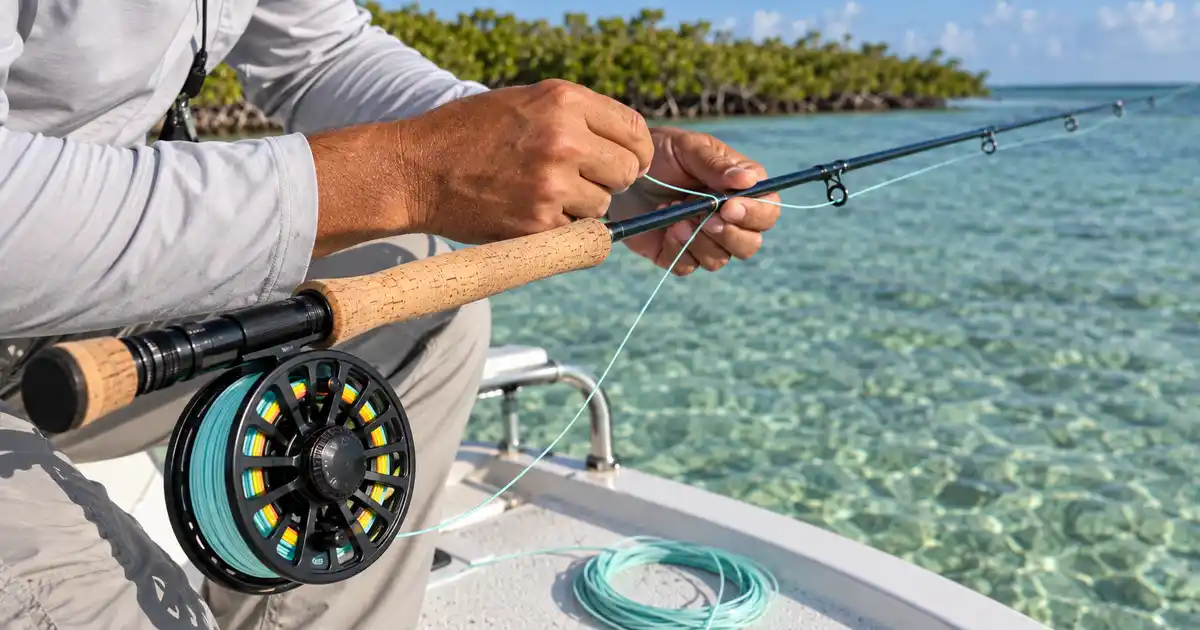
Saltwater Fly Fishing Gear: Essential Setup and Packing List
Saltwater fly fishing gear should be built around the fish and conditions you expect to face, not around a generic shopping list. A setup for bonefish on a tropical flat is different from one for striped bass in cooler coastal water, and both are different from a heavy tarpon outfit.
The simplest way to build saltwater fly fishing gear is to work from the target backward: choose the species and conditions first, then match the rod, reel, backing, fly line, leader, and flies. After that, add personal protection, tools, storage, and only the spare equipment that solves a realistic problem.
Use this order:
Species → Conditions → Rod → Reel and backing → Fly line → Leader → Flies → Personal gear → Spares
Table of Contents
What Makes Saltwater Fly Fishing Gear Different?
Saltwater fly fishing gear deals with several demands that typical trout equipment may not face as often: larger flies, more wind, longer casts, faster fish, longer runs, abrasive structure, and constant exposure to salt.
That does not mean every saltwater trip requires a huge rod and reel. It means the components need to match the target and the environment.
An 8-weight is a common reference point for many lighter saltwater situations. Orvis currently positions its 9-foot 8-weight Recon Saltwater for species such as bonefish, striped bass, and redfish. Heavier flies, stronger wind, and larger fish can move the setup into 9-, 10-, 11-, or 12-weight territory.
Salt also changes equipment care. Reels, pliers, guides, hooks, and other metal components need attention after fishing. A sealed drag can reduce exposure inside the reel, but it does not eliminate the need to rinse and dry the equipment according to the manufacturer’s instructions.
If you are still building your general equipment foundation, our guide to the best fly fishing gear covers the main rod, reel, line, wading, carrying, and landing components before you specialize for saltwater.
Saltwater Fly Fishing Gear: Rod, Reel, and Line Setup
The rod, reel, backing, and fly line form one system. Good saltwater fly fishing gear starts by matching these parts instead of buying them separately because each product looks suitable on its own.
Choosing a Saltwater Fly Rod
Rod weight should follow the fish, fly size, wind, and casting situation.
A 7- or 8-weight may make sense for lighter flats work and many redfish or bonefish situations. A 9- or 10-weight may be useful when flies get larger, wind becomes stronger, or the target fish demands more lifting power. Large tarpon and other demanding situations can call for still heavier tackle.
Those are starting ranges, not universal rules. Local guides are often the best source for destination-specific rod recommendations because they know the average fish size, fly size, wind, and water.
Saltwater rods also commonly use components selected with corrosion resistance in mind. That helps, but every rod used around saltwater still deserves proper rinsing and drying.
Choosing a Saltwater Fly Reel
A saltwater fly reel has a more demanding job than simply storing line.
Strong fish can take line quickly, so smooth drag performance and adequate backing capacity matter. A large arbor can also help retrieve line more quickly.
Saltwater exposure matters as well. Orvis currently recommends looking for a sealed drag system on a saltwater reel and washing saltwater reels after use. A sealed system protects the drag from water, sand, and dirt, but the exterior of the reel still needs care.
Choose the reel size only after choosing the rod and fly line. Then check the manufacturer’s capacity chart for the exact line and backing combination you plan to use.
If you need a deeper explanation of drag, arbor size, and reel capacity before choosing a saltwater model, our guide to choosing the right fly fishing reel covers those fundamentals.
Backing
Backing provides reserve line behind the fly line when a fish runs beyond the length of the fly line.
Saltwater anglers often care more about backing capacity because many saltwater species are capable of long, fast runs. But there is no useful universal number for every setup.
The amount you need depends on the reel, backing diameter, fly line, target fish, and fishing environment. Use the reel manufacturer’s capacity chart and local guidance rather than forcing a generic backing number onto every saltwater outfit.
Do not overfill the spool. The fly line still needs enough clearance to wind onto the reel without rubbing the frame.
Choosing the Saltwater Fly Line
Fly line is one of the easiest places to build the wrong saltwater setup.
First match the line weight to the rod. Then decide whether you need a floating, intermediate, or sinking presentation. Finally, consider water and air temperature.
Tropical lines use cores and coatings intended to remain appropriately stiff in hot conditions. A line designed for cold coastal water can become too soft in tropical heat, while a tropical line can behave poorly in colder conditions.
Scientific Anglers currently lists the Amplitude Grand Slam as a hot-water saltwater line available from 7- through 12-weight. It is three-quarter-size heavy and is designed by the manufacturer for tropical flats applications including bonefish, permit, tarpon, redfish, and snook.
That makes it a useful example of why the words “8-weight fly line” are not enough information by themselves. Taper, head weight, temperature range, and intended presentation all matter.
For a broader explanation of weights, tapers, floating and sinking designs, see our guide to choosing the right fly fishing line.
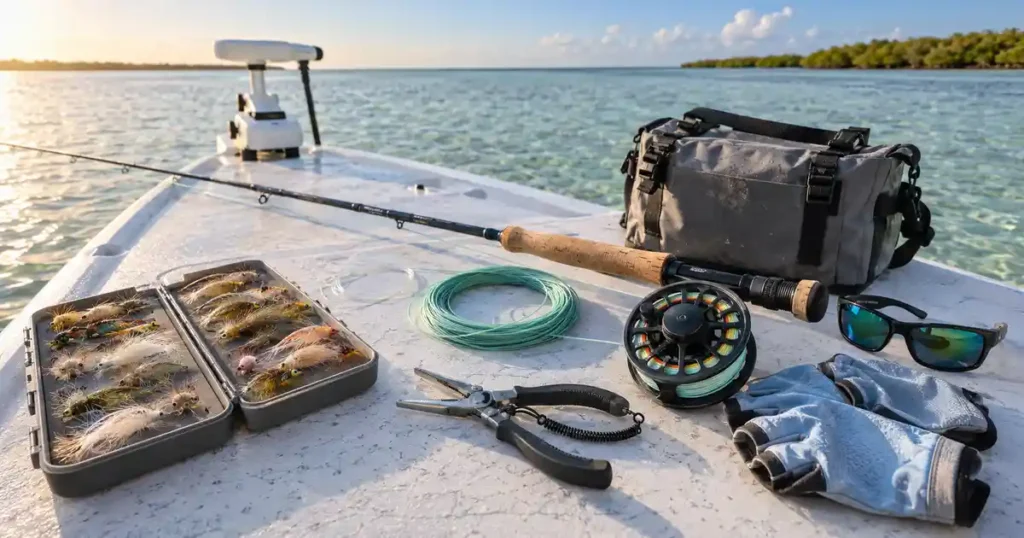
Saltwater Fly Fishing Gear: Leaders, Tippet, and Flies
The terminal end of saltwater fly fishing gear should be chosen around presentation, abrasion, fly size, and the fish’s mouth and behavior.
Saltwater Leaders
A saltwater leader needs to transfer energy from the fly line to the fly while also providing the strength and abrasion resistance required for the situation.
Length changes with presentation. A longer leader can help with wary fish in clear water, while shorter or more powerful leaders may turn over larger or wind-resistant flies more easily.
Scientific Anglers currently offers its Mastery Saltwater tapered leaders in 10- and 12-foot lengths and strengths from 8 to 20 lb. The manufacturer describes them for warm-to-hot saltwater conditions and points anglers toward a different striped-bass leader for cooler conditions.
That is a useful illustration of why leader choice should follow the target and water instead of relying on one “saltwater leader” for every trip.
Bite or Shock Tippet
Some fish require a stronger final section because of abrasive mouths, sharp teeth, gill plates, or the pressure involved in fighting larger fish.
This is where bite or shock tippet may enter the system. The appropriate material and strength can change dramatically between bonefish, barracuda, tarpon, snook, and other species.
Follow destination regulations and advice from a qualified local guide when the rig becomes species-specific. Do not assume that a leader used for ordinary flats fishing is appropriate for every predator.
Saltwater Flies
Saltwater flies often imitate shrimp, crabs, baitfish, or other local prey.
Your fly box should match the destination rather than contain every saltwater pattern you can buy. Size, weight, color, weed guards, hook strength, and sink rate may all change with the target and habitat.
For a first trip, ask the guide or local fly shop which patterns, sizes, and weights are currently useful. A concise box of relevant flies is usually easier to manage than several boxes of patterns chosen without local context.
Saltwater Fly Fishing Gear for Wading and Personal Protection
Good saltwater fly fishing gear includes more than the rod and reel. Sun, glare, heat, sharp shells, coral, slippery surfaces, and changing weather can become just as important as tackle.
Polarized sunglasses help reduce surface glare and also provide a physical barrier between your eyes and hooks. Carry a secure hat, sun-protective clothing, and sunscreen appropriate for exposed skin.
Footwear depends on the destination. Sand flats may call for purpose-built flats boots or other footwear that protects the foot while remaining practical for long periods of wading. Rocky or shell-covered areas can require more structure and protection.
Hydration matters in hot environments. Carry enough water for the actual outing instead of assuming the boat, lodge, or guide will supply it unless that has been confirmed.
For remote or tropical travel, add any destination-specific personal items recommended by the outfitter. The packing list should follow the place as much as the fish.
Saltwater Fly Fishing Gear Packing List
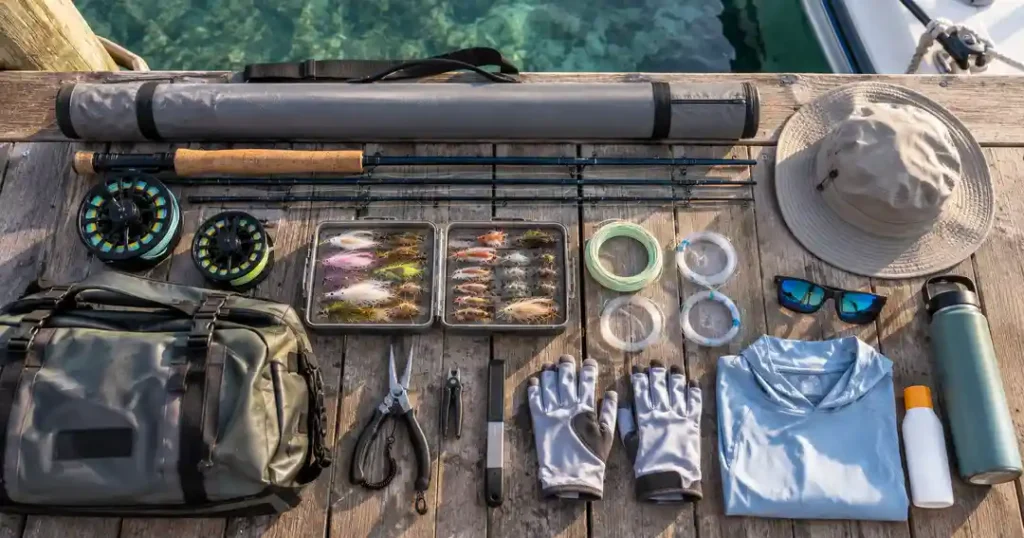
A saltwater fly fishing gear checklist works best when it separates essentials from optional backups.
Core Fishing Setup
Pack:
- rod matched to the target
- compatible reel
- correctly sized backing
- appropriate fly line
- leaders
- tippet or bite material
- fly box with destination-relevant patterns
Before leaving home, assemble the complete rod-reel-line system at least once. Confirm that the reel fits the rod, the line is installed correctly, the leader connection works, and everything you need is actually in the bag.
Tools
Useful saltwater tools can include:
- corrosion-resistant pliers
- nippers
- hook sharpener
- forceps or dehooking tool where appropriate
- line or leader cutters suitable for the material you use
Pliers deserve particular attention because hooks may be larger and heavier than ordinary trout hooks. They should match the work you expect them to do.
Personal Gear
Depending on the destination, pack:
- polarized sunglasses
- brimmed hat
- UPF or sun-protective clothing
- sunscreen
- rain shell
- appropriate wading or boat footwear
- sun gloves where useful
- water and electrolytes where appropriate
- small personal first-aid supplies
- any required medication
The exact list changes by location. Tropical flats and a cold striped-bass shoreline do not require identical clothing.
Spares
A spare item is useful when failure would seriously affect the trip and replacement is difficult.
Consider extra leaders, tippet, flies, and other small consumables first. For remote or expensive travel, an extra reel or spool, line, or even a backup rod may be reasonable.
That does not mean every local saltwater session needs two complete outfits. Balance redundancy against travel weight and cost.
Storage and Travel
Keep salt-exposed, wet, or sandy equipment separate from clean clothing and electronics.
A waterproof or water-resistant bag can be useful on boats, while a ventilated solution may be better for damp footwear or clothing that needs to breathe after the trip.
For help organizing reels, fly boxes, spare lines, clothing, and wet gear, our fly fishing gear bag guide explains waterproofing, capacity, and storage layouts.
For airline travel, verify current baggage rules directly with the airline before departure, especially for rod tubes, hooks, tools, and carry-on dimensions.
How to Match Saltwater Fly Fishing Gear to Target Species
There is no single saltwater fly fishing gear setup for every fish.
Bonefish: An 8-weight is a common reference point for many flats situations, with a reel that provides sufficient backing and a floating tropical or destination-appropriate line.
Redfish: An 8-weight can also cover many redfish situations, but larger flies, wind, or bigger fish can push the choice heavier.
Striped bass: Conditions can vary from estuaries to surf. Cooler-water lines, heavier rods, and sinking or intermediate presentations may be more relevant than tropical-flats equipment.
Permit: Accurate presentations and destination-specific crab or shrimp patterns are common considerations. Wind and the size of the flies can influence rod and line choice.
Tarpon: The setup can move substantially heavier, especially as fish size increases. Rod weight, reel drag, backing capacity, leader system, and hooks all deserve species-specific guidance.
These examples are starting points, not prescriptions. The guide, outfitter, or local shop should have the final word when a trip has specific fish, flies, and conditions.
Saltwater Fly Fishing Gear Care After Every Trip
Saltwater fly fishing gear lasts longer when salt, sand, and moisture are removed before storage.
After fishing, follow the manufacturer’s instructions for the exact reel and other equipment you own. Orvis’ current Hydros manual, for example, instructs anglers to rinse the reel in freshwater with the spool attached after saltwater use or excessive exposure to dirt or sand.
Do not assume every reel should be disassembled in the same way. Sealed drags and reel constructions differ.
Rinse the rod and guides with fresh water and inspect them for salt deposits, sand, or damage. Clean and dry pliers, nippers, and other tools according to their manufacturer’s guidance.
Fly line also deserves attention. Wipe away salt and dirt using the cleaning method recommended by the line manufacturer rather than applying household cleaners or lubricants that may damage the coating.
Allow equipment to dry before closing it in cases or bags for long-term storage. Hooks and flies that were exposed to saltwater should also be inspected, rinsed when appropriate, and dried before returning them to the main fly box.
Common Saltwater Fly Fishing Gear Packing Mistakes
A good packing list is as much about what you avoid as what you bring.
Bringing One Generic Outfit for Every Fish
One rod cannot efficiently cover every saltwater species and fly size.
Choose from the target backward. If the trip involves several very different species, discuss whether multiple outfits are justified.
Using the Wrong Temperature Fly Line
A tropical fly line and a cold-water coastal line are not interchangeable simply because the printed line weight matches.
Check the manufacturer’s temperature category and intended use.
Ignoring Backing Capacity
The reel must hold the fly line plus an appropriate amount of backing for the application.
Check the exact capacity chart before the trip rather than guessing after the reel is already loaded.
Overpacking Flies
More flies do not automatically create more options.
Pack proven local patterns in the useful sizes and weights, then bring sensible backups. Ask the guide or destination fly shop before filling several large boxes.
Forgetting Pliers or a Hook Sharpener
Saltwater hooks are exposed to hard mouths, shells, structure, and corrosion. Appropriate pliers help with hook handling, while a small hook sharpener can help maintain hook points when the pattern is still usable.
Forgetting Spare Leaders and Tippet
Leaders can be damaged by fish, coral, shells, rocks, or repeated fly changes.
Small consumables are relatively easy to pack and difficult to improvise well when you run out.
Ignoring Sun and Hydration
A perfect fly setup does not solve prolonged sun exposure or dehydration.
Treat personal protection as part of the fishing system, especially on open tropical flats.
Packing Salt-Exposed Gear Without Cleaning It
Do not close salty, damp equipment inside luggage and forget about it.
Rinse, inspect, and dry equipment according to manufacturer guidance before long-term storage.
Saltwater Fly Fishing Gear FAQs
What Weight Fly Rod Should I Use for Saltwater?
It depends on the target fish, fly size, wind, and fishing environment. An 8-weight is a common starting point for species such as bonefish and redfish, but heavier flies, bigger fish, and stronger wind can justify 9-, 10-, 11-, or 12-weight equipment.
Can I Use a Freshwater Fly Reel in Saltwater?
A reel may physically function in both environments, but saltwater places greater demands on corrosion resistance, drag protection, and maintenance.
For regular saltwater fishing, choose a reel intended for the environment, with adequate capacity and a drag appropriate to your target fish. Follow the manufacturer’s saltwater-care instructions after use.
How Much Backing Do I Need for Saltwater Fly Fishing?
There is no universal amount. It depends on the species, reel, fly line, backing diameter, and expected runs.
Check the reel manufacturer’s capacity chart and ask your guide or local shop what is appropriate for the destination.
Do I Need a Special Saltwater Fly Line?
Usually, you should choose a line designed for your saltwater conditions and presentation.
The important variables include line weight, taper, floating or sinking behavior, and temperature range. Tropical and cool-water lines can use different cores and coatings.
What Leader Should I Use for Saltwater Fly Fishing?
Match the leader to the species, fly, water clarity, abrasion risk, and presentation.
Saltwater tapered leaders are available in different lengths and strengths, but toothy or particularly large fish may require a different bite or shock-tippet system.
What Should I Pack for My First Saltwater Fly Fishing Trip?
At minimum, pack a rod, compatible reel, backing, appropriate fly line, leaders, tippet, destination-relevant flies, pliers, nippers, polarized sunglasses, sun protection, suitable footwear, and water.
Then add spare equipment according to how remote the trip is and how difficult replacements would be.
Final Thoughts on Saltwater Fly Fishing Gear
The most useful saltwater fly fishing gear setup begins with the fish, not the catalog.
Choose the target species and conditions first. Match the rod, reel, backing, line, leader, and flies to that job. Then add the personal gear, tools, storage, and backups that solve problems you are realistically likely to encounter.
Use this sequence:
Species → Conditions → Rod → Reel and backing → Line → Leader → Flies → Personal gear → Spares
That approach produces a more useful packing list, reduces unnecessary equipment, and makes it easier to identify which pieces of gear actually deserve your budget.
Sources Used
Orvis — Recon Saltwater Fly Rod
Used to verify the current 9-foot 8-weight Recon Saltwater configuration and Orvis’ current positioning for bonefish, striped bass, and redfish.
Orvis — How Do I Choose a Fly Reel?
Used to verify current Orvis guidance on sealed drag systems for saltwater reels and washing saltwater reels after use.
Orvis — 2026 Hydros Reel Manual
Used to verify current Hydros saltwater-care guidance, including rinsing the reel in freshwater with the spool attached after saltwater or excessive dirt/sand exposure.
Scientific Anglers — Amplitude Grand Slam Fly Line
Used to verify current 7- through 12-weight availability, hot-water/saltwater designation, three-quarter-size-heavy profile, Tropi-Core construction, and listed target species.
Scientific Anglers — Mastery Saltwater Leaders
Used to verify current 10- and 12-foot lengths, 8- to 20-lb strengths, abrasion-resistant construction, and warm-to-hot saltwater positioning.