
Fly Fishing Gear for Montana: What to Pack for Your Trip
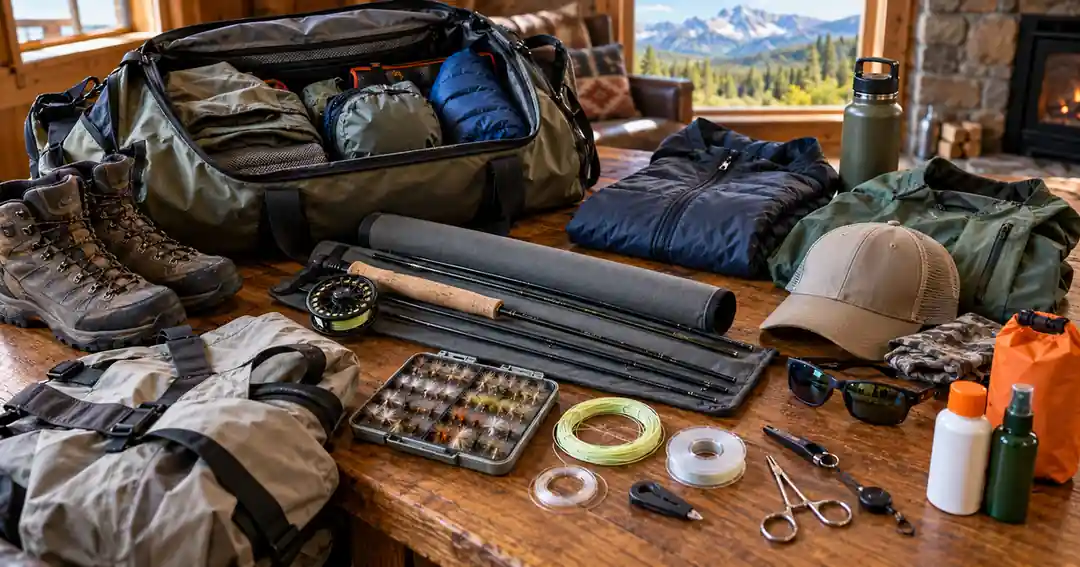
Choosing the right fly fishing gear for Montana is less about packing everything you own and more about preparing for the trip you actually booked. A guided float trip in July requires a different packing list from a self-guided walk-and-wade trip in cool spring weather.
For many Montana trout trips, a versatile 5- or 6-weight setup, weather-ready clothing, polarized sunglasses, and a compact selection of fishing essentials will cover the basics. Waders, additional rods, specialized lines, and larger fly collections depend more on the season, water, and whether a guide is supplying tackle.
Use this guide to build a practical Montana fly fishing packing list without hauling unnecessary equipment across the country.
Table of Contents
Fly Fishing Gear for Montana: Quick Packing List
A good fly fishing gear for Montana checklist starts by separating essentials from equipment that depends on your specific trip.
Must Pack
For most trips, consider these personal essentials:
- polarized sunglasses;
- brimmed hat;
- sunscreen;
- reusable water bottle;
- quick-drying fishing clothing;
- waterproof rain jacket;
- insulating layer;
- personal medications;
- phone and waterproof protection;
- current fishing license or access to the digital information you need;
- any personal gear your outfitter specifically asks you to bring.
If you are fishing independently, add your full rod, reel, line, leader, tippet, fly box, tools, and appropriate wading equipment.
Depends on Your Trip
These items may be essential on one Montana trip and unnecessary on another:
- breathable waders;
- wading boots;
- wading staff;
- second fly rod;
- heavier streamer setup;
- sinking or sink-tip line;
- dry bag;
- additional cold-weather layers;
- wet-wading footwear;
- larger fly selection.
The season, water temperature, fishing style, and whether you are floating or wading should determine whether they make the bag.
Confirm With Your Guide
Before traveling for a guided trip, ask whether the outfitter provides:
- fly rods;
- reels;
- fly lines;
- flies;
- leaders;
- tippet;
- strike indicators;
- split shot or other terminal tackle;
- landing nets;
- waders;
- boots.
Many guides provide substantial fishing tackle. Packing duplicates adds luggage without improving your trip.
Can Usually Stay Home
Unless your specific itinerary requires them, you probably do not need:
- several nearly identical trout rods;
- multiple large fly boxes;
- every fly line you own;
- excessive terminal tackle;
- specialized tools you rarely use;
- bulky fishing storage systems;
- heavy cotton clothing for active river use.
Pack around the fishing, not the size of your gear collection.
What Fly Fishing Gear for Montana Do You Actually Need?
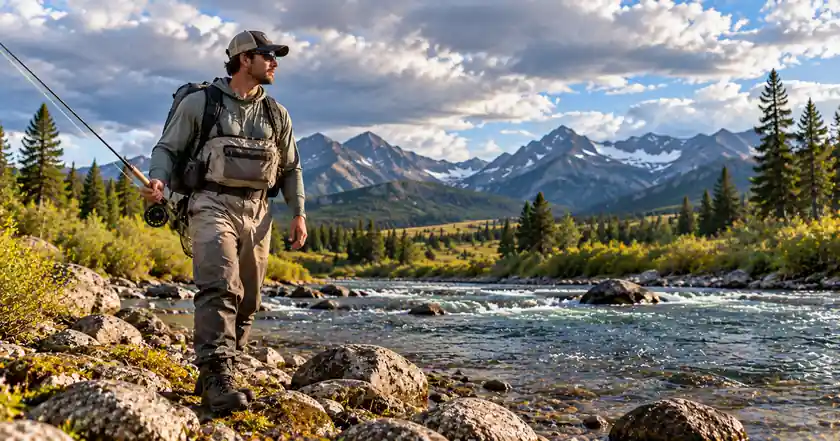
Before choosing fly fishing gear for Montana, answer four questions:
- Is the trip guided or DIY?
- What season are you fishing?
- Are you primarily floating or wading?
- What types of water and flies will you realistically fish?
Those answers eliminate much of the guesswork.
Guided Trip
A guided trip can dramatically reduce how much tackle you need to transport.
Many Montana guides supply rods, reels, flies, leaders, tippet, and other fishing equipment. Some also have rental waders or other equipment available.
Confirm the exact inclusions before departure. Do not assume every outfitter provides the same gear.
If rods and tackle are included, your priorities shift toward personal clothing, sun protection, rain protection, medications, eyewear, and any equipment you strongly prefer to use yourself.
DIY Trip
Independent anglers need a more complete system.
At minimum, make sure your rod, reel, fly line, leader, tippet, flies, and basic tools work together before leaving home.
A destination trip is a poor time to discover that your line does not match your rod or that you forgot suitable leaders.
If you are still building your first complete setup, FlyFishingScout’s fly fishing gear for beginners guide explains the basic equipment system in more detail.
Float Fishing
Float fishing often reduces the amount of sustained wading you need to do, although you may still enter the water at stops.
Ask the guide about preferred footwear.
Heavy studded wading boots are not automatically ideal inside a drift boat or raft. Some guides restrict studs because metal traction can damage boat surfaces.
A secure shoe or wading boot appropriate for both the boat and planned shore stops may be the better choice.
Walk-and-Wade Fishing
Walk-and-wade trips make footwear, waders, traction, and pack weight more important.
You may spend hours walking over gravel, uneven banks, slick rock, and trails.
Choose footwear for the terrain rather than simply selecting the most aggressive-looking sole.
A wading staff may also be useful when current, footing, or personal balance makes another contact point worthwhile.
Fly Fishing Gear for Montana: Rods, Reels, and Lines
The fishing tackle portion of fly fishing gear for Montana does not need to be complicated.
For many trout trips, one versatile outfit is enough.
When a 5-Weight Makes Sense
A 9-foot 5-weight is a useful all-around option for many Montana trout situations.
It can handle:
- dry flies;
- many standard nymph rigs;
- smaller streamers;
- general river fishing.
Its biggest advantage is versatility.
A 5-weight does not mean every Montana trout trip should use the same rod. It simply covers a broad range of ordinary trout fishing without becoming highly specialized.
When a 6-Weight Helps
A 6-weight can make more sense when you expect:
- frequent wind;
- larger or more wind-resistant flies;
- heavier nymph rigs;
- larger streamers;
- bigger water;
- longer casts.
A 6-weight provides additional line mass and power at the cost of some delicacy compared with a lighter trout setup.
Choose it because the flies and conditions require it, not because Montana trout automatically need heavier rods.
Reel and Floating Line
Match the reel to your rod and fly line.
For ordinary trout fishing, the reel mainly needs to hold your backing and fly line while providing reliable line storage and a usable drag.
A weight-forward floating line is the most versatile starting point for many Montana river situations.
It works for dry flies, many indicator rigs, and some lighter streamer fishing.
Specialized sinking systems can be useful when deeper water or frequent streamer fishing creates a genuine need.
For a deeper explanation of how the entire tackle system fits together, see FlyFishingScout’s fly fishing setup for trout.
Should You Pack a Second Rod?
A second rod can be useful, but it should solve a specific problem.
For example, you might carry:
- a 5-weight for dries and lighter nymph rigs;
- a 6-weight for heavier setups or larger streamers.
That can save rigging time during a day when techniques change frequently.
For many travelers, however, one versatile rod is enough.
If your guide provides additional rods, carrying two or three personal setups may only add luggage.
Fly Fishing Gear for Montana: Waders, Boots, and Clothing
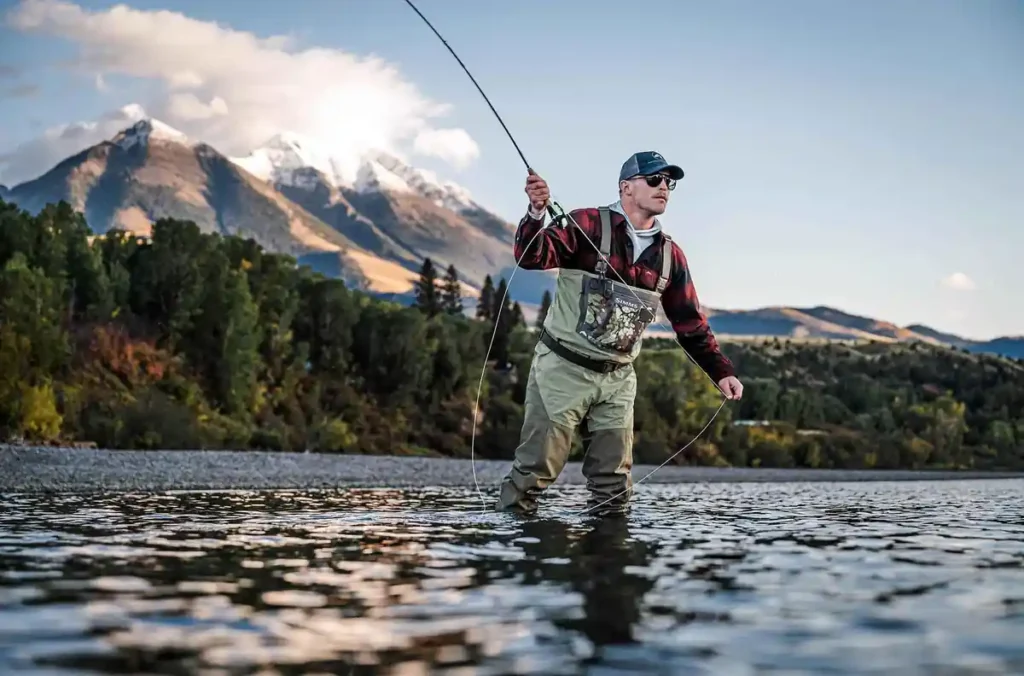
Clothing is one of the most important parts of fly fishing gear for Montana because conditions can change significantly during a fishing day.
A cool morning, warm afternoon, wind, and rain can all occur during the same trip.
Layering gives you more flexibility than relying on one heavy garment.
When to Pack Waders
Breathable stockingfoot waders are useful when:
- water is cold;
- air temperatures are cool;
- you expect extended wading;
- weather is unsettled;
- you are fishing during colder parts of the season.
Wear appropriate layers underneath rather than assuming waders provide significant insulation by themselves.
Avoid cotton as your main cold-weather layer because it retains moisture and dries slowly.
When Wet Wading May Make Sense
During warm summer conditions, some anglers prefer wet wading.
That usually means wearing quick-drying clothing with wading boots or appropriate river footwear and neoprene wet-wading socks.
Wet wading should still be based on actual water temperature, weather, current, and your comfort.
Do not leave the waders at home solely because your trip falls in a particular month. Check the forecast and ask your guide shortly before the trip.
Choosing Wading Boots
Good wading boots should fit properly over your stockingfoot waders, support your feet on uneven terrain, and provide traction appropriate for the water and banks you expect to cross.
Rubber soles are practical for many traveling anglers because they work across trails, banks, and water and generally dry more easily than absorbent materials.
Traction requirements vary.
Studs can help on some slick surfaces but may be inappropriate for certain boats or hard surfaces.
For a deeper comparison of fit, rubber, felt, and traction systems, read FlyFishingScout’s guide to fly fishing wading boots.
Base Layers and Mid Layers
Think in layers rather than one heavy outfit.
A practical system can include:
Base layer: Moves moisture away from your skin.
Mid layer: Adds warmth when temperatures drop.
Outer shell: Blocks wind and rain.
On warmer days, lightweight quick-drying shirts and pants may be all you need until weather changes.
For cooler trips, add appropriate thermal layers and warm socks.
Waterproof Rain Protection
A waterproof rain shell deserves a place in your Montana bag even when the forecast appears favorable.
Choose a jacket that allows you to cast and move comfortably.
Rain pants can also be useful, especially on float trips or when you are not wearing waders.
Your rain shell should be accessible during the fishing day rather than buried underneath luggage at the hotel.
Sun Clothing, Hat, and Polarized Sunglasses
Montana fishing can involve long periods of sun exposure.
Bring:
- polarized sunglasses;
- brimmed hat;
- sunscreen;
- lightweight sun shirt;
- sun gloves or neck protection if you prefer them.
Polarized sunglasses also reduce surface glare and provide a physical barrier between your eyes and hooks.
Fly Fishing Gear for Montana by Season
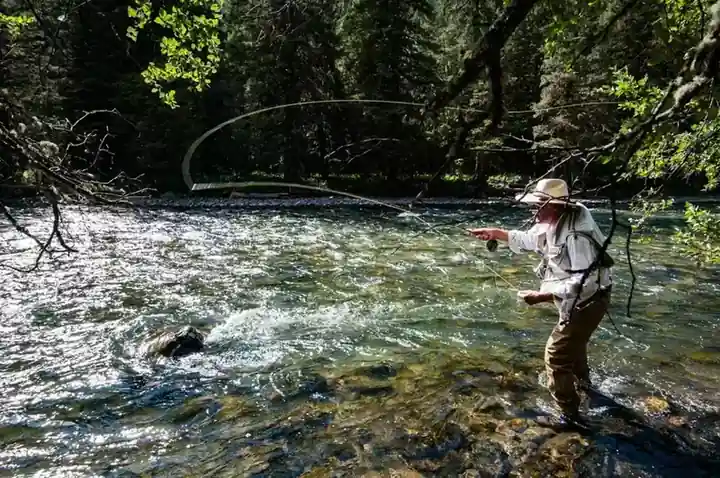
Season matters when selecting fly fishing gear for Montana, but do not treat these categories as guaranteed weather forecasts.
Montana conditions vary by elevation, location, and year.
Check the current forecast and river conditions shortly before your trip.
Spring
Spring trips deserve flexible cold- and wet-weather preparation.
Pack:
- breathable waders;
- appropriate wading boots;
- thermal base layers;
- warm mid layer;
- waterproof shell;
- warm hat;
- gloves when conditions justify them.
Higher flows can also make conservative wading decisions more important.
Do not assume a river is safe to wade simply because it is accessible.
Summer
Summer can reduce the amount of insulation you need, but it does not eliminate weather preparation.
Typical useful gear includes:
- quick-drying sun clothing;
- brimmed hat;
- polarized sunglasses;
- sunscreen;
- rain shell;
- hydration;
- wet-wading equipment when conditions allow.
Keep at least one warmer layer available, particularly for early starts, mountain weather, or changing conditions.
Fall
Fall often brings a wider temperature range between morning and afternoon.
Waders become more useful as water and air temperatures cool.
Pack:
- base layers;
- insulating layer;
- rain protection;
- warm hat;
- gloves when needed.
Do not rely on the conditions you experienced during a previous summer Montana trip.
Winter and Cold-Weather Trips
Winter fishing requires more deliberate preparation.
Cold-weather fly fishing gear for Montana should emphasize warmth, moisture management, and safety rather than adding excessive fishing tackle.
Pay attention to:
- insulating layers;
- warm socks;
- gloves;
- head protection;
- icy banks;
- cold-water exposure.
Avoid packing so many thick socks that your wading boots become tight. Compressing your feet can reduce comfort and make cold conditions harder to manage.
Fly Fishing Gear for Montana: Flies, Leaders, and Tippet
The terminal-tackle portion of fly fishing gear for Montana should be flexible without becoming excessive.
You do not need to carry every trout pattern available.
Build a Small Trip-Specific Fly Box
A useful Montana fly box can include several categories:
- dry flies;
- nymphs;
- emergers;
- terrestrials where seasonally relevant;
- streamers.
Specific patterns and sizes should follow the water, season, and current insect activity.
If you are fishing with a guide, ask whether flies are included before buying a large destination-specific assortment.
Leaders and Tippet
Bring leader and tippet appropriate to the flies and techniques you expect to use.
A delicate dry fly, weighted nymph rig, and larger streamer do not necessarily require the same terminal setup.
Carry enough material to rebuild or replace damaged sections without filling an entire bag with unnecessary sizes.
Indicators, Weight, and Floatant
Depending on your plans, useful small items may include:
- strike indicators;
- legal weighting material;
- dry-fly floatant;
- leader straightener;
- nippers;
- forceps.
Confirm local regulations before using tackle or rigging methods that may be restricted on specific waters.
Buy Local When Conditions Change
Local fly shops can be especially useful shortly before or during the trip.
Instead of buying dozens of Montana flies months in advance, arrive with a functional basic box and leave some room for locally appropriate patterns.
Current conditions can make a small local purchase more useful than a large generic assortment.
Guided Montana Trip vs DIY: What to Bring
Whether your trip is guided or independent may change your fly fishing gear for Montana list more than almost any other factor.
What Guides Often Provide
Many guided operations provide some combination of:
- rods;
- reels;
- fly lines;
- flies;
- leaders;
- tippet;
- terminal tackle;
- landing nets.
Some can also arrange rental waders.
This varies by outfitter, so confirm directly rather than relying on a generic packing list.
What You Usually Need to Bring Yourself
Personal items are more likely to remain your responsibility:
- weather-appropriate clothing;
- rain jacket;
- polarized sunglasses;
- hat;
- sunscreen;
- personal medications;
- fishing license;
- water bottle;
- personal footwear requested by the guide.
Ask whether lunch, drinks, waterproof storage, and transportation are included as well.
What to Confirm Before Flying or Driving to Montana
Several days before departure, confirm:
- meeting location;
- start time;
- provided tackle;
- expected fishing method;
- wader requirements;
- footwear recommendations;
- current weather;
- any unusual river conditions;
- current licensing or permit requirements.
This is also a good time to ask whether the guide expects mostly dry-fly, nymph, or streamer fishing so you can decide whether personal specialty gear is worth bringing.
Avoid Packing Duplicate Gear
If the outfitter already provides rods, reels, flies, nets, and terminal tackle, bringing duplicate equipment may provide little benefit.
Pack your own rod when you enjoy using familiar equipment or when the guide recommends bringing it.
Do not transport it simply because a fishing trip feels incomplete without every item you own.
Fly Fishing Gear for Montana: Safety, Weather, and Trip Essentials
The non-fishing portion of fly fishing gear for Montana can matter as much as your rod.
Weather preparation, hydration, safe wading, and responsible equipment care belong on the packing list.
Rain and Temperature Changes
Keep your rain shell and extra layer where you can reach them during the day.
A layer stored in a vehicle several miles away does not help when weather changes on the river.
A small pack, boat bag, or dry bag can keep personal equipment organized and accessible.
Sunscreen, Hydration, and Insect Protection
Pack:
- sunscreen;
- water;
- insect repellent when appropriate;
- lip protection;
- basic personal medication.
Long fishing days can make it easy to ignore sun exposure and hydration while concentrating on the river.
Wading Staff and Personal Safety Gear
A wading staff can provide an additional contact point on uneven or slippery bottoms.
That does not make difficult water automatically safe.
Assess current speed, depth, footing, and your experience before entering.
Polarized glasses also provide valuable eye protection around hooks.
Clean, Drain, Dry Fishing Equipment
Traveling between fisheries creates an aquatic invasive species risk.
Before moving between waters:
Clean mud, plants, and organisms from your boots, waders, net, and other equipment.
Drain trapped water from equipment.
Dry equipment thoroughly before using it in another water whenever possible.
Pay particular attention to boots, laces, seams, waders, nets, and other areas that can retain moisture or debris.
Montana Fish, Wildlife & Parks prefers non-felt-soled boots as an additional way to reduce the risk of spreading aquatic invasive species.
If your trip includes a boat or other watercraft, additional inspection requirements may apply.
License and Current Regulations Check
Fishing regulations in Montana are not identical for every river.
Before fishing:
- identify the Fishing District;
- review the standard regulations for that district;
- check the specific water for exceptions;
- check for current closures or emergency restrictions.
Do this shortly before your fishing day rather than relying solely on information saved months earlier.
If you also fish inside Yellowstone National Park, check the park’s separate current fishing rules and licensing requirements instead of assuming your Montana state rules cover the park.
Final Montana Fly Fishing Packing Checklist
Use this final checklist to review your fly fishing gear for Montana the night before departure.
Fishing Tackle
- appropriate 5- or 6-weight rod when bringing your own;
- matching reel;
- appropriate fly line;
- leaders;
- tippet;
- compact fly box;
- indicators if needed;
- legal weight if needed;
- floatant;
- nippers;
- forceps;
- landing net when required.
Wading Gear
- breathable waders when conditions justify them;
- wading boots;
- wet-wading socks or footwear for warm-weather trips;
- wading belt;
- optional wading staff.
Make sure wet equipment from previous trips is clean and thoroughly dry before packing it for a new fishery.
Clothing
- quick-dry fishing pants;
- quick-dry shirt;
- insulating layer;
- waterproof rain shell;
- rain pants when useful;
- fishing socks;
- warm hat for cool conditions;
- gloves when needed;
- sun hat.
Personal Items
- polarized sunglasses;
- sunscreen;
- insect repellent;
- reusable water bottle;
- personal medications;
- phone;
- waterproof phone protection;
- small pack or dry bag.
Documents and Regulations
Before leaving, verify:
- current Montana fishing license;
- Fishing District;
- water-specific rules;
- current closures or emergency restrictions;
- guide confirmation and meeting instructions;
- additional rules for any separately managed destination.
Night-Before Checks
Before the fishing day:
- check the weather;
- check current restrictions or closures;
- confirm meeting time with your guide;
- confirm required clothing;
- inspect leaders and tippet;
- organize flies;
- charge your phone;
- fill your water bottle;
- place rain gear somewhere accessible.
A five-minute check can prevent carrying too much while still catching important omissions.
Fly Fishing Gear for Montana FAQs
Is a 5-Weight or 6-Weight Better for Montana?
Both can be useful.
A 5-weight is a versatile choice for general trout fishing, including dries, many nymph rigs, and lighter streamers.
A 6-weight may be more comfortable when wind, heavier rigs, larger flies, bigger water, or streamer fishing become a regular part of the trip.
Choose according to the flies and conditions rather than assuming one rod weight is automatically best for all Montana fishing.
Do You Need Waders for Fly Fishing in Montana?
Not always.
Waders are particularly useful during colder weather and when you expect extended time standing in cold water.
Warm summer conditions can sometimes make wet wading practical.
Check the forecast, water conditions, and your guide’s recommendation before deciding.
What Should You Wear Fly Fishing in Montana?
Use layers.
A practical system includes quick-drying fishing clothing, a weather-appropriate base or mid layer, and a waterproof rain shell.
Add a brimmed hat, polarized sunglasses, sun protection, and warmer accessories when conditions require them.
How Many Rods Should You Bring to Montana?
For many trips, one versatile rod is enough.
A second rod makes sense if it serves a clearly different purpose, such as separating a lighter dry-fly setup from a heavier nymph or streamer setup.
If your guide already supplies multiple rods, bringing several personal outfits may be unnecessary.
Do Montana Fly-Fishing Guides Provide Gear?
Many do, but there is no universal rule.
Some provide rods, reels, flies, leaders, tippet, and other fishing tackle. Wader availability can also vary.
Contact your outfitter directly and confirm exactly what is included before packing.
What Should You Leave Out of Your Montana Packing List?
Avoid packing equipment simply because you own it.
Multiple redundant rods, huge fly collections, unnecessary specialty lines, and bulky accessories can make travel harder without improving the fishing.
The best fly fishing gear for Montana is the equipment that fits your actual trip.
Start with whether the trip is guided or independent, then consider the season, whether you will float or wade, and the types of flies you expect to fish.
Pack versatile tackle, flexible clothing layers, weather protection, and the personal essentials you know you will use. Confirm what your guide provides and leave unnecessary duplicates at home.
That approach gives you a lighter, more practical fly fishing gear for Montana packing list while keeping you prepared when conditions change.
Sources Used
The official Montana Fish, Wildlife & Parks — Fishing Regulations resource was used to verify the current district-based regulation system, water-specific exceptions, general fishing seasons, and the need to check current changes or closures before fishing.
The official Montana Fish, Wildlife & Parks — Fishing Licenses & Permits page was used to verify the current regulation period and the process of identifying the Fishing District and checking specific-water exceptions.
The official Montana Fish, Wildlife & Parks — Clean, Drain, Dry guidance was used to verify AIS prevention recommendations for anglers, including cleaning waders, footwear, lines, nets, and other fishing gear, draining water, drying equipment, and the preference for non-felt soles.
Montana Angler’s Packing List for Day Trips and Lodging Packages was used to cross-check commonly recommended Montana personal equipment, layered clothing, rain protection, waders, wet-wading considerations, 5- and 6-weight rods, leaders, tippet, and the distinction between personal gear and tackle provided by a guide.
FlyFishingScout’s Fly Fishing Gear for Beginners: Essentials for Your First Trip was used as the verified internal supporting resource for general gear selection and the principle of checking what a guide supplies before packing duplicate equipment.
FlyFishingScout’s Fly Fishing Line: How to Choose Type and Weight was used to cross-check the general use cases for 5- and 6-weight setups and the role of a weight-forward floating line in general trout fishing.
FlyFishingScout’s Fly Fishing Wading Boots: How to Choose the Right Pair was used as the verified internal supporting resource for wading-boot fit, rubber versus felt, studs, hiking considerations, drying, and invasive-species concerns.