
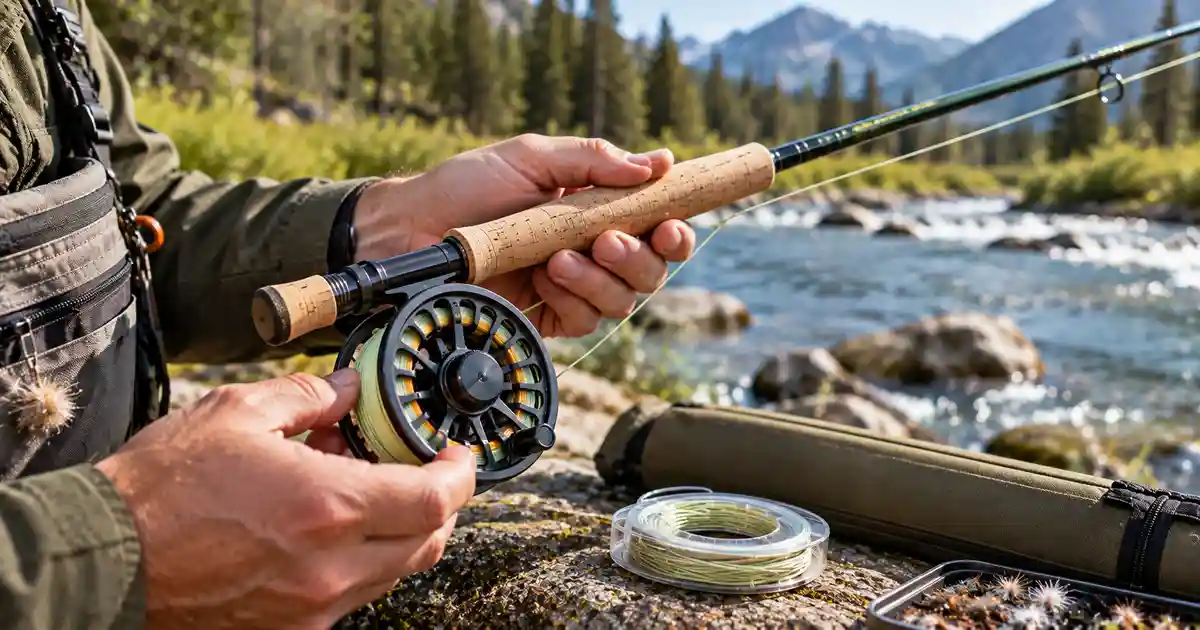
Fly Fishing Rod and Reel Combo: How to Choose the Right Setup
A fly fishing rod and reel combo should make compatibility easier, not hide the details that matter. The rod, reel, fly line, and backing still need to fit the fish, water, flies, and conditions you plan to fish.
For many trout anglers, a 9-foot 5-weight combo with a matching reel and weight-forward floating line is a versatile starting point. It is not the right answer for every angler. Small creeks, large bass flies, salmon, saltwater, strong wind, and specialized techniques can require very different equipment.
The best way to choose a fly fishing rod and reel combo is to read it as a compatibility chain:
Water → Fish → Rod → Reel → Fly line → Backing → Package → Warranty → Price
If each link makes sense, you probably have a useful setup. If one major component is poorly matched, a famous brand name or a large accessory bundle does not fix the problem.
Table of Contents
Fly Fishing Rod and Reel Combo: Quick Buying Checklist
Before buying a fly fishing rod and reel combo, run through these questions:
- What species will you target most often?
- What kind of water will you fish?
- What rod weight fits the flies and rigs you expect to cast?
- What rod length and action suit that water?
- Is the reel rated for the same line class as the rod?
- Does the reel have enough capacity for the fly line and appropriate backing?
- What fly line is included?
- Does the fly-line weight match the rod?
- Does the package include backing, leader, and a case?
- What warranty covers the rod and reel?
- What would you still need to buy before fishing?
A good combo answers those questions clearly.
Do not start with price alone. A $200 package that forces you to replace the line and buy missing core components may be worse value than a $250 outfit that is properly matched and more complete.
Fly Fishing Rod and Reel Combo: Start With the Fishing
Choosing a fly fishing rod and reel combo starts with the fishing job rather than the brand.
Target Species
Species matters because the rod must cast appropriate flies and the reel must handle the expected line and backing requirements.
A setup for small trout and panfish is different from one intended for:
- large bass;
- steelhead;
- salmon;
- bonefish;
- tarpon;
- other powerful saltwater species.
Do not choose only from fish size, though. The flies and rigs you cast can matter just as much.
A trout angler throwing tiny dries on a creek has different demands from a trout angler casting large weighted streamers in wind.
Water Size
Small creeks often reward shorter rods that are easier to move beneath branches and around brush.
A 9-foot rod is common on medium and large rivers because it offers useful reach for mending, line control, and general casting.
Large open rivers, lakes, and saltwater flats may increase the importance of distance, wind performance, and line control.
Fly and Rig Size
A small dry fly is easy for light tackle to carry.
A large streamer, popper, weighted nymph rig, or indicator setup places more demand on the line and rod.
This is why rod weight should be chosen for the complete presentation—not merely the fish.
Wind and Distance
If you frequently fish open, windy water, a light rod may be less comfortable than it would be on a sheltered creek.
Heavier line classes can provide more authority with larger flies and wind, although they also reduce some of the delicacy associated with lighter tackle.
Freshwater vs. Saltwater
Saltwater makes reel choice more important.
Strong fish can demand more backing capacity and more drag, while corrosive saltwater increases the value of construction and drag systems designed for that environment.
For ordinary trout fishing, you may not need the same reel features that matter for bonefish or tarpon.
Fly Fishing Rod and Reel Combo: Choose the Rod Weight
The number printed on a fly rod is one of the first specifications to understand when choosing a fly fishing rod and reel combo.
A 5-weight rod is designed around 5-weight fly line. The number does not mean the rod physically weighs five units or that it is intended for five-pound fish.
3- to 4-Weight
Lighter rods can make sense for:
- small streams;
- panfish;
- smaller trout;
- small dry flies;
- delicate presentations;
- shorter casting distances.
The trade-off is reduced comfort with large, heavy, or wind-resistant flies.
5-Weight
A 5-weight is one of the most versatile general freshwater choices.
It can handle many:
- trout dry flies;
- nymph rigs;
- small and moderate streamers;
- panfish situations;
- lighter bass applications.
For that reason, a 9-foot 5-weight is often used as the reference point for a general trout or freshwater setup.
6-Weight
A 6-weight can make sense when you regularly cast:
- larger streamers;
- heavier nymph rigs;
- more wind-resistant flies;
- bass flies;
- flies in stronger wind.
It provides more power but can feel less delicate than lighter tackle.
7- to 8-Weight and Heavier
These line classes become more useful for:
- larger bass flies;
- salmon and steelhead applications;
- stronger freshwater species;
- many saltwater situations;
- large streamers;
- heavier wind.
Do not buy a heavier rod merely because it sounds more capable. Extra power can be unnecessary for ordinary light trout fishing.
Why Rod Weight Is Really a Line-Class Decision
Rod, reel, and line numbers work together.
A 5-weight rod normally starts with 5-weight fly line and a reel whose published range supports that line.
Manufacturers do not all label reels the same way, so the reel’s stated compatibility matters more than assuming one model number translates perfectly across brands.
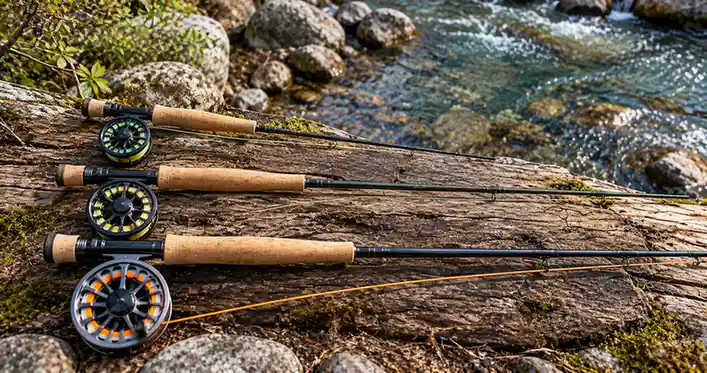
Is a 5-Weight Fly Fishing Rod and Reel Combo Right for You?
A 5-weight fly fishing rod and reel combo is a strong general option when your fishing centers on trout and similar freshwater situations.
It is especially practical when you need one setup to cover several techniques rather than specializing immediately.
Why 5 Weight Is Versatile
A typical 5-weight setup can handle:
- dry-fly fishing;
- many indicator nymph rigs;
- dry-dropper fishing;
- modest streamers;
- panfish;
- light freshwater use.
That range explains why manufacturers offer so many beginner and general-purpose outfits in this class.
When 4 Weight Makes More Sense
Choose lighter tackle when your fishing is dominated by:
- small creeks;
- short casts;
- small flies;
- delicate presentation;
- modest fish.
A lighter setup can make those situations more enjoyable and better proportioned.
When 6 Weight Makes More Sense
A 6-weight becomes attractive when your regular fishing includes:
- larger flies;
- weighted rigs;
- more wind;
- larger rivers;
- bass;
- stronger fish.
The added power can help turn over bulkier presentations.
When 5 Weight Is the Wrong Choice
A 5-weight is not an ideal all-purpose answer for:
- very large streamers;
- heavy bass bugs;
- salmon;
- steelhead;
- most larger saltwater species;
- extremely tight small creeks where a shorter and lighter rod is preferable.
If trout are your main target, FlyFishingScout’s fly fishing setup for trout goes deeper into trout-specific rod, line, leader, and rig choices.
Fly Fishing Rod and Reel Combo: Check Rod Length and Action
After choosing line weight, examine the rod itself.
A fly fishing rod and reel combo can have the correct weight rating and still be poorly suited to your water if the rod length and action do not fit the job.
Why 9 Feet Is Common
A 9-foot rod is a common general-purpose length because it offers useful reach without being unusually long.
For trout and general freshwater, that extra reach can help with:
- mending;
- line control;
- nymphing;
- keeping line off conflicting currents;
- moderate-distance casting.
Shorter Rods for Tight Water
A 7’6″ to 8’6″ rod may be easier to move around:
- trees;
- brush;
- narrow creeks;
- confined casting lanes.
A shorter rod is not automatically a beginner rod. It is simply a different tool for tighter environments.
Medium vs. Medium-Fast vs. Fast
Rod action describes how and where the rod flexes.
A medium-action rod flexes farther down the blank.
A medium-fast rod blends deeper feedback with more stiffness in the upper portion.
A fast-action rod generally feels stiffer and concentrates more flex near the tip.
These descriptions vary somewhat among manufacturers, so do not assume two rods labeled medium-fast will feel identical.
Why Action Should Match Use and Casting Style
A medium or medium-fast action can be a useful learning platform because the caster can often feel the rod load while retaining enough power for general trout situations.
Fast action can be useful in wind, with longer casts, or when moving larger flies, but it can require better timing.
There is no universally best action.
Choose action as part of the whole setup, not as a status label.
Fly Fishing Rod and Reel Combo: Match the Reel
The reel in a fly fishing rod and reel combo must support the line class and hold the complete line-and-backing system.
You do not need the most expensive reel available. You need one that fits the job.
Match Reel Range to Fly-Line Weight
Reels are often labeled with ranges such as:
- 3/4;
- 4/5;
- 5/6;
- 7/8.
Other manufacturers use their own size names or Roman numerals.
For example, Orvis currently rates its size II reels for 3- through 5-weight line and size III reels for 5- through 7-weight line.
The safest buying rule is simple:
Check the manufacturer’s line-weight range for the exact reel.
Check Capacity
The reel must hold:
- the complete fly line;
- appropriate backing;
- enough free spool space that the line does not constantly rub against the frame.
Backing requirements vary with species, reel, line design, and fishing situation.
A small-stream trout angler has very different capacity needs from an angler targeting long-running saltwater fish.
Check Physical Weight and Balance
A reel’s line-weight rating and its physical weight are different measurements.
A reel may be suitable for 5-weight line but still feel heavier or lighter than another reel in the same class.
Balance is partly personal, but extreme mismatches can make a setup feel awkward.
Use the manufacturer-intended reel range first, then handle the outfit when possible.
How Much Drag Do You Need?
For general trout and panfish, a simple dependable drag can be sufficient.
Stronger fish increase the value of:
- smoother drag adjustment;
- more drag range;
- better heat management;
- greater backing capacity.
Do not pay for heavy-duty drag performance if your fishing is unlikely to use it.
Freshwater vs. Saltwater Reel Requirements
Saltwater deserves extra consideration because of corrosion and powerful fish.
A saltwater-focused reel may emphasize:
- sealed drag;
- corrosion-resistant construction;
- larger capacity;
- larger handle;
- faster line pickup.
For deeper reel guidance, read FlyFishingScout’s guide to choosing the right fly fishing reel.
Fly Fishing Rod and Reel Combo: Check the Included Fly Line
The fly line may be one of the most important and least examined parts of a fly fishing rod and reel combo.
The line provides much of the mass that loads the rod and carries the leader and fly during the cast.
Is Fly Line Included?
Never assume it is.
Some products marketed as rod-and-reel packages include only:
- rod;
- reel;
- case.
Others include a fully spooled reel with backing and fly line.
Read the contents list.
Does the Weight Match the Rod?
A 5-weight rod should normally start with a 5-weight line unless the rod or line manufacturer specifically recommends something different.
Some modern fly lines are intentionally heavier than their nominal rating, so automatically buying a heavier-numbered line can compound the difference.
Weight-Forward Floating as a General Starting Point
For many general freshwater setups, a weight-forward floating line is the most straightforward starting option.
It can cover:
- dries;
- many nymph rigs;
- dry-droppers;
- smaller streamers.
A sinking or specialty line should solve a specific fishing problem rather than being chosen simply because it sounds advanced.
Generic vs. Named Fly Line
A combo that identifies the exact fly line gives you more information.
You can research:
- taper;
- density;
- intended species;
- temperature range;
- manufacturer specifications.
A package that merely says “fly line included” gives you less information about one of the most important components.
That does not prove the line is poor, but it reduces transparency.
When a Specialty Line Makes Sense
You may eventually need:
- sink-tip line;
- intermediate line;
- full-sinking line;
- streamer taper;
- specialty nymph line;
- technical dry-fly line.
Start with the fishing problem first.
FlyFishingScout’s guide to choosing the right fly fishing line explains line weights, tapers, densities, and specialty designs in more depth.
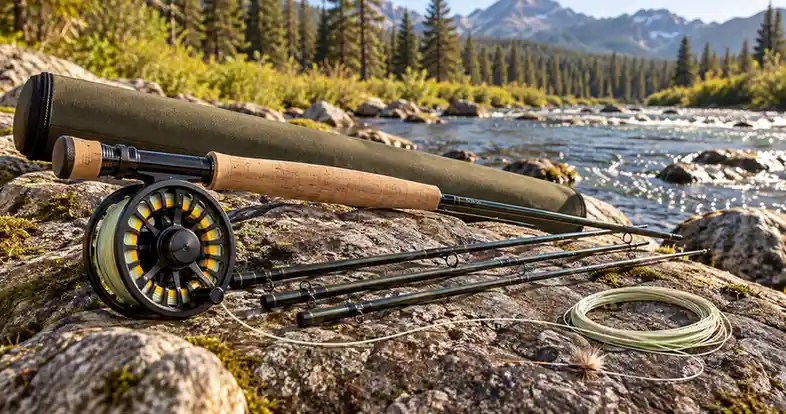
What Should a Fly Fishing Rod and Reel Combo Include?
A fly fishing rod and reel combo can range from two core components to a nearly complete rod-to-leader system.
Do not rely on the product name. Read the package list.
Rod
Check:
- line weight;
- length;
- action;
- number of pieces;
- intended use;
- warranty.
A four-piece rod is common because it packs down conveniently for travel and storage.
Reel
Verify:
- line-weight range;
- capacity;
- drag;
- construction;
- retrieve configuration;
- saltwater suitability if relevant.
Backing
Backing sits underneath the fly line.
It provides reserve line and helps fill the reel to an appropriate level.
If backing is not included, make sure you know what material and amount suit the reel and intended fishing.
Fly Line
Confirm:
- line weight;
- floating or sinking;
- taper;
- exact model if listed.
This can materially affect the value of the package.
Leader
Leader inclusion varies.
A leader makes the package closer to a fishable system, but even then you will still need to choose appropriate flies and maintain the terminal section with tippet when necessary.
Case or Tube
A case protects the outfit during storage and transportation.
Combo cases often allow the reel to remain attached to the lower rod section.
Two Current Examples
The current Orvis Encounter 9-foot 5-weight outfit is priced at $249 and includes a size II Encounter reel, 5-weight fly line, backing, 4X leader, and rod/reel case. Its rod is covered by Orvis’ current five-year guarantee.
The current Orvis Clearwater outfit starts at $479 and includes a Clearwater rod, reel, fly line, and backing, with a 25-year rod guarantee. Its official package list does not present the same leader inclusion as the Encounter.
Neither example is automatically the right choice for you.
They simply show why two products both described as fly-fishing outfits can have different contents, prices, and warranty structures.
What May Still Be Missing
Even a well-equipped fly fishing rod and reel combo may not include:
- tippet;
- flies;
- nippers;
- forceps;
- polarized sunglasses;
- net;
- waders or boots;
- appropriate clothing;
- fishing licence.
FlyFishingScout’s fly fishing gear for beginners guide covers the broader first-trip equipment list.
Fly Fishing Rod and Reel Combo vs Buying Separately
A fly fishing rod and reel combo is not automatically better or worse than choosing individual components.
The best route depends on how much you already know about your preferences.
Advantages of a Combo
A well-designed outfit can reduce:
- compatibility mistakes;
- research time;
- setup decisions;
- separate purchases.
It can also offer package pricing that is attractive compared with buying every component individually.
For a first setup, that simplicity has real value.
Advantages of Buying Separately
Buying individually gives you control over:
- exact rod action;
- reel design;
- physical reel weight;
- fly-line model;
- backing;
- warranty mix;
- budget allocation.
This becomes more useful when you know what you want.
When a Combo Saves Money
A combo can be strong value when it includes components you would have purchased anyway.
Compare the total cost of:
- rod;
- reel;
- fly line;
- backing;
- leader;
- case.
Do not compare a complete package directly with the price of only a rod and reel.
When Separate Components Make More Sense
Buying separately may be better when:
- you already own a suitable reel;
- you want a specific premium line;
- you prefer a particular reel;
- you are building a specialized system;
- the included combo line or reel does not fit your intended use.
Immediate Upgrade Risk
A cheap outfit loses value if you immediately replace the line, reel, or both.
Before buying, ask:
Would I fish the included system as it arrives?
If the answer is no, calculate the upgrade cost before calling the package inexpensive.
Fly Fishing Rod and Reel Combo Buying Mistakes
A fly fishing rod and reel combo can simplify buying, but only if you avoid the most common compatibility mistakes.
Choosing by Brand Alone
A trusted manufacturer can provide good support, but the brand name does not tell you whether a particular rod weight, length, action, and line fit your water.
Read the specifications.
Choosing Rod Weight From Fish Size Alone
Fly size, rig weight, wind, casting distance, and technique all matter.
Choose a rod for the whole fishing job.
Ignoring the Fly Line
A capable rod paired with an unsuitable or poorly matched line can be frustrating.
Find out exactly what line comes with the package.
Ignoring Reel Capacity
The reel needs room for both backing and the complete fly line.
Specialty lines can have different diameters, so capacity should be checked rather than guessed.
Assuming Every Combo Is Complete
The words “combo,” “kit,” and “outfit” do not guarantee identical contents.
One product may include rod and reel only.
Another may include backing, line, leader, and case.
Paying for Drag You Do Not Need
A powerful sealed drag can matter for saltwater or strong-running fish.
It may add little practical value to an ordinary small-stream trout setup.
Buying Saltwater Features for Ordinary Trout
Saltwater-resistant construction, extra capacity, and heavy-duty drag are useful when the environment demands them.
They are not mandatory just because they sound premium.
Assuming More Expensive Means Better Matched
Price can buy better materials, components, warranty, or refinement.
It cannot guarantee that the outfit suits your fishery.
A correctly matched $250 system can be a better purchase for your needs than a $500 outfit designed around a different use.
Fly Fishing Rod and Reel Combo FAQs
What Size Fly Fishing Rod and Reel Combo Should a Beginner Buy?
For many beginners targeting trout and general freshwater fish, a 9-foot 5-weight with a reel rated for 5-weight line is a practical starting point.
Choose something different when your local water, fly size, species, or conditions justify it.
Is a 5-Weight Combo Good for Trout?
Yes. A 5-weight is highly versatile for many trout situations, including dry flies, common nymph rigs, and modest streamers.
Small creeks may favor a 3- or 4-weight, while larger flies, stronger wind, or heavier rigs may make a 6-weight more useful.
Does the Fly Reel Have to Match the Rod Weight?
The reel should be rated to hold the fly-line class used with the rod.
A 5-weight rod normally uses 5-weight fly line and a reel whose published range includes that line.
Reel labels vary among manufacturers, so always check the exact compatibility specifications.
Should a Combo Include Fly Line and Backing?
A more complete combo often includes both, but there is no universal rule.
Check the contents list before purchase.
If the line is included, confirm that its weight and intended use match the rod and your fishing.
Is It Cheaper to Buy a Fly Fishing Combo?
It can be.
Manufacturers often bundle components at a lower total price than purchasing similar pieces separately.
The real comparison should include anything you need to replace or add immediately.
Is a Combo Better Than Buying the Rod and Reel Separately?
A combo is often easier for a beginner because compatibility decisions have already been made.
Separate components provide more customization for an angler who knows the preferred rod action, reel, fly line, and use case.
Neither approach is automatically better.
Fly Fishing Rod and Reel Combo: Final Takeaway
Choose a fly fishing rod and reel combo as a connected system.
Start with the fish, water, flies, and techniques you expect to use. Choose the appropriate rod weight, length, and action. Then confirm that the reel supports the same line class, has enough capacity, and offers the level of drag your fishing requires.
Next, inspect the included fly line, backing, leader, case, and warranty. Do not assume every package contains the same components.
For many trout and general freshwater anglers, a 9-foot 5-weight outfit with a matching reel and weight-forward floating line is a useful baseline. It is not a universal answer.
The right fly fishing rod and reel combo is the one where every component fits both the next component and the fishing job you actually plan to do.
Sources Used
Orvis — Encounter Fly Rod Outfit
Verified the current $249 price for the 9′ 5-weight configuration, size II Encounter reel, 5-weight line, backing, 4X leader, rod/reel case, and current five-year rod guarantee.
Orvis — Clearwater Fly Rod Outfit
Verified the current $479–$519 price range, included Clearwater rod, reel, fly line and backing, rod tube, and current 25-Year Guarantee.
Orvis — Fly Fishing Reels
Used to verify current reel-to-line matching guidance, Orvis reel-size ranges, capacity considerations, and the additional drag/corrosion demands associated with saltwater fishing.
ECHO Fly Fishing — ECHO LIFT
Verified the current $249.99 kit price, 9′ 5-weight LIFT 590 configuration, four-piece construction, 3.7-ounce physical rod weight, and medium-fast action.
Pacific Fly Fishers — How to Choose the Best Fly Rod and Reel Combo
Used as specialist guidance to cross-check the relationship between target species, water type, rod weight, rod length, rod action, and reel matching.