
Fly Fishing for Coho Salmon: Best Flies, Lines, and Techniques
Fly fishing for coho salmon is often a question of getting the fly in front of a fish at the right depth and making it move convincingly. Coho—also called silver salmon—may be easy to spot yet difficult to interest. A bright fly alone cannot compensate for a retrieve that misses their holding water or passes far above them.
This guide explains how to choose streamers and leech-style flies, match floating or sinking lines to your fishing depth, and vary retrieves in freshwater rivers and coastal water. The central approach to fly fishing for coho salmon is simple: find the fish, choose the depth, select a suitable profile, control movement, and adjust based on what happens. Always check the rules for your exact water before making a cast.
Table of Contents
Fly Fishing for Coho Salmon: Quick Answer
Start with a streamer or leech pattern suited to the water, then choose the line that brings it through the fish’s likely holding or feeding depth. In rivers, search seams, slower pool edges, and travel lanes. In coastal water, watch for baitfish, birds, and tidal current boundaries. Change depth or retrieve speed before endlessly switching fly colors.
| Situation | Sensible Starting Approach | First Adjustment if Ignored |
|---|---|---|
| Freshwater pool with holding coho | Leech or mobile streamer on a floating line or suitable sink tip | Adjust depth and strip speed |
| River run with steady current | Swing a streamer through the holding lane | Change swing angle or sink-tip depth |
| Coastal fish chasing bait | Baitfish imitation with an appropriate floating or intermediate line | Change retrieve pace or profile |
| Fish follow and turn away | Keep the fly in their path without rushing | Add a pause or reduce fly size |
| Frequent bottom snags | Presentation may be too deep | Use a shallower line or change angle |
These are starting decisions, not universal rules. What works depends on fish behavior, legal methods, current, tide, and visibility.
Fly Fishing for Coho Salmon: Understanding Their Behavior
Coho vs. Other Pacific Salmon
For fly fishing for coho salmon, the first useful distinction is their life stage. Coho salmon (Oncorhynchus kisutch) are anadromous: they begin life in freshwater, grow at sea, and return to freshwater to reproduce. Fresh ocean-run adults often look bright silver, which explains the name silver salmon. NOAA describes their marine diet as including herring, anchovies, sand lance, and other small fish. Those prey types help explain why mobile baitfish imitations are useful in coastal coho fishing.
Feeding at Sea vs. Returning to Freshwater
A marine coho actively feeding on baitfish is not necessarily behaving like a salmon holding in a river on its spawning migration. Adult Pacific salmon generally reduce or stop feeding after returning to freshwater. They may still strike flies through aggression, curiosity, or another response; a strike should not be taken as proof that a returning fish is feeding normally.
This distinction changes the goal. Along the coast, you may try to imitate prey that fish are actively pursuing. In a river, you may need to place a fly precisely near a fish and experiment with its speed or shape to produce a response.
Why Visible Fish May Not Strike
Seeing a school does not establish that those fish are willing to take. They may be moving, resting, pressured, or focused on a different depth. Repeatedly casting a fly above a holding group can create the illusion that the fly is wrong when the actual problem is presentation.
When fly fishing for coho salmon, check whether your fly is reaching the same lane and depth as the fish before changing a productive-looking pattern.
How Conditions Affect Position
Light, water level, clarity, current, temperature, and nearby cover can change where coho travel or pause. Look for soft water beside stronger flow rather than assuming fish will occupy the deepest part of every pool. In tidal locations, current edges and baitfish movement can be more informative than water depth alone.
Fly Fishing for Coho Salmon in Freshwater
Pools, Seams, and Slower Holding Water
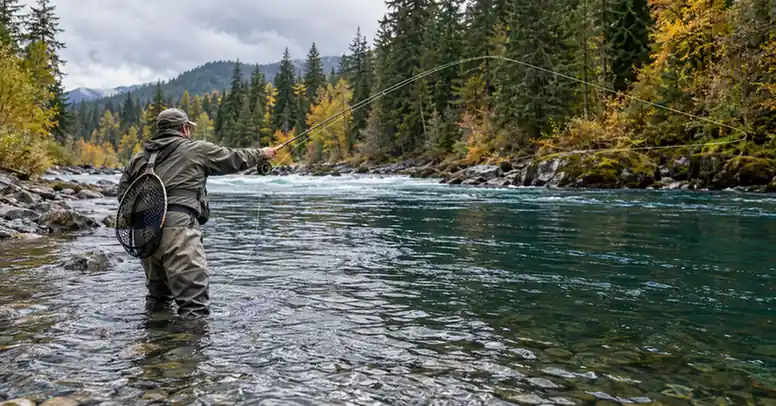
For fly fishing for coho salmon in rivers, start with the water fish can use without fighting the strongest current. Returning coho can hold in pools, slower river margins, current seams, and deeper slots. Start by watching the water without immediately wading in. A visible fish close to your bank may be easier to approach from shore than after you step into its holding lane.
Where to Cast
Make a controlled cast that lets the fly travel through the likely holding zone without repeatedly landing line over the fish. In moderate current, an across-and-down presentation can carry a streamer through a pool edge. In slow water, a shorter cast and deliberate retrieve may give you better control.
Cover nearby fish first, then work farther across the run. Avoid scraping a weighted fly through spawning gravel or repeatedly dragging it into fish rather than offering a voluntary strike.
Presenting Streamers and Leeches
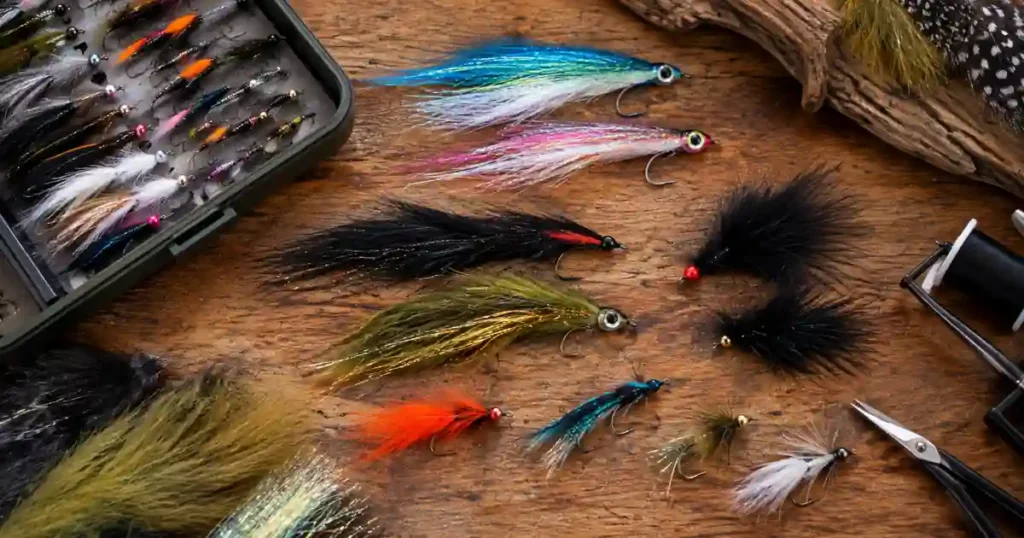
Rabbit-strip leeches, marabou streamers, and baitfish-shaped flies provide movement even when the retrieve is not especially fast. Start with a fly you can control and track. A larger or more visible profile may be useful in stained water, but bright color is not automatically better than a smaller, subtler pattern in clear water.
Fishing Different Depths
If coho are holding several feet below your presentation, change the depth. You can alter your cast angle, allow more sink time, adjust a legally weighted fly, or switch from floating line to an appropriate sink tip. Do not assume the deepest line produces the most strikes: excessive depth makes the fly snag, drag unnaturally, or pass below fish.
When to Move or Change Methods
Give each promising lane several purposeful presentations. If the fly travels correctly through different depths with no response, change one variable—retrieve, profile, or location—rather than everything at once. Move on if fish are absent or repeatedly disturbed.
Fly Fishing for Coho Salmon in Saltwater
Coastal Feeding Behavior
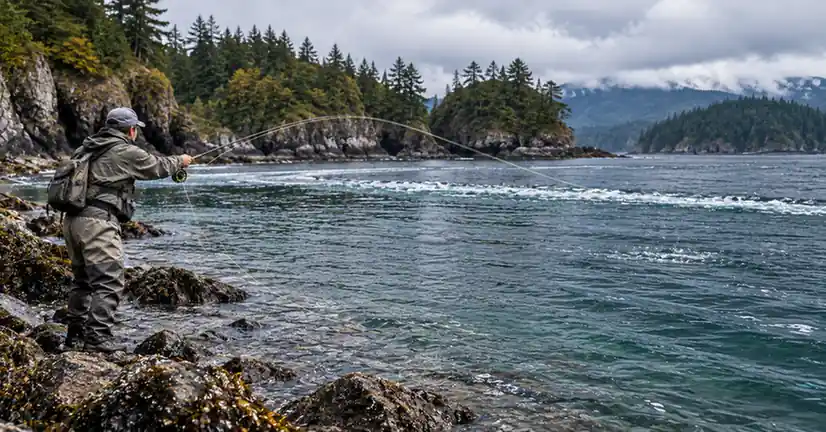
Fly fishing for coho salmon along the coast is often about locating prey activity. Actively feeding marine coho may pursue schools of herring, sand lance, anchovies, or other forage fish. Washington’s fishery guidance points anglers toward feeding activity at tide rips and current boundaries. Birds concentrating over bait and surface splashes can be useful clues, although neither proves coho are present.
Baitfish Concentrations and Tide Rips
A tide rip is a boundary where moving water gathers floating material or prey. Work the edge rather than casting without a target. Watch the direction of travel and allow the fly to pass through the fish’s feeding path instead of pulling it immediately away from them.
Baitfish Imitations
Clouser-style minnows and other slim baitfish flies can be logical coastal choices. White-and-chartreuse, white-and-pink, and natural baitfish tones are useful examples, not guaranteed colors. Match the profile and approximate size of visible forage before buying a box of unrelated patterns.
Fishing from Accessible Shorelines
Coho can sometimes feed within casting range of shore, particularly near current or bait concentrations. That does not establish public access to any specific beach or that every shore is safe to wade. Verify entry permissions, tides, surf conditions, and local rules. Keep a safe route back as the tide changes.
How Coastal Retrieves Differ
In coastal water, vary stripped retrieves to imitate a fleeing or wounded baitfish. Short quick strips can suggest darting prey; longer pulls and pauses can keep a fly visible to following fish. The right retrieve depends on water movement, fly design, and actual fish response.
Fly fishing for coho salmon near saltwater also exposes reels, hooks, and tools to corrosion. Rinse equipment following manufacturer instructions after the outing. For the broader setup and care checklist, see our guide to saltwater fly fishing gear.
Best Flies for Coho Salmon
A smart fly selection for fly fishing for coho salmon covers different situations instead of relying on one magic pattern. No single fly wins everywhere. A compact selection should cover different profiles, sizes, depths, and amounts of movement rather than dozens of nearly identical colors.
Clouser Minnows and Other Baitfish Imitations
Clouser-style minnows are a sensible coastal choice when coho are pursuing smaller fish. Weighted eyes can influence how these flies sink and swim, but heavy versions can be awkward in shallow water. Choose a hook and fly size that fit your rod, the local prey, and the applicable rules.
Leech-Style Patterns
Rabbit-strip leeches and similar flies create strong movement with relatively little effort. Patterns such as the Dolly Llama or other mobile leech-style flies are familiar options in Alaska-focused coho instruction. Use them as examples of a profile and presentation, not a promise that a particular named pattern will outperform everything else.
Woolly Buggers and Related Streamers
A Woolly Bugger or marabou-bodied streamer can offer an easy-to-control alternative. In freshwater, it may be easier to fish accurately than a very large articulated fly. Consider dark tones, brighter attractors, and modest changes in size, then choose the version that behaves correctly at the depth you need.
Egg-Sucking Leech Variations
Egg-sucking leech-style patterns combine a mobile body with a contrasting head. They are commonly discussed in salmon and steelhead fishing, but their usefulness is situation-dependent. Check local fly and hook restrictions and avoid any snagging-oriented presentation.
Surface Patterns in Suitable Conditions
Some coho, especially in suitable estuary or slower-water situations, may respond to a surface popper or skating fly. These tactics are less universally applicable than streamer approaches. The disturbance can attract fish in some conditions and alarm them in others, so start carefully when fish are holding close.
Size, Profile, and Color
Choose the fly in this order: correct depth, manageable size, visible profile, useful movement, then color. In low visibility, a contrasting or larger profile may help fish locate it. In clearer or pressured water, try a smaller or less aggressive pattern. Color matters, but it should not replace attention to presentation.
Fly Fishing for Coho Salmon: Floating vs. Sink-Tip Lines
Fly fishing for coho salmon becomes easier to troubleshoot when you think of line choice as depth control. The appropriate line is the one that lets the fly travel through the intended zone while you can still cast, retrieve, and manage the current.
When a Floating Line Is Enough
A floating line can work in shallow river pools, along current edges, with appropriately weighted flies, and for surface patterns. It is also useful for some indicator or controlled-drift techniques where local rules permit them. You do not need a sink tip simply because your target species is salmon.
When a Sink Tip Makes Sense
A sink-tip line sinks its forward section while the rear line remains floating or higher in the water. It can help keep streamers down in a moving river or along a deeper travel lane without committing the entire line to a full-sinking presentation.
Different tips sink at different rates. In current, the fly’s actual depth also depends on swing angle, tension, current speed, leader, and retrieve. Printed sink rate alone will not tell you exactly where the fly fishes.
Intermediate Lines for Coastal Presentations
An intermediate line can be useful when you want a slow subsurface retrieve through coastal water rather than a floating presentation. Faster sinking lines can help with deeper fish, but they can also lead to unwanted bottom contact. Match the line to the depth and water conditions you can realistically fish.
A Depth-First Line Choice
| What You Need | Line to Consider | Caution |
|---|---|---|
| Shallow river streamer or surface presentation | Floating | Weighted fly may still sink |
| River streamer below the surface | Suitable sink tip | Current changes effective depth |
| Slow subsurface coastal retrieve | Intermediate | Not ideal for every shallow shoreline |
| Deeper open-water presentation | Appropriate sinking system | More difficult line pickup and bottom risk |
Do not buy several specialty lines before learning what depth problem you actually need to solve. For help with line weights, density, and tapers, see our guide to choosing the right fly fishing line.
Fly Fishing for Coho Salmon: Retrieves and Presentations
When fly fishing for coho salmon, retrieve choice determines how long the fly stays near fish as well as how it looks. The retrieve is how you control the fly’s speed and apparent behavior. Fly fishing for coho salmon does not require one universal stripping rhythm; a response to a particular motion is information you can use.
Short Strip Retrieves
Cast to the intended lane, allow the fly to settle as needed, and retrieve it with short, controlled strips. Keep enough tension to detect a take without pulling the fly so quickly that it leaves the target zone immediately.
Longer Strips and Pauses
Try a longer pull followed by a brief pause. If a fish follows without taking, a change of pace may sometimes alter its response. A following fish does not always mean the next faster strip is correct; slower movement or a smaller fly can also be worth trying.
Swinging Streamers
Cast across and slightly downstream where permitted and let the current carry the fly in an arc. Control slack so the fly maintains a believable path and you can detect a strike. The angle and sink tip determine where the fly swings through the run.
Slow Presentations
Fish holding in slow water may not respond to a fast-moving fly. Try shorter strips with longer pauses, a slower swing, or a carefully controlled drift when that method is legal and appropriate. Do not deliberately drag a fly into fish to create a false hookup.
Watching for Follows and Refusals
Watch the water near the fly when visibility allows. A chase, flash, or turn can help you distinguish “fish noticed it” from “fly passed unseen.” Even then, you cannot know exactly why a fish refused. Make a measured adjustment rather than assuming a particular behavior proves a universal rule.
Demonstration: Strips and Pauses
The Orvis Learning Center lesson titled Streamer Retrieves demonstrates short strips and alternative streamer movements. It is a general streamer video, not coho-specific testing; the lesson is listed in References for optional viewing.
Fly Fishing for Coho Salmon When Fish Won’t Bite
When coho are visible but unresponsive, changing patterns repeatedly is usually a poor first diagnostic step. Check whether the fish can actually see and reach the fly as it passes.
Check Whether the Fly Reaches the Fish
Compare the fish’s holding position with the fly’s estimated path. If it passes above the school, allow a longer sink period or choose a line suited to greater depth. If it scrapes the bottom, go shallower. This is a judgment based on observed water and presentation, not an exact depth measurement.
Change Retrieval Speed
Try a short sequence: several short strips, then longer pulls with pauses, then a slower presentation. Keep the same fly and casting lane while comparing responses. If fish follow, note which movement drew interest.
Try a Smaller or Less Aggressive Profile
A bulky bright fly may be appropriate in stained water yet too intrusive for some clear pools. Test a smaller, slimmer, or more natural-looking version. The reverse can be useful if a subtle fly goes unnoticed in poor visibility.
Reassess Angle and Position
Changing where you stand can make more difference than changing what you tie on. Approach quietly, keep line away from holding fish where possible, and aim the fly through the lane from a different angle. Never enter restricted or unsafe water simply to improve a cast.
Avoid Disturbing Holding Fish
Repeated casting over stationary fish, wading into a school, or snagging salmon is not a productive or responsible solution. If the fish appear close to spawning or the water is closed, leave them alone. Give a pool a reasonable number of clean passes, then reassess or move.
A Simple Troubleshooting Order
- Verify that salmon fishing is open and the method is legal.
- Identify the likely fish lane and depth.
- Make clean presentations at that depth.
- Change retrieve speed or pause length.
- Change fly size or profile.
- Move when the fish or water no longer justify repeated casts.
This is the repeatable core of fly fishing for coho salmon: adjust based on observed conditions rather than assuming one secret fly will solve every refusal.
Fly Fishing for Coho Salmon: Rod, Reel, and Leader Setup
Rod Weight Based on Flies and Conditions
A 9-foot 8-weight single-hand rod is a common general coho reference, particularly for larger streamers and coastal wind. Lighter rods may suit calmer or smaller-fly situations, while heavier tackle may be appropriate for demanding conditions. The rod must match the fly line you actually intend to cast.
Reel Capacity and Drag
Coho can make strong runs, so choose a reel with smooth drag and suitable backing capacity. Avoid imposing one backing amount on every reel or fishery; check the manufacturer’s capacity chart and local expectations. Saltwater fishing also makes corrosion resistance and equipment care more important.
Our guide to choosing the right fly reel explains drag, arbor size, backing, and line-weight compatibility in more detail.
Leader and Tippet Considerations
A shorter, stronger leader may turn over a large streamer more comfortably than a long delicate trout leader. Length and breaking strength depend on fly size, water clarity, abrasion, and the intended method. Match leader materials and hook configuration to local restrictions, especially where particular weights or presentations are prohibited.
Keep the Setup Technique-Focused
You do not need a separate rod for every coho fly. Start with one compatible rod, reel, line, and leader system. Add a second line or specialized tackle only when your regular water creates a clear reason.
Fly Fishing for Coho Salmon: Seasons and Water Conditions
Regional Migration Differences
Timing is one of the biggest regional variables in fly fishing for coho salmon. There is no universal North American coho fishing season. Runs reach different Alaska, Washington, and British Columbia waters at different times, and legal opening dates can be narrower than the periods when fish are present. Marine resident and migratory fisheries also have their own timing.
Freshwater Flow and Clarity
Rain can change both access and fishing conditions quickly. High or dirty water may shift the useful holding lanes or make a highly visible fly easier to locate; low, clear water can demand quieter approaches and smaller presentations. Neither condition guarantees active fish.
Coastal Tides and Baitfish Activity
In saltwater, look at tides, current boundaries, bait concentration, and birds as clues. Do not rely only on a published seasonal average: today’s wind, water clarity, access, and regulations affect the actual outing.
Why Dates Are Not Universal
A month described as productive in one river may be closed or unproductive elsewhere. Research the precise fishery and check fresh local reports for conditions; always verify the legal season with the fisheries authority.
Coho Salmon Regulations and Responsible Fishing
Before fly fishing for coho salmon, verify the rules for the exact water rather than relying on a general guide. Rules can change during a season, sometimes with only a narrow water-body or date range affected. Verify your licence, permitted hooks and weights, seasons, closures, retention rules, and boundaries for the exact water you plan to fish.
Alaska
Alaska Department of Fish and Game emergency orders are not interchangeable across drainages. For example, its 2026 Southcentral listings include coho no-retention measures in the Susitna and Little Susitna drainages. That is a specific example, not a statewide rule.
Washington
Washington Department of Fish and Wildlife publishes its annual rules and emergency updates. In October 2026, listed changes included river closures and fishery-specific adjustments. Check both the statewide pamphlet and the current emergency rules before fishing any named river or marine area.
British Columbia
Fisheries and Oceans Canada separates tidal and non-tidal management by area. Its 2026 notices show different coho retention conditions among waters and describe barbless-hook rules and additional coastwide tidal gear restrictions. Do not transfer a rule from one region to another, and check the current notice on the day you fish.
Responsible Presentation and Handling
Use legal methods intended to prompt a voluntary take, not to snag or foul-hook salmon. Avoid trampling redds (spawning nests), disturbing actively spawning fish, or making repeated casts into concentrated spawners. When release is required, minimize handling, keep fish in the water as much as practical, and follow local release guidance.
Fly Fishing for Coho Salmon FAQs
What Are the Best Flies for Coho Salmon?
Useful starting categories include baitfish imitations, Clouser-style minnows, leech patterns, and marabou streamers. Which works best depends on fish position, visibility, movement, water type, and local conditions. Carry different profiles rather than trusting one universal color.
Do Coho Salmon Take Flies in Freshwater?
Yes, coho may strike flies in freshwater even though adults returning to spawn generally stop feeding normally. Controlled streamer presentations and other legal techniques can draw strikes, but visible fish are not always willing to respond.
Is a Floating or Sink-Tip Line Better?
Use floating line when it can place the fly at the intended depth, including shallow or surface presentations. Consider a sink tip when you need to keep a streamer deeper in moving water. Neither line is automatically better everywhere.
Why Do Coho Follow Flies Without Striking?
A follow shows that a fish noticed or tracked the presentation, not why it refused. Possible adjustments include depth, retrieve speed, pauses, fly size, and casting angle. Change one variable at a time rather than claiming you know the fish’s motivation.
What Rod Weight Is Suitable for Coho?
An 8-weight is a common all-around reference for fly fishing for coho salmon. Match the line and fly size to the rod and consider wind, water type, and fishery conditions. Local experts may recommend lighter or heavier systems for particular applications.
When Is Coho Salmon Fly Fishing Season?
Timing varies by region and individual fishery. A coho run may occur when angling is restricted or closed. Check the exact date, water, licence, and emergency regulations with the responsible Alaska, Washington, or British Columbia authority before fishing.
Fly Fishing for Coho Salmon: Final Takeaway
Successful fly fishing for coho salmon begins with a sensible presentation rather than an enormous fly box. Locate fish, bring a suitable fly through the correct depth, watch for a response, and adjust retrieve, profile, or position deliberately.
Coastal baitfish feeding and freshwater holding fish may call for different approaches. Choose tackle that controls your fly in the water you actually fish, protect spawning salmon, and confirm the current local rules before every trip.
References
NOAA Fisheries — Coho Salmon: Science
Coho life history, anadromous migration, marine diet, and freshwater spawning behavior.
U.S. Geological Survey — Questions and Answers About Salmon
Pacific salmon feeding and spawning behavior during freshwater migration.
Washington Department of Fish and Wildlife — Salmon Fishing in Marine Areas
Marine coho fishing, baitfish imitations, tide rips, and coastal fly-fishing considerations.
Alaska Fly Fishing Goods — Fly Fishing 101: Silver Salmon
Specialist coho techniques, fly patterns, typical rod choices, stripping presentations, and freshwater methods.
Orvis Learning Center — Streamer Retrieves
Verified video demonstration of basic streamer retrieves and presentation changes.
Orvis — Should I Use a Sink-Tip or Full-Sink Fly Line?
Differences among floating, sink-tip, and sinking-line applications.
Alaska Department of Fish and Game — Emergency Orders and Press Releases
Official 2026 regional emergency orders, including specified coho-retention restrictions.
Washington Department of Fish and Wildlife — Emergency Fishing and Shellfishing Rules
Current emergency-rule listings and changes to Washington fishing regulations.
Fisheries and Oceans Canada — 2026 Coastwide Tidal-Water Gear Requirements
Official September 2026 tidal-water gear measures and barbless-hook requirements.
Fisheries and Oceans Canada — 2026 Coho Management Measures for the Stamp and Somass Rivers
An example of water-specific coho retention and fisheries management.