
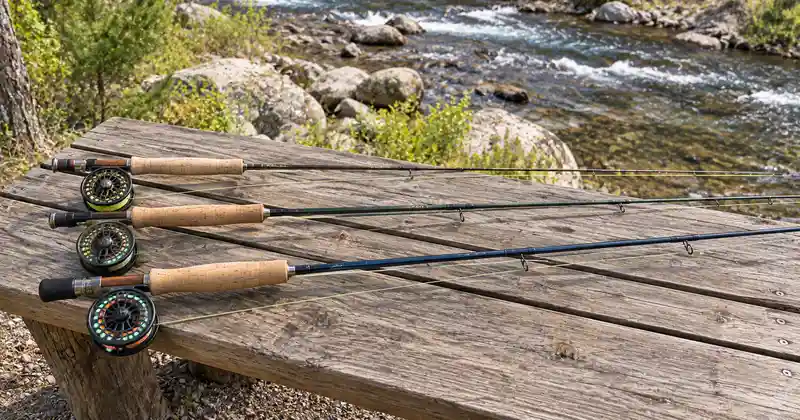
Fly Fish Pole: How to Choose the Right Fly Rod
A fly fish pole is normally called a fly rod, and choosing the right one starts with the fishing you plan to do—not the brand name or the highest price. Focus first on the fish you expect to target, the flies and rigs you need to cast, and the type of water you fish most often. Then choose the rod’s weight, length, and action.
For many trout anglers, a 9-foot 5-weight is a practical starting point because it can handle dry flies, many nymph rigs, and smaller streamers. But it is not a universal answer. Tight creeks, very large flies, stronger fish, and specialized techniques may call for a different rod.
Table of Contents
A simple buying order is:
Fish → Flies → Water → Rod Specs → Budget
What Does “Fly Fish Pole” Mean?
If you searched for a fly fish pole, the product you are looking for is generally sold as a fly rod or fly fishing rod.
The terminology matters because fly rods work differently from conventional spinning or baitcasting rods. In fly casting, the fly line provides much of the mass used to carry the fly through the cast. That is why fly rods are commonly labeled by a line-weight class such as 3-weight, 5-weight, or 8-weight.
A 5-weight fly rod does not mean the rod physically weighs five ounces or five pounds. It means the rod is designed around a 5-weight fly line. Physical rod weight, when a manufacturer lists it, is a separate specification. Current fly-rod buying guidance similarly treats line weight, length, and action as the three core specifications a buyer should understand.
Start With the Fish, Flies, and Water
Before comparing rods, answer three questions.
- What fish will you target most often?
- What flies and rigs will you cast?
- What kind of water will you fish most?
These questions narrow the choices much faster than starting with brands.
A trout angler making short casts on a brushy creek has different needs from an angler fishing larger rivers with indicator rigs and streamers. Someone casting bulky bass bugs has different requirements from someone presenting tiny dry flies.
Match the Rod to the Flies You Cast
Fish size matters, but so does the fly.
Small dry flies generally require less line mass to cast effectively than large, heavy, or wind-resistant flies. A heavier rod-and-line system can make it easier to turn over larger streamers, weighted rigs, or bulky flies.
That is why choosing only by target species can be misleading.
For example, two anglers may both target trout. One primarily fishes small dries on a creek, while the other regularly casts weighted nymph rigs and streamers on larger rivers. They may be better served by different rods even though the target fish is the same.
If you are still deciding which fly styles you are likely to use, our guide to choosing the right fly fishing flies explains dry flies, nymphs, wet flies, streamers, and where each type fits.
Fly Rod Weight: The Most Important Number
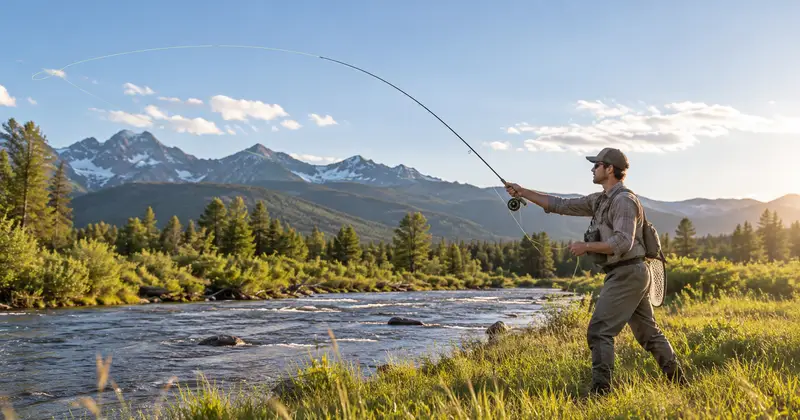
Fly rod weight is one of the first specifications to choose because it affects the line the rod is designed to cast and the kinds of flies and fishing situations it can comfortably handle.
These are practical starting points, not strict species rules:
| Rod Weight | Common Starting Uses | Main Trade-Off |
|---|---|---|
| 2–3 weight | Small streams, small trout, panfish, delicate flies | Limited with larger flies, wind, and heavier rigs |
| 4 weight | Light trout fishing, dry flies, smaller rivers | Less power for bulky flies and heavier setups |
| 5 weight | General trout, dries, nymphs, smaller streamers | Not ideal for every tiny creek or large-fly situation |
| 6 weight | Larger trout rigs, streamers, some bass fishing | Less delicate than lighter trout rods |
| 7–8 weight | Larger flies, bass, stronger fish, many heavier applications | More rod and line than needed for light trout fishing |
| 9 weight and up | Specialized larger-fish and heavy-fly applications | Usually excessive for ordinary trout fishing |
Actual choices depend on fly size, wind, fish, water, and technique.
Why a 5-Weight Is So Common
A 9-foot 5-weight appears frequently in current beginner guidance because it covers a wide range of ordinary trout fishing. Trident currently describes that configuration as a classic starting point for trout rivers, dry flies, nymph rigs, and lighter streamers.
Its appeal is versatility.
A 5-weight can give a new trout angler enough capability to learn several techniques without buying a specialized rod for each one immediately.
When a 5-Weight Is the Wrong Choice
Do not buy one automatically just because it is commonly recommended.
A lighter or shorter rod may make more sense if you mainly fish:
- Tiny brushy creeks
- Small trout
- Short casting distances
- Delicate dry flies
A heavier rod may make more sense if you primarily cast:
- Large streamers
- Bulky bass bugs
- Heavier rigs
- Wind-resistant flies
- Flies for substantially larger fish
The best fly fishing pole for one angler can therefore be a poor fit for another.
Fly Rod Length: How Much Reach Do You Need?
After rod weight, consider length.
Rod length affects line control, reach, casting room, and how easily the rod fits into the places you fish.
Shorter Rods
Shorter rods can make sense on small streams with trees, brush, and limited casting room.
They can also feel more appropriate when most casts are short and long-distance line control is not a priority.
The trade-off is reduced reach compared with a longer rod.
Around 9 Feet
A rod around 9 feet is common because it balances casting, mending, line control, and manageable handling across many freshwater situations.
This is one reason the 9-foot 5-weight is so common in trout gear.
It gives enough length for useful line control on rivers without becoming a highly specialized long rod.
Longer Rods
Longer rods can provide additional reach and line-control advantages.
They are particularly useful in some nymphing techniques and situations where keeping more line off conflicting currents helps presentation.
But longer does not automatically mean better or farther-casting.
Extra length can be unnecessary in tight streams and may make a rod feel less convenient where vegetation limits your casting space.
Fly Rod Action: Fast, Medium, or Slow?
Rod action describes how and where a rod flexes and recovers during casting and under load.
Manufacturers typically use terms such as fast, medium, medium-fast, and slow, but these terms are not perfectly standardized across every brand.
Orvis describes action in terms of flex pattern, stiffness, and recovery and notes that choosing an action is a personal part of rod selection.
Fast Action
A fast-action rod generally concentrates more flex toward the tip while retaining greater stiffness farther down the blank.
Fast rods can suit:
- Wind
- Larger flies
- Anglers who prefer a quicker casting stroke
- Situations requiring higher line speed
The trade-off is that some beginners may find it harder to feel the rod load and develop timing.
Medium and Medium-Fast Action
Medium and medium-fast rods provide a middle ground between deeper-flexing rods and very fast designs.
For many beginners, that added feedback can make casting timing easier to feel.
Current beginner guidance from Trident specifically notes that many beginner-oriented rods use moderate to medium-fast actions because they provide more noticeable loading and a larger timing window.
That does not mean every beginner must buy a medium-action rod. Casting style and personal preference matter.
If you are learning the mechanics of the cast, our guide to how to cast a fly rod covers the basic casting motion and timing.
Slow Action
Slower-action rods flex deeper into the blank.
They can work well for:
- Shorter casts
- Delicate presentations
- Small streams
- Anglers who enjoy a slower casting rhythm
They are not automatically outdated or inferior.
Fast action is not an upgrade from medium or slow action. They are different design choices for different fishing and casting preferences.
Match the Rod, Reel, and Fly Line
A fly rod is one part of a system.
At minimum, you need to think about:
Rod → Reel → Fly Line → Leader/Tippet → Fly
If you buy a 5-weight rod, a 5-weight fly line is normally the logical starting match unless the rod or line manufacturer gives a specific reason to do otherwise.
The reel must also be appropriately sized to hold the fly line and backing while balancing reasonably with the rod.
Do not assume every manufacturer’s reel-size numbering system means exactly the same thing. Check the listed line-capacity range.
For a deeper explanation, see our guide to choosing the right fly fishing reel.
Graphite vs. Fiberglass Fly Rods
Rod material can influence weight, flex, durability characteristics, and how the rod feels, but material alone does not tell you whether a rod is good.
Graphite and Carbon-Fiber Rods
Graphite-based construction dominates much of the modern fly-rod market.
It can be used to produce many different actions, from relatively moderate rods to very fast designs.
That makes “graphite” too broad to use as a buying decision by itself. Compare the actual rod’s action and intended use.
Fiberglass Rods
Fiberglass rods are often associated with deeper flex and slower casting rhythms.
They can be appealing for:
- Small streams
- Short-range fishing
- Delicate presentation
- Anglers who like more pronounced rod flex
But fiberglass is not automatically easier for every beginner.
Rod design still matters, and casting preference is personal.
Bamboo rods also exist, but they are more specialized and are not necessary to understand when buying a typical first fly rod.
How Many Pieces Should a Fly Rod Have?
Four-piece fly rods are extremely common today.
Their biggest practical advantage is simple: they break down into a shorter package for storage, car travel, hiking, and air travel.
Current beginner guidance from Trident also describes four-piece rods as a modern standard because they are easier to transport and store.
Some rods use two, three, five, or other section counts.
Do not assume fewer pieces automatically means a better-performing rod. Modern rod quality depends on the complete design, not section count alone.
Rod Only vs. Complete Fly Rod Outfit
You also need to decide whether to buy only the rod or a complete outfit.
Buy the Rod Only When
A rod-only purchase makes sense when:
- You already own a compatible reel
- You already have suitable fly line
- You want to choose each component separately
- You are upgrading an existing setup
This gives you more control over every component.
Buy a Complete Outfit When
An outfit can make more sense when:
- This is your first setup
- You do not already own a compatible reel or line
- You want to simplify component matching
- You prefer one purchase that gets most of the setup assembled
Always check exactly what an outfit includes.
“Outfit” does not guarantee that every manufacturer includes the same components.
What Should a Beginner Prioritize?
A fly rod for beginners does not need the most advanced materials or the highest price.
Need to Get Right
Prioritize:
- Appropriate line weight
- Suitable rod length
- An action you can cast comfortably
- Ability to handle your typical flies
- Suitability for your target fish
- Compatible reel
- Compatible fly line
- Reasonable warranty or repair support
Nice to Upgrade Later
You can decide later whether premium features matter enough to justify the cost:
- Higher-end blank technology
- Premium guides and hardware
- Lower physical weight
- Specialized tapers
- Premium cork
- Cosmetic finishes
- Specialized technique-specific designs
A rod that matches your fishing is more useful than an expensive rod designed for a job you rarely do.
Current Fly Rod Examples by Use Case
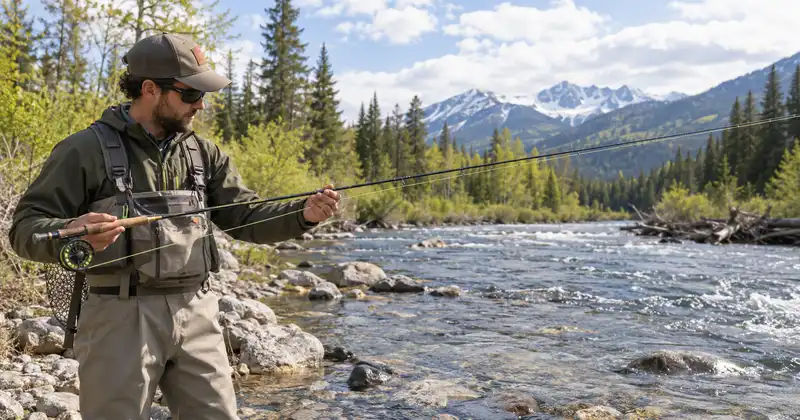
These current rods illustrate different design choices. They are not a universal best-to-worst ranking.
Redington Wrangler 590-4 — Medium-Fast 5-Weight Example
The current Redington Wrangler 590-4 is a 9-foot, 5-weight, four-piece rod. Redington lists it with a medium-fast action and supplies a protective nylon carrying tube. The manufacturer positions this specific model as an all-around trout rod capable of handling dries, nymphs, buggers, and indicator fishing.
That makes it a useful example of the classic general-purpose trout configuration.
Who it may suit: An angler who wants one 5-weight for varied trout techniques.
Main limitation: A general-purpose 5-weight will not replace a short light creek rod or a heavier rod intended for large flies and bigger species.
Redington — Wrangler 590-4
Orvis Clearwater 9′ 5-Weight — Versatile Freshwater Example
The current Orvis Clearwater 9-foot 5-weight is designed as a freshwater rod for larger trout water and general 5-weight fishing. Orvis lists a rod tube and a 25-year guarantee for the current model and describes the Clearwater freshwater range as using purpose-built actions, including medium-fast freshwater designs.
This is another example of why specifications should be considered as a package rather than looking only at “5-weight.”
Who it may suit: Trout anglers who want a current 9-foot 5-weight with manufacturer-backed long-term repair support.
Main limitation: It is still a general freshwater rod; anglers committed to highly specialized small-stream or heavy-fly fishing may want something different.
Orvis — Clearwater 9′ 5-Weight Fly Rod
ECHO Carbon XL 590-4 — Moderate-Action Example
The current ECHO Carbon XL 590-4 is also a 9-foot, 5-weight, four-piece fly rod, but ECHO describes the Carbon XL series as moderate action. The manufacturer lists the 590-4 at 3.5 oz and positions it for dry flies, nymphs, small streams, and lakes.
That makes it particularly useful for understanding an important buying lesson:
Two rods can both be 9-foot 5-weights and still have different actions and casting feel.
Who it may suit: Someone looking for a more moderate-action all-around freshwater option.
Main limitation: An angler who strongly prefers a faster casting feel or regularly throws much larger flies may favor another design.
ECHO — Carbon XL Fly Rod
Orvis Encounter 9′ 5-Weight — Complete Outfit Example
The current Orvis Encounter 9-foot 5-weight Outfit takes a different approach because it is sold as a complete system.
Orvis currently lists the outfit as a four-piece 9-foot 5-weight with a size II Encounter reel, 5-weight fly line, backing, 4X leader, and rod/reel case. The current Encounter rod carries a five-year warranty for the original owner under the stated terms.
That removes several compatibility decisions from a first purchase.
Who it may suit: A beginner who does not already own a reel, line, or backing and wants a matched setup.
Main limitation: An outfit gives you less freedom to choose every component separately.
Orvis — Encounter 9′ 5-Weight Outfit
Common Fly Rod Buying Mistakes
Assuming a Higher Rod Weight Is Better
A heavier line-weight rating is not a quality ranking.
Choose enough rod for your flies, fish, and conditions without buying unnecessary power.
Confusing Rod Weight With Physical Weight
A 5-weight describes the fly-line class the rod is designed around.
The rod’s actual physical weight is a different specification.
Automatically Buying a 5-Weight
The 9-foot 5-weight is versatile, but it is not the answer to every type of fly fishing.
Start with your actual water and flies.
Ignoring the Flies You Will Cast
A rod selected only by fish species can be a poor match if you regularly cast large or heavy flies.
Ignoring Length
A great 9-foot river rod may be inconvenient on a tiny overgrown creek.
Assuming Fast Action Means Better
Fast action is a design characteristic, not a quality grade.
Choose the action that works with your fishing and casting style.
Buying for Maximum Casting Distance
Many real fishing situations depend more on control, presentation, accuracy, and line management than extreme distance.
Do not choose a rod around distance claims you may rarely need.
Forgetting the Reel and Line
Buying a rod without planning the rest of the system can create compatibility problems or unnecessary additional purchases.
Paying for Features You Will Not Use
Premium construction can be worthwhile, but only if its advantages matter to you.
A properly chosen simpler rod can be more useful than a premium specialty rod that does not fit your fishing.
Quick Fly Rod Buying Checklist
Before buying, ask:
- What species will I fish for most?
- What flies and rigs will I cast?
- What water will I fish most often?
- Which fly-line weight fits those uses?
- What rod length fits the water?
- What action feels appropriate for my casting experience?
- Do I need a rod only or a complete outfit?
- Is my reel compatible with the line and rod?
- Does my fly line match the rod?
- Will a four-piece rod make storage and travel easier?
- What warranty or repair support is available?
- Am I paying for features that actually help my fishing?
- Can I cast the rod before buying when practical?
If you can answer those questions, choosing a fly fish pole becomes much easier than comparing dozens of models by brand name alone.
FAQs
Is a Fly Fish Pole the Same as a Fly Rod?
Yes. “Fly rod” or “fly fishing rod” is the standard term used by manufacturers and anglers. Someone searching for a fly fish pole is generally looking for the same piece of equipment: the rod designed to cast a fly-line system.
What Fly Rod Weight Should a Beginner Get?
For general trout fishing, a 5-weight is a common starting point because it can handle many dry flies, nymph rigs, and smaller streamers. If you mainly fish tiny creeks or use very large flies, another weight may be more appropriate.
Is a 5-Weight Fly Rod Good for Beginners?
It can be an excellent first rod for someone focused on ordinary trout and similar freshwater fishing. It is less suitable when your primary fishing involves tiny streams, very large flies, powerful fish, or specialized techniques.
What Is a Good Fly Rod Length for a Beginner?
Around 9 feet is a practical general-purpose length for many freshwater anglers because it provides useful casting and line-control reach. Shorter rods can make more sense on tight, brushy streams.
Is Fast or Medium Action Better for a Beginner?
Neither is universally better. Many beginners find moderate or medium-fast actions easier to feel during the casting stroke, while faster rods can suit anglers who prefer quicker timing or need more line speed in certain conditions.
Should a Beginner Buy a Fly Rod Outfit?
A complete outfit can simplify a first purchase because the rod, reel, and line are selected as a compatible system. Buying components separately provides more customization but requires you to understand each component’s specifications.
Final Takeaway
The right fly fish pole is not simply the most expensive rod or the model with the strongest specifications.
Start with fish, flies, and water. Then choose the appropriate rod weight, length, and action, make sure the reel and fly line match, and set a budget based on features that genuinely help your fishing.
For a general trout angler, a 9-foot 5-weight is a sensible place to begin comparing rods. For anyone whose fishing is more specialized, let the actual fishing job—not the popularity of that setup—determine the final choice.
Sources Used — Not Part of the Article:
- Trident Fly Fishing — How to Choose a Fly Rod: The Complete Guide — current guidance on fly-line weight, rod length, action, fly size, and beginner rod selection.
Trident Fly Fishing — How to Choose a Fly Rod - Trident Fly Fishing — Beginner Fly Rods — current guidance on the 9-foot 5-weight, beginner-friendly actions, rod-only vs. outfit decisions, and four-piece rods.
Trident Fly Fishing — Beginner Fly Rods - Orvis — Choosing the Right Action in a Fly Rod — definitions and practical differences among fast-, medium-, and slow-action rods.
Orvis — Choosing the Right Fly Rod Action - Redington / Far Bank — WRANGLER 590-4 — current manufacturer specifications for the 9-foot 5-weight Wrangler, including four-piece construction, medium-fast action, carrying tube, and intended trout applications.
Redington — Wrangler 590-4 - Orvis — Clearwater Fly Rod, 9′ 5-Weight — current manufacturer specifications, intended freshwater use, rod tube, and 25-year guarantee.
Orvis — Clearwater 9′ 5-Weight Fly Rod - ECHO Fly Fishing — Carbon XL — current manufacturer specifications for the Carbon XL 590-4, including 9-foot length, 5-weight rating, four-piece construction, 3.5-oz listed weight, moderate action, and intended uses.
ECHO — Carbon XL Fly Rod - Orvis — Encounter Fly Rod Outfit, 9′ 5-Weight — current manufacturer specifications for the complete outfit, included reel, line, backing, leader, case, and five-year warranty.
Orvis — Encounter 9′ 5-Weight Outfit