
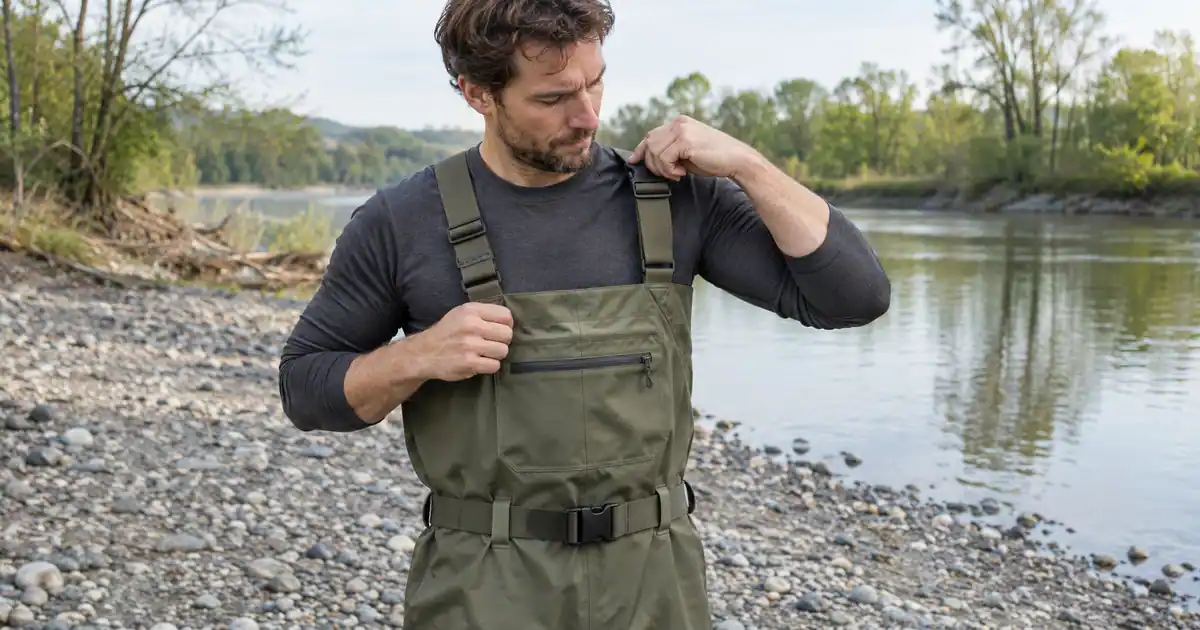
chest waders: Compare Coverage, Fit and Features for Fishing
Choose chest waders when you want more upper-body coverage than waist-high or hip waders provide. Then compare how the bib, suspenders, pockets, and belt work together while you move. A pair can match the size chart and still be a poor fit if the bib pulls every time you step high or your pack blocks the one pocket you need.
Table of Contents
When chest waders offer useful coverage
Chest-high wader coverage is useful when you expect splashes or spray above your waistband, or when you want a covered bib over your layers on a cool, exposed day. For shallow, warm outings with a lot of walking, a waist-high cut leaves more of your upper body open. Hip waders cover each leg separately and make sense when you can keep your route in genuinely shallow water.
Think about where you actually enter and exit, how much walking you do, and whether you fish from dry banks for much of the day. If most of the trip involves hiking between easy banks, you may spend more time carrying the extra bib and adjusting straps than using the additional coverage. The pant wader comparison can help if the waist-high option fits that routine.
A high bib does not define a safe depth. Current speed, footing, temperature, and an available exit matter before you step in. Keep the wading belt properly fitted when wading and avoid entering where the current or footing makes standing or retreating uncertain. The National Park Service’s river safety guidance is a good reminder that even rocks at the edge can be slippery.
As an Amazon Associate, we earn from qualifying purchases. FlyFishingScout may earn a commission on qualifying purchases at no extra cost to you.
🎣 Check belt fit with your wading layers. fishpond South Fork Fly Fishing Wading Belt The belt has an integrated net slot for anglers who want to carry a net at the waist. Check the fit over your chest waders and follow the wader maker’s belt instructions. See Belt & Check Price ➜
Think through a full morning before choosing how much coverage you need. Picture walking from the car in a warm layer, fishing two bank spots, then crossing a short gravel bar to reach the last pool. If the higher bib keeps wind and splashes off your layers at that last stop, you have a practical reason to carry it for the walk. If the route lets you fish from dry ground throughout, compare a lower cut before paying for a convertible system. Repeat the exercise for your coldest regular outing. Buy for the trips you actually take most often and note the conditions that would send you back to the bank.
How chest waders should fit through your torso
Start with the chart for the exact model. Simms, for example, starts its stockingfoot chart with your largest girth at the chest, waist, or hips, then uses inseam and stockingfoot size. Measure as the maker directs, then do the movement test in the layers and boots you expect to wear. If you are between sizes in one dimension, check whether a short, tall, or fuller cut can solve it before buying a larger body overall.
Put on chest waders and set the suspenders so the bib rests comfortably through the shoulders. Raise one foot onto a stable low step, bend to reach a boot, then reach forward as if handling a net. The crotch should allow the step without pulling the straps tight. The chest panel should allow easy breathing and reaching without forming a large fold under your belt.
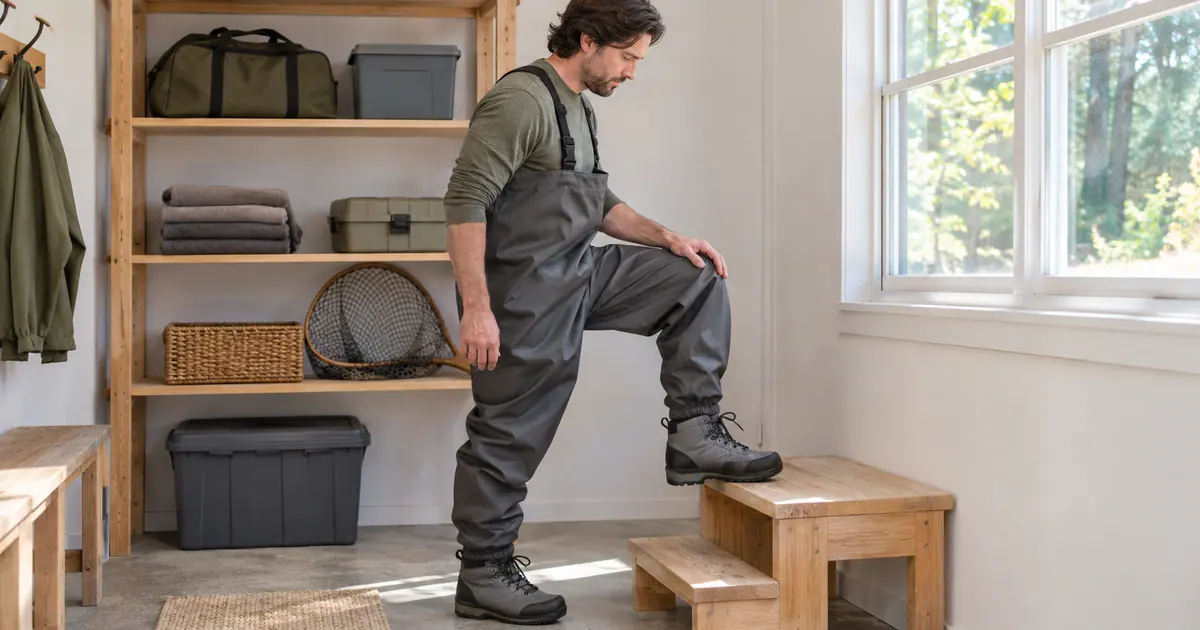
Check the opposite problem as well. If the bib sags into your hands or the upper panel bunches when you sit, shortening the straps alone may crowd the crotch. Treat chest wader torso fit and chest wader suspender adjustment as separate checks. Try the neighboring size with the same layers so you can tell whether you needed a different cut or a smaller strap change.
When two pairs of chest waders feel equally good standing up, run a second trial with the boots fully laced. Put one foot on a low step, lean forward as if kneeling to land a fish, then return to standing without touching the straps. Check where the strain starts. A pull from the toes can mean the boot crowds the stockingfoot, while a pull across both shoulders points you back to the upper fit. Try the same sequence with the winter layer removed.
Compare how chest waders open, convert and carry gear
Compare designs by the action they make easier. A plain bib has fewer controls to manage. A convertible chest wader design may make sense where you switch between short wades and longer dry walks. A front zipper is most useful if you repeatedly need to get in and out or change layers. Some models combine the designs, so compare the actual features and instructions for the model you can buy.
| Feature | What to check | Practical trade-off |
|---|---|---|
| Traditional bib | Reach the buckles and adjust straps with your outer layer on. | Simple layout. Getting out can require moving a jacket or pack first. |
| Chest-to-waist conversion | Use the manufacturer’s strap or belt arrangement and sit or walk with the bib lowered. | Easier to vent on dry approaches. Raise it before relying on chest-height coverage. |
| Front zipper | Open and fully close it with your usual layers on. Check the maker’s care instructions. | Easier entry and relief. The closure adds a part to use and care for. |
| Chest pockets | Test chest pocket access with your pack, net, and jacket in their normal positions. | A generous pocket loses value if straps cover the opening or the box presses into you. |
Simms lists stretch suspenders and a top-access storage pocket on the Men’s Freestone Stockingfoot. Patagonia’s Men’s Swiftcurrent Expedition Zip-Front combines a front zipper, quick-release suspenders, and vertical-zip chest pockets. These examples show different openings and adjustments to compare. Only treat a pocket as waterproof if the manufacturer specifically rates that pocket that way, and check how its closure must be used.
When you try chest waders with a chest pack, place a fly box inside the pocket and undo the closure with one hand. If the pack covers the pocket, decide which item should carry your everyday tools. For broader trade-offs around footwear, insulation, and price, see the fly fishing wader buying guide.
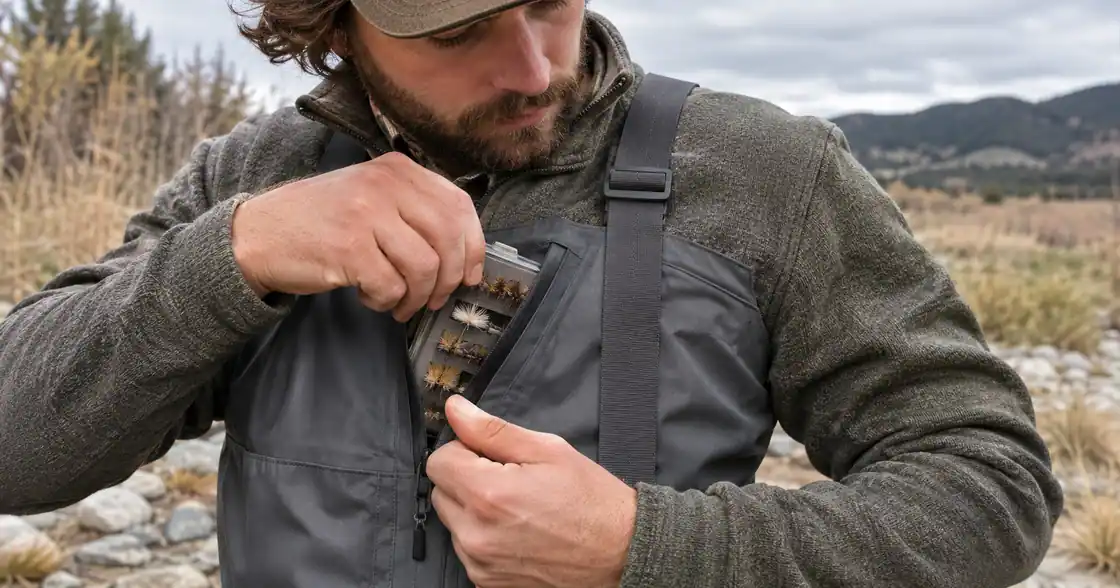
Before buying a front-zip pair, check whether your top layer or the shoulder strap of your pack crosses the zipper pull. Open and close the bib while wearing both. Then try the chest pocket with the same fly box you use on the water. Some pockets feel generous when empty but push the box into your ribs once the belt is snug. For chest waders you will wear from a boat, repeat the check seated and see whether the pocket still opens. Write down the trade-off in plain terms: which pocket stays usable, which buckle you can reach, and which adjustment you would make most often.
🎣 Compare a bootfoot option. FISHINGSIR Waterproof Fishing Chest Waders with Boots This listing pairs a two-ply nylon/PVC chest bib with attached boots. Check the listed boot size and repeat the bib and pocket fit checks above with your usual layers. See Waders & Check Sizing ➜
Chest waders fit checklist before checkout
Use the same sequence for each pair so you can compare the differences you actually feel. If ordering online, check the return terms before testing indoors.
- Write down your largest girth, inseam, and foot size. Compare them against the exact model chart.
- Adjust shoulders and belt independently. Stand upright, lift a knee onto a stable low step, and take a seated position.
- Reach across your chest and forward. Check for shoulder strain, an overtight crotch, and bulk under the belt.
- Put on your usual jacket and pack. Open the main pocket and remove the largest item you expect to carry.
- Operate the conversion buckles or front zipper, if equipped. Verify that layers and straps stay clear of the closure.
Make the decision in this order: coverage for the trips you take, freedom to move in your layers, then convenience features. The right chest waders let you climb, sit, and reach without repeatedly adjusting the bib.
🧰 Keep a repair option for compatible waders. GEAR AID Aquaseal Wader and Boot Repair Kit, 2 Pack The kit combines Aquaseal FD adhesive and repair patches for small holes and tears. Confirm material compatibility and follow the wader maker’s instructions before applying it. See Repair Kit & Check Price ➜
References
Simms — Men’s Freestone Stockingfoot Waders
Patagonia — Men’s Swiftcurrent Expedition Zip-Front Waders
National Park Service — River and Stream Safety