
Fly Fishing Backing Line: How to Choose Material, Strength and Length
Choosing fly fishing backing line is not simply a matter of buying the strongest braid or filling a reel with a fixed number of yards. The right backing must work with your exact fly reel, the fly line you plan to install, and the kind of fish you intend to pursue.
Quick answer: Start with the reel manufacturer’s capacity chart. Note the reel size, specified fly line, and backing material used in that chart. Then compare backing diameter, breaking strength, and the amount of reserve line appropriate for your fishing. Traditional Dacron is a sensible starting point for many ordinary setups; thinner gel-spun can help when capacity is a verified constraint, but it needs careful handling.
This guide explains how to make that decision without confusing pound-test with fly-line weight or assuming that every 5-weight reel holds the same amount of backing.
Table of Contents
What Is Fly Fishing Backing Line?
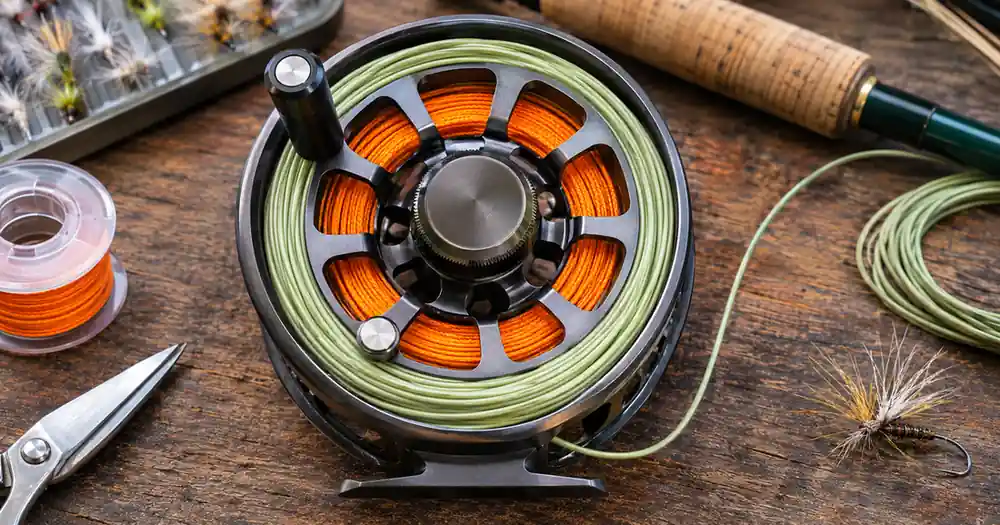
Fly fishing backing line is the thin line wound onto a fly reel before the thicker fly line. It is attached to the reel arbor at one end and the reel end of the fly line at the other. Its jobs are to provide reserve line if a fish runs beyond the fly line and to occupy spool space so the working fly line is stored on a useful diameter.
A typical line system runs reel → backing → fly line → leader → tippet → fly. Backing is usually not what you cast. The coated fly line carries the mass used to load the rod during a cast.
That distinction matters when shopping. A 5-weight fly line is a casting-line classification, not five-pound breaking strength. A backing label such as 20 lb describes the manufacturer’s nominal breaking-strength rating, not the rod or fly-line weight it must accompany. Choose both components for their separate jobs.
In routine small-stream trout fishing, a fish may never take enough line to reach the backing. It still needs to be properly installed and compatible with the reel. In applications involving long, powerful runs, the reserve line becomes much more important.
Fly Fishing Backing Line Materials: Dacron vs. Gel-Spun
Two common materials for fly fishing backing line are braided Dacron polyester and gel-spun polyethylene, often called GSP. They are alternatives, not materials you must combine on one reel. Neither is automatically correct for every angler.
Dacron Backing
Dacron is a familiar choice because it is relatively straightforward to handle, connect, and wind onto many fly reels. It comes in several strengths and spool lengths, with important diameter differences between products.
For example, Scientific Anglers lists its 20 lb Dacron at 0.018 in (0.46 mm) and its 30 lb Dacron at 0.024 in (0.61 mm). The stronger version is thicker in that specific range, which can leave less space for backing when the reel and fly line stay the same.
Dacron makes sense when the manufacturer-listed capacity already meets your needs and you have no compelling reason to pay for a specialized, smaller-diameter material. However, a 100-yard retail spool is only a quantity for sale: it does not mean 100 yards is the correct amount to load.
Affiliate disclosure: As an Amazon Associate, we earn from qualifying purchases. FlyFishingScout may earn a commission from qualifying purchases at no additional cost to you.
⭐ Smart Traditional Pick: Scientific Anglers Dacron Backing — 20 lb / 100 yd
Looking for a straightforward starting point rather than a specialty braid? This 20 lb Dacron is a familiar polyester backing option with a manufacturer-stated 0.018-inch diameter. It may suit a modest freshwater setup when that strength and diameter match the reel maker’s guidance.
Check before buying: The 100-yard package is not a universal reel-fill prescription, and this material is not the same diameter as every other 20 lb Dacron. Confirm the amount your reel actually needs.
👀 View Scientific Anglers Dacron Backing & Check Price on Amazon
Gel-Spun Polyethylene Backing
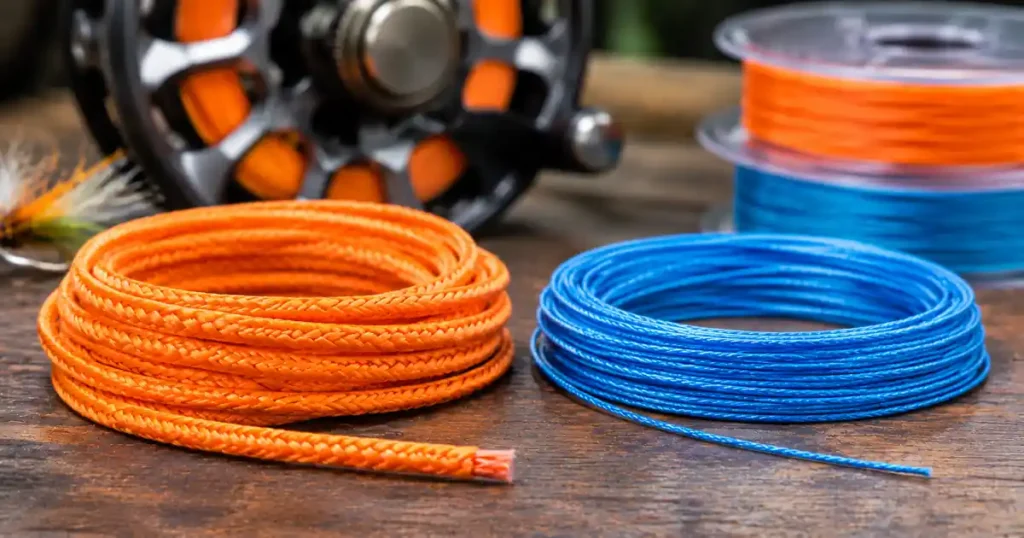
Gel-spun backing generally emphasizes a high strength-to-diameter ratio. Scientific Anglers specifies 0.014 in (0.36 mm) for its 30 lb XTS Gel Spun and 0.016 in (0.41 mm) for the 50 lb version. In this product comparison, the 30 lb gel-spun line is actually thinner than the company’s 20 lb Dacron.
That is useful if you need reserve length but cannot fit enough conventional backing beneath your intended fly line. The trade-offs are cost, handling, and connection requirements. Very thin, slick backing deserves particular care when spooling under tension or making knots. Avoid handling line under heavy tension with bare fingers, and follow the relevant manufacturer’s connection instructions.
Material, Strength, and Diameter Comparison
| Backing product | Material | Rated strength | Manufacturer diameter |
|---|---|---|---|
| Scientific Anglers Dacron | Polyester braid | 20 lb | 0.018 in / 0.46 mm |
| Scientific Anglers Dacron | Polyester braid | 30 lb | 0.024 in / 0.61 mm |
| Scientific Anglers XTS Gel Spun | Gel-spun polyethylene | 30 lb | 0.014 in / 0.36 mm |
| Scientific Anglers XTS Gel Spun | Gel-spun polyethylene | 50 lb | 0.016 in / 0.41 mm |
These are manufacturer specifications for particular products, not independent laboratory tests or universal measurements for all Dacron and gel-spun lines. Colors, lengths, newer versions, and different brands should be checked individually.
Choosing Fly Fishing Backing Line Breaking Strength
When comparing fly fishing backing line, breaking strength is important, but it should not be the only number driving your purchase. Your reel, drag setting, target fish, leader, connections, and fishing environment all affect whether a particular backing is appropriate.
What 20 lb and 30 lb Ratings Mean
A 20 lb or 30 lb rating describes the maker’s nominal backing strength. It does not tell you how much line will fit or what your entire fishing system will withstand. A knot or damaged section can be weaker than the line’s stated rating, and drag settings change the force placed on the system.
For many everyday trout outfits, traditional backing at a suitable manufacturer-recommended strength is sufficient. Larger, harder-running species may justify considering stronger backing and greater reserve length, but the reel maker’s intended use and spool capacity must remain part of the decision.
Why Heavier Backing Is Not Automatically Better
Higher-strength backing may use more space, depending on its construction. Buying 30 lb Dacron instead of 20 lb Dacron solely because the number is higher can reduce the amount that fits without providing a useful advantage for the actual fishing.
Conversely, it would be a mistake to assume that every 30 lb line is thicker: the Scientific Anglers gel-spun example above demonstrates the opposite. Compare the actual diameter printed for the actual product, not just the pound-test number.
Consider the Whole Line System
Backing strength is only one link. The fly-line connection, terminal leader or tippet, hook, and reel drag all influence how force is transmitted to a fish. A high backing rating does not make fine tippet stronger or guarantee that a connection will hold.
Match the backing to your fishing application, then use connection methods approved for its material. The aim is a balanced system, not the largest strength number on a label.
Fly Fishing Backing Line Diameter and Reel Capacity
Reel capacity is where fly fishing backing line choices become practical. Every yard of backing occupies space that the full fly line also needs. Reel size by itself cannot establish capacity; different spool shapes and different fly-line diameters change the answer.
Why Diameter Influences Capacity
Thicker backing occupies more room per turn than thinner backing under otherwise comparable conditions. That makes backing diameter important when a reel must also fit a full-length fly line. How tightly and evenly the backing is spooled also matters.
You cannot calculate a trustworthy yardage increase merely by comparing two printed diameters. Real lines are braided, compress to different degrees, and pack differently. A manufacturer may describe a potential percentage increase, but that is not a verified result on your exact reel.
How to Read a Manufacturer’s Capacity Chart
A fly fishing backing line capacity chart may combine a reel model, a fly-line designation, and a backing specification. Read all three as one configuration. A rating such as WF5F identifies a weight-forward, 5-weight floating fly line; the length and diameter of that particular line remain part of the space calculation.
Annotated manufacturer example — Cortland Guide Series Fly Reel
| Chart field | Published value | How to interpret it |
|---|---|---|
| Exact reel | Guide Series, 3–5 WT | Applies to this reel size, not every 3–5 reel |
| Fly line | WF5F, 90 ft | Specified weight-forward floating fly line |
| Backing | Cortland Micron, 20 lb | Specific backing used for published capacity |
| Backing capacity | 200 yd | Manufacturer’s figure for this combined setup |
Cortland also lists its 20 lb Micron at 0.015 in on the relevant product page. This is not the same stated diameter as Scientific Anglers’ 20 lb Dacron at 0.018 in. Consequently, the published 200-yard capacity must not be transferred automatically from Cortland Micron to Scientific Anglers Dacron. Nor is it a recommendation that every angler should carry 200 yards.
What the Chart Does Not Tell You
It does not guarantee a particular remaining clearance when you substitute a thicker specialty fly line or different backing. It does not establish the reserve length your fishing application requires. And it is not an invitation to fill every spool completely to the frame.
Use the chart as a manufacturer-published configuration reference. If your materials differ materially, consult the manufacturer or a knowledgeable fly shop and verify the final spool fill.
How Much Fly Fishing Backing Line Fits on a Reel?
For fly fishing backing line, the useful question is not simply how many yards to buy; it is how much suitable backing will fit after the entire fly line is accounted for. Start with the exact combination you own.
Start With the Reel and Fly Line
- Record the reel’s complete brand, model, and spool size.
- Identify the fly line by its model, weight, taper, and full length.
- Read the reel maker’s capacity specification and note its backing assumption.
- Decide how much reserve line makes sense for the species and fishing situation.
- Compare the candidate backing’s stated diameter and handling requirements.
- Leave enough practical clearance for the fly line to wind normally without rubbing the frame.
When choosing fly fishing backing line, if the maker’s chart uses a different fly line or backing, treat its yardage as a starting reference, not a guaranteed fit. A 100-yard or 250-yard product spool is packaging, not an instruction to install every yard.
Worked Capacity Example
Imagine you own the Cortland Guide Series 3–5 WT and plan to use the 90-foot WF5F line specified in its chart. You find the maker’s capacity of 200 yards of 20 lb Micron for that exact configuration.
Now consider three choices:
- Keep 20 lb Cortland Micron: You are using the specified backing type and line configuration, so the manufacturer’s figure is the relevant starting point. Your actual fishing needs may call for less reserve.
- Switch to Scientific Anglers 20 lb Dacron: The stated diameter is 0.018 in instead of Cortland Micron’s 0.015 in. You cannot claim that the same 200 yards will fit.
- Switch to Scientific Anglers XTS 30 lb Gel Spun: Its stated diameter is 0.014 in, smaller than either backing above. It could help with a genuine capacity constraint, but no verified replacement yardage is supplied for this reel and line combination.
The decision: First decide whether the original setup actually lacks usable reserve or full-line clearance. If it does not, a more expensive material may solve a problem you do not have. If it does, consider a thinner backing and have the final fill checked for that reel.
When Thinner Backing Helps
Thin gel-spun becomes a practical option when you need more reserve line than the existing backing-and-fly-line combination can comfortably accommodate. It may be especially relevant where a larger fish could make an extended run and the reel’s spool volume is limited.
🔥 Capacity-Focused Option: Scientific Anglers XTS Gel Spun Backing — 30 lb / 250 yd, Blue
Running short of spool space? Scientific Anglers lists this XTS backing at 0.014 in, compared with 0.018 in for its 20 lb Dacron. That can make it worth considering when the actual reel capacity is tight.
Know the trade-off: The listed 250 yards is the package length, not a promise that your reel can hold all of it. Thin gel-spun requires attentive spooling and compatible connections; it is not automatically better for a simple trout setup.
👀 See Scientific Anglers XTS Gel Spun & Check Price on Amazon
Leave Room for the Full Fly Line
A reel that looks neatly full on the workbench can become frustrating if the line rubs when it is rewound less evenly after fishing. Keep usable clearance beneath the frame. If the full fly line does not fit, reduce backing length or reassess materials rather than forcing the line onto the spool.
For the actual winding order and installation process, see our fly fishing line setup guide. This article focuses on selecting the backing first.
Choosing Fly Fishing Backing Line for Different Fishing Applications
The right fly fishing backing line depends on what the fish can do, the reel’s design, and the room left beneath your fly line. The categories below are practical considerations rather than rigid strength prescriptions.
Small-Stream and General Trout Fishing
For smaller streams and general trout work, reliable ordinary backing may satisfy the reel maker’s requirements without demanding unusually thin material. Check the reel chart before choosing pound-test or spool length. If you are uncertain about the fly line itself, read our guide to choosing the right fly fishing line.
There is little reason to buy premium backing solely because it is marketed for powerful saltwater fish when your reel already carries an adequate reserve and winds smoothly.
Salmon, Steelhead, and Larger Freshwater Fish
Longer runs and different fishing conditions may change your fly fishing backing line needs and increase the value of reserve length. Consider suitable rated strength, reliable connections, and capacity under the actual fly line. But do not borrow a universal yardage recommendation from a different reel or fishing technique.
Larger Fish and Saltwater
For demanding fisheries, a stronger, appropriately designed backing may be justified. However, 65 lb backing is not automatically correct for every saltwater reel, and the exact model’s stated diameter and connection methods still require attention.
RIO, for example, offers Multi Color Gel Spun Backing rated at 65 lb with an eight-carrier braid. The colored segments change every 10 meters, according to the manufacturer. This may appeal to anglers who actually need that strength and line-management format. It is unnecessary as a default upgrade for many light freshwater reels.
A higher breaking-strength label should prompt a capacity and handling check—not an automatic purchase.
🔥 More Strength for Demanding Fishing
RIO Fly Line Backing – Multi Color Gel Spun, 65 lb / 200 yd
Need stronger backing for a demanding fly fishing setup? RIO’s 65 lb eight-carrier gel-spun braid offers a specialized option for anglers evaluating larger-fish applications.
⭐ Check reel capacity, connection compatibility, and required backing length before choosing this option.
Check Price on Amazon →As an Amazon Associate, we earn from qualifying purchases.

WordPress placement: use a Custom HTML block immediately after “A higher breaking-strength label should prompt a capacity and handling check—not an automatic purchase.” The product image remains pending until you replace the placeholder src. Amazon US live availability was not independently confirmed.
When Standard Dacron Is Enough
If the reel accepts the full fly line, has appropriate reserve for its intended use, and the backing’s breaking strength and connections are suitable, conventional Dacron can be the sensible choice. A thinner alternative is most valuable when it fixes an identifiable constraint rather than simply sounding more advanced.
Backing Connections, Handling, and Common Mistakes
Choosing fly fishing backing line also means thinking about how that material will be tied or spliced and loaded. That affects the real-world usefulness of an apparently attractive strength or diameter.
Dacron vs. Thin Gel-Spun Handling
Traditional Dacron fly fishing backing line is generally more forgiving to handle than very fine gel-spun. Thin backing can cut or injure fingers when pulled hard, and poorly laid wraps may bury under later tension.
Keep hands clear of running line under load, use controlled spool tension, and follow the product maker’s handling guidance.
Check Manufacturer Connection Instructions
Different backing types may need different loop, knot, or splice methods. Do not assume the same knot and wrap count are suitable for every thin braid. The reel-arbor connection and the backing-to-fly-line junction both need to match the materials used.
Our published guide to tying fly line to backing covers appropriate connection choices and installation checks in detail. Keep this selection decision separate from the knot-tying process.
Mistakes That Waste Capacity
Common fly fishing backing line mistakes include choosing material only by pound-test, overlooking diameter, treating a retail spool length as reel capacity, following a capacity chart for the wrong reel, overfilling the reel, and substituting a thick fly line without checking space.
Do not mix multiple backing materials simply to imitate a specialty rig unless the reel or line manufacturer’s guidance supports that arrangement. Added connections and differences in handling need a clear purpose.
Fly Fishing Backing Line Buying Checklist
Use this short checklist before you order fly fishing backing line:
- Exact reel: Do you know the model, size, and applicable manufacturer capacity chart?
- Exact fly line: Do you know its weight, taper, model, and full length?
- Application: What fish and conditions determine your reserve needs?
- Material: Does Dacron meet the need, or is thinner gel-spun justified?
- Strength: Is the rating appropriate without being selected merely because it is higher?
- Diameter: Is the value specified for the exact product and version?
- Length: Are you purchasing enough for the intended fill without assuming every yard must be installed?
- Handling: Are the required connection method and spool tension manageable?
- Clearance: Will the full fly line wind freely without frame contact?
When in doubt, bring your reel, fly line, and backing specifications to a specialist shop. Confirmed compatibility is more valuable than a guess based on package labels.
Fly Fishing Backing Line FAQs
Is 20 lb or 30 lb Backing Better?
Neither rating is universally better. Choose a strength suitable for the reel, intended fishery, and overall line system. Compare actual diameters, too: a 30 lb gel-spun product may be thinner than a 20 lb Dacron product.
Is Dacron or Gel-Spun Backing Better?
Dacron is often a practical standard option where capacity is sufficient and simple handling matters. Gel-spun can be worthwhile when a smaller diameter helps address a real capacity limitation. Both still require compatible connections and suitable spool fill.
How Much Backing Should Be on a Fly Reel?
Start with the specific reel manufacturer’s capacity chart and its exact fly-line and backing assumptions when selecting fly fishing backing line. Then adjust for the fishing application and leave clearance for the complete fly line. No single yardage applies to all reels.
Can Changing Backing Material Increase Reel Capacity?
It may. Thinner backing can create room for additional reserve line in the same spool, but a particular percentage or yardage increase must not be claimed without a relevant manufacturer measurement or actual verified spool test.
Does Fly-Line Weight Determine Backing Strength?
No. Fly-line weight class describes the line intended to cast with the rod. Backing pound-test is a nominal breaking-strength rating. They are related only through the needs of the overall setup.
Is the Full Length of a 250-Yard Backing Spool Required?
No. A package containing 250 yards tells you how much material you buy, not how much belongs on your reel. Your actual capacity and needed reserve may be lower.
Final Fly Fishing Backing Line Takeaway
The most reliable way to choose fly fishing backing line is to begin with the actual reel and fly line, not a universal rule about 20 lb, 30 lb, or 200 yards. Compare manufacturer-stated diameter and strength, decide how much reserve the fishing requires, and leave the full fly line enough room to wind properly.
For a setup with adequate capacity, a conventional Dacron option may be all you need. Consider gel-spun when its narrower diameter addresses a genuine limitation and you are prepared to handle and connect it correctly. A well-matched system beats a larger number on the spool label.
References
- Scientific Anglers — Dacron Backing
- Scientific Anglers — XTS Gel Spun Backing
- Cortland Line Company — Guide Series Fly Reel
- Cortland Line Company — Micron Black Dacron Fly Line Backing
- RIO Products — Fly Line Backing: Multi Color Gel Spun
- Orvis — Understanding Fly Line Backing: When and Why It Matters