
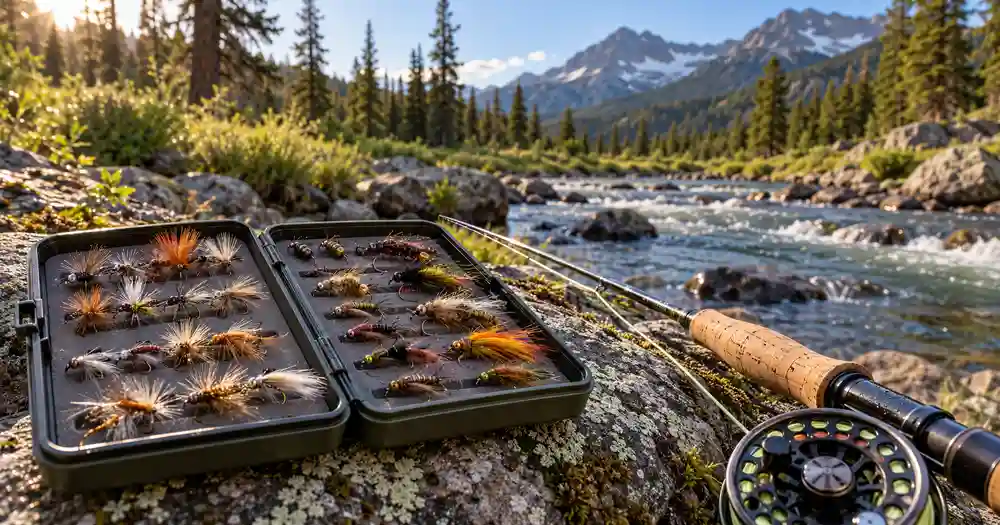
Brown Trout Fishing Flies: Best Patterns and When to Use Them
Choosing the right brown trout fishing flies gets much easier when you stop looking for one magic pattern and start reading the water. Brown trout eat a wide range of food, including aquatic insects, crustaceans, terrestrial insects, and small fish, so the best fly can change with feeding depth, available prey, water conditions, and presentation.
This guide gives you a practical selection of patterns and, more importantly, explains when to use them. Instead of filling your fly box with dozens of similar options, you can build a smaller collection that covers the main situations you are likely to encounter.
Table of Contents
Brown Trout Fishing Flies: Quick Answer
A useful selection of brown trout fishing flies should cover five main situations: surface feeding, emerging insects, subsurface nymphs, terrestrial insects, and larger moving prey.
Good starting patterns include:
| Fishing Situation | Useful Starting Pattern | Why It Works |
|---|---|---|
| Trout rising to mayflies | Parachute Adams | Versatile mayfly profile and easy to see |
| Caddis activity | Elk Hair Caddis | Floats well and suggests adult caddis |
| No obvious surface feeding | Pheasant Tail or Hare’s Ear | Covers common subsurface insect profiles |
| Small subsurface food | Zebra Midge or RS2 | Useful for small nymph and emerger situations |
| Summer terrestrial activity | Ant, beetle, or hopper | Imitates land insects falling into the water |
| Trout chasing larger prey | Woolly Bugger or baitfish streamer | Provides movement and a larger food profile |
There is no universal best fly for every river. The best approach is to carry several patterns that cover different depths and food sources, then choose based on what the trout appear to be eating.
How to Choose Brown Trout Fishing Flies on the Water
The simplest way to select brown trout fishing flies is to follow a repeatable process:
Depth → Food → Size and profile → Pattern → Presentation
This prevents random fly changes and helps you solve the actual problem.
If trout are feeding several feet below the surface, changing between different dry flies will not help much. If trout are rising steadily, fishing a heavily weighted nymph may put your fly below the most active feeding zone.
Start With Where the Trout Are Feeding
Watch the water before making your first cast.
Consistent surface rises usually suggest that trout are feeding on insects at or near the surface.
Bulges, flashes, or subtle movement just below the surface can indicate emerging insects.
If there is little visible surface activity, a nymph or other subsurface fly is often a practical starting choice.
If trout are chasing minnows or attacking larger prey, a streamer becomes a more logical option.
You do not need to know the exact insect immediately. Identifying the feeding depth already narrows your choices considerably.
Look for the Available Food
Pay attention to the water, nearby vegetation, rocks, and surface film.
You do not need advanced entomology to make a useful decision. Start by identifying the general food category.
Ask yourself:
- Are mayflies visible?
- Are caddis flying close to the water?
- Are small insects emerging through the surface?
- Are grasshoppers, ants, or beetles present along the bank?
- Are small baitfish visible?
- Are trout feeding close to the bottom?
These observations help determine whether you should start with a dry fly, emerger, nymph, terrestrial, or streamer.
Match the Approximate Size and Profile
The most famous fly pattern will not always outperform a simpler fly that better resembles the available food.
Compare the natural food with your fly based on:
- overall size;
- body shape;
- silhouette;
- general color;
- movement;
- position in the water.
You usually do not need a perfect imitation.
Start by getting the size, general profile, and feeding depth reasonably close. Fine color differences are often less important than presenting the fly where the trout are actually feeding.
Fix Presentation Before Constantly Changing Patterns
A good fly still needs a believable presentation.
A dry fly normally needs a natural drift.
A nymph needs to reach the feeding zone without excessive drag.
An emerger should often remain close to the surface.
A streamer may need to swing, strip, pulse, or drift depending on the water and the prey you are trying to imitate.
If your brown trout fishing flies appear appropriate but are being ignored, change one important variable at a time.
Depth and presentation may be the problem rather than the pattern itself.
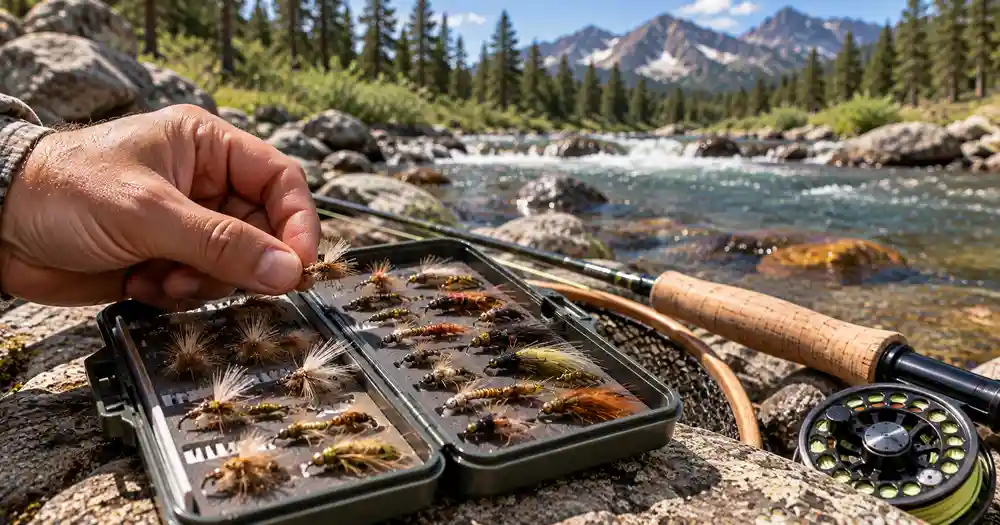
Best Brown Trout Fishing Flies by Type
The best brown trout fishing flies are not necessarily the largest collection of famous patterns.
A practical fly box gives you a small number of patterns that solve different problems.
Dry Flies for Brown Trout
Dry flies are useful when brown trout are actively feeding at the surface.
Parachute Adams
The Parachute Adams is one of the most versatile general-purpose dry flies. Its profile can suggest several mayfly species, and the parachute post makes it relatively easy to track on the water.
Use it when trout are rising to mayfly-sized insects but you do not need an extremely specific imitation.
Elk Hair Caddis
The Elk Hair Caddis is a useful choice when adult caddis are active.
Its buoyant construction also makes it practical in broken or slightly faster water.
You can fish it with a natural drift, and in some situations a small amount of movement can help suggest an active caddis.
Stimulator
The Stimulator is a larger, buoyant dry fly that can suggest stoneflies or other substantial surface insects.
It is especially useful when you need a visible fly that remains afloat in faster currents.
Local Mayfly or Caddis Imitations
General patterns are useful, but they should not replace observation.
If brown trout are clearly feeding on a specific hatch, matching the approximate size and profile of that insect can be more effective than continuing with a generic pattern.
Nymphs and Emergers for Brown Trout
Nymphs are among the most useful flies for brown trout because much of a trout’s feeding can happen below the surface.
Pheasant Tail
The Pheasant Tail represents the general shape of several mayfly nymphs.
It works well as a general-purpose subsurface pattern when mayfly nymphs are part of the available food.
Hare’s Ear
The Hare’s Ear has a rough, buggy appearance that suggests a variety of aquatic insects.
It is a useful choice when you want a general nymph rather than an exact imitation.
Zebra Midge
The Zebra Midge gives you a much smaller profile.
It can be especially useful when trout are feeding on small midge larvae or pupae and larger patterns are being ignored.
RS2 or Similar Emerger
An RS2 or similar emerger can be useful when trout are feeding close to the surface but are not consistently taking fully emerged adult insects.
Pay attention to subtle rises and bulges rather than assuming every surface disturbance calls for a floating dry fly.
Streamers for Brown Trout
Streamers give you another important category of brown trout fishing flies.
They represent larger prey and allow you to cover water differently from dry flies and nymphs.
Woolly Bugger
The Woolly Bugger is a versatile streamer that can suggest several forms of aquatic prey depending on its size, color, weight, and presentation.
It can be stripped, swung, or allowed to move naturally with the current.
Baitfish-Style Streamer
A baitfish-style streamer becomes useful when brown trout are feeding on small fish.
Try to match the general size and profile of the local baitfish rather than automatically selecting the largest fly available.
Sculpin-Style Streamer
A sculpin-style pattern can make sense in waters where bottom-oriented forage fish are part of the food supply.
Because sculpins spend much of their time near the bottom, presentation depth becomes especially important.
Streamers should not be treated as a guaranteed way to catch large brown trout. They are simply another tool for presenting a larger food item.
Terrestrials and Other Opportunistic Food
Terrestrial flies imitate insects that live on land but sometimes end up in the water.
Common options include:
- ants;
- beetles;
- grasshoppers.
They can become particularly useful near grassy banks, overhanging vegetation, and other places where land insects regularly fall into the river.
Do not assume that every summer river requires a hopper.
If small ants or beetles are more common along the bank, a smaller terrestrial may better match the available food.
Brown Trout Fishing Flies by Season
Season can help narrow your starting choices, but brown trout fishing flies should still be chosen according to actual conditions.
Hatches and feeding behavior vary with location, elevation, water temperature, weather, and the type of river.
Spring
Spring often brings increasing aquatic insect activity as conditions become more favorable.
Nymphs can be useful when insects are active below the surface.
Emergers become important when insects begin moving upward through the water column.
When trout begin rising consistently, dry flies that match the approximate size and profile of the available insects become a better option.
Higher or slightly stained water can also create opportunities for streamers, depending on the river.
Summer
Summer can provide a wide range of feeding opportunities.
Dry-fly fishing may be productive during active hatches.
Terrestrials can also become important where ants, beetles, or grasshoppers regularly enter the water.
During bright conditions with low and clear water, brown trout may have more time to inspect a fly.
Before changing to a completely different pattern, consider using a smaller fly or improving your presentation.
Fall
Aquatic insect activity can continue during fall, so dry flies and nymphs remain useful when conditions support them.
Streamers can also become an important part of the fly box.
Brown trout generally spawn during the cooler part of the year, although exact timing varies between regions and fisheries.
Avoid disturbing visible spawning fish or walking through obvious spawning areas.
Always check the current regulations for the water you are fishing because seasonal closures and special restrictions can vary considerably.
Winter
Brown trout can continue feeding during winter.
Small aquatic insects remain available even when surface insect activity is limited.
Nymphs, midges, and controlled subsurface presentations can therefore be useful starting options.
Winter fishing often rewards careful depth control more than constant fly changes.
Instead of assuming that one winter pattern works everywhere, adjust your brown trout fishing flies to the actual food and feeding depth in the river you are fishing.
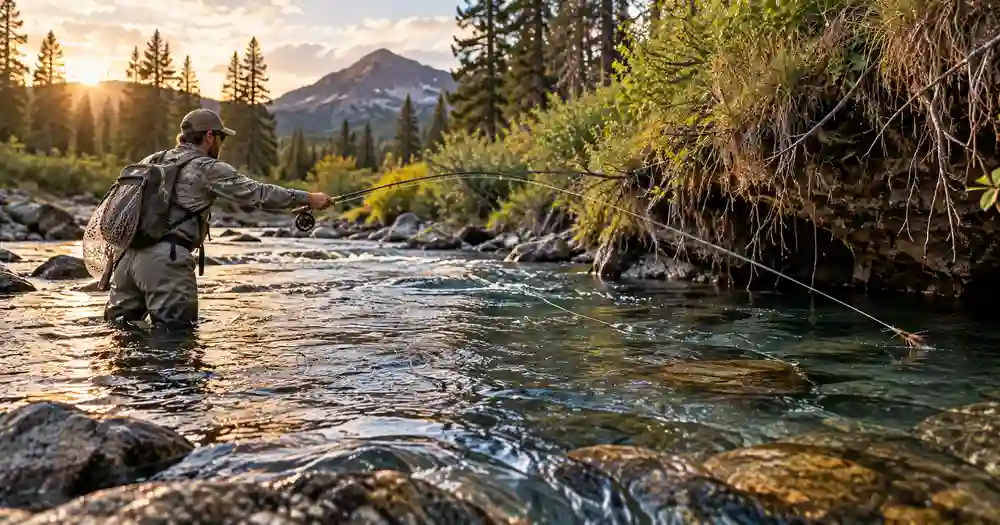
Brown Trout Fishing Flies for Different Water Conditions
The same fly does not behave the same way in every type of water.
Choosing brown trout fishing flies should include both the available food and the conditions affecting visibility, depth, and presentation.
Clear, Slow Water
Clear, slow water gives trout more time to inspect your fly.
Pay close attention to:
- fly size;
- silhouette;
- leader presentation;
- drag;
- casting disturbance.
If a trout refuses a dry fly that looks reasonably close to the natural insects, try improving the presentation or adjusting size before changing to a completely different pattern.
In shallow water, avoid unnecessary weight or heavy casts that create excessive disturbance.
Fast or Broken Water
Fast water can make presentation more difficult.
Buoyant dry flies are easier to track through broken currents.
Weighted nymphs can help reach the feeding zone when water speed keeps lighter flies too close to the surface.
Do not automatically choose the largest fly simply because the water is fast.
The fly still needs to match a believable food source.
Higher or Stained Water
Reduced visibility can make flies with a stronger silhouette or more movement easier for trout to notice.
Larger nymphs and streamers may become useful options.
However, stained water does not automatically mean you should use the biggest or brightest fly possible.
Use a fly that is visible enough for the conditions while still presenting a reasonable food profile.
Deep Pools and Runs
Depth is often the first problem to solve in deeper water.
A good nymph or streamer will not help if it never reaches the depth where trout are feeding.
Depending on the fishing method and local regulations, you may need to adjust:
- weight;
- leader length;
- casting angle;
- sink time;
- presentation position.
Before abandoning the pattern, determine whether your fly is reaching the correct zone.
Surface Feeding
When brown trout are rising, study the rise carefully.
A clean surface take may indicate trout eating adult insects.
Subtle bulges or movement under the surface can indicate emerging insects.
Start by matching the approximate size and profile of the available food.
Then concentrate on presentation.
Even the right brown trout fishing flies can be refused if they move unnaturally across the current.
How to Present Dry Flies, Nymphs, and Streamers
Pattern selection is only part of the process.
Presentation determines how naturally the fly behaves once it reaches the trout.
Dry-Fly Presentation
Try to achieve a natural drift.
Position yourself so the current does not immediately pull your line faster or slower than the fly.
Mending can help reduce drag when different current speeds are acting on your line.
If trout repeatedly inspect and refuse your fly, check:
- fly size;
- profile;
- tippet;
- drag;
- casting position.
Do not immediately assume the pattern is wrong.
Nymph and Emerger Presentation
For nymphs, one of the most important questions is whether the fly is reaching the feeding depth.
Adjust weight, leader setup, or presentation method as appropriate and legal for the water you are fishing.
Remember that surface current speed can differ from the current deeper in the river.
Emergers often need to remain higher in the water column than heavily weighted nymphs.
If trout are feeding just below the surface, adding more weight may move your fly away from the productive zone.
Streamer Presentation
Streamer retrieves should match the water and the prey you are trying to imitate.
Depending on the situation, you can:
- strip the fly;
- swing it through the current;
- allow it to sink before retrieving;
- use short pulses;
- retrieve slowly through deeper water.
More movement is not automatically better.
The goal is believable movement at the correct depth.
Change One Variable at a Time
If your brown trout fishing flies are not producing, avoid changing everything at once.
Do not simultaneously change:
- fly pattern;
- depth;
- tippet;
- retrieve speed;
- fishing position.
Change one variable and observe what happens.
This makes it much easier to determine whether depth, presentation, size, or pattern was causing the problem.
Over time, this approach also teaches you more about trout behavior than randomly changing flies every few casts.
Build a Compact Brown Trout Fly Box
You do not need hundreds of patterns to start fishing effectively for brown trout.
A compact box can cover most common situations if it includes several different fly categories.
A practical starting setup could include:
- several general dry flies;
- mayfly and caddis options in a few useful sizes;
- general-purpose nymphs;
- small midge or emerger patterns;
- a few terrestrial flies where relevant;
- one or two streamer styles;
- duplicates of the flies you use most often.
The goal is coverage rather than sheer quantity.
If you want to build a broader trout box that is not limited specifically to brown trout, FlyFishingScout’s guide to the best flies for trout fishing explains how to organize dry flies, nymphs, streamers, and other essential patterns for general trout fishing.
If you are still learning the difference between dry flies, nymphs, emergers, wet flies, and streamers, the FlyFishingScout guide to fly fishing lures and fly types provides a broader introduction to the major fly categories.
When buying brown trout fishing flies, choose patterns that expand what your box can do.
For example, if you already have several general dry flies, adding another nearly identical dry may be less useful than adding a small emerger or streamer.
Local knowledge also matters.
A local fly shop can often help you identify the insects currently active on a particular river and suggest appropriate sizes or locally important patterns.
Brown Trout Fishing Flies FAQs
What is the best all-around fly for brown trout?
There is no single best fly for every situation.
Patterns such as the Pheasant Tail, Parachute Adams, Hare’s Ear, and Woolly Bugger are versatile, but each serves a different purpose.
Choose according to feeding depth, available food, fly size, and presentation.
Are nymphs or dry flies better for brown trout?
Neither category is always better.
Dry flies make sense when trout are feeding at or near the surface.
Nymphs are usually more appropriate when trout are feeding below the surface or when there is little visible surface activity.
Let the feeding depth determine which category you try first.
What streamer should beginners use for brown trout?
A Woolly Bugger is a practical starting streamer because it is versatile and can be presented in several ways.
A simple baitfish-style streamer is another useful choice when small fish are part of the local food supply.
Do brown trout flies need to match the hatch exactly?
Not always.
Matching the approximate size, profile, life stage, and position of the available food is often enough to give you a reasonable starting point.
During a concentrated hatch when trout become selective, a more precise imitation may become useful.
How many brown trout fly patterns do you really need?
You need enough brown trout fishing flies to cover the main feeding situations you expect rather than every fly sold in a shop.
Start with a compact selection of:
- dry flies;
- nymphs;
- emergers;
- terrestrials where appropriate;
- streamers.
Add specialized patterns when your local fishing gives you a reason.
The best brown trout fishing flies are the ones that fit the food, depth, and presentation in front of you. Build your box around situations rather than pattern popularity, observe the water before casting, and change one variable at a time.
Choosing brown trout fishing flies this way gives you a repeatable system that works better than relying on guesswork or constantly changing patterns.
Sources Used
The U.S. Geological Survey Brown Trout (Salmo trutta) Species Profile was used to verify brown trout feeding behavior, dietary breadth, and general spawning information.
The USGS study Winter Feeding, Growth and Condition of Brown Trout Salmo trutta in a Groundwater-Dominated Stream was used to verify location-specific evidence about winter feeding and diet composition.
Fly Fishers International’s Biology of Fly Selection was used to support guidance about prey availability, insect life stages, size, profile, and practical fly selection.
The Orvis Learning Center guide Tom Rosenbauer’s 12 Essential Trout Flies was used to cross-check established foundational trout patterns.
The Orvis Learning Center lesson Fly Selection was used to support guidance about considering depth and presentation before constantly changing patterns.