
Fly Fishing Lures: Types of Flies and How to Choose Them
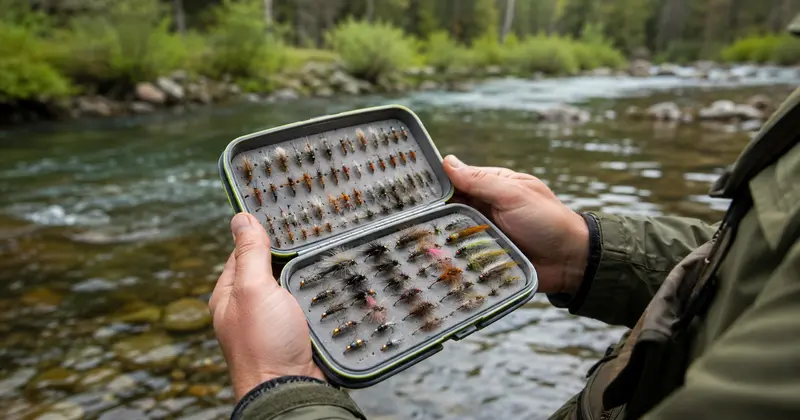
Fly fishing lures are usually called flies. Unlike conventional lures, they are typically tied to imitate insects, baitfish, crustaceans, and other food that fish may eat. The easiest way to choose one is to look at where the fish are feeding, what they are likely eating, the size and profile of that food, and the presentation you need. The National Park Service also describes flies as the artificial lures used in fly fishing to imitate insects and other prey.
For beginners, the goal is not to memorize hundreds of pattern names. Start with the fishing situation, then choose the fly type and pattern that fit it.
Table of Contents
What Are Fly Fishing Lures?
In fly fishing, the lure is the artificial fly. Flies may imitate aquatic insects, land-based insects, baitfish, and other prey.
They can range from tiny insect imitations to much larger patterns designed to suggest larger food sources. The exact materials and construction vary, but the important beginner concept is that the fly must work with your rod, fly line, leader, tippet, and intended presentation.
It also helps to separate fly type from fly pattern.
A dry fly is a broad type. A specific named dry fly is a pattern within that type. The same idea applies to nymphs, wet flies, and streamers.
That distinction makes fly selection much less confusing. You do not need to learn every named pattern before you can make a sensible choice.
Main Types of Fly Fishing Lures
Most beginner fly selections can be understood through four broad categories: dry flies, nymphs, wet flies, and streamers. Orvis currently uses those same four basic groups in its fly-selection guidance.
| Fly Type | Typical Position | Common Imitation | Common Presentation |
|---|---|---|---|
| Dry fly | Surface | Adult aquatic insects, terrestrials | Float or drift |
| Nymph | Below the surface | Immature aquatic insects | Usually drifted |
| Wet fly | Subsurface | Emerging or drowned insects, small prey | Drift or swing |
| Streamer | Subsurface | Baitfish, leeches, crayfish, larger prey | Strip, swing, or retrieve |
These four groups give you a practical way to compare fly fishing lures, but the categories are not perfectly rigid. Some flies can be presented in more than one way, and what the fly does in the water often matters as much as the label on the fly box.
Dry Flies
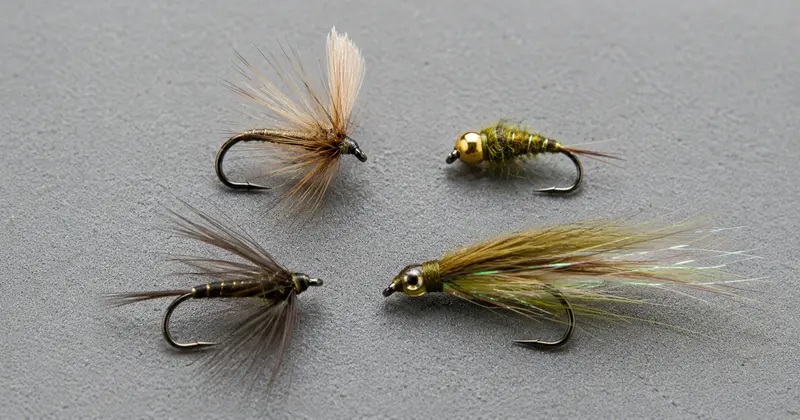
Dry flies are designed to fish on or very near the surface.
They commonly imitate adult aquatic insects such as mayflies, caddisflies, and stoneflies, along with terrestrials such as ants or grasshoppers that may fall into the water.
A dry fly becomes a logical starting point when fish are clearly feeding at the surface. Rising fish, visible insects, or repeated surface takes are useful clues that a surface presentation may be worth trying.
When choosing dry flies, pay attention to:
- Approximate size
- General shape or silhouette
- Whether the natural food is aquatic or terrestrial
- How the fly is intended to sit on the water
- How easily you can see it when visibility matters
Do not assume a famous pattern is automatically the right one. A poor size or unnatural presentation can matter more than the pattern name.
Nymph Flies
Nymphs imitate immature stages of aquatic insects and are normally fished below the surface.
Because these insects live underwater during important parts of their life cycle, nymphs are useful when fish are not visibly feeding on top. They are commonly dead-drifted, although some nymphs can also be swung.
Nymph selection should consider more than color. Think about:
- Depth
- Current speed
- Approximate insect size
- Whether you need a weighted or unweighted pattern
- The profile of the natural food
- How the fly needs to move through the water
A weighted nymph can help reach deeper water, but weight is only one part of the setup. Current, leader setup, legal added weight where allowed, and presentation also affect depth.
Wet Flies
Wet flies are subsurface flies that are often drifted or swung through the current.
Many use soft hackles or other materials that move in the water. They may suggest emerging insects, drowned insects, or other small prey.
Orvis describes wet flies as patterns fished below the surface and commonly presented either on a drift or swing.
Wet flies can be especially useful when fish are feeding below the surface but you want more movement than a strict dead drift provides.
The boundary between a wet fly and another subsurface category is not always absolute. Focus on what the fly is doing in the water and what feeding behavior you are trying to match.
Streamer Flies
Streamers imitate larger prey such as baitfish, leeches, crayfish, and other moving food.
They are usually fished with more deliberate movement than a typical dry fly or dead-drifted nymph. Depending on the water and species, a streamer may be stripped, swung, pulsed, or otherwise retrieved to suggest swimming prey.
Streamers can also place more demand on your tackle. A large, bulky, or heavily weighted streamer may be harder to cast comfortably with light gear.
When choosing streamer flies, consider:
- Target species
- Prey available in the water
- Water depth
- Current
- Fly size and weight
- Rod and line setup
- The retrieve you plan to use
Other Fly Types Beginners Will See
The four major categories cover a large part of fly fishing, but you will encounter several useful subgroups.
Emergers
Emerger patterns imitate insects transitioning toward the adult stage.
They are often presented in or near the surface film, making them useful when fish appear to feed close to the surface without consistently taking fully floating dry flies.
This is a good example of why fly categories overlap. An emerger can sit between what a beginner thinks of as a nymph and a dry fly.
Terrestrials
Terrestrial flies imitate land-based insects that enter the water.
Common examples include:
- Ants
- Beetles
- Crickets
- Grasshoppers
They can become useful when these food sources are naturally available, but they are not a universal answer for every river or season.
Egg Patterns
Egg patterns are designed to suggest fish eggs and are used in situations where eggs are a natural food source.
Their use depends heavily on species, season, and local regulations. Check the current fishing rules for the water you plan to fish rather than assuming the same hooks, rigs, or techniques are allowed everywhere.
Poppers and Surface Bugs
Poppers and other surface bugs are commonly used for bass, panfish, and other species willing to strike larger prey at the surface.
They differ from delicate trout dry flies because they are often designed to create movement, disturbance, or a larger surface profile.
How to Choose Fly Fishing Lures
Use this five-question framework:
- Where are the fish feeding?
- What are they likely eating?
- What size and profile resembles that food?
- What presentation is needed?
- Which fly type and pattern fit those clues?
This approach is more useful than starting with a favorite pattern and trying to make every situation fit it.
1. Where Are the Fish Feeding?
Start with depth.
If fish are visibly rising, a dry fly or emerger may make sense. If there is little obvious surface activity, a nymph or another subsurface pattern may be a better starting point.
If fish are actively chasing minnows or other larger prey, a streamer can become a more logical option.
Think of the water column first:
- Surface: dry flies, terrestrials, some emergers
- Just below the surface: emergers, wet flies, some nymphs
- Deeper subsurface: nymphs, weighted subsurface flies, streamers
- Actively chasing prey: streamers or other moving patterns
Depth does not choose the exact pattern, but it quickly eliminates many poor choices.
2. What Are the Fish Eating?
Observe before changing flies repeatedly.
Look for insects on the water, insects around streamside vegetation, baitfish, or other prey. Also watch how the fish are feeding.
A trout repeatedly taking insects from the surface is giving you different information from a fish chasing prey across shallow water.
When an insect hatch is underway, try to identify the stage the fish appear to be eating rather than focusing only on the insect’s name.
You do not need advanced entomology. You need enough information to make a useful match.
3. Match the Approximate Size and Profile
Size is one of the most useful clues you can evaluate.
During a hatch, compare the natural insect with flies in your box. Orvis recommends looking at characteristics such as size, shape, and color, while also emphasizing that presentation can still determine whether a trout accepts the fly.
Try to compare:
- General length
- Body profile
- Wing or tail shape when relevant
- Overall silhouette
- Approximate color family
Do not become so focused on exact color that you ignore size, profile, or presentation.
4. Choose the Presentation
The fly needs to behave in a way that makes sense for the food it represents.
A dry fly may need a natural surface drift. A nymph may need to move naturally with the current at the appropriate depth. A wet fly can be drifted or swung. A streamer may need deliberate movement.
That means a pattern that looks correct in your hand can still be a poor choice if it cannot be presented properly in the situation.
5. Pick a Pattern That Fits Those Clues
Pattern choice comes last.
Several different patterns may imitate the same general food source well enough to work. That is why carrying a functional range of fly fishing flies is often more useful than buying dozens of nearly identical patterns with different names.
Choose a pattern that fits the:
- Depth
- Food source
- Size
- Profile
- Presentation
- Tackle you are using
Then give the fly a reasonable presentation before deciding the pattern itself is the problem.
How to Match the Hatch Without Becoming an Entomologist
“Match the hatch” means choosing a fly that reasonably resembles the food fish are currently eating.
Start by observing the water before casting.
If insects are present, compare them with the flies in your box. Look first at the life stage and approximate size. Then consider shape and color.
You can also watch the fish. A trout taking insects directly from the surface suggests a different situation from one feeding just below it.
A practical order is:
- Feeding depth
- Insect or prey stage
- Approximate size
- General profile
- Color
- Presentation
You do not need perfect scientific identification. The goal is to match the characteristics that matter well enough while presenting the fly naturally.
If fish refuse a fly that appears visually close, improving the drift or presentation may be more useful than immediately switching to a completely different pattern. Orvis similarly notes that presentation can still cause refusals even when size and color appear correct.
Fly Size Matters More Than Beginners Think
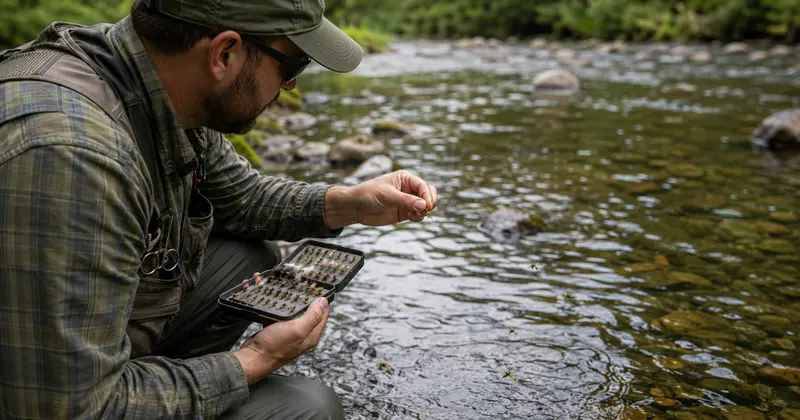
A common beginner mistake is choosing a fly because the pattern name sounds right while ignoring its size.
The same pattern may be available in several hook sizes, and the most useful one depends on what food is present and what your tackle can handle.
Larger is not automatically more attractive. Smaller is not automatically more realistic.
Choose a size that makes sense for the food source and your fishing situation.
Fly size also affects casting. A tiny dry fly and a large weighted streamer create very different demands on the leader, tippet, rod, and fly line. The National Park Service likewise notes that lighter flies generally pair with lighter gear, while heavier flies require equipment capable of handling them.
Match the Fly to Your Tippet and Tackle
The fly has to work with the rest of your setup.
Very small flies are often paired with finer tippet when delicate presentation is useful, while larger or more wind-resistant flies can benefit from a stronger or stiffer connection that turns them over more effectively.
Large or heavy streamers may also call for heavier rods and lines than small dries or nymphs.
There is no single tippet size that works for every fly. If you need help matching that connection to your fly and fishing situation, see our guide to choosing the right fly fishing tippet.
Think of the system as a whole:
- Fly
- Tippet
- Leader
- Fly line
- Rod
- Target fish
A fly can be appropriate for the fish but still be a poor match for the tackle you brought.
Choosing Flies by Fishing Situation
Use this table as a starting point, not a guarantee:
| Fishing Situation | Useful Starting Fly Type |
|---|---|
| Fish visibly rising | Dry fly or emerger |
| No obvious surface activity | Nymph or another subsurface fly |
| Insects emerging below the surface | Emerger, wet fly, or appropriate nymph |
| Fish chasing baitfish | Streamer |
| Bass or panfish feeding at the surface | Popper or suitable surface bug |
The table helps you choose a category. You still need to adjust fly size, pattern, and presentation to the actual water.
Are There Best Flies for Fly Fishing?
There is no universal best fly for every river, lake, species, or season.
The most useful choice depends on what the fish are eating and how they are feeding. Water depth, current, available food, target species, season, fly size, and presentation can all influence the decision.
This is why a useful fly box contains different types of fly fishing flies rather than relying entirely on one favorite pattern.
A balanced selection gives you options for changing situations. It does not need to contain every famous fly ever tied.
Building a Simple Beginner Fly Box
A beginner fly box should cover useful fishing situations rather than impress anyone with the number of patterns inside.
A practical starting structure might include:
- Several dry flies in useful sizes
- A selection of subsurface nymphs
- A few wet flies or emerger-style patterns
- A few streamers
- Species- or water-specific additions as you learn your local fishing
Variety of function matters more than raw quantity.
Ten nearly identical dry flies may provide less flexibility than a smaller mix that covers surface, subsurface, and moving-prey situations.
Once you choose a fly, you also need a dependable way to attach it. Our guide to fly fishing knots for beginners covers the core connections from reel to fly.
As you gain experience, your local water will show you which categories deserve more room in your box.
How to Evaluate a Fly Assortment Before Buying
Pre-packed assortments can be useful, especially for beginners, but a large fly count does not automatically mean better value.
When fly fishing lures are sold in an assortment, check what the box actually helps you fish before comparing the headline number of flies.
Look at:
- Target species: Is it intended for trout, bass, panfish, saltwater species, or something else?
- Fly types: Does it include categories you will actually use?
- Size range: Are the sizes suitable for your water and tackle?
- Duplicates: Are you getting useful backups or excessive repetition?
- Water-column coverage: Can you fish both surface and subsurface situations?
- Hook sizes: Are they appropriate for your intended fishing?
- Freshwater or saltwater use: Does the selection match where you fish?
- Pattern purpose: Do the patterns solve genuinely different fishing situations?
A smaller assortment with useful variety may be a better purchase than a huge box filled with patterns you are unlikely to use.
Common Fly Selection Mistakes
Choosing by Pattern Name Alone
A famous pattern can still be wrong for the feeding depth, prey size, or presentation you need.
Fishing the Surface When Fish Are Feeding Below It
If there is no surface activity, do not assume a dry fly is automatically the best starting point.
Ignoring Fly Size
A good pattern in an inappropriate size may be less useful than a simpler pattern that better matches the available food.
Changing Flies Without Changing Presentation
If the fly is drifting unnaturally or fishing at the wrong depth, another pattern may produce the same disappointing result.
Buying Too Many Nearly Identical Flies
Build functional variety first. Add duplicates and specialized patterns as experience shows you what you use most.
Ignoring Tackle Compatibility
A large weighted streamer can be difficult or unpleasant to cast on equipment designed around tiny dry flies.
Assuming One Best Fly Works Everywhere
Fly choice is situational. Species, prey, depth, season, water conditions, and presentation all matter.
Focusing on Color Before Depth and Presentation
Color can matter, but it should not distract you from where the fish are feeding and how the fly moves.
Quick Fly Selection Checklist
Before tying on a fly, ask:
- Where are the fish feeding?
- What are they likely eating?
- What approximate size is the food?
- What general profile matches it?
- Should the fly float, drift, swing, or move actively?
- Which fly category fits that presentation?
- Which pattern in your box is close enough?
- Does the fly work with your tippet and tackle?
That process is much more useful than guessing from a long list of pattern names.
FAQs
What Are the Four Main Types of Fly Fishing Flies?
The four broad categories commonly used are dry flies, nymphs, wet flies, and streamers. Dry flies generally fish on the surface, while the other three are usually presented below it in different ways. Additional groups such as emergers, terrestrials, egg patterns, and poppers also have useful roles.
What Fly Should a Beginner Use?
There is no single fly every beginner should use. Start with the feeding situation. If fish are rising, try a suitable dry fly or emerger. If there is little surface activity, consider a nymph or another subsurface pattern.
Should I Use a Dry Fly or a Nymph?
Use feeding depth as your first clue. A dry fly makes more sense when fish are feeding at the surface. A nymph is often a better starting point when feeding activity appears to be below the surface.
What Is the Difference Between a Wet Fly and a Nymph?
Nymphs generally imitate immature aquatic insect stages. Wet flies often suggest emerging, drowned, or swimming insects and are commonly drifted or swung. The categories can overlap, so intended imitation and presentation are more useful than treating the labels as rigid rules.
Are Streamers Considered Fly Fishing Lures?
Yes. Streamers are artificial flies used in fly fishing. They commonly imitate larger moving prey such as baitfish, leeches, or crayfish and are often retrieved or swung below the surface.
How Many Flies Does a Beginner Really Need?
There is no universal number. A beginner is usually better served by a smaller selection covering surface, subsurface, and moving-prey situations than by a very large collection of nearly identical patterns.
Final Takeaway
Choosing fly fishing lures becomes much easier when you stop searching for one magical pattern.
Start with where the fish are feeding. Identify the food they are likely eating, match the approximate size and profile, choose the right presentation, and only then select a pattern.
Build your fly box around useful situations rather than pattern count. A balanced mix of surface flies, subsurface options, and streamers will usually give you more practical choices—and teach you more about fly selection—than buying dozens of patterns without knowing when to use them.
Sources Used — Not Part of the Article:
- U.S. National Park Service — Fly fishing — National Park Service fly-fishing guide
- Orvis — Fly Fishing Flies — Orvis fly types guide
- Orvis News — Tom Rosenbauer on How to Match the Hatch — Orvis match-the-hatch guide
- Orvis — Fly Fishing Dry Flies — Orvis dry-flies guide
- Orvis — Wet Flies For Fly Fishing — Orvis wet-flies guide
- Orvis — Streamer Flies for Fly Fishing — Orvis streamer guide