
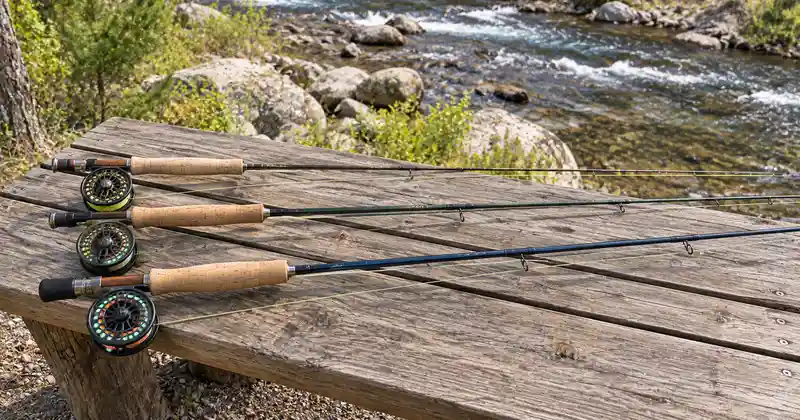
Fly Fish Pole: What It Is and How It Differs From a Regular Fishing Rod
A fly fish pole is usually called a fly rod. Unlike a conventional spinning rod or baitcasting rod, it is designed to cast a weighted fly line that carries a fly toward a fish. With most conventional tackle, the lure or sinker supplies the mass that pulls the line out during the cast.
If you already own a regular fishing pole and want to try fly fishing, the main question is not which expensive rod to buy. It is whether your existing equipment can present the flies you want to fish. This guide explains how to recognize the different systems, what parts are interchangeable, and what you actually need to get started.
What Does “Fly Fish Pole” Mean?
In everyday conversation, people use fishing pole and fishing rod interchangeably. In fly-fishing stores, the usual product name is fly rod or fly fishing rod. A modern fly rod has a flexible blank, a grip, a reel seat, and guides that carry the line. It works with a fly line, leader, tippet, and imitation fly. A simple pole without a reel is a different design; fixed-line methods such as tenkara are also distinct from conventional fly-rod-and-reel fishing.
The defining feature is the casting system, not the name. Orvis’s fly-fishing glossary describes fly rods as rods built to cast fly line. A conventional rod may be able to cast an artificial fly with added weight or a casting float, but that does not make its usual casting method the same as fly casting.
Fly Rod vs. Spinning Rod vs. Baitcasting Rod
| Feature | Fly rod | Spinning rod | Baitcasting rod |
|---|---|---|---|
| What carries the cast? | Mass of the fly line | Usually lure, bait or added weight | Usually lure or added weight |
| Reel position | Below grip, near the butt | Below rod, farther forward on typical grip | Above rod |
| Reel design | Rotating spool holding fly line and backing | Fixed spool during cast | Spool rotates during cast |
| Typical rod label | Length and fly-line class (5 wt, for example) | Length, power, action, line and lure ratings | Length, power, action, line and lure ratings |
| Line system | Fly line, tapered leader, tippet | Monofilament, braid or fluorocarbon; leader as needed | Monofilament, braid or fluorocarbon; leader as needed |
| Typical presentations | Dry flies, nymphs, wet flies and streamers | Lures, bait and some fly-with-float rigs | Lures and rigs suited to casting tackle |
These are typical conventional setups, not rules for every specialty technique. A heavy streamer or weighted nymph can affect a fly cast; the mass and motion of the fly line remain central to ordinary fly casting. See Take Me Fishing’s comparison of fly and conventional fishing and its fishing equipment glossary.
Practical difference: a nearly weightless dry fly is difficult to cast any useful distance with a normal spinning outfit by itself. A matched fly rod and fly line let you present that fly without having to attach a heavy conventional lure. Conversely, a conventional jig or heavy plug may be a better match for spinning or baitcasting tackle.
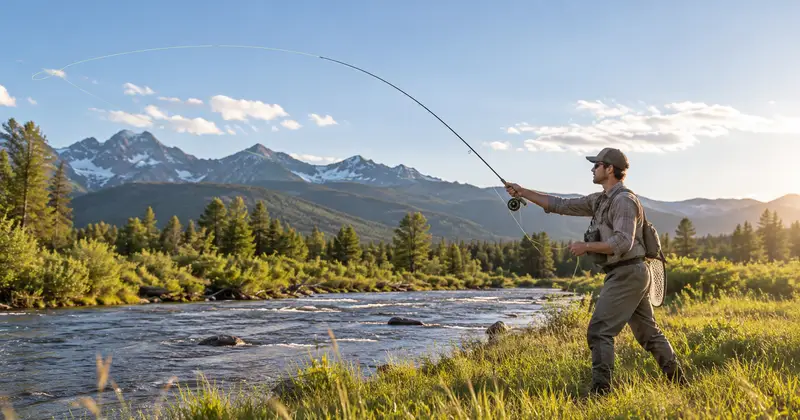
How to Recognize a Fly Rod in a Store or Used Listing
- Look for a line-class marking such as 5 wt rather than relying on the rod’s appearance.
- Look at the reel seat near the butt end, behind the main cork grip. Some heavier fly rods add a fighting butt.
- Check for a large-diameter fly line on the reel, not merely thin monofilament.
- Look for a manufacturer’s model number and verify that the rod is sold as a fly rod. Guide shape and handle material are clues, not definitive proof.
If a listing simply says fishing pole and supplies no rod markings, request clear photographs before ordering. Do not confuse the number of rod pieces with the line-weight rating. A four-piece 5-weight rod still takes a fly line selected for its design.
Can You Use a Regular Fishing Pole for Fly Fishing?
You can fish certain artificial flies with spinning equipment by using a suitably rated casting float or other legal rig to supply the casting mass. This can be an option if you want to try a fly presentation with gear you already own. It is not the same as learning to cast a conventional fly line.
For traditional fly fishing, use a rod, reel, and fly line designed to work together. A spinning reel or baitcasting reel is not a practical substitute for the fly reel in a normal fly outfit. Some accessories, such as a landing net or forceps, may be shared if suitable for the fish and method. Hooks, leaders, and terminal tackle still need to fit the technique and local fishing rules.
If you want to learn the casting motion, start with our fly rod casting guide. If you need the complete equipment arrangement, use our beginner fly fishing setup guide.
Which Fishing Pole Fits the Way You Want to Fish?
| Your situation | Starting choice | Why |
|---|---|---|
| Presenting small dry flies to rising trout | Fly outfit | Designed to carry light fly patterns on a weighted fly line. |
| Casting small conventional jigs and spoons | Spinning outfit | Lure-driven casting with a suitable lure-weight rating. |
| Working larger plugs or heavier conventional bass rigs | Suitable baitcasting or spinning outfit | Rod and reel ratings should match the lure and line. |
| Learning several trout fly-fishing methods | General-purpose fly outfit | A matched setup provides room to practice several fly presentations. |
Neither system is universally better. Choose the equipment based on how you want to deliver the lure or fly, not just the species you want to catch. These comparisons describe typical starting points; fishery rules can restrict tackle, bait, hooks, or methods.
Read the Fly Rod Label Before Buying
A label such as 9 ft, 5 wt, 4 pc means the assembled rod is nine feet long, designed around a five-weight fly line, and separates into four sections. The 5 wt marking is not the physical mass of the rod or a five-pound fishing-line strength rating.
A nine-foot five-weight is a common choice for general trout fly fishing, but a shorter, lighter rod may suit small creeks and a heavier setup may be appropriate for bulky flies. Start with the specifications for your water and technique. For detailed size selection, consult our trout fly rod weight and length guide. For comparisons of specific beginner products, see beginner fly rod picks.
Length, Action, Material, and Number of Pieces
Length affects reach and the space available to cast. Action describes the rod’s flex and recovery; moderate and fast rods feel different, but neither is automatically superior. Graphite, fiberglass, and bamboo are common construction materials, and the number of sections affects packing length. These specifications matter after you have chosen the correct type of fishing system, not before.
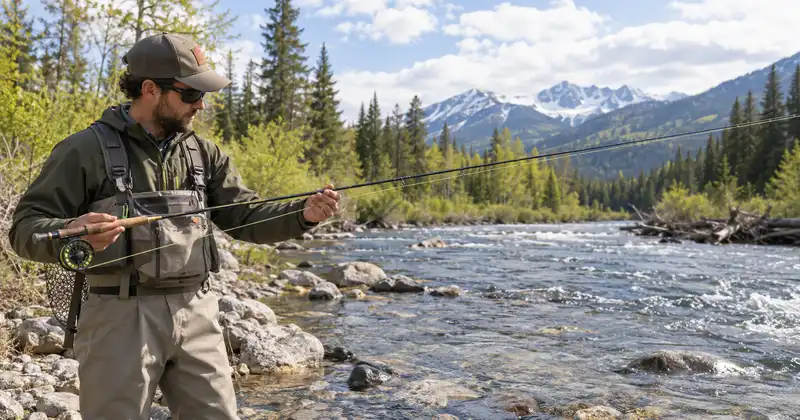
Rod Only or a Complete Fly Fishing Outfit?
If you own only spinning tackle, buying a fly rod alone leaves several missing components. A conventional fly outfit needs a matched reel, backing, fly line, leader and appropriate flies. Check exactly what the package contains, since outfits vary. If you already own compatible fly components, rod-only purchasing may make more sense.
A useful cost comparison is the total price of the fishable setup, not just the rod. Orvis’s line-selection guidance explains how a line is selected for the rod and fishing situation. Avoid buying a reel or line purely because it looks similar to your existing conventional tackle.
Quick First-Trip Checklist
- Confirm that the water allows your intended method.
- Choose a fly outfit instead of conventional tackle if you want to learn traditional fly casting.
- Match the rod and fly-line class and verify reel capacity.
- Attach a suitable leader and tippet and choose flies for the water.
- Practice with a hookless yarn fly in an open area before fishing.
- Wear eye protection, check weather and access, and use relevant fishing licenses and permissions.
Frequently Asked Questions
Is a fly fish pole the same as a fly rod?
Yes, in ordinary usage the phrase usually refers to the rod designed for fly fishing. Fly rod is the standard equipment term.
Can I put regular fishing line on a fly rod?
Ordinary thin fishing line alone does not provide the weighted casting system of conventional fly fishing. Monofilament or fluorocarbon can be appropriate for leaders and tippet. Select a proper fly line for the rod and method.
Can I use a spinning rod to cast a fly?
Some flies can be presented using a compatible casting float or weighted rig where legal. That is a conventional casting method rather than ordinary fly-line casting.
Does the reel go above or below a fly rod?
A conventional fly reel sits below the rod, at the reel seat behind the main grip. A spinning reel also sits below its rod, so reel position by itself is not proof of rod type.
Do I need a special rod if I want to learn fly fishing?
For standard fly-line casting, a matched fly rod, line, and reel are the practical starting point. A suitable complete outfit can simplify the purchase.
Final Takeaway
A fly fish pole is a rod designed to cast fly line and present flies. Understand that difference before comparing fly rod weights, materials, or brands. If your goal is traditional fly fishing, start with a compatible outfit and learn the casting method. If your goal is casting conventional lures, your existing spinning or baitcasting tackle may already be the better tool.