
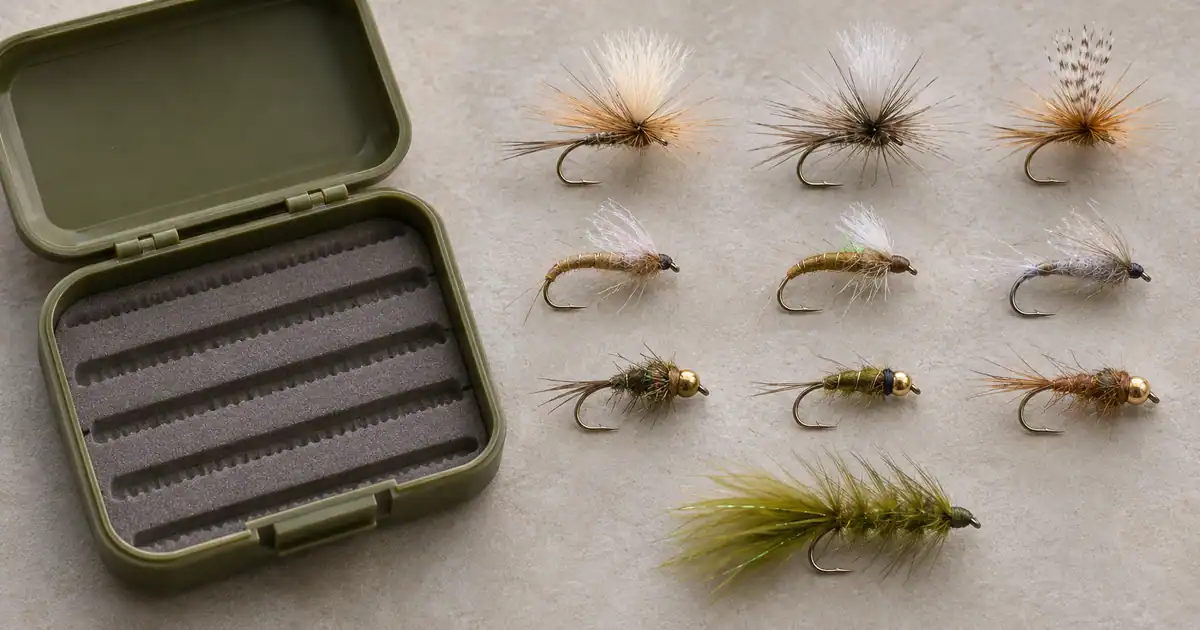
trout flies: Build a Balanced Selection for Your Water
Start with the trout flies you already own. Sort them by where they fish, then check the sizes and weights you can actually use on your water. That turns a box of look-alike patterns into a shopping list: replace the flies you rely on, fill the gaps you expect to encounter, and leave the rest for another trip.
Table of Contents
Start your trout flies audit with a specific trip
Write down the water, season, and two or three situations you expect to fish. On a small freestone creek in early summer, that could mean quiet edges, broken riffles, and a deeper pocket below a boulder. A box for that trip can be useful even if it lacks patterns you would want on a large tailwater or a lake.
Add a question you can ask a local shop before fishing. For example, ask whether anglers are seeing a small mayfly hatch or mainly finding fish below riffles. If the local answer points to much smaller flies, note the size range and what to watch for. Record what you learn separately from what you assumed when packing.
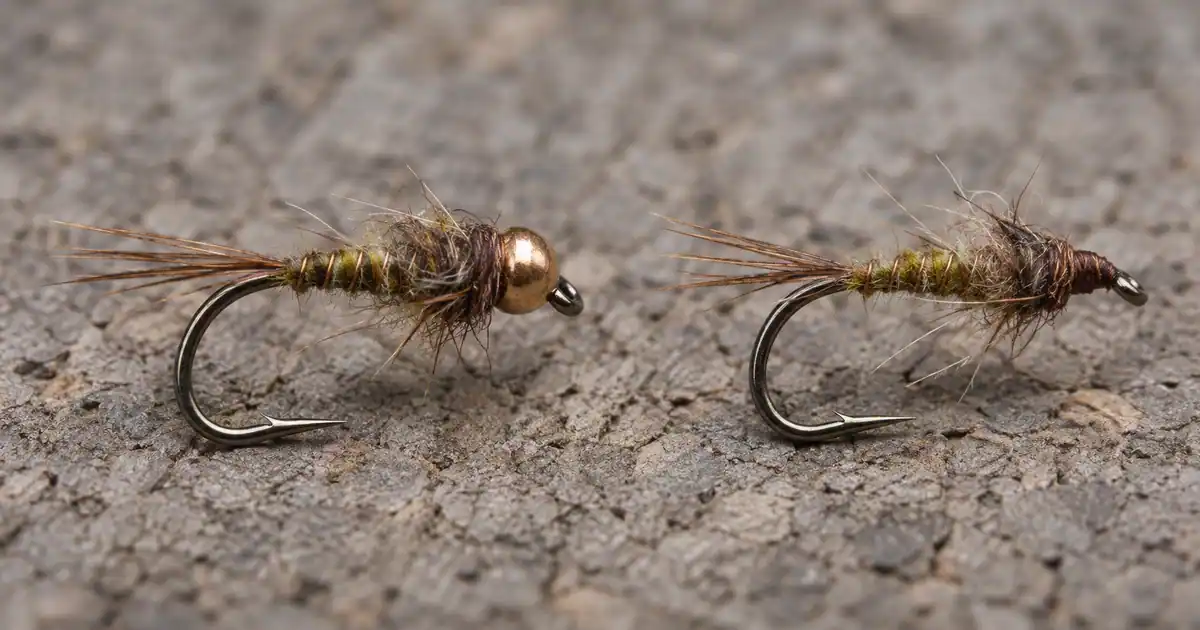
Use the guide to trout fly types to identify unknown patterns. If you recognize a fly but cannot tell whether the bead is tungsten, brass, or decorative, mark its weight as unknown. Compare flies you can identify side by side before declaring one the deeper option.
If you fish one small stream regularly, draw a quick map with three spots you can reach from the bank. Write down the first presentation you would try at each spot and the next one you can switch to without rebuilding the whole rig. This helps you decide which trout flies earn duplicate slots. If four patterns all appear in the same spot on your plan, keep the one you can identify and replace easily, then give the extra slots to a missing job.
Sort trout flies by the jobs they cover
Lay the flies out in four rows: surface, surface film, below the surface, and larger prey. Some patterns can serve more than one job depending on the tie and presentation. Assign each fly its main job for this trip, then note a second use only if you know how you plan to fish it.
| Job | Check your box for | What a gap might look like |
|---|---|---|
| Surface | A floating option you can see and a size that fits the food you expect. | Several bulky dries and nothing smaller for a calm edge. |
| Surface film | A low-riding emerger or another suitable option for insects caught in or near the film. | Dry flies ride high and your subsurface options are all heavily weighted. |
| Below the surface | Pattern size and weight options for shallow and deeper water. | Every nymph is the same size with the same bead. |
| Larger prey | A streamer you can cast and fish with your current setup. | The only streamer is too bulky for your rod and leader, or you have none for a trip where you expect to fish bigger prey. |
Hook size and weight are separate entries. Two size 16 nymphs can fish differently if one is unweighted and one is bead-head. Two flies with different color names may do almost the same job if their outline, size, and weight are alike. Read the actual fly or the package details when you compare.
As an Amazon Associate, we earn from qualifying purchases. FlyFishingScout may earn a commission on qualifying purchases at no extra cost to you.
📦 Keep large inventories separated. fishpond Tacky Original Fly Box – 2X Double Sided The double-sided silicone slots give you room to separate the sizes and weights you already own. A smaller box can be easier to carry when you only need a few rows for one outing. See Product & Check Price ➜
Audit a sample box of trout flies
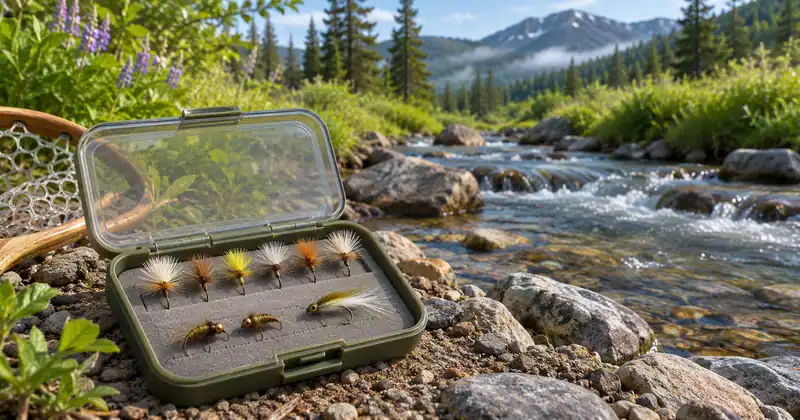
Here’s a hypothetical box for the creek above: four size 14 high-floating dries in two colors, four size 16 bead-head nymphs of similar weight, two size 14 unweighted nymphs, and a small Woolly Bugger. It covers a visible surface fly, two basic subsurface options, and a larger-prey option. It has little flexibility for a quiet edge when the likely food is small and low in the film.
Priority one is a film option if local advice or the day’s observations support it. For example, RIO describes its RS2 as an emerging mayfly or midge imitation. A second priority could be a smaller dry if the existing ones are too large for the insects you see. Keep useful duplicates of the trout flies you expect to lose in rocks or branches. Buying another color of the high-floating dry can wait when it would leave a more likely job uncovered.
For a different trip with open riffles and no signs of a hatch, you might change that order. A second manageable nymph weight could make more sense if the first one struggles to reach your intended depth. If it reaches the right layer but the drift drags, improve the presentation before buying a replacement. The trout pattern guide can help you identify candidates once you know the job.
🎣 Check the drift of the nymphs you already own. Oros Strike Indicators for Fly Fishing These reusable foam indicators attach to the leader and can be repositioned when you change depth. Choose a size suited to the weight of your rig, and check whether your water permits indicators. See Strike Indicators & Check Price ➜
Make the sample box work harder before replacing anything. Suppose you bring it to a quiet edge and the fish ignore the larger dries. First check whether your fly is skating faster than nearby bubbles or debris. If the drift is smooth and the natural insects look much smaller, test a smaller profile or a lower-riding pattern if you have one. At the next pocket, keep the nymph pattern the same and compare a lighter and a heavier tie when both are available. Note which one lets you pass through the intended layer. That separates a missing option from a change your existing trout flies already handle.
Compare packaged trout flies with your actual gaps
Use the maker’s inventory when available. The Orvis assortment catalog, for example, distinguishes selections focused on dries or nymphs from broader trout assortments. That is a starting point. Check the exact purchase listing for the proposed contents, sizes, and whether patterns can be replaced individually. A dry-only assortment could be a sensible purchase for somebody with strong subsurface coverage and a poor range of dries.
If the listing only gives a total fly count and a photo, ask for a pattern and size list or shop for the missing flies individually. On a small trip, that may be easier than buying several unknown duplicates. If you inherit a loose box, photograph the slots before moving anything, then store the sorted groups in separate rows. That makes it easier to identify what disappears after the trip.
Treat the assortment as one possible way to fill the gap. If your trout flies already cover the depth, size, and visibility you need, spend the money on replacements for the patterns you actually use.
🎣 Fill several gaps at once. Ventures Fly Co. | 122 Premium Hand Tied Fly Fishing Flies Assortment This mixed assortment includes dries, nymphs and streamers in two fly boxes. Compare the included patterns with your inventory before buying a broad selection to fill a single gap. Check Current Price ➜
Compare two assortments by the number of jobs they would add to your particular box. If the first set includes six more high-floating dries and your slot for that job is full, set those six aside on paper. Count the sizes or weights it adds where you have gaps. Do the same with the second set, then compare the two against what it would cost to buy just the relevant patterns separately. A large box of trout flies can make sense if you need reserves or fish several types of water. For a single creek trip, a short list of specific replacements can be easier to use and restock.
A trout fly assortment checklist you can reuse
- Water and dates: ___ . Expected insect activity or prey: ___ .
- Surface and film: record what floats high, what rides low, and usable sizes.
- Below the surface: record the size plus known or estimated weight. Note any unweighted alternative.
- Larger prey: record the option you can cast comfortably and where you expect to use it.
- Local advice to check: ___ . First gap to buy for: ___ . Flies to replace after the trip: ___ .
Before the next trip, mark what you tried, what actually reached the layer you wanted, and what needs replacing. That record gives your next purchase a purpose and helps with avoiding redundant fly selections when different patterns fill the same slot.
References
Orvis — Fishing Flies Assortments
Orvis — Tom Rosenbauer’s 12 Essential Trout Flies
Fishpond — Tacky Original Fly Box 2X