
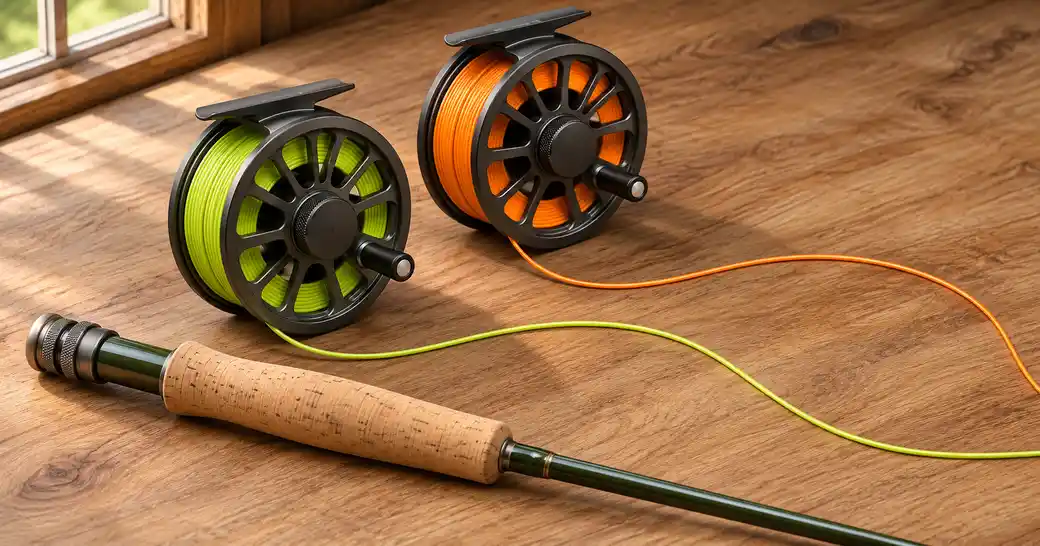
fishing fly line: Compare Tapers, Features and Upgrade Value
Before replacing your fishing fly line, write down what the current line keeps you from doing. Does it drag through the guides, struggle to turn over a big streamer, or ride too high on a retrieve? Clean and inspect a line that previously worked. Try a different design when the line is sound and the same problem persists. Pay for an upgrade when it improves a task you can repeat on the water.
Table of Contents
Diagnose your fishing fly line before replacing it
Write down the rod model and weight, the exact line if you know it, leader length, and the fly or rig that gives you trouble. Include the distance you actually fish. A line that feels good across a parking lot can feel different when only a few feet extend beyond the rod tip. For a short cast under branches, use the fishing distance you face rather than the furthest target you can hit.
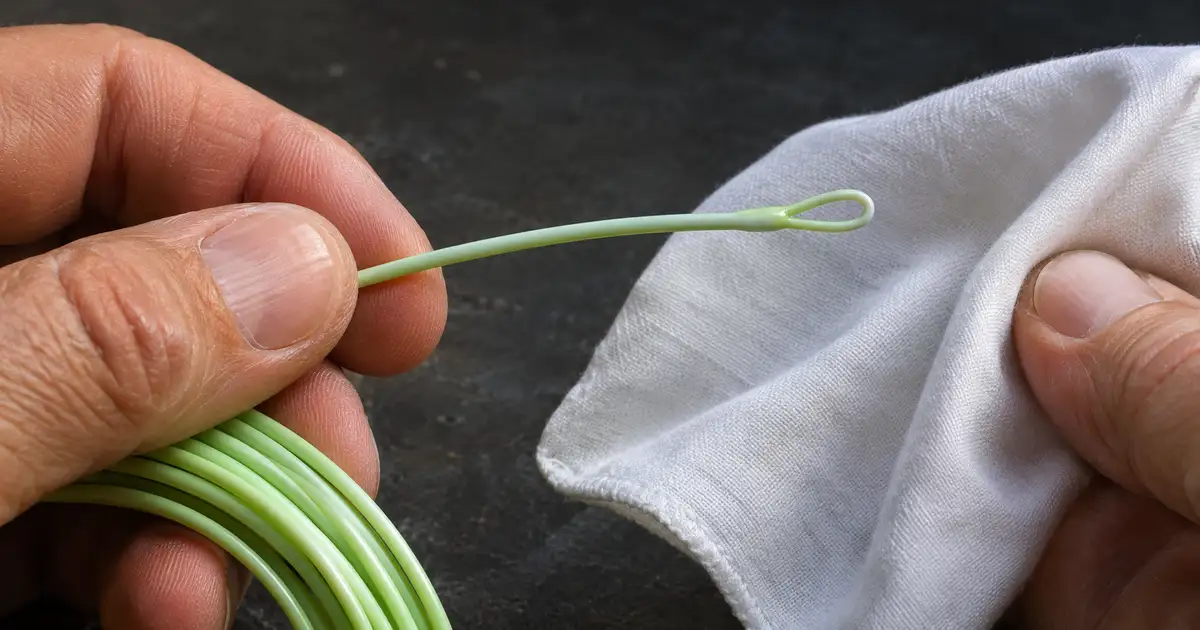
Inspect the tip, running line, and loops for splits, peeling, or a visibly damaged join. If an undamaged line feels sticky or the tip now sits lower than it used to, follow the maker’s cleaning instructions and let it dry before testing again. Scientific Anglers notes that dirt can affect flotation. Persistent damage still calls for inspection or replacement. When a sound line and light practice fly work but a bulky rig collapses, check leader and fly size as well. The fly fishing leader guide explains how taper and length affect turnover.
As an Amazon Associate, we earn from qualifying purchases. FlyFishingScout may earn a commission on qualifying purchases at no extra cost to you.
Establish a baseline 🎣 Scientific Anglers Air Cel Floating Lines, Yellow, WF-5-F — This general-purpose floating WF5F is rated at 140 grains in the first 30 feet. It is a separate model from the Air Cel Trout 5–6 in the table. See product on Amazon (paid link) ➜
If you inherited a reel and cannot identify the fishing fly line on it, check both ends for an ID mark and look for a label on the spool box. Record what you can confirm and leave the unknowns blank. Bring the reel and rod to the shop together so you can compare the feel against a known setup before buying.
Compare fishing fly line head length, mass, and density
Head length describes the forward section you handle in the cast. The weight for the first 30 feet and the total head weight can be different numbers on the same spec sheet. Compare matching columns. Where the maker publishes both, record both. An intentionally heavy line may carry a bulky fly well on a compatible rod, but it can change timing and feel considerably.
| Documented example | What the numbers tell you | When it is worth trying |
|---|---|---|
| Scientific Anglers Air Cel Trout 5–6 | 40-foot head, 150 grains in the maker’s grain column, floating | A general trout baseline if you mostly fish dries or unweighted rigs. |
| Scientific Anglers Frequency Sink Tip WF-5-F/S | 45-foot head, 140 grains in the first 30 feet, 10-foot Type III tip, floating rear section, $59.95 listed | A depth change if an otherwise useful floating line keeps a streamer too high. |
| Scientific Anglers Sonar Titan Sink Tip WF-5-F/S | 43-foot head, 245-grain full head, 185 grains in the first 30 feet, 8-foot tip in 5-weight, $99.95 maker listing | A heavier streamer-oriented profile when very bulky patterns are the recurring problem. Check the specific sink option. |
Prices are U.S. listing snapshots checked November 15, 2026, before tax and shipping. For the Air Cel 5–6, check the current price and availability of that exact SKU. For the Sonar, the manufacturer specifies cold to moderate conditions. Confirm the temperature range of the exact alternative you plan to fish. Use the published rod and line guidance before trying a specialty line. An intentionally heavy line in a labeled weight is a design choice. Jumping to the next published weight changes the comparison again.
Compare a half-size-heavy taper 🎣 Scientific Anglers MPX Taper, Buckskin / Optic Green, WF-5-F — The Mastery MPX puts added mass toward the front and is listed at 150 grains in the first 30 feet for WF5F. Compare it on your own rod before committing. See product on Amazon (paid link) ➜
A listing for a fishing fly line may show a taper chart for the family while a dropdown controls the actual item in the cart. Select the intended weight and density, and check that the product code and chart row match. Save that row so you can compare the item on arrival before opening the spool.
Test two fishing fly line setups on the same rod
For a floating-line comparison, borrow a line or ask a shop to demo one. Use the same rod, leader, and hookless yarn with each setup on open grass. Pick two targets at your normal fishing distances. Make five casts to each, then switch and repeat. Record how many land near the target, how often the leader straightens, and how many false casts you need. Repeat with a yarn bundle closer to the size of your bulkier fly. A consistent difference matters more than a single cast.
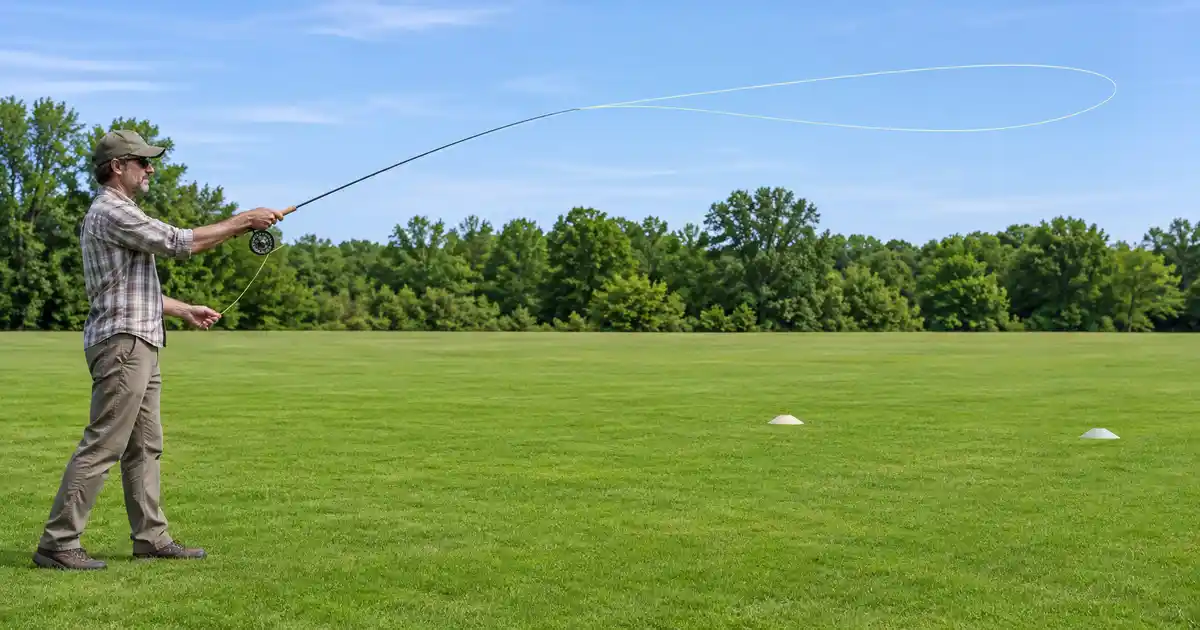
When you compare a fishing fly line against the one you already own, finish with a second round on the original. Keep the targets and yarn the same. Use the same leader. If your original line starts landing as accurately as the candidate, practice may explain part of the improvement. Repeat on another day if the difference is small.
For a sink-tip comparison, test at a safe bank position using the same streamer and leader. Pick a visible lane and repeat the same cast direction, initial pause, and retrieve. Judge whether the fly tracks at your intended depth and whether you can lift and recast without repeatedly dragging the tip back through the full retrieve. Current and retrieve speed affect running depth. The advertised sink rate gives you a starting point for comparison; the test tells you how the fly actually fishes that lane.
If both floating setups behave the same, spend some practice time with the fly fishing casting techniques guide before buying. When you switch spools or change line, use the fly fishing line setup guide to check how the backing, line, and leader connect.
For a small-stream test, set one target close enough to reach with a short cast and the other far enough to require feeding more line. Record misses to either side and whether the leader straightens. That tells you more about a fishing fly line for your water than a distance record, especially if most of your casts have branches behind them.
Decide when a fishing fly line upgrade earns its price
Keep a clean, intact line if it delivers the most common rig at your usual distance. Replace it with a similar design if the coating or loop is damaged and it served you well before. Change the design if you can name a repeatable delivery or depth problem and another line solves it. For a rod you fish almost entirely with small dries, a specialty streamer line will spend most of its time in a bag.
Compare the $59.95 Frequency Sink Tip and $99.95 Sonar Titan as different options for a known depth or turnover problem. The $40 gap buys a different combination of taper, mass and available densities. If the simpler line consistently delivers the flies you actually carry and reaches the depth you fish, that price gap is money you can keep. If the heavier profile turns over your bulky streamer on the same rod and still gives you control, then you have a reason to try it on the water before buying.
Test whether texture is worth paying for 🎣 Scientific Anglers Amplitude Textured MPX Fly Line, WF-5-F — This floating MPX also lists 150 grains in the first 30 feet. Compare it with the Mastery version on the same rod if you want to judge the difference in handling before paying more. See product on Amazon (paid link) ➜
When you change a fishing fly line, keep the old spool available for a follow-up comparison. Budget for a spare spool only if you need to swap lines on the same outing. Ask the shop whether it will let you demo your intended weight, whether cutting the line affects returns, and whether both lines fit your existing reel with its backing. The best decision about a fishing fly line begins with a job you can actually test.
Before you pay, decide which improvement would justify keeping a new fishing fly line. For example, you might want three clean deliveries out of five with your usual nymph rig at the distance you actually fish. If the candidate reaches that mark and your current line cannot, you have a reason tied to your own fishing. Keep the notes for the next comparison.
References
Scientific Anglers Air Cel Trout 5–6 specifications
Scientific Anglers Frequency Sink Tip specifications
Scientific Anglers Sonar Titan Sink Tip
The Avid Angler Sonar Titan Sink Tip taper and weight chart
Scientific Anglers line cleaning and dressing instructions
The Fly Shack Frequency Sink Tip specifications and WF-5-F/S price
Scientific Anglers Air Cel WF specifications