
Fly Tying Kit: How to Choose the Right Starter Kit
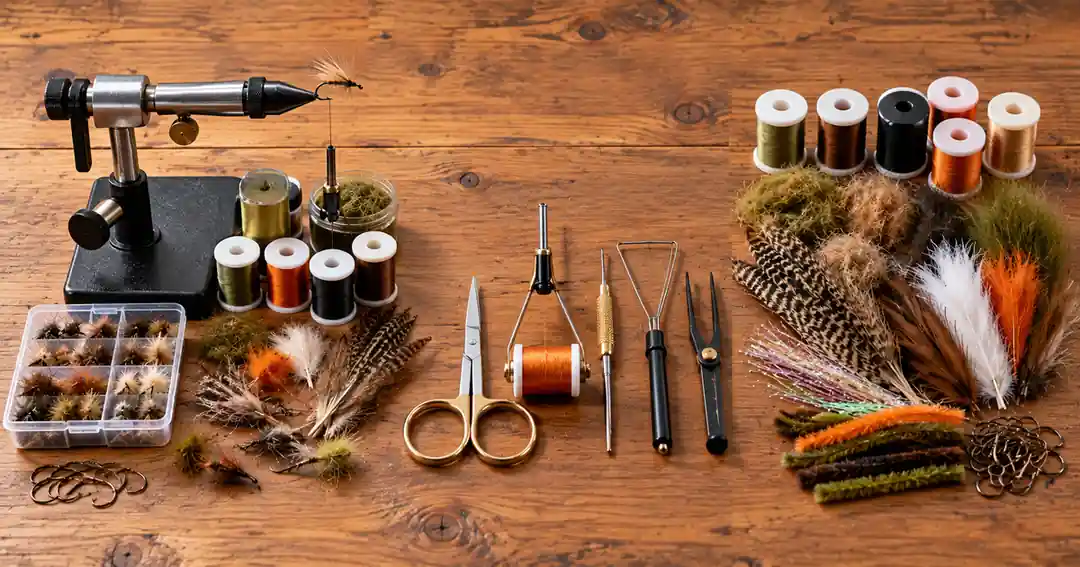
A fly tying kit should make it possible to learn useful tying skills without forcing you to replace half the setup immediately. For a true beginner, that usually means a stable vise, a few core hand tools, materials for specific patterns, and instructions that explain how those materials fit together.
The biggest mistake is assuming every product called a kit contains the same things. Some packages include a vise, tools, hooks, and materials. Others contain only hand tools or only tying materials.
The best way to choose a fly tying kit is to work backward from the flies you want to tie:
Patterns → Kit type → Vise → Tools → Materials → Instructions → Future upgrades
That method is more useful than simply buying the box with the largest number of pieces.
Table of Contents
Fly Tying Kit: Quick Buying Guide
Before comparing brands or prices, identify what type of fly tying kit you are looking at.
| Kit Type | Typical Contents | Best For | Main Risk |
|---|---|---|---|
| Complete starter kit | Vise, core tools, materials, instructions | Beginner starting from zero | Some components may be basic |
| Tool kit | Scissors, bobbin, bodkin, whip finisher and similar tools | Angler who already owns a vise and materials | Not ready to tie by itself |
| Materials kit | Hooks, thread, dubbing, feathers, hair and other materials | Tyer who already owns tools and a vise | No tying hardware |
| Pattern kit | Materials for one or several specific flies | Learning selected patterns | Limited range |
A beginner starting with nothing will usually find a true complete kit easiest.
Someone who already owns a good vise may get better value from buying a tool kit and pattern-specific materials separately.
Do not rely on the word complete. Read the actual contents list.
Fly Tying Kit: Choose the Kit Type First
The first decision is not which brand to buy. It is which kind of fly tying kit solves your current problem.
Complete Starter Kit
A complete starter kit should give a beginner enough equipment to sit down and tie the patterns included in the instructions.
At minimum, look for:
- a vise;
- bobbin;
- scissors;
- basic finishing tool;
- hooks;
- thread;
- pattern materials;
- instructions.
Additional tools such as hackle pliers, a bodkin, and hair stacker can be useful depending on the flies included.
The current Orvis Encounter kit is an example of this approach. It includes a starter vise, ceramic bobbin, scissors, bodkin, hair stacker, hackle pliers, head cement, and materials for eight patterns.
That is very different from a tool-only package.
Fly Tying Tools Kit
A fly tying tools kit normally contains hand tools but may not contain a vise, hooks, thread, or fly materials.
For example, Loon’s current Core Fly Tying Tool Kit contains:
- scissors;
- bobbin;
- bodkin;
- whip finisher;
- hackle plier.
That is a useful set if you already have a vise and materials.
It is not a complete first tying bench by itself.
Fly Tying Materials Kit
A materials kit takes the opposite approach.
It may include:
- hooks;
- threads;
- dubbing;
- feathers;
- hackle;
- chenille;
- wire;
- beads;
- hair;
- other pattern materials.
Hareline’s current Fly Tying Material Kit, for example, is built around a large materials selection and a pattern book while leaving the vise and tool choice to the buyer.
That can be a good arrangement for someone who wants to choose better hardware separately.
Why “Complete” Must Be Verified
There is no universal rule defining exactly what the word “complete” must mean on a fly tying kit.
One kit may be complete enough to tie its included patterns.
Another may still require a vise.
Another may provide tools and materials but lack a whip finisher or another tool you expected.
Always compare the actual contents, not just the product name.
Fly Tying Kit: Check the Vise First
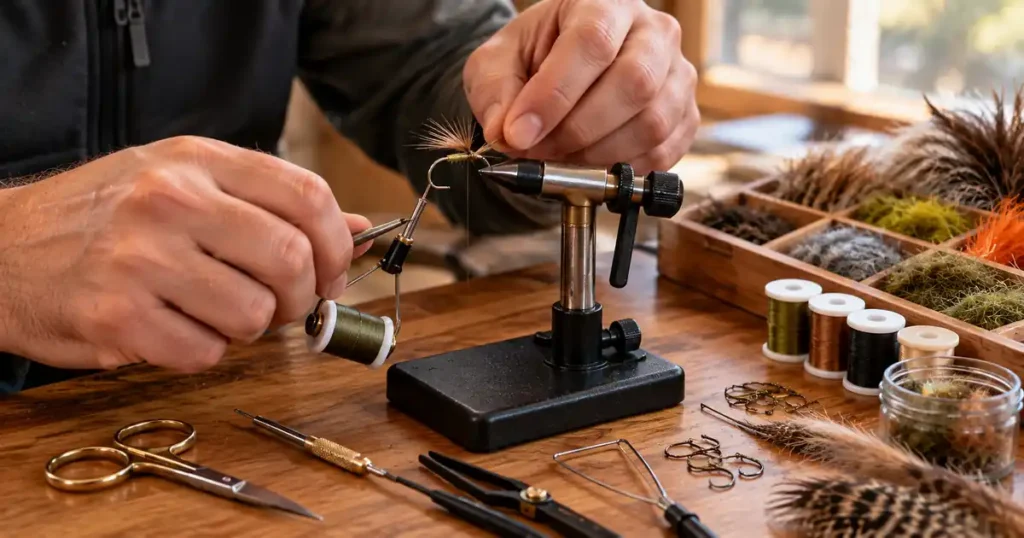
If a fly tying kit includes a vise, inspect that component before getting excited about the amount of thread, feathers, or dubbing in the box.
The vise is the foundation of the tying setup.
Secure Hook Grip Matters Most
A beginner vise has one essential job: hold the hook securely while you wrap thread and materials.
The hook should not rotate or slip unexpectedly under normal tying pressure.
A package with dozens of materials is poor value if its vise makes every fly frustrating to tie.
Hook Sizes You Plan to Tie
Start with the patterns you actually expect to make.
Small trout flies use very different hooks from large streamers, bass bugs, or saltwater patterns.
Before paying more for a wide hook range, ask whether you will actually use it.
FlyFishingScout’s guide to choosing a fly tying vise goes deeper into jaw design, hook ranges, rotary features, and base options.
C-Clamp vs. Pedestal
A C-clamp attaches the vise to the edge of a suitable table or bench.
Advantages include:
- secure mounting;
- relatively compact setup;
- less equipment occupying the tabletop.
A pedestal vise sits on a weighted base.
Advantages include:
- easier repositioning;
- use on tables that cannot accept a clamp;
- quick setup and removal.
Neither system is automatically better.
For a starter fly tying kit, reliable stability matters more than choosing one base type because it sounds more advanced.
Rotary Features Are Secondary for Beginners
A beginner does not need true in-line rotary operation to learn basic fly tying.
Rotation can make inspection and some material wraps easier, but thread control, proportions, material placement, trimming, and finishing are more fundamental skills.
Prioritize a vise that grips your hooks reliably.
Upgrade for advanced rotary features when you know why you want them.
Fly Tying Kit: Essential Tools Beginners Need
A fly tying kit does not need twenty specialized tools to teach the basics.
A small group handles most beginner patterns.
Bobbin
The bobbin holds the thread spool and controls thread delivery while you tie.
It should let thread feed smoothly without constantly breaking it.
Ceramic-lined bobbins are common because the smooth tube helps reduce thread abrasion.
Scissors
Good tying scissors should make controlled cuts close to the fly.
For a beginner, one useful all-purpose pair is enough.
Avoid using your best fine tying scissors on heavy wire or materials that can quickly damage the cutting edge.
Whip Finisher
A whip finisher creates a secure finishing knot at the head of the fly.
You can learn to whip finish by hand, but the tool makes the process more repeatable for many beginners.
A useful kit should either include one or provide a clear alternative finishing method.
Bodkin
A bodkin is essentially a fine needle-style tool.
It can help with:
- applying small amounts of head cement;
- separating fibers;
- clearing hook eyes;
- positioning materials.
It is inexpensive and useful even though it is not complicated.
Hackle Pliers
Hackle pliers grip feathers and other delicate materials while you wrap them around the hook.
They become important when the included patterns require hackle.
If the kit contains no patterns using wrapped hackle, they are less urgent.
Hair Stacker
A hair stacker aligns the tips of natural hair such as deer or elk hair.
It is useful for patterns where aligned hair matters, including many caddis-style flies.
It is not equally important for every beginner tying style.
This illustrates an important buying rule: the useful tool list should follow the included patterns.
Fly Tying Kit: Choose Materials by Pattern
The materials section of a fly tying kit can look impressive because it is easy to fill a box with feathers, fur, thread, and synthetic fibers.
Quantity alone tells you very little.
Hooks
The hooks should correspond to the patterns included in the instructions.
For a beginner kit, having enough hooks to repeat a pattern is more valuable than receiving one hook in many unrelated styles.
Repetition builds tying skill.
Thread
Thread is the foundation holding most flies together.
A starter kit may include several colors or sizes, but more is not automatically better.
The thread should make sense for the hooks and patterns provided.
Dubbing
Dubbing is used to build bodies on many nymphs and dry flies.
A small selection of useful colors can teach more than a huge assortment that the included recipes never explain.
Feathers and Hackle
Feathers may be used for:
- tails;
- wings;
- legs;
- collars;
- hackle;
- movement.
The exact feather type matters because different materials behave differently.
A good kit explains where each material belongs instead of handing the beginner an unexplained bag of feathers.
Marabou, Chenille, Hair, and Other Materials
Patterns such as Woolly Buggers may use materials such as marabou and chenille, while dry flies may use deer or elk hair.
This is why buying by pattern is so effective.
Once you know the patterns, the material list becomes logical.
If you are still learning how dries, nymphs, wet flies, and streamers differ, FlyFishingScout’s guide to types of fly fishing flies provides a useful starting point before you buy a large material assortment.
Why Raw Material Count Is a Weak Buying Metric
Imagine two kits.
One includes 50 small packages of unrelated materials with minimal instruction.
Another includes fewer materials but provides everything required to tie eight proven patterns ten times each.
For a beginner, the second arrangement may provide much more useful practice.
Judge the fly tying kit by what you can learn and tie, not by how full the box appears.
Fly Tying Kit: Instructions Matter More Than Beginners Expect
Instructions are one of the most underrated parts of a beginner fly tying kit.
Without a clear learning path, even good materials can become confusing.
Pattern Recipes
A useful recipe should identify:
- hook;
- thread;
- tail;
- body;
- rib;
- wing;
- hackle;
- finishing steps;
when those elements apply.
The recipe gives each package of material a purpose.
Step-by-Step Photos or Video
Beginners often need to see where hands, tools, and materials move.
Video can be especially helpful for:
- thread control;
- starting thread;
- wrapping materials;
- using a whip finisher;
- managing proportions.
The current Orvis Encounter and Premium kits both include pattern-specific instruction, while Wapsi’s Starter Kit includes its step-by-step handbook.
Start With Repeatable Patterns
Good beginner patterns teach transferable skills.
A Woolly Bugger can teach material placement, wrapping, proportions, and finishing.
A Zebra Midge can teach thread control and simple body construction.
A Pheasant Tail-style nymph introduces additional material management.
The exact first pattern matters less than having a logical progression.
Tie the Same Pattern Several Times
Do not rush from one new fly to another after every attempt.
Tie the same pattern several times.
You will start noticing:
- better proportions;
- cleaner thread wraps;
- more consistent material amounts;
- smaller heads;
- faster tool handling.
A fly tying kit that contains enough material for repeated practice is more useful than one designed only to maximize variety.
Fly Tying Kit Examples by Type and Budget
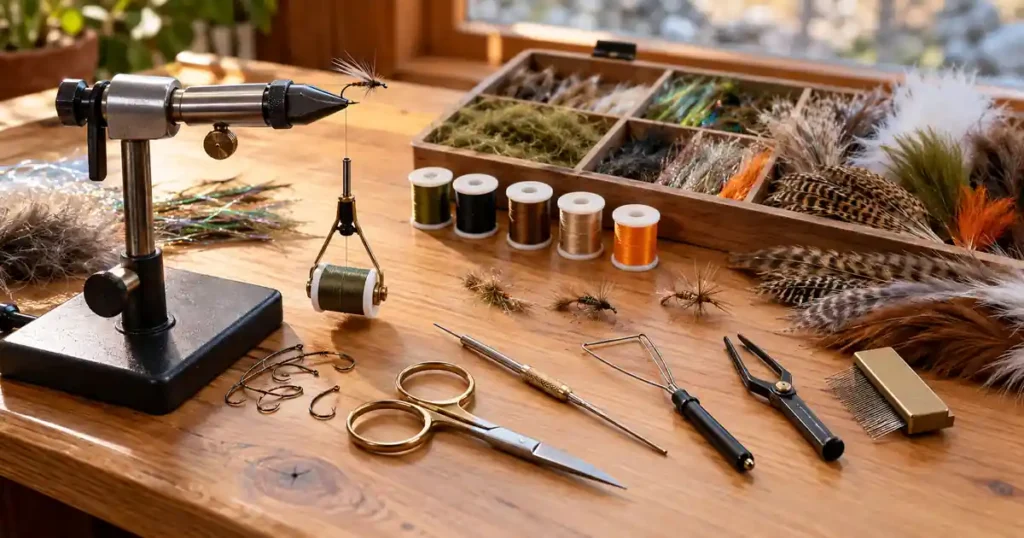
Current products show why fly tying kit comparisons need to consider contents rather than price alone.
Prices below are current reference prices and may change.
Orvis Encounter — Complete Starter Kit
Current price: about $98.
The Encounter includes:
- starter vise;
- ceramic bobbin;
- scissors;
- bodkin;
- hair stacker;
- hackle pliers;
- head cement;
- materials for eight patterns.
Orvis states that the included materials are sufficient for ten of each of the eight basic patterns, or 80 flies total.
Examples include:
- Woolly Bugger;
- Pheasant Tail Nymph;
- Elk Hair Caddis;
- Zebra Midge.
Best fit: A beginner starting with no vise, tools, or materials.
Main trade-off: It is designed as a starter system, so someone who already knows they want higher-end individual tools or a premium vise may prefer building a bench separately.
Orvis Premium — Expanded Complete Kit
Current price: about $198.
The Premium kit expands the learning system to materials for 16 patterns, ten flies each.
Its tool set includes:
- vise;
- ceramic-lined bobbin;
- scissors;
- bodkin;
- half-hitch tool;
- hackle plier;
- hair stacker;
- whip finisher.
It also includes a carrying case and pattern instruction.
Orvis notes that hooks, beads, and tying materials can be substituted depending on availability.
Best fit: Beginner who wants a broader pattern curriculum from the start.
Main trade-off: At roughly twice the Encounter price, it makes sense only if you value the additional tools, patterns, and materials.
Wapsi Starter Kit — Pattern-Based Complete Kit
Wapsi states that its Fly Tying Starter Kit includes the tools and materials required to tie ten trout fly patterns, along with a handbook containing step-by-step instructions.
Wapsi is a manufacturer and wholesale distributor rather than a direct-to-consumer retailer, so current retail price can vary by dealer.
Best fit: Beginner who values a structured pattern-based learning approach.
Main trade-off: Compare the specific retailer package and current price before purchase.
Loon Core — Tool Kit, Not a Complete Setup
Current manufacturer price: about $70.
The Loon Core Fly Tying Tool Kit contains five tools:
- scissors;
- bobbin;
- bodkin;
- whip finisher;
- hackle plier.
It does not provide the vise and pattern materials required for a complete first setup.
Best fit: Someone who already owns or plans to choose a vise and materials separately.
Main trade-off: A true beginner starting from zero still needs several additional purchases.
Loon also currently offers a 10-tool Complete Fly Tying Tool Kit for about $140, but despite the name, it remains a tool set rather than a complete vise-and-materials tying system.
Hareline Material Kit — Materials-Focused Option
Current manufacturer reference price: about $186.
Hareline lists 47 different materials, hooks, threads, and a full-color 20-pattern book.
Hareline explicitly leaves vise and tool selection to the dealer or buyer.
Best fit: Someone who already owns tying hardware and wants a broader materials collection.
Main trade-off: It is not a ready-to-tie setup for someone starting with an empty desk.
Fly Tying Kit vs Buying Vise, Tools, and Materials Separately
A fly tying kit is usually easiest when you are completely new, but buying everything separately gives you more control.
Advantages of a Kit
A complete kit can reduce:
- compatibility questions;
- material-selection confusion;
- initial shopping time;
- risk of forgetting a basic tool.
It can also give you a built-in learning progression.
That is valuable when you do not yet know which vise, scissors, bobbin, hooks, and materials you prefer.
Advantages of Building Your Own Bench
Buying separately lets you choose:
- a better vise;
- specific scissors;
- preferred bobbin;
- only the materials for patterns you fish;
- higher-quality tools where they matter most.
You also avoid accumulating materials you may never use.
The downside is that you need enough knowledge to assemble a functional system.
Which Route Makes More Sense for a True Beginner?
Choose a complete fly tying kit when:
- you own nothing;
- you want structured instruction;
- the included patterns interest you;
- the vise and tools meet your initial needs;
- the total price is reasonable.
Build separately when:
- you already know which flies you want to tie;
- you want a specific vise;
- you already own part of the setup;
- you prefer to buy fewer, better individual tools.
If you are unsure whether fly tying is something you will enjoy, trying instruction first can also make sense. FlyFishingScout’s guide to fly fishing classes near you explains how to find local shops and programs, some of which offer fly tying instruction.
Common Fly Tying Kit Buying Mistakes
A fly tying kit should simplify your first tying experience. These mistakes often do the opposite.
Choosing by Piece Count
More pieces do not guarantee a better kit.
Ask what those pieces let you tie.
Ignoring the Vise
A large materials assortment cannot compensate for a vise that does not hold your hooks reliably.
Evaluate the vise before the extras.
Buying Materials Before Choosing Patterns
Random materials accumulate quickly.
Choose several patterns first, then buy what those patterns require.
Assuming Every Kit Is Complete
Tool kits and materials kits are often marketed alongside complete tying systems.
Read the contents list carefully.
Paying for Specialty Tools Too Soon
Dubbing spinners, specialized tweezers, advanced bobbins, multiple scissors, and specialty hair tools can all be useful.
You do not need all of them on the first day.
Buying a Huge Assortment With No Learning Plan
The purpose of your first fly tying kit is to teach you to tie consistent useful flies.
A focused kit plus repeated practice usually creates a clearer path than a desk covered in unexplained materials.
Fly Tying Kit FAQs
What Should a Beginner Fly Tying Kit Include?
A true beginner setup should include a vise, bobbin, scissors, basic finishing method, hooks, thread, pattern materials, and clear instructions.
Hackle pliers, a bodkin, and hair stacker can also be valuable depending on the patterns included.
Do You Need a Vise in a Fly Tying Kit?
You need a vise to hold the hook while tying.
It does not have to come inside the kit if you already own one or plan to purchase one separately.
Always check whether a product called a kit actually includes a vise.
How Much Should a Beginner Spend on a Fly Tying Kit?
Current complete beginner kits can start around the $100 level, while more extensive kits can approach $200 or beyond.
The better question is what you receive for the price.
Compare:
- vise;
- essential tools;
- patterns;
- materials;
- instruction;
- likely immediate upgrades.
Are Complete Fly Tying Kits Worth It?
They can be, especially when you are starting from zero.
A well-designed complete fly tying kit saves you from selecting every component individually and can provide a structured learning path.
It is less attractive when you already own a vise or know you want specific higher-end tools.
Is It Better to Buy a Kit or Tools Separately?
Buy a complete kit for convenience and structured learning.
Buy separately when you know your preferred vise, tools, and patterns or already own part of the setup.
Neither route is universally better.
What Flies Should a Beginner Learn to Tie First?
Start with patterns that use a manageable number of materials and teach repeatable skills.
Common beginner-friendly examples include:
- Zebra Midge;
- Woolly Bugger;
- simple nymphs;
- basic caddis-style patterns.
Choose flies that are also useful for the fishing you actually do.
Fly Tying Kit: Final Takeaway
Choose a fly tying kit from the flies backward.
Decide which patterns you want to learn, determine whether you need a complete kit or only tools or materials, check the vise, and then evaluate the contents according to what those patterns require.
For a true beginner starting from zero, a focused complete kit with a usable vise, essential tools, materials for repeatable patterns, and clear instruction is usually easier than assembling everything separately.’
Do not pay for the largest box.
Buy the fly tying kit that gives you a clear path from an empty hook to your first consistent set of usable flies.
Sources Used
Orvis — Encounter Fly Tying Kit
Verified the current $98 manufacturer price, starter vise, ceramic bobbin, scissors, bodkin, hair stacker, hackle pliers, head cement, instructional material, eight included patterns, and materials for ten flies per pattern.
Orvis Encounter Fly Tying Kit
Orvis — Premium Fly Tying Kit
Verified the current $198 price, 16-pattern curriculum, ten flies per pattern, tool set, vise, carrying case, and the manufacturer’s note that hooks, beads, and materials may be substituted based on availability.
Orvis Premium Fly Tying Kit
Wapsi — Fly Tying Starter Kit
Verified that the kit includes the necessary tools and materials for ten trout fly patterns plus step-by-step handbook instruction. Wapsi also states that it sells through dealers rather than directly to the public.
Wapsi Fly Tying Starter Kit
Loon Outdoors — Core Fly Tying Tool Kit
Verified the current $70 price and five-tool contents: scissors, bobbin, bodkin, whip finisher, and hackle plier.
Loon Core Fly Tying Tool Kit
Loon Outdoors — Complete Fly Tying Tool Kit
Verified the current $140 price and ten-tool contents. The manufacturer’s list confirms that this remains a tying-tool set rather than a complete vise-and-materials starter system.
Loon Complete Fly Tying Tool Kit
Hareline Dubbin — Fly Tying Material Kit
Verified the current $186 manufacturer reference price, 47 listed materials, hooks, threads, 60-page 20-pattern book, and separate vise/tool approach.
Hareline Fly Tying Material Kit