
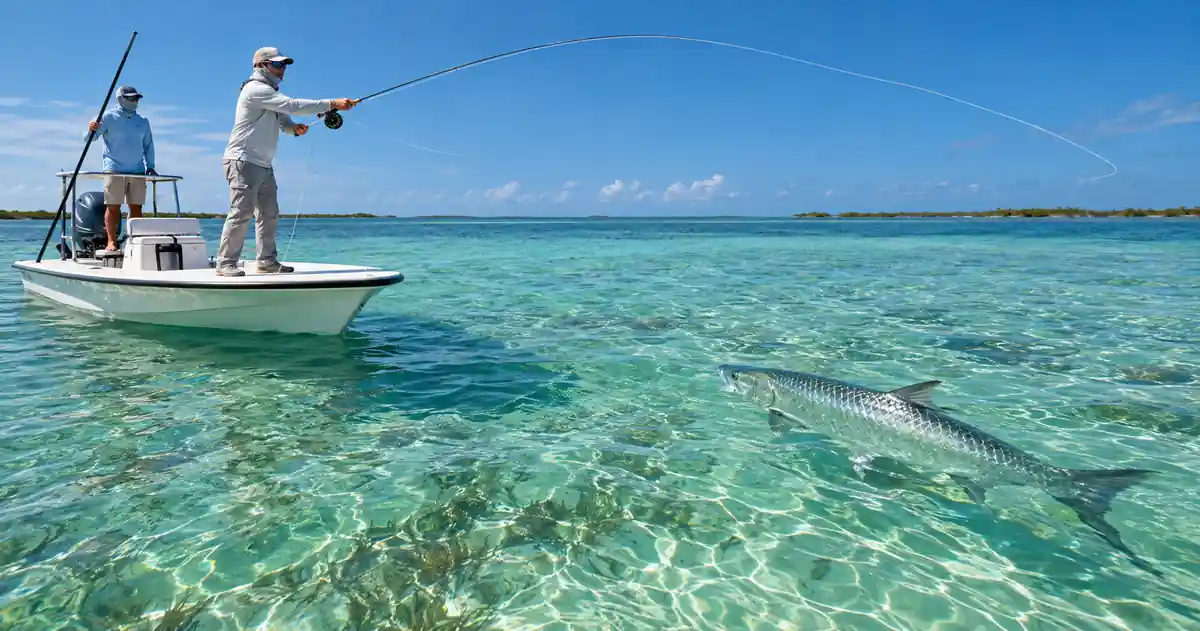
Fly Fishing for Tarpon: Gear, Casting, and First-Trip Tips
Fly fishing for tarpon asks more of an angler than simply swapping a trout rod for a heavier one. Tarpon can appear suddenly, follow a fly without taking it, and accelerate hard when hooked. Your first trip will go better if you can deliver a fly quickly, maintain contact during the retrieve, and manage loose line safely—not just make a long cast on an empty lawn.
This guide explains the essential gear, flies, casting drills, strip set, and fighting basics for a first trip. The focus is preparation, particularly for guided flats fishing in Florida and the Keys. Conditions and fish size vary, so confirm your outfit and presentation with your guide rather than expecting one setup to work everywhere.
Table of Contents
Fly Fishing for Tarpon: Quick First-Trip Priorities
For a first trip, prioritize a properly matched saltwater outfit, accurate casts in wind, a direct strip set, safe line handling, and a plan for releasing fish quickly. A useful 50-foot cast made promptly may create a better opportunity than a slow, inaccurate 80-foot attempt. Practice with the equipment you expect to use.
| Priority | What to prepare | Why it matters |
|---|---|---|
| Suitable tackle | Rod, reel, backing, line, and leader matched to expected tarpon | Helps cast the fly and fight fish without unnecessary exhaustion |
| Quick, accurate casting | Practice at 30, 45, and 60 feet, including in wind | Moving fish may leave a small window for a presentation |
| The strip set | Pull the line firmly while pointing the rod toward the fly | Keeps a more direct connection than a trout-style upward lift |
| Loose-line control | Keep coils away from feet, hardware, and fingers | Prevents tangles and dangerous line tension |
| Responsible release | Know local laws and minimize handling | Reduces stress and protects fish |
The hardest part of fly fishing for tarpon is often putting several ordinary skills together under pressure. Start with repeatable movements, then build speed.
Tarpon Gear: Rods, Reels, Lines, and Leaders
The right setup for fly fishing for tarpon depends first on whether you are targeting smaller resident fish or large migratory adults. Match the whole system rather than buying the heaviest rod you can afford.
Choosing Rod Weight for Juvenile vs Large Tarpon
Fly Fishers International gives 8–10-weight rods for juvenile tarpon and 10–12-weight rods for migratory tarpon as broad references. A guide might select an 11- or 12-weight for large Florida Keys fish, but that does not make a 12-weight necessary for every juvenile fish or quiet-water situation.
Heavier rods can turn over bigger flies and provide greater lifting power, but they also require more practice to cast efficiently. Before spending money, ask your guide about the expected fish size, typical wind, fly size, and whether suitable tackle is included.
Saltwater Reels, Drag, and Backing
Use a saltwater-suitable reel with reliable drag and enough backing for the fish and conditions. Large tarpon can take fast, lengthy runs, so reel capacity is not a minor detail. Check the manufacturer’s capacity for the exact backing and fly line combination. Avoid overfilling the spool.
Corrosion resistance matters, but even sealed-drag equipment needs rinsing and drying according to its care instructions. Test the drag and all connections before fishing. For broader component advice, see FlyFishingScout’s guide to saltwater fly fishing gear.
Floating vs Intermediate Fly Lines
A tropical floating line is useful for many shallow flats presentations. Intermediate lines can help when you need the fly to track beneath the surface in wind or current. Neither is universally superior: the right choice depends on water depth, fish behavior, and the guide’s approach.
For a verified example of design rather than a blanket recommendation, RIO lists its Premier Tarpon Quickshooter WF10F as a tropical floating line with a 30-foot head. The short, heavy head is intended to load quickly. A different taper may better suit delicate presentations or longer carry. Ask to practice with the actual line you will use.
FlyFishingScout’s overview of choosing the right fly fishing line explains floating and intermediate lines in more detail.
Understanding Tarpon Leaders and Bite Tippet
A tarpon leader must turn over the fly while providing appropriate strength and abrasion resistance. The butt section transfers casting energy, the class or breaking section helps define the system’s breaking strength, and the bite or shock section resists abrasion from a tarpon’s mouth.
For instance, RIO’s current Tarpon Pro Leader is listed at 10 feet, with class-section options of 20, 30, or 40 pounds and shock sections of 60 or 80 pounds. Those are specifications of that product, not a universal leader recipe. IGFA record-class systems have separate rules. Let the guide confirm the appropriate connections and tippet for your trip.
Fly Fishing for Tarpon: Choosing Flies and Presentations
When fly fishing for tarpon, select flies for silhouette, movement, sink behavior, and how they enter the water. One compact fly box is usually more useful for a first trip than a large collection of untested variations.
| Fly style | Practical role | Trade-off |
|---|---|---|
| Tarpon Toad-style fly | Compact profile with movement from its fibers | The wrong size or weight may land too hard |
| Cockroach-style pattern | Relatively sparse traditional tarpon profile | May be less visible in poor light or stained water |
| Tarpon Bunny | Rabbit-strip movement during slow or moderate retrieves | Wet materials can become heavier and harder to cast |
| Baitfish imitation | Useful when a fishery favors baitfish-like presentations | Bulk or added weight may complicate quick shots |
Do not assume one fly color works throughout the Florida Keys. A modest selection of natural-looking and contrasting patterns gives you options, while the guide’s local knowledge should determine the initial choice.
Present to the Fish, Not Just Its Current Position
When sight-fishing, look at the tarpon’s direction and speed. A fly placed directly onto its head can startle it; a fly dropped too far away may never enter its path. Listen for the guide’s preferred lead distance and retrieve. There is no reliable universal number of feet ahead of every fish.
Some tarpon are traveling steadily; others are resting or moving slowly. A moving fish may call for a prompt lead cast and timed strips. A laid-up fish may require a quieter presentation and slower movement. If the tarpon follows but refuses, change one thing at a time instead of violently accelerating every retrieve.
Fly fishing for tarpon is different from presenting a tiny trout dry fly: you may be delivering a larger fly into wind from a boat that is also moving. Keep false casts to what you need, and never direct a loaded cast over the guide or another passenger.
Fly Fishing for Tarpon: Casting Accurately in Wind
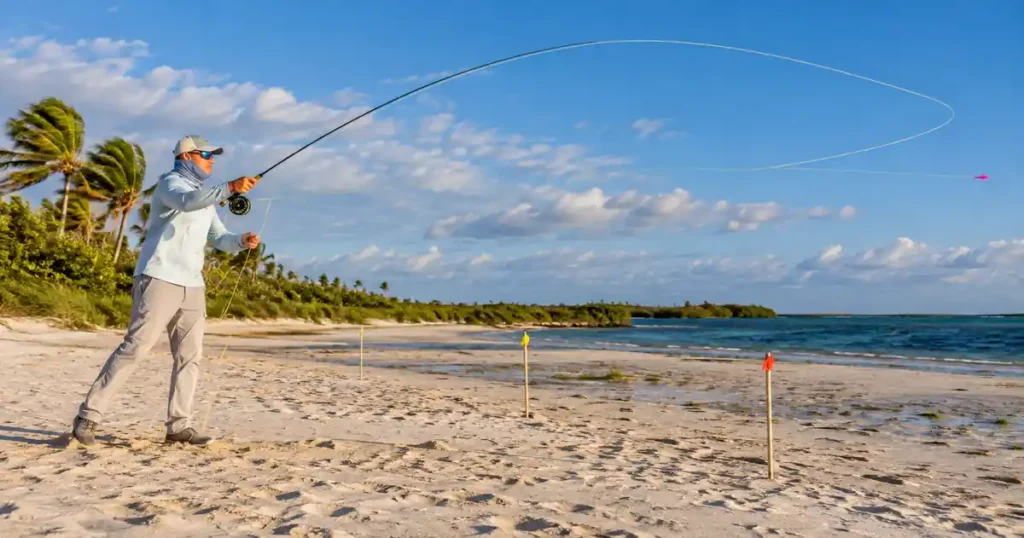
For many first-time anglers, casting is the highest-value preparation for fly fishing for tarpon. Florida Keys guides cited in MidCurrent describe functional casts around 50–70 feet delivered quickly in wind as useful targets for some flats fishing. Treat that as a practice ambition, not a license to keep casting when conditions are unsafe or a rule for every tarpon fishery.
Accuracy Before Maximum Distance
Put small targets at 30, 45, and 60 feet. Begin at the distance where you can consistently land a yarn practice fly within a few feet of your target. Once you are accurate, work on delivering the cast after a short pause, as if a fish has appeared without warning.
Short, clean casts matter because not every opportunity requires 70 feet. A slightly shorter cast that turns over and lands in the right area can be more useful than an uncontrolled long one.
Use Fewer False Casts
Tarpon can move beyond casting range while you repeatedly false cast. Learn to lift the line, make a controlled back cast, and deliver promptly. Speed should come from efficient setup and timing, not from rushing the rod stroke.
Practice with a leader and yarn sized to mimic the turnover of your fishing fly. Keep the rod tip and line under control between shots, rather than carrying excessive loose line around your feet.
Double Haul and Wind Direction
A double haul adds line speed through the line hand during the back and forward strokes. It can help with heavy lines, larger flies, and headwinds, but it cannot repair a poor loop or badly timed cast. If you are still struggling with the basics, study the fly fishing casting techniques guide before adding power.
A side wind that pushes the line toward you creates a hook hazard. Change your casting plane, use the other shoulder or a safe backhand cast when competent, or reposition the boat with the guide’s help. Wear eye protection. Practice with yarn, not a sharp hook.
A Simple Three-Session Casting Drill
- Session one — Accuracy: Make ten careful casts at 30 feet, then ten at 45 feet. Track how often the yarn lands in a small target area.
- Session two — Quick shots: Begin with the line ready but motionless. On a partner’s signal, aim at a randomly chosen target in as few false casts as you can manage safely.
- Session three — Realistic conditions: Repeat the drill at 45 and, if comfortable, 60 feet with a moderate breeze. Change the target direction and practice keeping the casting loop downwind of your body.
A casting instructor can provide feedback if your fly repeatedly collides with the line, falls short, or turns over poorly. The goal of practicing fly fishing for tarpon is dependable presentation, not a personal distance record.
Fly Fishing for Tarpon: The Strip Set and Line Control
The strip set is one of the biggest adjustments when fly fishing for tarpon after years of trout fishing. A familiar trout-style upward rod lift can pull a large saltwater fly away before the hook takes hold.
How to Make a Strip Set
- Keep the rod tip low and generally directed toward the fly while retrieving.
- As the fish takes and you feel firm contact, use the line hand to make a deliberate, strong strip against the fish.
- Maintain tension rather than lifting the rod immediately or striking through slack.
- After the hook is set and the fish is tight, transition to the fighting position recommended by the guide.
Orvis demonstrates this movement in its lesson Striking Saltwater Fish. It also cautions anglers against lifting the rod during the initial saltwater strike. You can review the instructional video in References.
Avoid a Dangerous Line Tangle
Before each cast, keep the fly line clear of shoe soles, handles, cleats, reel knobs, and other obstacles. Do not wrap loose line around a finger or hand. When a hooked tarpon accelerates, allow the loose line to clear without grabbing a running loop. Maintain balance and follow the guide’s instructions as the line moves onto the reel.
If the cast or retrieve feels awkward, reset rather than trying to force a strike through piles of slack. Good fly fishing for tarpon depends on remaining connected and safe during the transition from take to first run.
Fly Fishing for Tarpon: Fighting Large Fish
A tarpon may leap, change direction, or take backing soon after being hooked. The correct response changes as the fish moves, so preparation matters more than memorizing a single dramatic maneuver.
Manage the First Run
Clear loose line without touching fast-moving loops. Let the reel’s drag work, while keeping an appropriate bend in the rod and avoiding sudden high-stick angles that could damage it. The guide may reposition the boat if conditions permit.
Do not attempt to stop every run through brute force. At the same time, do not fight so gently that the fish becomes unnecessarily exhausted. Use suitable tackle and steady, controlled pressure.
Respond to Jumps and Changes of Direction
Tarpon are famous for jumps. Guides sometimes tell anglers to briefly lower the rod or ease tension as a fish launches, a practice often called “bowing to the king.” The timing is situational; a poorly timed drop can introduce slack and cost the fish. Follow the guide’s immediate instructions instead of treating it as an automatic move after every splash.
As the fish settles, restore controlled pressure and keep line clear of the boat. Avoid locking the reel drag or placing a hand on a rapidly turning spool.
Finish the Fight Without Exhausting the Fish
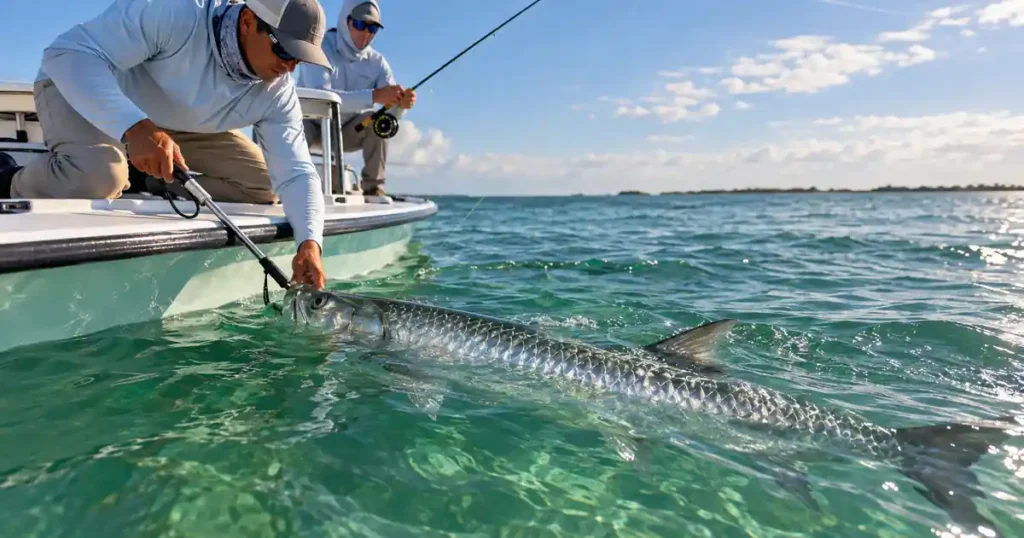
A prolonged fight can leave a tarpon vulnerable to predators or make a successful release harder. Use appropriately heavy equipment for the target and coordinate with the guide on landing and dehooking. Do not sacrifice fish welfare to take a photograph.
Fly fishing for tarpon is not complete when the fish reaches the boat. Successful handling and release are part of the skill, and the safest release may happen without touching or lifting the fish at all.
First-Trip Checklist: Practice and Guide Communication
A guided trip for fly fishing for tarpon can be expensive, and nobody can promise feeding fish or perfect weather. A useful preparation plan reduces preventable mistakes while keeping expectations realistic.
Before You Book or Travel
- Ask whether the trip focuses on juvenile, resident, or large migratory tarpon.
- Confirm what rod, line, leader, and flies the guide provides; if bringing your own outfit, ask for exact specifications.
- Describe your real casting range in wind, not your farthest calm-day cast.
- Clarify the likely departure plan, weather policy, physical demands, and cancellation terms directly with the provider.
- Confirm your fishing-license situation and what the charter’s license covers.
- Bring polarized sunglasses, sun protection, water, suitable non-slip footwear, and any essential personal medication.
Learn the Guide’s Clock System
From a boat, guides may describe a fish at “one o’clock, 40 feet.” The clock indicates direction relative to the bow, while the distance locates where the guide sees the fish. Agree on what a measured 40-foot cast looks like before the action begins.
Orvis’s Communicating With Your Guide lesson demonstrates this system. If you cannot see the fish, point the rod toward the suspected location and confirm the guide’s instruction rather than casting blindly.
Set a Useful First-Trip Goal
Make your first goal three clean presentations when genuine opportunities occur, not a guaranteed tarpon landed. Consider success in stages: seeing the fish, understanding the call, delivering accurately, managing the retrieve, and responding correctly to a take.
Even a fishless day of fly fishing for tarpon can reveal which skills need work before the next trip. Do not interpret one weather-affected outing as a complete verdict on your ability.
Fly Fishing for Tarpon: Florida Rules and Ethical Release
In Florida, fly fishing for tarpon takes place within a catch-and-release-only fishery. Florida Fish and Wildlife Conservation Commission (FWC) states that tarpon over 40 inches must remain in the water, except for the specific state- or world-record pursuit allowed with a tarpon tag obtained in advance. In ordinary recreational fishing, never lift a large tarpon aboard for a photo.
Licenses and Local Rules
An angler fishing from a properly licensed Florida saltwater charter vessel may be covered by the charter license and not need a separate recreational saltwater fishing license. That exemption depends on the actual vessel or operator arrangement; do not assume every guided activity is covered. Verify before departure.
FWC also prohibits tarpon snagging, snatch hooking, and spearing. Boca Grande Pass has an additional year-round rule against certain bottom-weighted hook, fly, or lure configurations. Check the exact water and current regulations rather than relying on a generic Florida Keys packing list.
Handling and Releasing Tarpon
Keep handling brief and leave large tarpon fully in the water. FWC recommends no-touch dehooking with a suitable long-handled tool when practical, or cutting the line close to the hook when necessary. Keep fingers away from gills and eyes. If a smaller tarpon is legally lifted, support it horizontally with wet hands and return it quickly.
If a fish struggles to maintain balance, allow it to recover upright with water flowing naturally across its gills. Do not drag it over a gunwale or hold it out of the water for repeated pictures.
Sharks, Heat, and Fight Time
Bonefish & Tarpon Trust advises using appropriately strong tackle, keeping fights short, and avoiding fishing activity when sharks become attracted to hooked or released tarpon. FWC advises cutting the line close to the hook if a shark shows up during a fight, when that offers the fish a better chance of escape, and moving away from predator-heavy areas.
Hot water and long fights increase concern about exhaustion. Responsible fly fishing for tarpon means choosing fish welfare over an exhausting fight, photo opportunity, or tally of hookups.
Fly Fishing for Tarpon FAQs
Is Fly Fishing for Tarpon Suitable for Beginners?
Yes, particularly with appropriate instruction and realistic expectations. It is easier when you already have basic fly-casting control, but you do not need to be an expert trout angler. A guide can help match the target fish and conditions to your abilities.
What Rod Weight Should a Beginner Use?
For juvenile tarpon, an 8–10-weight outfit can be suitable. For larger migratory fish, 10–12-weight tackle is a common reference. Ask the guide about the exact fishery before buying a rod.
How Far Should You Cast for Tarpon?
There is no universal minimum. Being accurate and quick at 40–60 feet is a useful preparation target, while some guided flats situations reward casts around 50–70 feet in wind. A clean presentation matters more than a maximum-distance cast.
Why Use a Strip Set Instead of a Trout Strike?
Pulling line firmly while the rod points toward the fly helps maintain direct tension and drive the hook home. Raising the rod immediately can create an unfavorable angle or remove the fly before the hook engages.
Do You Need a Guide for Your First Trip?
Not always, but a knowledgeable guide can help locate fish, coordinate shots, choose legal gear, and manage a powerful fish near the boat. Compare instruction, target species, equipment included, and cancellation policies rather than assuming every charter suits beginners.
Can You Lift a Tarpon Out of the Water for a Photo in Florida?
In ordinary fishing, tarpon over 40 inches must remain in the water. Florida has a narrowly defined record-fishing exception that requires an appropriate tarpon tag. Keep even smaller fish in the water when practical and minimize handling.
Final Thoughts on Fly Fishing for Tarpon
Successful fly fishing for tarpon starts before the boat leaves the dock. Match your tackle to the fish, practice quick accurate casts in wind, learn the strip set, keep loose line clear, and understand how to release a fish responsibly. These skills are more valuable than chasing the most expensive rod or memorizing dozens of fly patterns.
Before your first trip, ask your guide what outfit and casting distance to practice with. Then spend a few focused sessions making realistic shots safely. You cannot control whether tarpon eat, but you can arrive ready for the opportunity.
References
1. Fly Fishers International — Angler’s Guide: Tips for Saltwater Angling
2. Florida Fish and Wildlife Conservation Commission — Tarpon Regulations and Best Fishing Practices
4. Florida Fish and Wildlife Conservation Commission — Charter and Headboat License Coverage
5. Florida Fish and Wildlife Conservation Commission — Visitors’ Licenses
6. Bonefish & Tarpon Trust — Best Practices for Catch and Release Fishing for Tarpon
7. Orvis — Cast Better Into the Wind
8. Orvis — Striking Saltwater Fish
9. Orvis — Communicating With Your Guide
10. RIO Products — Premier Tarpon Quickshooter Fly Line
11. RIO Products — Tarpon Pro Leader
12. MidCurrent — How to Prepare for Your First Tarpon Trip (2026 Guide)
13. Salt Water Sportsman — Fly Angler’s Guide to Laid-up Tarpon