
Fly Fishing for Bass During Late Summer Hot Days Lakes: What Works?
Fly fishing for bass during late summer hot days lakes can still be productive, but a hot afternoon calls for a different plan from a calm sunrise. Start near shallow cover when bass are visibly feeding, then work shade lines, weed edges, and suitable deeper water as light and conditions change. Choose a popper for active surface fish and a sinking baitfish or crayfish fly when you need to search below the surface. Change your depth and retrieve before automatically buying another pattern.
This guide focuses on largemouth bass in U.S. lakes and reservoirs during August and the late-summer transition. Smallmouth appear only where their preference for rock, clearer water, and depth makes a meaningful difference. For general habitat and basic tackle, see our guide to fly fishing for largemouth bass; here, the goal is to make a hot-day plan you can actually follow.
Table of Contents
Where Bass Go During Late-Summer Heat
Hot sunshine does not send every largemouth to the lake’s deepest hole. Some stay in shallow vegetation that provides shade and places to ambush small fish. Others use dock pilings, submerged trees, or the outside edges of weeds near a drop-off. In reservoirs, bass may also follow shad or other baitfish over open water. Watch the food and cover as closely as the temperature.
Largemouth are often comfortable in warmer, plant-filled water, while smallmouth are more likely to use cooler, rockier areas and deeper edges. That makes a shaded lily-pad pocket a reasonable largemouth starting point but less obvious for smallmouth. You are looking for usable habitat, not one temperature or depth that applies to every lake.
A simple rule: fish a shallow, sheltered feeding lane first when you see baitfish or surface disturbances. If the area is quiet, test the outside edge at a deeper level. If neither produces signs of active bass, move to another cover-and-depth combination instead of casting repeatedly at empty water.
| What you notice | Where to try | First fly presentation |
|---|---|---|
| Morning swirls beside weeds | Open pockets and the outer pad edge | Small popper with pauses |
| Strong midday sun | Shaded dock or overhanging bank | Baitfish streamer just inside the shadow line |
| Weed bed beside a drop-off | Outside weed edge | Counted-down streamer or Bugger |
| Baitfish breaking the surface offshore | Reachable feeding activity, if safe | Baitfish imitation at the observed level |
| Rocky point with deeper water | Rock-to-depth transition | Slowly worked crayfish or streamer |
Best Time of Day for Hot-Weather Bass Fly Fishing
Early and late are sensible starting windows, but midday is not automatically a waste of time. The important change is usually where you look and how you present the fly.
Early Morning
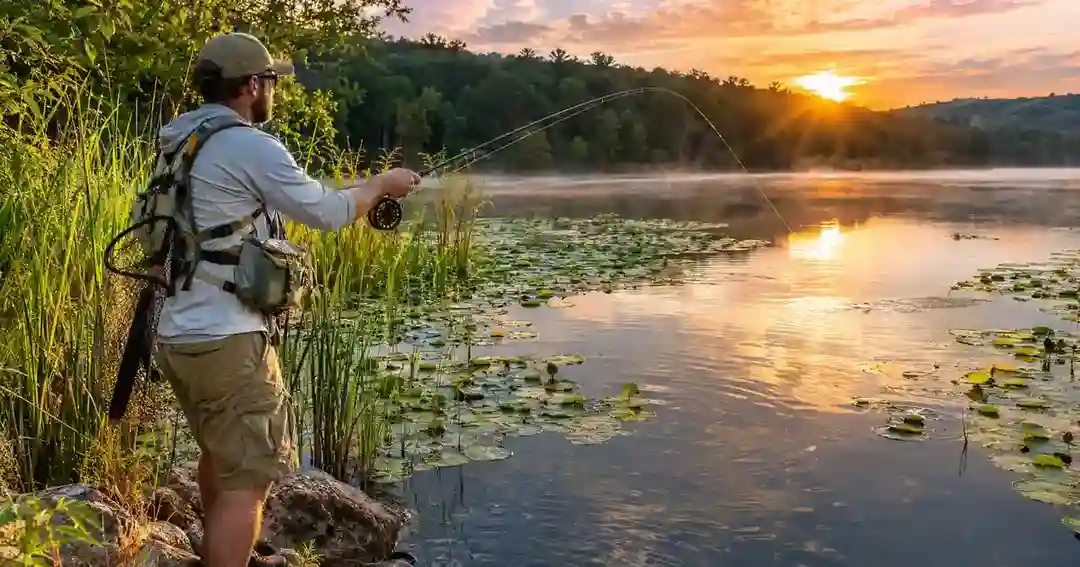
Begin where weeds, reeds, or shoreline wood border calm water. Watch for baitfish jumping, a bass pushing a wake, or a surface swirl. A floating line and moderate-size popper let you work these areas without first changing equipment. Cast beyond an opening, let the ripples settle, give the bug one short pull, then pause. Another cast a few feet along the edge is often more useful than hitting the same pocket repeatedly.
If fish chase a popper without taking, reduce the number of pops or use a smaller profile. If nothing rises, test a lightly weighted streamer along the same edge before abandoning the location.
🎣 Smart Topwater Choice — FAISOX 30PCS Popper Flies Kit
Want a range of popper sizes for open pockets beside vegetation? This 30-fly assortment includes foam popper-style flies in several colors and sizes, giving you alternatives without buying individual bugs. It is a larger kit than you need for one short trip, and bulky poppers require a rod and leader that can cast them comfortably.
👀 View on Amazon & Check Current Offers
Bright Midday
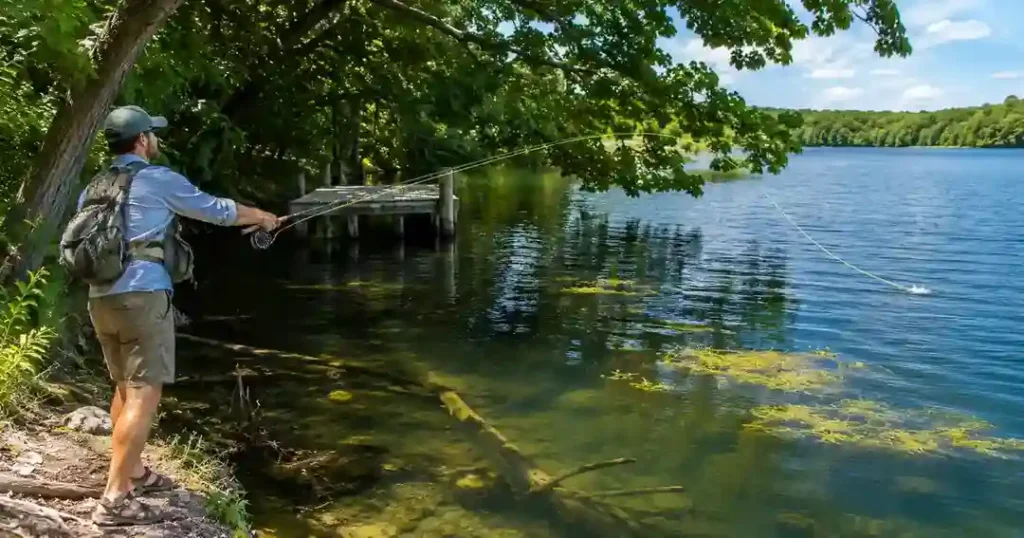
Look for shade under tree limbs or alongside docks, especially where there is a weed line or depth change nearby. A bass may hold in cover and react to a fly that travels close to its position rather than chase prey across exposed water. Put the fly along the shade boundary, not into a dock, over a moored boat, or onto someone else’s property.
Try a Clouser-style baitfish fly or Woolly Bugger. Count it down briefly and retrieve along the cover with small strips. Then repeat at a slightly different depth if the first drift produces nothing. On a shallow pond, a floating line and weighted fly may reach enough water; in a larger reservoir, an intermediate or sinking line can make deeper presentations more practical.
Late Afternoon and Evening
As the shadows lengthen, recheck cover that was unproductive in bright sunlight. A point or weed edge may become active when baitfish move shallower. Try a popper again if there are surface signs; otherwise keep a streamer available. Evening is not a guarantee of a topwater bite, particularly after a weather change or when offshore baitfish remain the main food source.
Find Bass Around Shade, Vegetation, and Cover
The best-looking cover is not necessarily the cover that holds feeding fish. Favor locations with a useful edge: weeds beside open water, wood beside a channel, or shade beside a drop-off. These let a bass hold securely while moving only a short distance to intercept food.
Weed Edges and Lily Pads
Cast down an open lane rather than across the thickest mat. Let a frog-style fly or popper move through gaps with short strips and pauses. If the pads have an outside edge near deeper water, search that edge with a streamer as the day gets brighter. Even a weed-resistant fly can snag, and a snag-free design is not the same as a guarantee of a clean hookup.
Docks and Overhanging Trees
Start on the outer edge of the shadow and work inward only where casting is safe and permitted. Sun angle matters: the productive shadow at 10 a.m. may be gone by 2 p.m. Accuracy and quiet entry can matter more than a long cast. Avoid occupied docks, swimmers, ropes, and watercraft.
Fallen Trees, Points, and Drop-Offs
A submerged tree can hold bass at several depths. Work the outer branches first so you do not immediately bury a hook in the center. A rocky point or channel edge may suit smallmouth or largemouth if prey is present. Test the shallow side, the break, and one deeper lane in that order. If you must fish so deep that you lose all control of the fly, consider a more reachable location.
How Deep Should You Fish in a Hot Lake?
Deeper is not always better. Many lakes stratify during summer. The thermocline is the transition between a warm upper layer and colder water below it. In some lakes, deeper water has little dissolved oxygen, so bass may not use it even when the surface feels hot. The exact depth varies by lake and weather; do not assume a universal 15- or 20-foot target.
Without electronics, look for slopes where a weed edge, point, or steep bank meets deeper water. With a depth finder, consider baitfish marks, structure, and the lake’s temperature and oxygen profile when those measurements are available. Visible baitfish activity is often more useful than a guess about maximum depth. If you searched for “fly fishing for bass during late summer hot days lakes,” focus on where baitfish, suitable oxygen, and reachable cover overlap rather than assuming the deepest water holds every fish.
Choose your fly line for the depth you can fish with control:
| Line or rig | Practical job | Limitation |
|---|---|---|
| Floating line + popper | Surface and shallow cover | Does not hold a streamer deep |
| Floating line + weighted fly | Shallow to moderate-depth edges | Hard to keep the fly down on long retrieves |
| Intermediate line | Search beneath the surface with steadier depth control | Too shallow for some deeper fish |
| Sinking line or sink-tip | Reach a deeper baitfish or structure zone | Harder to manage in weeds, shallow snags, or from a cramped bank |
A heavy fly is not a substitute for a suitable line when you need a long, level deep-water retrieve. Nor is a sinking line automatically necessary in a shallow pond. Try the least complicated outfit that puts the fly in the right water and allows a controlled cast.
Best Bass Flies for Late Summer
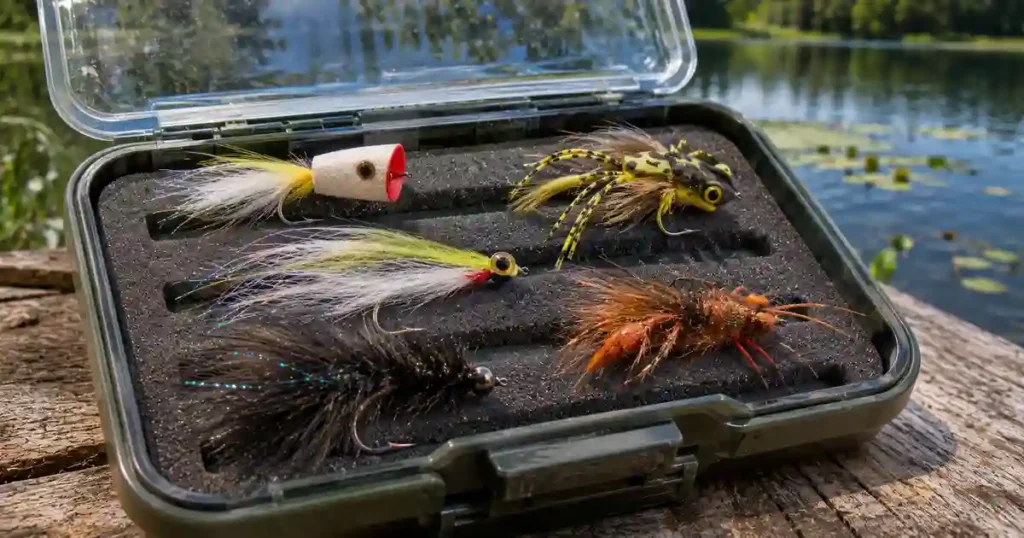
Carry flies for two jobs: making a surface disturbance and working a subsurface lane. A compact selection of poppers, frog patterns, baitfish streamers, and perhaps a crayfish fly gives more tactical flexibility than many nearly identical colors. For an explanation of the larger fly categories, see our guide to different types of fly fishing flies.
Poppers and Surface Bugs
A popper displaces water with its face. Use it when bass are feeding near the surface, especially around low-light weed edges, open pad pockets, or visible baitfish activity. Make one modest pop and pause; vary the pause before increasing the noise. An aggressive repeated retrieve can move the fly out of a small ambush zone too quickly.
Choose a popper your outfit can turn over. Bigger, more air-resistant foam bugs are often harder to cast than a slim streamer. For tight vegetation, consider whether an appropriate weed guard is useful; it reduces some hang-ups but also changes the fly’s behavior.
Frog Flies
Frog-style flies fit lily pads, emergent plants, and shallow vegetation where frogs are a plausible food source. A quiet landing and short movements through open lanes make more sense than pulling the fly rapidly across thick vegetation. If vegetation is extremely dense or you cannot land a fish safely, select an easier edge rather than forcing a fly into the mat.
Baitfish Streamers
Clouser-style minnows use weighted eyes and a narrow baitfish profile. They can be effective when bass feed below the surface along a drop-off, shaded dock, or offshore baitfish lane. The weighting helps them sink, but larger versions require careful casting and sufficient room behind you. Olive/white or shad-like color combinations are reasonable starting points where they resemble local forage; color alone will not solve the wrong depth.
⭐ Subsurface Option — Dr.Fish 6pcs Clouser Minnow Fishing Flies #4–2/0
Need a baitfish fly for a midday depth change? This six-fly line uses weighted dumbbell eyes and a hand-tied baitfish-style profile, with size options from #4 to #2/0. Choose the actual size to match your rod and local baitfish; a large weighted hook is unsuitable for some light outfits or crowded casting spots.
👀 View on Amazon & Check Current Offers
Woolly Buggers and Crayfish Flies
A Woolly Bugger is a versatile searching fly when you have no obvious hatch or surface action. A non-beadhead version can swim higher over weeds; a weighted version gets down more quickly beside a drop-off. A crayfish imitation is another option around suitable rock or firm bottom, especially when you can retrieve slowly without snagging every cast.
When planning your fly box, avoid paying for a large set of deep streamers if most of your lake has only two feet of clear water above heavy vegetation. A handful of correctly sized flies can be the smarter purchase.
🎣 A Flexible Streamer Box for Hot-Day Bass
RoxStar Fly Shop Wooly Bugger Flies Assortment — 24 Pack
Want to cover more than one depth along a lake’s weed edge? This assortment contains beadhead and non-beadhead Woolly Buggers, so you can choose a weighted or lighter presentation.
A 24-fly pack is more than many anglers need for one short outing. Check the exact Amazon offer and size mix.
👀 Check Price on AmazonAs an Amazon Associate, we earn from qualifying purchases.

Adjust Your Retrieve When Bass Won’t Bite
Before switching flies, change one variable at a time. This helps you distinguish a bad location from a bad presentation.
- Pause a popper longer. Let the surface rings fade before the next movement; if fish follow but do not strike, try a smaller bug.
- Shorten a streamer strip. Use short pulls with a pause rather than a constant fast retrieve, especially near shaded cover.
- Count down for a new depth. Let the same fly sink a little longer on the next safe cast. Avoid dragging it through heavy snags.
- Change the casting angle. Run the fly along the edge instead of directly across it so it stays near cover longer.
- Move to another edge. After several controlled presentations with no feeding signs, search a different weed line, point, or shaded section.
For a useful visual demonstration, Orvis has a lesson on summer bass flies that shows why poppers and weighted patterns serve different roles. The verified video is listed in References rather than embedded without a publishing plan.
A Practical Hot-Day Lake Fishing Plan
Imagine you have access to a small lake from morning until evening. You do not need a perfect schedule; use this as a flexible sequence. For anglers researching “fly fishing for bass during late summer hot days lakes,” a morning-to-evening plan can help turn broad advice into manageable choices.
7 a.m.: Begin at a weed edge with visible open lanes. Cast a modest popper, wait, and work the edge slowly. If bass are chasing small baitfish just beneath the surface, switch to a small streamer.
Noon: Leave exposed shallow water that shows no life. Look for a dock shadow or an outside weed line connected to a drop-off. Make short controlled casts with a weighted baitfish fly, testing a few sink times. If the only deep water is inaccessible or oxygen-poor, do not force the fly down blindly.
Sunset: Revisit the most promising cover as shadows change. Watch for splashes, nervous baitfish, or feeding swirls. Try a popper again when surface feeding justifies it, or keep the subsurface fly if the fish remain below.
A reasonable hot-day fly box might contain two modest poppers, one frog-style fly, two baitfish streamers at different weights, two Woolly Buggers, and a crayfish imitation. You do not need to carry every pattern at every moment; choose the box around your available water and rod.
Safety and Common Hot-Weather Mistakes
Hot-weather fishing is easier to enjoy when you plan around both water and weather. Bring drinking water and sun protection, watch for heat exhaustion, and avoid long exposure on an uncovered shore or boat. Wear a suitable life jacket from a kayak or small boat. Never fish through a thunderstorm: head for a substantial building or fully enclosed vehicle when thunder threatens.
Check state fishing seasons, lake rules, and access permissions before traveling. Docks are not public casting platforms simply because they extend into a lake. Keep room for a backcast around other people and wear eye protection when throwing weighted flies. Handle bass promptly with wet hands, remove hooks carefully, and release fish without unnecessary delay when required or intended.
Common tactical mistakes include assuming all fish are deep, pulling a popper continuously without pauses, fishing a weighted fly above the holding depth, and staying too long at cover that shows no feeding activity. Temperature helps frame the day, but observations should guide the next cast.
Late Summer Lake Bass Fly Fishing FAQs
Can you catch bass on a fly rod at noon?
Yes. Fish may use dock shade, vegetated edges, or suitable deeper habitat. A controlled streamer presentation near reachable cover can be more practical at noon than repeatedly casting a popper across exposed shallow water.
Do bass always move deeper when it gets hot?
No. Largemouth may remain in shallow vegetation, while other fish move to cooler edges or deeper structure. Some deep water lacks enough dissolved oxygen, so the deepest water is not automatically productive.
Which flies work around lily pads?
Poppers and frog-style flies are sensible starting points in open lanes. Work the outer pad edge with a lightly weighted streamer if fish are not feeding on the surface. Avoid casting into cover you cannot fish or retrieve safely.
Should I use floating or sinking fly line?
A floating line is appropriate for poppers and many shallow presentations. An intermediate or sinking option makes sense when you repeatedly need to keep a streamer at a greater depth. Choose for actual water depth, cover, and casting room.
Are poppers useful in late August?
They can be, especially when you see surface feeding during low light or around shaded cover. The calendar does not guarantee a topwater bite. Switch to a subsurface fly if the fish are feeding lower.
Final takeaway: On a hot late-summer lake day, follow the edges that combine cover, reachable depth, and food. Begin with surface flies when feeding is visible, then use subsurface presentations around shade or drop-offs as conditions change. A deliberate change in depth, retrieve, or location usually teaches you more than changing flies after every cast.
References
- Massachusetts Division of Fisheries and Wildlife — Bass Fishing Tips
- Oklahoma Department of Wildlife Conservation — Summer Fishing Tips
- Kentucky Department of Fish and Wildlife Resources — Farm Pond Management: Water Quality
- Orvis — Summer Largemouth in Lakes
- Orvis — Flies for Summer Bass
- Orvis — Tackle for Summer Bass Fishing
- National Weather Service — Safe Boating and Thunderstorms
- FAISOX — Fly Fishing Flies Assortment Kit Product Information
- Dr.Fish Tackles — 6pcs Clouser Minnow Fishing Flies
- RoxStar Fishing — Woolly Bugger Pro 24PK Trout & Bass
- FlyFishingScout — Fly Fishing for Largemouth Bass
- FlyFishingScout — Fly Fishing Lures