
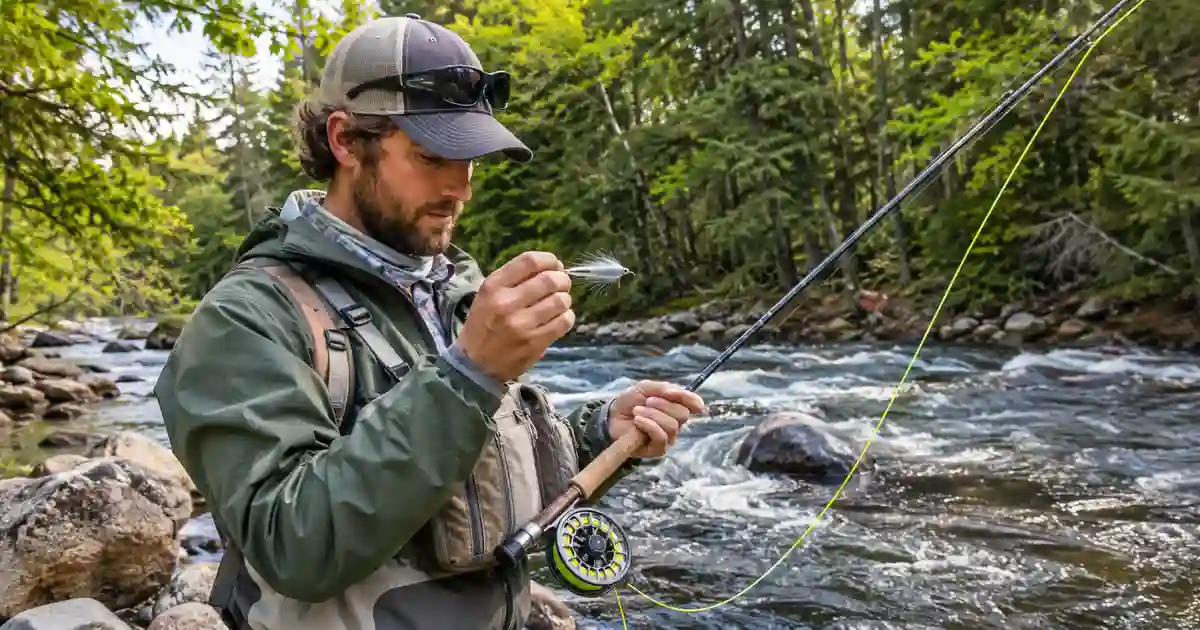
Fly Fishing for Landlocked Salmon: Best Flies, Seasons, and Techniques
Fly fishing for landlocked salmon is often most practical when cold water brings fish near the surface or into accessible rivers. In Maine, start with a smelt-style streamer during spring baitfish activity, switch to nymphs, wet flies, or dry flies when salmon feed on insects, and adjust the depth before changing patterns. In midsummer lakes, salmon may be too deep for ordinary shore-based fly casting. Always check the exact water’s fishing season and special rules before planning a trip.
For anyone fly fishing for landlocked salmon, this guide focuses on Maine’s landlocked Atlantic salmon, with lessons relevant to other northeastern populations. It explains fly choice, seasonal lake and river tactics, and safe, legal presentations without promising a catch or treating every Maine salmon water as open at the same time.
Table of Contents
Fly Fishing for Landlocked Salmon: Start Here
Successful fly fishing for landlocked salmon starts with understanding that landlocked Atlantic salmon feed heavily on rainbow smelt in many Maine lakes, but they also take aquatic insects and other prey. That creates two useful fly-fishing approaches: fish a slim baitfish imitation where salmon can reach smelt, or present insects where salmon hold and feed in river currents. Your first decision should be where the fish are feeding, not which famous fly to buy.
| Situation | Start with | What to change first |
|---|---|---|
| Spring salmon near lake shore or an outlet | Gray Ghost, Black Ghost, or another slim smelt streamer | Retrieve speed and depth |
| River salmon holding in seams or pools | Woolly Bugger or traditional streamer | Swing angle and sinking time |
| Fish feeding beneath a hatch | Prince, Pheasant Tail, or caddis pupa | Drift depth and drag |
| Clear surface rises | Adams or hatch-matched dry/emerger | Size and drift |
| Midsummer salmon deep in a lake | Reassess whether they are accessible with a fly rod | Location and feeding depth, not just fly color |
When planning fly fishing for landlocked salmon, bring a few streamers in silver-white and darker profiles, several nymphs, and a small dry-fly selection. The water and season should decide how much of each you use. A lake’s deep summer salmon population is not automatically accessible just because you can reach the shoreline.
Landlocked Atlantic Salmon vs Sea-Run Salmon and Kokanee
Maine’s landlocked Atlantic salmon are freshwater-resident Atlantic salmon, a form of Salmo salar commonly called Sebago salmon. They spend their lives in freshwater lakes and connected rivers, rather than traveling to the ocean as sea-run Atlantic salmon do. Both forms are the same biological species, and they can look alike. Do not assume you can reliably tell a protected sea-run fish from a landlocked fish by appearance alone.
Kokanee are different. They are freshwater-resident sockeye salmon, Oncorhynchus nerka, mainly associated with western North America. Kokanee tactics and regulations should not be copied into a Maine landlocked Atlantic salmon guide.
This distinction matters legally when fly fishing for landlocked salmon in Maine. The state allows regulated fishing for landlocked salmon in designated inland waters, but targeting sea-run Atlantic salmon is prohibited. If you accidentally hook a sea-run salmon, keep it in the water and release it promptly and carefully under Maine Department of Marine Resources guidance. When the species or fishery is uncertain, contact the responsible fisheries agency before casting.
Best Flies for Fly Fishing for Landlocked Salmon
For fly fishing for landlocked salmon, the best flies depend on whether the fish is taking baitfish, emerging insects, or drifting nymphs. A well-presented ordinary trout fly may be more suitable than a larger traditional streamer when salmon are eating small insects. Choose the imitation and its swimming or drifting behavior together.
| Fly type | Examples | Best starting situation | Main limitation |
|---|---|---|---|
| Traditional smelt streamer | Gray Ghost, Black Ghost, Barnes Special | Spring baitfish feeding and river swings | Wrong depth or fast retrieve can pass fish by |
| Brighter bucktail streamer | Mickey Finn | Attractor or alternative streamer presentation | Color does not compensate for poor location |
| Woolly Bugger | Dark or beadhead variants | Pools, seams, and varied subsurface presentations | Heavy versions may snag shallow gravel |
| Wet fly or soft hackle | Small traditional soft-hackle patterns | Salmon responding to emerging insects | Needs a controlled swing or drift |
| Nymph or caddis pupa | Prince, Pheasant Tail, beadhead caddis pupa | Salmon feeding below the surface | Drag and depth often determine the result |
| Dry fly | Adams or matching mayfly/caddis imitation | Genuine surface rises | Unlikely to interest fish feeding deep |
Smelt and Traditional Streamer Patterns
Rainbow smelt are central to the diet of many Maine lake salmon, making a slim, silver-white streamer a useful starting point. The Gray Ghost is a historic Maine pattern; the Black Ghost, Barnes Special, and Mickey Finn provide alternative profiles. Grand Lake Stream’s local fly report includes Gray Ghost, Black Ghost, Barnes Special, and Mickey Finn among its suggested streamers, with size-4 examples at the report date.
For fly fishing for landlocked salmon in spring, try presenting a smelt imitation beside a current seam or along a reachable shoreline where baitfish activity is credible. Start with a steady, controlled retrieve or a swing, then vary short pauses or speed. A smelt-style fly is not automatically the right choice when fish visibly feed on small caddis.
Woolly Buggers and Modern Streamers
A Woolly Bugger offers a thicker, mobile silhouette compared with many slender featherwing smelt imitations. Grand Lake Stream’s October 29, 2026 report listed a beadhead Woolly Bugger in size 6. That is a local pattern example—not evidence that a size-6 Bugger is best everywhere.
A darker Bugger can be practical in a river pool, while a lightly weighted version may be easier to control in shallower water. Choose the weight after assessing depth and flow. If your current streamers already span those conditions, there is no need to buy a large assortment just because it has many colors.
🎣 A Versatile Streamer Assortment
RoxStar Fly Shop Wooly Bugger Flies Assortment — 24 Pack
Need streamer options for Maine landlocked salmon? This 24-fly assortment includes beadhead and non-beadhead Woolly Buggers in several colors and sizes.
Choose the weight that fits your river depth and presentation. A full assortment may be unnecessary if you already own suitable streamers.
👀 Check Price on AmazonAs an Amazon Associate, we earn from qualifying purchases.

Wet Flies and Soft Hackles
Wet flies are useful for fly fishing for landlocked salmon when fish investigate emerging insects below the surface. Cast across or slightly downstream, allow the fly to follow a controlled arc, and keep enough contact to detect a take without dragging it unnaturally. Change the swing angle or line tension before cycling through many similar patterns.
A soft hackle is an alternative to a dry fly when you see insects but few clean surface rises. It should be offered at the depth where fish actually appear to feed, rather than stripped like a fast baitfish imitation.
Nymphs and Dry Flies
In river-based fly fishing for landlocked salmon, Prince-style nymphs, Pheasant Tails, and caddis pupae can work when landlocked salmon hold in trout-like river lanes. The recent Grand Lake Stream report includes a Prince variant in size 10 and beadhead caddis pupa in size 16. It also lists an Adams dry in size 18 for appropriate surface situations.
Dry flies make sense when rises and insects are visible. Use a drag-free drift, choose the size of the observed insect as closely as practical, and avoid repeated splashing casts. For definitions of dries, nymphs, and streamers, our guide to types of fly fishing flies explains the fundamentals.
Fly Fishing for Landlocked Salmon by Season
When fly fishing for landlocked salmon, fish location changes through the year, and so does the usefulness of different flies. Maine’s fisheries agency reports that salmon are commonly nearer the surface in spring and fall but often retreat much deeper during warm summer months. These are broad tendencies, not a guarantee for every lake or day.
| Season | Commonly useful opportunity | Fly priority | Important qualification |
|---|---|---|---|
| Spring | Cold lake margins, outlets, and smelt activity | Slim smelt streamers; nymphs in rivers | Ice-out, flow, and season openings vary |
| Late spring–early summer | River mayfly/caddis activity | Dry flies, emergers, caddis pupae | Look for actual feeding before switching |
| Mid-to-late summer | Cold river pockets or occasional shallower lake feeding | Nymphs, dries on hatches, suitable streamers | Many lake salmon occupy deep water |
| Fall | Cooler water and seasonal river movements | Streamers, wet flies, nymphs | Spawning protection and closures limit access |
| Winter | Specific legal exceptions only | Controlled small flies or streamers when permitted | Most rivers and streams are closed by general law |
Spring: Smelt and Shallow Feeding
Spring is a particularly sensible time to consider fly fishing for landlocked salmon from a lake margin or river outlet. Maine IFW notes that salmon are more likely to feed near the surface or shore when water is cool. A Gray Ghost, Barnes Special, or another slim streamer can represent a smelt without needing a giant fly.
At an outlet, cast where the fly can pass naturally through a feeding lane. Use a floating line for shallow presentations, or an appropriate sinking tip when the fish hold deeper and the rules permit the setup. If smelt activity is absent, observe before assuming salmon want a baitfish pattern.
Summer: Deep Water and River Opportunities
During June, July, and August, Maine IFW says lake salmon commonly descend to about 30–60 feet. Conventional shore fly casting does not reliably reach and fish that depth. Rather than promising a magic deep streamer technique, shift toward legally accessible rivers or confirmed surface hatches if fly fishing is your priority.
Grand Lake Stream’s late-spring and summer insect activity can create opportunities for mayflies, caddis, nymphs, and dry flies. Water releases, temperature, and fish behavior matter more than the date printed on a hatch chart. If a river is unusually warm or unsafe, postpone fishing or choose a suitable alternative.
Fall: Cooler Water and Salmon Movements
Cooler fall water can bring salmon toward shallower feeding zones and connected rivers. Streamers and wet flies may suit those conditions, but many salmon also approach spawning areas. Do not wade through spawning gravel or target fish in closed reaches.
Maine’s general river season closes after September 30, with particular special-law exceptions. Grand Lake Stream’s exception extends fishing through October 25; the East Outlet has its own different sections and dates. Always check the exact regulation and whether catch-and-release is required.
Winter: Legal and Practical Limitations
Most Maine rivers and streams are closed October 1 through March 31 unless specially opened. A limited section of the East Outlet allows fly fishing through winter with immediate release requirements, but that permission does not extend to the whole river or every nearby lake.
Cold water, ice, slippery banks, and changing dam releases add risk. If you choose a legal winter location, check the forecast and water releases, keep the outing conservative, and avoid fishing where access or footing is unsafe.
Fly Fishing for Landlocked Salmon in Lakes
Lake-based fly fishing for landlocked salmon differs from river fishing because fish can move vertically through a much larger water column. In spring and fall, salmon may come near accessible shorelines to feed on smelt. Watch for baitfish, surface activity, wind-driven food, and safe casting access; don’t assume every point or beach holds salmon.
A floating line and streamer may be adequate when fish are near the surface. A sink-tip can help control a slightly deeper presentation, but it is not a practical substitute for reaching salmon holding 40 or 50 feet down. Maine IFW describes deep summer lake salmon as more accessible by trolling methods; that is a limitation of conventional fly casting, not a recommendation to troll in fly-fishing-only waters.
If fishing from a boat where permitted, wear an appropriate personal flotation device and check weather before leaving shore. Observe local restrictions on trolling, methods, and fishing seasons. Maine prohibits trolling flies in waters designated fly fishing only, so do not treat an effective lake technique as automatically legal on every water.
On a lake, change location or timing before blaming your fly box. If fish are not reachable at your presentation depth, a different streamer color will not fix the problem. Focus fly fishing for landlocked salmon on the windows when fish and fly can actually meet.
Fly Fishing for Landlocked Salmon in Rivers
River-based fly fishing for landlocked salmon often lets you present a fly at a predictable depth in seams, tailouts, and pool edges. Fish may hold near current breaks rather than chase a fly across the whole river. Start with a controlled drift or swing and refine it based on what the fish appear to do.
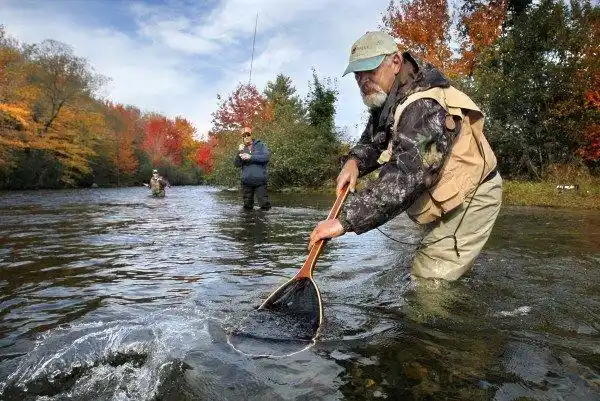
Swinging Streamers
Make a cast across or slightly downstream, mend as needed to control the line, and let a slim streamer sweep through a likely holding lane. Keep enough contact to feel movement but avoid pulling so tightly that the fly skates above the fish. A short retrieve as the swing ends can add motion without repeatedly ripping the fly through the pool.
For fly fishing for landlocked salmon in current, the first adjustment after an unsuccessful swing should often be angle or depth. Try working a lane more deliberately before changing from a Gray Ghost to several other similar streamers.
Nymphing Through Holding Water
Nymphing fits salmon that are feeding below the surface. Choose an appropriate weight, cast upstream of the target lane, and control drag so the nymph passes naturally at the intended depth. Small adjustments to weight and leader length are often more important than changing from one attractor nymph to another.
⭐ Smart Nymph Choice: Flies Direct BH Prince Nymph Assortment
Flies Direct BH Prince Nymph Assortment Trout Fishing Flies (1-Dozen)
Need a selection of Prince Nymphs for river fishing? This dozen-fly assortment offers a familiar beadhead nymph pattern that fits the subsurface techniques discussed here.
It’s a useful addition when salmon are taking drifting nymphs, although you may also need smaller caddis pupae or other patterns.
👀 View on Amazon & Check Current Price
Do not drag heavy rigs through fish holding in shallow spawning gravel. Use only permitted hook and fly configurations, and make sure you can cast and manage a multi-fly rig safely.
Dry Flies and Emergers
When salmon rise repeatedly, determine whether they are eating adults on the surface or insects just below it. Match the size and general stage, and use a relaxed cast that lets the fly drift without immediate drag. A dry fly may be excellent during a caddis hatch and nearly useless an hour later when feeding shifts underwater.
🎣 A Useful Dry-Fly Option: Flies Direct Adams Assortment
Flies Direct Adams Assortment Trout Fishing Flies (1 Dozen)
Seeing salmon rise during a mayfly hatch? This Adams assortment offers a classic dry-fly profile for suitable surface-feeding situations.
It makes a practical addition to a Maine salmon fly box, although selective fish may still require a more closely matched size or emerger.
👀 Explore the Flies & Check Current Offers
An emerger or soft hackle can help when you see activity but cannot get clean surface takes. Keep moving downstream only when you can do so safely and without disturbing other anglers or fish.
Common Presentation Mistakes
If repeated casts produce nothing, work through a short check: Is the water legal and suitable to fish? Does the salmon appear to be feeding? Is your fly at the right depth? Is the streamer swinging too fast, or the nymph dragging? Only then consider changing size or pattern.
A general-purpose setup for many river situations is a manageable 5- or 6-weight fly rod with a floating line, suitable leader, and a small collection of appropriate flies. This is editorial use-case guidance, not a required specification; heavier streamers, wind, and particular water conditions may favor a different rod or line.
Maine Waters for Fly Fishing for Landlocked Salmon
For fly fishing for landlocked salmon, remember that Grand Lake Stream, the East Outlet of the Kennebec River, and the Moosehead and Rangeley lake regions are not one connected fishing reach. They have different fishing seasons, flows, and methods. Use the regional map below for orientation only; it does not identify public access, open reaches, or safe wading areas.
Grand Lake Stream
Grand Lake Stream is a well-known Maine fly-fishing river. Local guidance identifies early-season smelt-related streamer opportunities, followed by mayfly and caddis hatches and late-season salmon movements. The October 29, 2026 Orvis/Weatherby’s report said the 2026 season had ended.
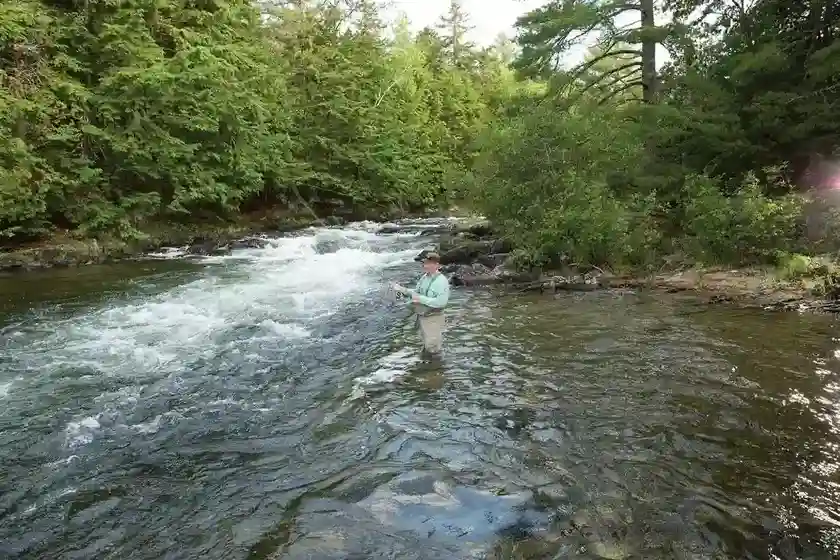
Maine’s special law designates Grand Lake Stream fly fishing only and closes all fishing within 150 feet of Grand Lake Stream Dam. Its October 1–25 exception requires release of all fish, apart from the specifically stated largemouth-bass provision. Do not treat the nearby canal or adjacent lake as having identical rules.
East Outlet of the Kennebec River
The East Outlet below Moosehead Lake is a useful place to compare streamer swings, nymphs, and hatch fishing. Its flow can change with releases, making depth control and safety important. Check the actual discharge before wading; a normal-looking bank does not establish safe footing.
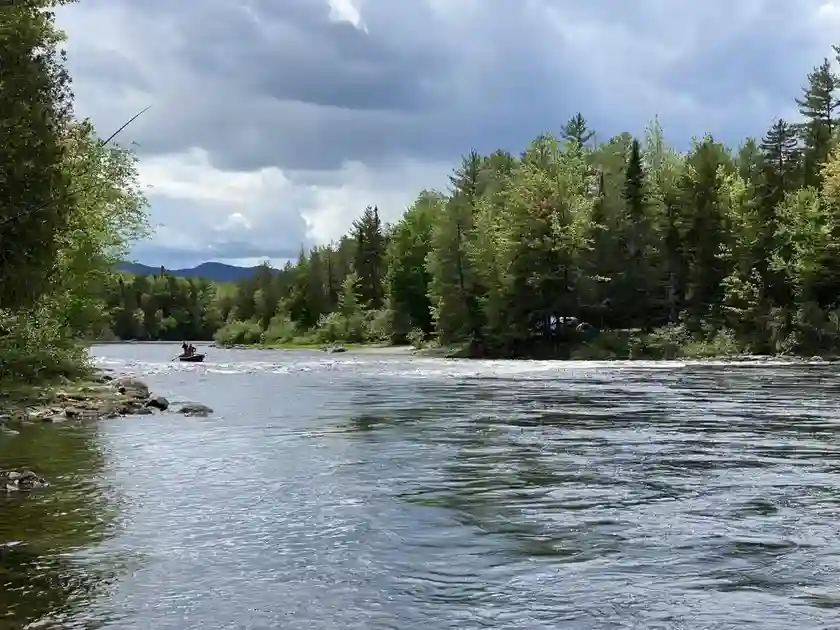
Under the checked Maine special law, the reach from Moosehead Lake to the red markers at Indian Pond is fly fishing only April 1–September 30, with stated harvest and length rules; October 1–31 is fly fishing only with immediate release of trout, salmon, and togue. A shorter reach from the dam to the yellow markers at the tail of Beach Pool is open November 1–March 31, fly fishing only with immediate release. The fishway and 50 feet around it remain closed. The winter exception belongs only to that marked reach.
Moosehead and Rangeley Lake Regions
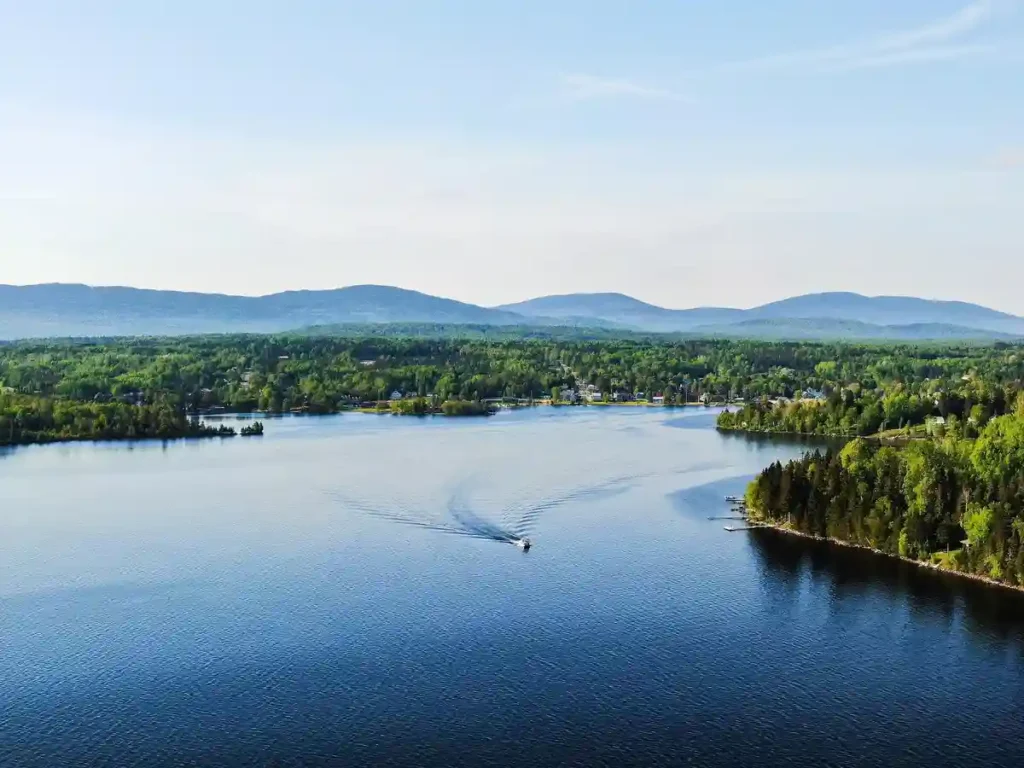
Moosehead Lake and the Rangeley lake system demonstrate why landlocked salmon fly fishing requires seasonal planning. Spring and fall can create more accessible feeding opportunities, while deep summer fish may remain beyond practical conventional casting range. Connected outlets and rivers can offer different fly-fishing possibilities from their parent lakes.
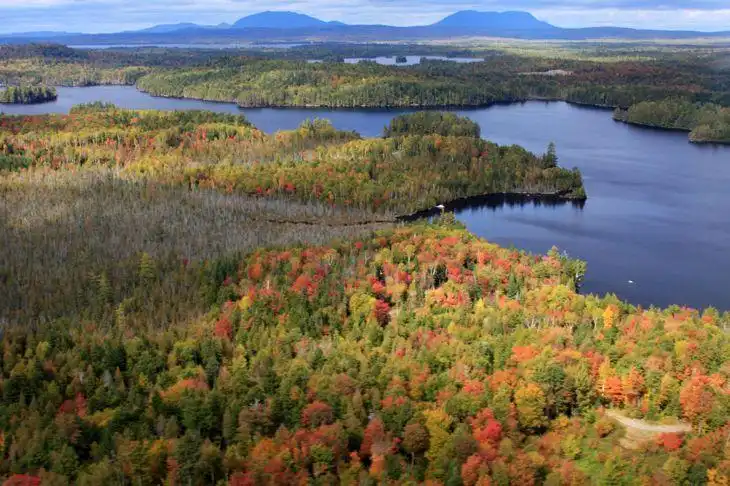
Each lake, outlet, and stream may have its own special regulations. Check the exact water name in Maine’s current fishing-law listings rather than using a regional label as your legal permission to fish. A regional map helps you understand geography, not access rights.
Maine Fishing Laws, Spawning, and Responsible Release
Before fly fishing for landlocked salmon in Maine, check license requirements; a valid license is generally required unless an exemption applies. The general rule closes rivers, streams, and brooks from October 1 to March 31. Special laws can open named reaches with different tackle, season, length, and release requirements. Read both before traveling.
Two common abbreviations matter: FFO means fly fishing only, and ALO means artificial lures only. FFO is more restrictive. Maine defines fly fishing in terms of the fly line propelling the fly; simply tying a fly onto another type of gear does not make it legal in an FFO section. Some waters also ban trolling with flies. Know the exact rule before assembling a rig.
Spawning landlocked salmon use gravel in connected rivers during fall. Avoid disturbing redds or wading through spawning areas. Where catch-and-release is required, fight fish without unnecessary delay, keep them wet, avoid touching the gills, and use suitable tools to remove a hook.
Protected sea-run Atlantic salmon may not be targeted. They resemble landlocked Atlantic salmon, and incidental captures should remain in the water while you release them promptly, following Maine DMR guidance. Do not lift an uncertain fish for a photograph to decide which Atlantic salmon form it is.
Before leaving home, confirm the license, exact waterbody, current rules, river conditions, weather, access permission, and a safe exit route. In remote Maine water, a guide or local outfitter can help interpret sections and conditions, but an outfitter’s report does not override an official closure.
Fly Fishing for Landlocked Salmon FAQs and Trip Checklist
What flies should I bring for Maine landlocked salmon?
Start with slim smelt streamers such as a Gray Ghost or Black Ghost, a Woolly Bugger, several nymphs and caddis pupae, and a few small dry flies. Adjust the mix for your river, lake, and season rather than buying every pattern at once.
Is spring or fall better for fly fishing?
Both can offer shallow-feeding opportunities when water is cool. Spring can align with smelt activity, while fall brings different river movements and stricter spawning-related rules. A legal, accessible spring outing may be more practical than a fall day on a closed reach.
Can landlocked salmon be caught on dry flies?
Yes. Local Maine guidance and fishing reports identify mayfly, caddis, and dry-fly opportunities on waters such as Grand Lake Stream. Use them when actual rises and insect activity justify a surface presentation.
How deep do lake salmon go in summer?
Maine IFW describes many landlocked salmon moving to approximately 30–60 feet during warm summer months. Their exact depth varies, and fish that deep are generally not practical targets for ordinary shore-based fly casting.
Can I fish for landlocked salmon in Maine in November?
Most rivers are closed under general law, but a specified East Outlet reach is an exception with FFO and immediate-release requirements. Check the named water and current rules; do not assume the entire East Outlet or every nearby stream remains open.
Are Maine landlocked salmon the same as kokanee?
No. Maine landlocked Atlantic salmon are Salmo salar, while kokanee are freshwater-resident sockeye salmon, Oncorhynchus nerka.
Before your trip: identify the exact legal water, check flows and seasonal fish position, pack streamers plus insect patterns, and practice a controlled swing and drift. Fly fishing for landlocked salmon is most rewarding when the fly can reach feeding fish without sacrificing safe access or the fishery’s rules.
References:
- Maine Department of Inland Fisheries and Wildlife — Landlocked Salmon
- Maine Department of Inland Fisheries and Wildlife — How to Catch a Specific Fish
- Maine Department of Inland Fisheries and Wildlife — Statewide General Fishing Laws
- Maine Department of Inland Fisheries and Wildlife — Special Fishing Laws
- Maine Department of Inland Fisheries and Wildlife — General Fishing Laws and Definitions
- Maine Department of Marine Resources — Tips on Releasing Salmon
- Maine Department of Marine Resources — DMR Uses Grant Funds to Support Public Education and Protection of Endangered Atlantic Salmon
- NOAA Fisheries — Atlantic Salmon
- NOAA Fisheries — Sockeye Salmon
- Orvis — Fish Facts: Landlocked Salmon
- Orvis / Weatherby’s — Grand Lake Stream Fishing Report
- Weatherby’s — Fly Fishing Grand Lake Stream
- FlyFishingScout — Fly Fishing Lures: Types of Flies and How to Choose Them