
Fly Fishing Trips for Beginners: Where to Go and What to Expect
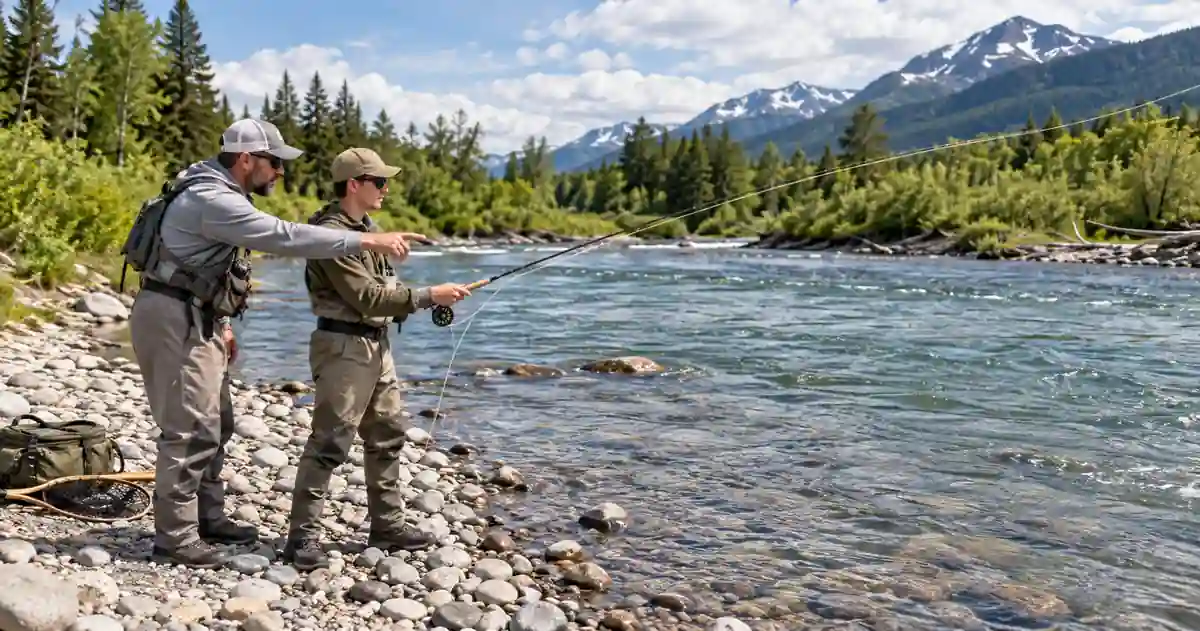
Fly fishing trips for beginners work best when the trip is chosen around instruction, manageable water, and simple logistics rather than the fame of the destination. For many first-time anglers, a private half-day guided wade trip is an excellent starting point because it gives you enough time to learn basic casting, reading water, rigging, and fish handling without turning the first outing into an exhausting full day.
The best fly fishing trips for beginners usually share five qualities:
Instruction → Access → Water → Duration → Logistics
A good first trip gives you patient help, water that matches your ability, clear expectations about gear and licenses, and enough fishing time to learn. That is why fly fishing trips for beginners should be judged by the learning environment as much as the destination name. It should not be judged only by how many fish you catch.
Table of Contents
Fly Fishing Trips for Beginners: Quick Answer
For most first-timers, start with a private guided wade trip lasting roughly two to four hours or a half day. Choose a guide who regularly teaches beginners, confirm whether rods, reels, flies, waders, and boots are included, and pick water that does not require advanced casting or difficult wading.
If you want less walking, a guided float trip can be a better fit. If you want a full vacation rather than a lesson-focused outing, consider a lodge or multi-day package after you understand what type of fishing you enjoy.
| If You Want | Good Starting Trip Type |
|---|---|
| Maximum hands-on instruction | Private guided wade trip |
| Less walking | Guided float trip |
| Low commitment | Two- to four-hour or half-day trip |
| Full vacation | Lodge or multi-day guided package |
| Practice before traveling | Local lesson plus local guided day |
If you are completely new to the sport, reading what fly fishing is and how it works before the trip can make the first conversation with your guide easier.
What Makes Fly Fishing Trips for Beginners Beginner-Friendly?
A famous river is not automatically beginner-friendly. The best fly fishing trips for beginners give first-timers a realistic chance to learn without making access, casting, or physical demands unnecessarily difficult.
Look for these qualities:
- A guide who regularly teaches complete beginners
- Simple or clearly explained access
- Water that can be matched to your mobility and skill
- Gear rental or loaner equipment if you do not own a setup
- A short-trip option
- Straightforward license requirements
- Clear communication about weather and water conditions
- A trip pace that allows instruction instead of constant rushing
Current beginner-oriented guide programs in the Great Smoky Mountains and Eastern Sierra both emphasize instruction, supplied gear, and shorter trip options for first-time anglers.
Instruction Matters More Than Prestige
A patient guide on an ordinary local river may give you a much better first experience than a famous destination where the fishing is technical and the guide assumes you already cast well.
For a first trip, the guide should be comfortable explaining:
- How to hold and cast the rod
- How to manage line
- How to read a basic current seam
- How to detect a take
- How to set the hook
- How to land and release a fish
Manageable Water Matters
Beginner-friendly water should fit your actual ability.
That may mean:
- Shallow wading
- Easy bank access
- A boat rather than a long hike
- Moderate current
- Shorter casts
- Fewer obstacles behind you
“Easy” should never be treated as permanent. River level, weather, and seasonal conditions can make normally approachable water much more difficult.
Best Types of Fly Fishing Trips for Beginners
Different trip formats solve different beginner problems. There is no one correct format for every angler.
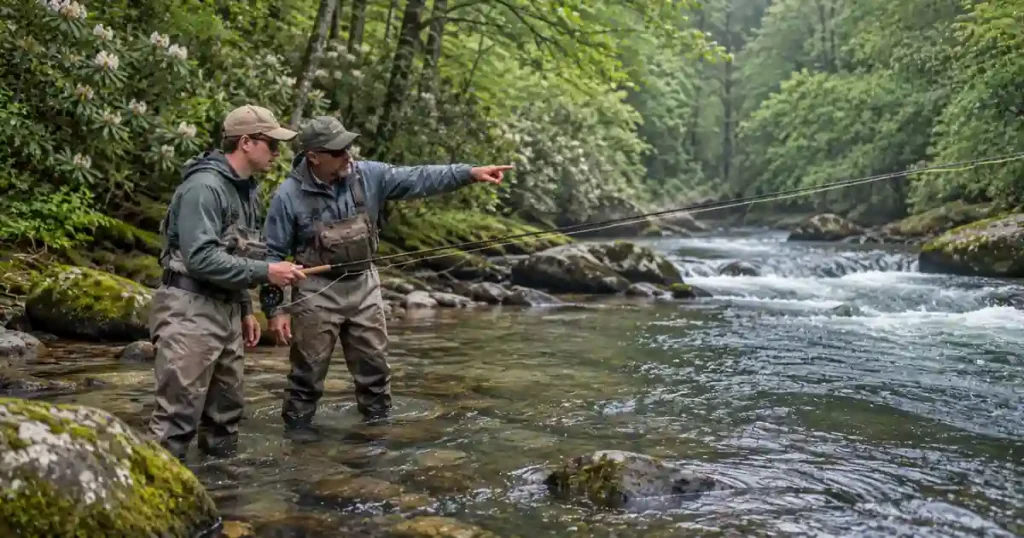
Half-Day Guided Wade Trip
For many fly fishing trips for beginners, this is the strongest starting format.
A wade trip allows the guide to stay close while helping you with:
- Casting
- Line control
- Fly changes
- Mending
- Reading water
- Landing fish
A shorter trip also limits fatigue while giving you time to decide whether you enjoy the sport.
Current Great Smoky Mountains beginner trips include a short introductory option as well as half-day wade trips, with no prior fly-fishing experience required and necessary fishing equipment supplied.
Full-Day Wade Trip
A full day gives you more time to:
- Practice
- Move between stretches
- See more water
- Learn multiple techniques
The trade-off is physical demand.
A beginner who is not used to walking in wading boots, standing in current, or concentrating on casting for hours may learn more during a focused half day than during an overly long first outing.
Guided Float Trip
A float trip can be a strong choice when:
- You want to cover more water
- Long walks are difficult
- The river is best accessed by boat
- You want to experience a larger Western river
A float trip is not automatically easier. Casting from a moving boat, reacting quickly to targets, and following the guide’s instructions can require concentration.
Ask whether the trip is appropriate for a first-time caster.
Lodge or Multi-Day Trip
A lodge-based fly fishing vacation for beginners can simplify:
- Lodging
- Meals
- Guides
- Transportation to water
- Equipment planning
The trade-off is cost and commitment.
If you have never fly fished before, it can be smart to take a local lesson or guided day before booking several days at a destination lodge.
Beginner Saltwater Trip
Saltwater can be a first fly-fishing trip, but choose the guide and species carefully.
Some saltwater situations demand:
- Longer casts
- Faster presentations
- Casting in wind
- Quick shots at moving fish
Tell the guide your actual skill level before booking so the trip can be matched to your ability.
Where to Go on Fly Fishing Trips for Beginners
The following destinations are examples, not a ranking. The right choice depends on travel distance, budget, season, physical ability, and the kind of fishing you want to learn.
Montana, Wyoming, and Idaho
The Northern Rockies have a deep guided-trout infrastructure, with options ranging from simple day trips to full-service lodges.
Current beginner-trip travel guidance from Yellow Dog identifies Montana, Wyoming, and Idaho as established choices because of the combination of guided programs, lodging options, and trout-focused trip infrastructure.
These states can make sense if you want:
- A Western trout experience
- Wade or float options
- Multi-day packages
- Professional guide services
- A destination built around fishing
The trade-off is travel cost. You do not need to fly across the country to learn.
Great Smoky Mountains, North Carolina and Tennessee
The Smokies can be a practical option for anglers who want a first guided trout experience in the Southeast.
Current guide options include short beginner introductions and half-day private wade trips, with instruction and equipment available.
If you fish inside Great Smoky Mountains National Park, current NPS rules require anglers age 16 and older to hold a valid Tennessee or North Carolina fishing license or permit. The park also has its own fishing rules, so check the current park page before fishing.
Mammoth Lakes and the Eastern Sierra, California
The Eastern Sierra is another example of a destination where several current guide services specifically welcome beginners.
Visit Mammoth currently lists beginner-oriented options that include half-day trips, walk-and-wade fishing, boat trips, instruction, and gear depending on the provider.
California currently requires a sport fishing license for anglers age 16 and older, subject to limited exceptions such as designated free-fishing days.
Southwest Colorado
Southwest Colorado offers walk-wade, float, and full-day options across several types of trout water.
Current RIGS information says guided tackle and rental equipment are included with its trips, and its guide program accepts anglers from complete beginners through experienced fishers.
The important point is not that Colorado is automatically better. It is that a destination with multiple trip formats gives a guide more options for matching water and method to your ability.
Start Local Instead
One of the best fly fishing trips for beginners may be close to home.
A local fly shop or guide can often help you:
- Avoid airfare and lodging
- Learn on familiar regional water
- Understand local regulations
- Return later to practice alone
- Discover what gear you actually need before buying more
A local half-day lesson followed by a self-guided return trip can be more useful than an expensive destination vacation if your main goal is learning.
Guided vs. DIY: Which Is Better for Your First Trip?
A guide is not mandatory, but it can remove several beginner problems at once. For many fly fishing trips for beginners, that combination of instruction and local knowledge is the main reason guided fishing is worth considering.
Guided Trip Advantages
A guide can help with:
- Access
- Local regulations
- Rigging
- Fly selection
- Casting
- Reading water
- Fish handling
- Adjusting to current conditions
A guide can also reduce the amount of gear you need to own if loaner equipment is available.
Guided Trip Trade-Offs
Guided fishing costs more than fishing independently.
You also need to find a guide whose teaching style and trip type fit your goals.
A great angler is not automatically a great beginner instructor.
DIY Trip Advantages
A DIY trip gives you:
- More schedule flexibility
- Lower guide-service cost
- Freedom to fish at your own pace
- A chance to practice solving problems independently
DIY Trip Trade-Offs
You need to handle:
- Access research
- Licenses
- Regulations
- Equipment
- Fly choice
- Weather
- Water conditions
- Safety decisions
For someone who has never held a fly rod, a guided first outing is usually the simpler learning path.
What to Expect on Fly Fishing Trips for Beginners
Most fly fishing trips for beginners begin with more instruction than an experienced angler’s trip.
The exact sequence varies, but a first guided day may look like this:
- Meet the guide and discuss goals.
- Confirm licenses and the day’s plan.
- Fit or organize equipment.
- Review basic safety.
- Practice a simple cast.
- Walk, drive, or float to the fishing water.
- Learn a basic presentation.
- Fish while the guide coaches.
- Learn how to land and release fish.
- Adjust the method as conditions change.
You do not need a perfect cast before booking many beginner trips. Current Great Smoky Mountains and Mammoth-area beginner programs explicitly accommodate first-time anglers.
Still, spending a little time learning how to cast a fly rod before the trip can help you use your guide time more efficiently.
Do Not Judge the Day Only by Fish Count
The guide cannot control:
- Weather
- Water temperature
- River flow
- Fish activity
- Hatches
- Your casting progress
A useful first trip may teach you enough to fish independently later even if the catch is modest.
What to Bring on Your First Fly Fishing Trip
Do not assume “guided” means every item is supplied.
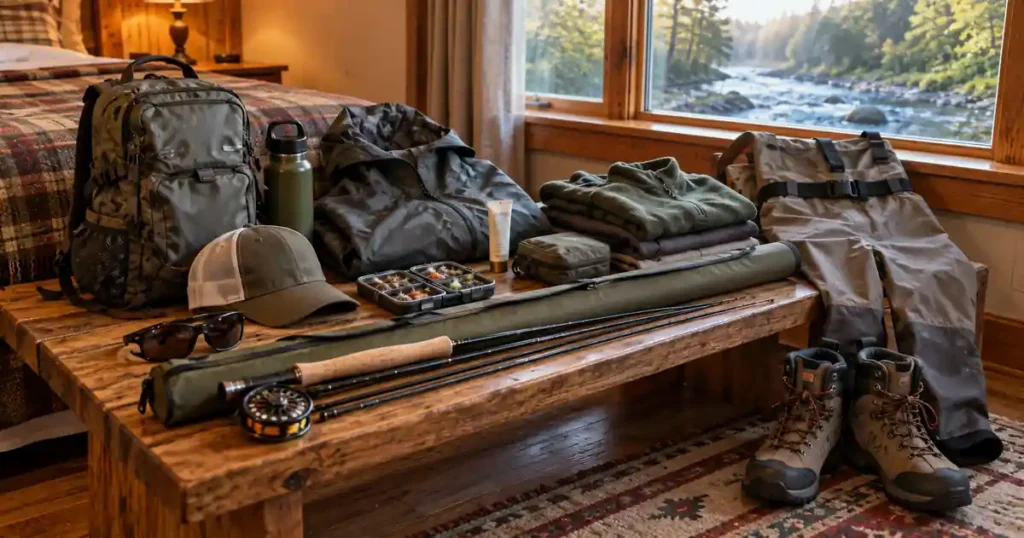
Before leaving home, ask what the guide provides. Packing for fly fishing trips for beginners is much easier when you separate guide-supplied fishing equipment from the personal clothing and essentials you still need.
Confirm With the Guide
Ask specifically about:
- Rod and reel
- Fly line
- Flies
- Leaders
- Tippet
- Waders
- Wading boots
- Pliers or forceps
- Lunch
- Drinking water
- Transportation to the fishing location
Current providers vary. Some beginner programs supply most fishing equipment, while others expect anglers to bring or rent certain items.
Bring Personally
Unless the guide tells you otherwise, plan for:
- Fishing license or proof of purchase
- Polarized sunglasses
- Hat
- Rain shell
- Season-appropriate layers
- Sunscreen
- Water
- Personal medication
- Phone
- Dry change of clothes when useful
You do not need to memorize every fishing knot before your first day. Learning a few fly fishing knots for beginners can still make you more independent when changing flies or rebuilding a simple leader.
How to Choose Fly Fishing Trips for Beginners
Before paying a deposit, ask questions that reveal how the trip actually works.
Ask About Beginner Experience
Ask:
Do you regularly guide people who have never fly fished before?
The answer matters more than generic claims such as “all skill levels welcome.”
Ask About the Fishing Method
Clarify whether the trip is:
- Wade fishing
- Float fishing
- Stillwater fishing
- Saltwater fishing
- A casting lesson combined with fishing
Ask About Physical Demands
Find out:
- How far you may walk
- How much wading is expected
- Whether the bottom is rocky
- Whether there are steep approaches
- Whether alternatives exist if mobility is limited
Ask What Is Included
Confirm:
- Equipment
- Waders and boots
- Flies
- Transportation
- Lunch
- Drinks
- Fees
- Required licenses
Ask About Weather and Water Changes
Find out what happens if:
- The river is too high
- Water is too warm
- Lightning develops
- Strong wind makes the planned water unsuitable
- A road or access point closes
A responsible guide should be willing to change plans when conditions demand it.
Ask About Cancellation Terms
Read the current policy before paying.
Weather cancellations, client cancellations, deposits, and rescheduling rules vary by provider.
Ask About Guide-to-Angler Ratio
More anglers can reduce individual instruction time.
If your main goal is learning, private instruction or a small group can be worth prioritizing.
Common First-Trip Mistakes
Choosing the Most Famous River
Fame does not guarantee a good learning environment.
Choose the trip that fits your skill level. The strongest fly fishing trips for beginners prioritize suitable instruction and water over a famous river name.
Booking Too Long a First Day
More hours do not automatically mean more learning.
If you tire after four hours, an eight-hour first outing may become frustrating.
Assuming Gear Is Included
Confirm every major item before traveling.
Buying a Full Setup Before the Trip
If a guide provides equipment, the first trip can teach you what kind of rod, reel, waders, and boots you actually prefer.
Ignoring Physical Demands
A “wade trip” can range from easy shoreline movement to demanding river crossings.
Ask before booking.
Forgetting the Fishing License
Guide services do not automatically eliminate state or park licensing requirements.
For national parks, the NPS notes that anglers may need to account for service-wide rules, state regulations, park-specific regulations, and the current Superintendent’s Compendium.
Expecting Guaranteed Fish
A professional guide can improve your opportunities and instruction, not control wildlife.
Ignoring Weather
Cold rain, extreme heat, lightning, high water, or wildfire impacts can change the trip.
Hiding Your Experience Level
Tell the guide if you have never cast a fly rod.
That helps the guide choose appropriate water and instruction from the start.
Packing Too Much
Bring what the guide asks for.
A heavy backpack full of unnecessary gear can make a beginner wade trip less comfortable.
FAQs About Fly Fishing Trips for Beginners
Do You Need Experience for a Guided Fly Fishing Trip?
Not necessarily. Many guide services specifically work with complete beginners and teach basic casting, rigging, reading water, and fish handling during the trip. Confirm this before booking because each guide service structures its trips differently.
Is a Half-Day or Full-Day Fly Fishing Trip Better for a Beginner?
A half-day trip is a practical first choice for many beginners because it provides enough time for instruction and fishing without the physical and mental fatigue of a full day. A full day makes more sense if you are comfortable outdoors and want more practice.
Are Fly Rods and Waders Included on Guided Trips?
Sometimes. Some guide services include rods, reels, flies, leaders, and even waders or boots, while others rent equipment or require you to bring it. Confirm the exact inclusions before your trip.
What Is a Good First Fly Fishing Destination?
Choose a destination with guides who teach beginners, manageable water, straightforward access, suitable seasonal conditions, and simple logistics. The Great Smoky Mountains, Eastern Sierra, parts of the Rockies, and many local trout regions can fit those criteria depending on the season.
Is a Wade Trip or Float Trip Better for Beginners?
A wade trip often provides closer hands-on instruction and can be excellent for learning basic casting and reading water. A float trip can reduce walking and cover more water. The better choice depends on your mobility, the river, and how the guide teaches.
Do You Need a Fishing License on a Guided Trip?
Often yes. Licensing rules vary by state, park, age, and type of fishing. Do not assume the guide’s permit or business license covers your personal fishing license. Confirm requirements with the guide and the responsible wildlife agency before the trip.
Final Fly Fishing Trips for Beginners Takeaway
The best fly fishing trips for beginners are built around the learner, not around prestige.
Choose a trip with patient instruction, manageable access, water that fits your ability, a realistic duration, and clear logistics. A half-day guided wade trip is an excellent first option for many anglers, but a float trip, local lesson, or full destination package may fit you better.
Confirm the license, included gear, physical demands, weather policy, and what you need to bring before paying. Then treat your first fly fishing trips for beginners experience as a chance to learn rather than a test of how many fish you can catch.
Sources Used :
- U.S. National Park Service — How Regulations Work — explains the relationship between service-wide NPS rules, state fishing regulations, park-specific rules, and Superintendent’s Compendiums.
Direct URL: NPS — How Regulations Work - Great Smoky Mountains National Park / National Park Service — Fishing — current park license requirements and fishing rules.
Direct URL: NPS — Great Smoky Mountains Fishing - Fly Fishing the Smokies — Wade Trips — current beginner-oriented two-hour and half-day trips, supplied gear, and no-prior-experience guidance.
Direct URL: Fly Fishing the Smokies — Wade Trips - Visit Mammoth — Guided Fishing Trips for Beginners — current Eastern Sierra beginner-trip options, half-day guidance, instruction, and provider gear information.
Direct URL: Visit Mammoth — Guided Fishing Trips for Beginners - California Department of Fish and Wildlife — Sport Fishing Licenses and Report Cards — current 2026 California fishing-license requirements.
Direct URL: CDFW — Sport Fishing Licenses - Yellow Dog Flyfishing — The Best Freshwater Fly Fishing Trips for Beginners — current beginner-trip planning context for Montana, Wyoming, and Idaho.
Direct URL: Yellow Dog — Beginner Freshwater Trips - RIGS Fly Shop & Guide Service — Guided Fly Fishing Trips — current Southwest Colorado trip types and included tackle/rental equipment.
Direct URL: RIGS — Guided Fly Fishing Trips