
Fly Fishing Nymph Setup: How to Rig It Step by Step
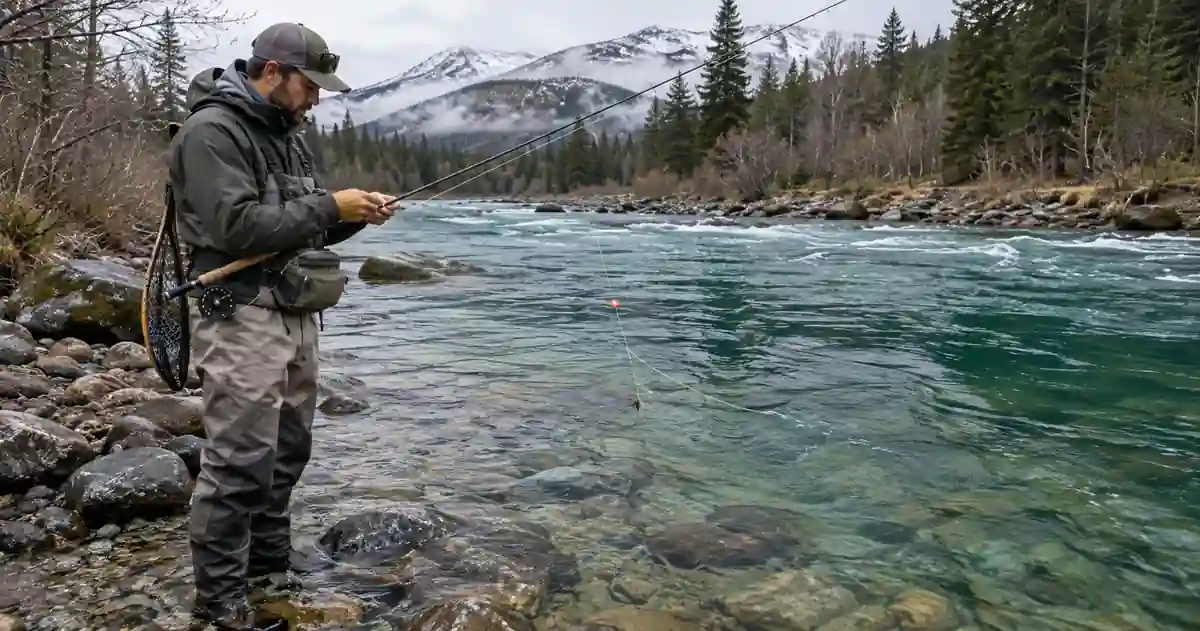
A fly fishing nymph setup lets you present subsurface flies at the depth where trout are feeding while using an indicator, weight, leader, and tippet to control the drift. For most beginners, the easiest place to start is one nymph under a small strike indicator on a tapered leader.
The basic order is simple:
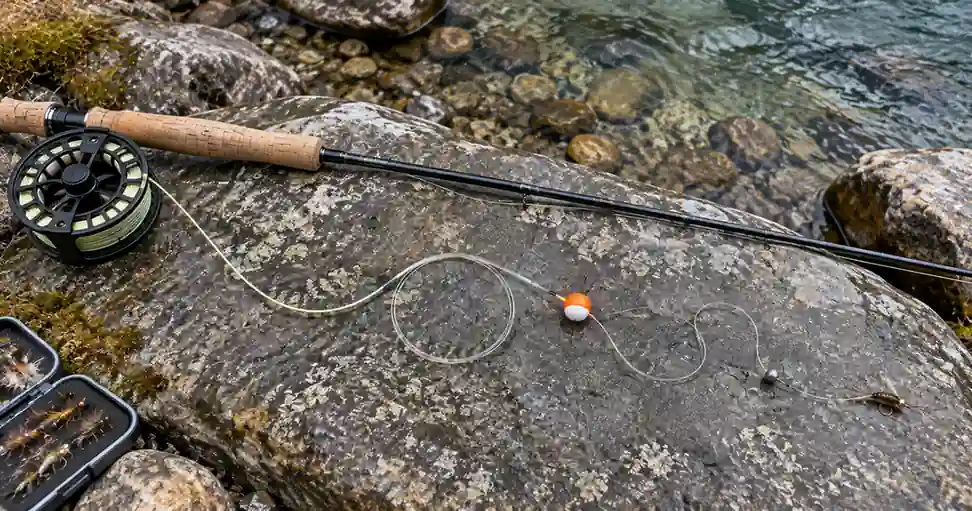
Fly line → leader → indicator → tippet → weight → nymph
A good fly fishing nymph setup is not a permanent formula. Build it simply, watch how it drifts, then adjust depth and weight before changing everything else.
Use this process:
Build → Set Depth → Add Weight → Control Drift → Adjust
Table of Contents
Fly Fishing Nymph Setup: Quick Answer
For a beginner, a practical fly fishing nymph setup starts with a normal trout rod and floating fly line. Add a tapered leader, an adjustable strike indicator, tippet if needed, enough legal weight to reach the target zone, and one nymph.
| Component | Main Job |
|---|---|
| Floating fly line | Casts the rig and allows mending |
| Tapered leader | Transfers energy and separates the fly from the fly line |
| Tippet | Connects the terminal rig to the fly |
| Strike indicator | Helps show takes and controls suspended depth |
| Weight or weighted nymph | Helps the fly reach the target depth |
| Nymph | Imitates subsurface food |
Start with one fly. A single-nymph rig is easier to cast, easier to untangle, and easier to troubleshoot than a tandem rig.
Once that setup makes sense, you can add a second fly where regulations allow.
What You Need for a Fly Fishing Nymph Setup
You do not need a specialized nymphing outfit to learn basic indicator fishing. A standard trout rod, matching reel, floating line, and a few simple terminal components are enough for a useful fly fishing nymph setup.
Rod and Reel
For general trout fishing, the same balanced rod-and-reel outfit you use for other common fly-fishing methods can handle basic indicator nymphing.
A longer rod can make mending and line control easier, but this article does not require you to buy a dedicated nymph rod before learning the technique.
Floating Fly Line
A floating line makes indicator fishing easy to manage because you can see and mend the line on the surface.
The line does not need to pull the nymph down. The leader, weighted fly, split shot, or a combination of those elements controls depth.
Tapered Leader
A tapered leader is useful because the thicker butt section transfers casting energy toward the terminal rig.
That matters when the rig includes a strike indicator and weight, which create more air resistance than a small dry fly.
A standard trout leader can work. A purpose-built indicator leader can make turnover easier with bulkier rigs.
One current example is the RIO Indicator Leader. RIO currently lists it at $8.99 and describes it as a 10-foot leader with a powerful butt, short taper, and long level tippet section designed for indicator fishing.
It is an optional convenience, not a requirement.
Tippet
Tippet lets you adjust the terminal section without repeatedly shortening the main leader.
Choose it according to:
- Fly size
- Trout size
- Water clarity
- Current
- Cover
- Abrasion risk
If you are unsure how tippet size works, see our guide to choosing the right fly fishing tippet.
A specialized product such as RIO ESP Tippet can be used for indicator or Euro nymphing, but you do not need specialized tippet to learn the method.
Strike Indicator
The indicator helps you:
- See hesitation or movement that can signal a take
- Suspend part of the rig
- Control how much leader can hang below the surface
Use the smallest indicator that still supports the rig and remains visible enough for your conditions.
An oversized indicator creates more air resistance and can make casting harder.
Weight
You can get a nymph down with:
- A weighted fly
- Split shot where legal
- A combination of both
Use enough weight to reach the feeding zone, but do not assume more is always better.
Nymph
Start with one pattern you can see and manage confidently.
Common trout nymph families include Pheasant Tail, Hare’s Ear, Prince, midge, and caddis-larva or pupa patterns. The exact fly should reflect local food and conditions.
Fly Fishing Nymph Setup: How to Rig It Step by Step
The easiest way to understand a fly fishing nymph setup is to assemble it in order.
Step 1 — Attach the Leader
Connect a tapered trout leader to the floating fly line.
Many modern fly lines and leaders have welded or tied loops, making a loop-to-loop connection straightforward.
If your line or leader uses a different connection, use an appropriate secure knot or connector.
Step 2 — Add Tippet if Needed
If the leader is already the correct diameter and length at the tip, you can tie the fly directly to it.
If you need more length or a finer terminal section, add tippet.
For the common connections from leader to tippet and tippet to fly, review our fly fishing knots for beginners.
Step 3 — Attach the Indicator
Place an adjustable indicator on the leader.
Do not worry about finding a perfect position immediately. Start with an estimate based on water depth, then adjust after observing the drift.
Step 4 — Add Weight
If the nymph itself does not reach the intended zone, add a small amount of legal weight.
Orvis currently suggests starting with a small shot rather than immediately adding a large amount, then adding more only if the fly is still riding too high.
Weight placement is adjustable. Around 8 inches above the upper fly is one useful starting point in some rigs, but faster or slower water can justify moving the shot.
Step 5 — Tie On the Nymph
Tie on one nymph first.
Starting with one fly lets you isolate problems. If the rig tangles, drifts poorly, or snags constantly, you have fewer variables to diagnose.
Step 6 — Test the Rig
Before making a full cast:
- Check every knot
- Make sure the indicator is secure
- Confirm the shot is not damaging the tippet
- Make sure the hook is clear of the leader
- Straighten the rig
A few seconds here can prevent a knot of leader, shot, indicator, and fly on the first cast.
How Deep Should a Fly Fishing Nymph Setup Run?
The correct depth for a fly fishing nymph setup is the depth where trout are actually feeding, not automatically the river bottom.
A common indicator-nymphing starting point is to place the indicator roughly 1.5 times the water depth above the fly. In a 3-foot-deep run, that might put the indicator around 4.5 feet from the fly as an initial estimate.
This is only a starting point.
Your fly does not hang perfectly straight beneath the indicator. Current pushes the leader downstream, and the actual depth depends on:
- Current speed
- Fly weight
- Added weight
- Leader angle
- Drift length
- Indicator drag
Signs the Rig Is Too Shallow
Your nymph may be too high if:
- It never touches structure in water where trout are holding deeper
- The indicator races with surface current while the fly never settles
- You repeatedly drift above visible fish
Try moving the indicator farther from the fly, adding a small amount of weight, or both.
Signs the Rig Is Too Deep or Heavy
The rig may be too deep or heavy if:
- It snags almost every drift
- The indicator repeatedly stalls because the flies are pinned to the bottom
- You cannot cast the rig comfortably
- The fly is dragging rather than drifting
Remove a little weight or shorten the suspended depth before changing multiple things at once.
Adjust Depth Before Randomly Changing Flies
If you believe trout are feeding on nymphs but you get no response, first ask whether the fly is reaching them.
A perfect pattern several feet above the fish can be less useful than a basic pattern drifting at the correct level.
How to Fish a Nymph Rig
Once the rig is built, presentation matters more than adding extra components.
Cast Upstream or Upstream-and-Across
Place the flies far enough above likely holding water to let them sink before reaching the fish.
The required lead distance changes with depth, current, and weight.
Mend Early
After the cast lands, use a mend to reduce unwanted drag from the floating fly line.
Try to move the line without pulling the indicator several feet across the surface.
A useful fly fishing nymph setup still fails if the floating line drags the entire rig unnaturally.
Follow the Indicator
Track the indicator with the rod tip while maintaining enough slack for a natural drift but not so much that you cannot react.
Watch for:
- Sudden stops
- Hesitation
- Sideways movement
- Unusual dips
- Movement that differs from the surrounding bubbles
Not every movement is a fish, but waiting for a dramatic plunge can cause you to miss subtle takes.
Use an Open Loop or Water Haul
Weighted indicator rigs tangle more easily than a single dry fly.
Reduce tangles by:
- Making fewer false casts
- Opening the casting loop
- Letting the current straighten the rig below you
- Using the water tension to help load the rod for the next cast
Do not try to force a tight, high-speed dry-fly loop around an indicator, split shot, and multiple hooks.
Fly Fishing Nymph Setup: Single Fly vs. Two-Fly Rig
A single-fly fly fishing nymph setup is the best place for most beginners to start.
Start With One Fly
Advantages include:
- Easier casting
- Fewer tangles
- Fewer snags
- Easier knot checking
- Easier depth troubleshooting
- Clearer understanding of which fly was taken
You can catch trout perfectly well with one nymph.
Two-Fly Rig
Once you can manage one fly, a tandem rig can help you:
- Test two patterns
- Fish two slightly different depths
- Combine different fly sizes or weights
One common arrangement is:
Main leader/tippet → upper fly → tippet from hook bend → lower fly
Tie a section of tippet to the bend of the first hook, then tie the second nymph to the end.
The exact spacing should suit the water and casting conditions rather than one mandatory number.
Before adding patterns simply because they are popular, review our guide to choosing the right fly fishing flies.
Alternative Dropper Connection
A second fly can also be tied on a tag or dropper rather than from the first hook bend.
A tippet ring can simplify some leader and dropper arrangements. Current RIO Tippet Rings are listed at $9.99 and are specifically described by RIO as useful for adding droppers and for indicator nymph fishing.
They are optional. You do not need a tippet ring to build a functional tandem rig.
Check Regulations
Do not assume two flies are legal everywhere.
Local regulations can restrict:
- Number of flies or hooks
- Added weight
- Barbs
- Seasonal methods
- Particular tackle configurations
Check the current rules for the exact water before fishing.
Adjusting a Fly Fishing Nymph Setup for Different Water
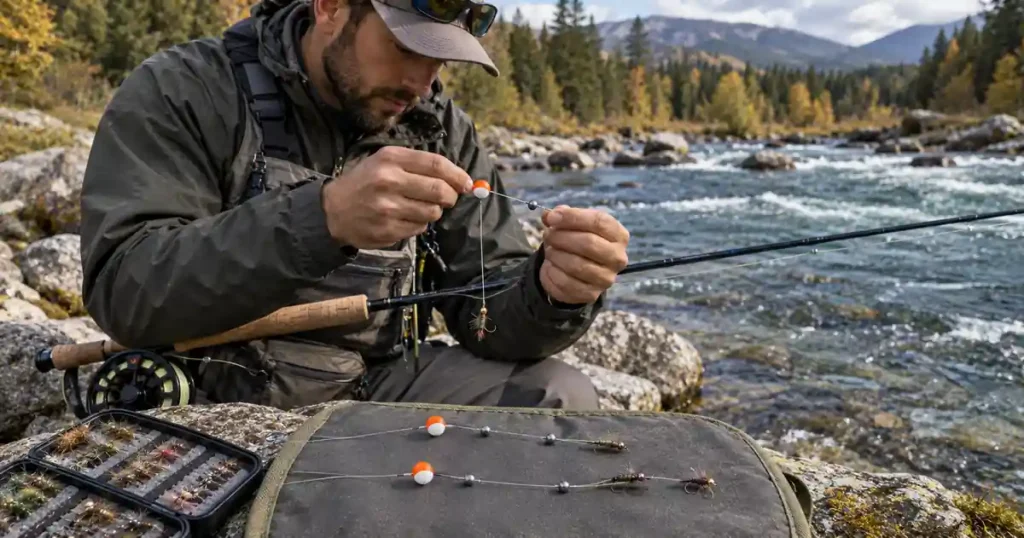
The best fly fishing nymph setup changes as depth and current change.
Shallow Riffle
In shallow water:
- Shorten the distance from indicator to fly
- Reduce weight
- Consider a smaller indicator
- Keep the drift short and controlled
Too much weight can turn a shallow riffle into constant snagging.
Medium Run
A medium-depth run is a good place to learn indicator fishing.
Start with a moderate depth estimate, then watch the drift.
If the nymph never reaches the likely holding zone, add a small amount of depth or weight.
Deep Pool
A deep pool may require:
- More suspended depth
- Additional weight
- A heavier nymph
- More lead distance before the target
Give the flies time to sink.
Do not assume that a heavy rig dropped directly over the deepest spot will immediately fish effectively.
Fast Pocket Water
Fast pocket water often rewards:
- Shorter casts
- Quick sinking
- Direct line control
- Frequent depth changes
Because pockets can shift rapidly from shallow to deep, one fixed indicator setting may not cover the whole section.
Common Nymph Rig Mistakes
Using Too Much Weight
If every drift ends in a snag, remove some weight before assuming the fish are absent.
Using Too Little Weight
If the rig never reaches the feeding zone, add weight gradually.
Setting the Indicator Too Shallow
The fly may ride above the fish.
Setting the Indicator Too Deep
Excess leader below the indicator can make casting harder and increase snagging without improving the drift.
Using an Indicator That Is Too Large
A larger indicator can support more weight, but it also creates more resistance.
Match it to the rig.
Mending Too Late
Once drag has pulled the indicator and nymphs out of their natural path, a large late mend can make things worse.
Mend early.
Making Too Many False Casts
Every extra false cast gives an indicator rig another chance to tangle.
Adding a Second Fly Too Soon
Master the single-fly fly fishing nymph setup first. Add complexity only after you can cast, mend, and adjust it confidently.
Changing Everything at Once
If you simultaneously change:
- Fly
- Depth
- Weight
- Indicator
- Tippet
you learn very little about what solved the problem.
Change one major variable at a time.
FAQs About Nymph Fishing
What Is the Easiest Nymph Rig for Beginners?
The easiest rig is a floating line, tapered leader, adjustable indicator, appropriate tippet, enough weight to reach the target depth, and one nymph. It is easier to cast and troubleshoot than a two-fly system.
How Far Should the Indicator Be From the Nymph?
A common starting guideline is around 1.5 times the water depth, but it is not a fixed rule. Current speed, weight, leader angle, and where the trout are feeding all affect the correct setting.
Where Should Split Shot Go on a Nymph Rig?
A practical starting point can be several inches above the upper fly. Orvis demonstrates roughly 8 inches as one starting position and recommends adjusting placement according to current and rig behavior. Local weight rules still apply.
Should I Use One or Two Nymphs?
Beginners should generally learn with one fly first. Add a second nymph when you can cast and control the basic rig and when local regulations allow multiple flies.
What Tippet Should I Use for Nymph Fishing?
Choose tippet based on fly size, fish size, current, water clarity, and cover. There is no single tippet size that is correct for all nymph fishing.
Is Euro Nymphing the Same as Indicator Nymphing?
No. Euro or tight-line nymphing relies much more on direct contact with the leader and flies and often uses specialized long leaders or sighters. Conventional indicator nymphing suspends the rig under a visible indicator and manages the drift primarily through floating-line mends.
Final Fly Fishing Nymph Setup Takeaway
A reliable fly fishing nymph setup does not need to be complicated.
Start with one nymph under an adjustable indicator. Set an approximate depth, add only enough weight to reach the target zone, and focus on producing a controlled drift.
When the rig is not working, use the same sequence every time:
Build → Set Depth → Add Weight → Control Drift → Adjust
Once you can cast, mend, and troubleshoot the simple fly fishing nymph setup, adding a second fly becomes a useful option instead of another source of tangles.
Sources Used
- Orvis — Nymph With Indicator, Split Shot & Multiple Flies — tapered leaders, smaller indicators, weight placement, and water-haul/open-loop casting guidance.
Direct URL: https://www.orvis.com/how-do-i-nymph-with-an-indicator-split-shot-and-multiple-flies.html - Orvis Learning Center — How to Set Up an Indicator Rig — indicator position, two-fly configuration, depth estimation, and weight-placement context.
Direct URL: https://howtoflyfish.orvis.com/video-lessons/advanced-intermediate-fly-fishing-lessons/4-indicators-and-dry-droppers/1402-11-how-to-set-up-an-indicator-rig - Orvis — What Is Nymph Fishing? — general indicator-depth guidance, weight adjustment, open-loop casting, and distinction from Euro/tight-line nymphing.
Direct URL: https://www.orvis.com/what-is-nymph-fishing.html - Orvis Learning Center — Adding Weight to Your Leader — current instructional guidance for adding weight gradually and adjusting split-shot position according to current.
Direct URL: https://howtoflyfish.orvis.com/video-lessons/advanced-intermediate-fly-fishing-lessons/4-indicators-and-dry-droppers/1403-12-adding-weight-to-your-leader - Orvis Learning Center — Basic Nymph Fishing Techniques — two-fly rig construction, pocket-water presentation, and indicator-nymphing technique.
Direct URL: https://howtoflyfish.orvis.com/how-to-articles/trout-fishing-articles/basic-nymph-fishing-techniques - RIO Products / Far Bank — Indicator Leader — current $8.99 research price, 10-foot construction, powerful butt, short taper, and long level tippet section.
Direct URL: https://farbank.com/products/rio-indicator-leader - RIO Products / Far Bank — RIO ESP Tippet — current $9.99 research price, 2X–7X range, and manufacturer positioning for indicator and Euro nymphing.
Direct URL: https://farbank.com/products/rio-esp-tippet - RIO Products / Far Bank — Tippet Rings — current $9.99 research price and current manufacturer guidance for tippet replacement, droppers, and indicator nymph fishing.
Direct URL: https://farbank.com/products/rio-tippet-rings