
Steelhead Fly Fishing Setup: Rod, Reel, Line, and Rigs
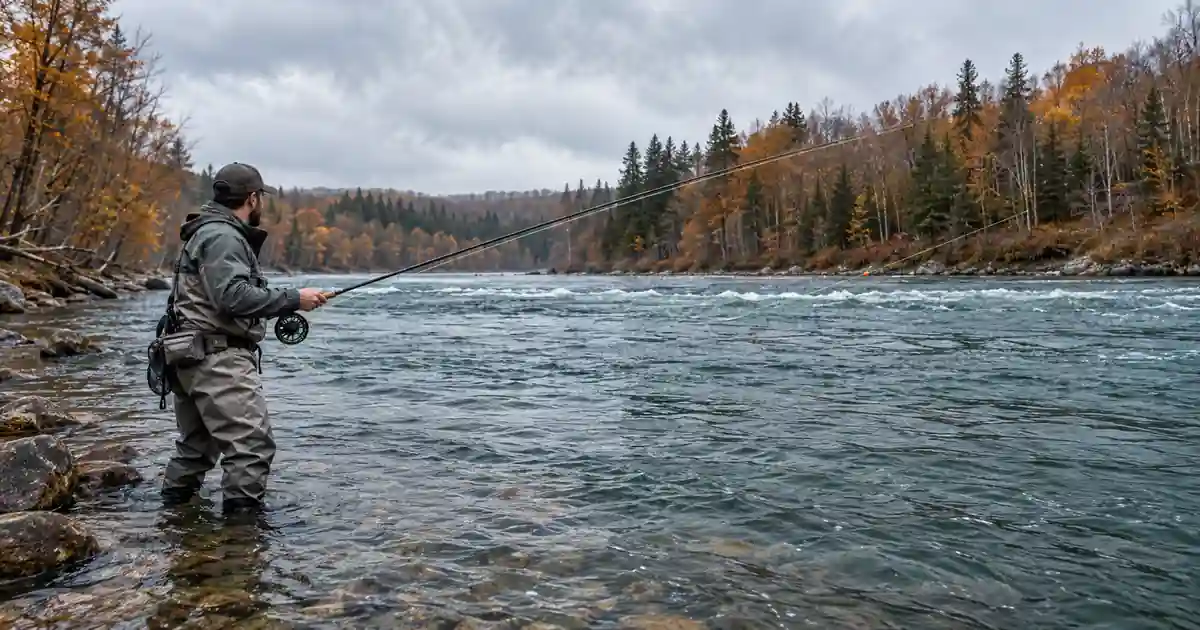
A steelhead fly fishing setup should be built around the way you plan to fish, not around a rod you happened to buy first. For many Great Lakes anglers who primarily indicator nymph, a practical starting point is a 10-foot 7-weight single-hand rod, a reel with enough capacity for the fly line and backing, and a floating line that can turn over an indicator, weight, and one or two flies where regulations allow.
If you plan to swing flies, your steelhead fly fishing setup can look very different. A single-hand rod can work on smaller rivers, while switch and Spey rods become more useful when two-handed casting, sink tips, and broad swings are central to the day.
Use this sequence:
Method → Rod → Reel → Line → Terminal Rig
That order keeps every part of the system working together.
Table of Contents
Steelhead Fly Fishing Setup: Quick Answer
There is no single universal setup, but these three starting points cover most of the common decisions.
| Method | Rod | Reel | Line | Terminal System |
|---|---|---|---|---|
| Indicator nymphing | Around 10′ 7wt for many rivers | Matching reel with suitable backing capacity and dependable drag | Floating indicator taper | Leader + indicator + weight + fly |
| Single-hand swing | 9’–10′ 7/8wt depending on water | Matching reel | Floating or sink-tip-capable line | Sink tip or leader + short leader + streamer |
| Switch/Spey swing | Two-hand rod matched to river and technique | Reel sized to balance rod and hold line system | Skagit or Scandi system | Tip or leader + terminal leader + swung fly |
For a first Great Lakes steelhead fly fishing setup, a 10-foot 7-weight is popular because the extra length helps with mending and line control while still remaining a conventional single-hand rod.
Rod
A 7-weight is a useful middle ground for many steelhead rivers. It gives you enough power to cast weighted indicator rigs and control strong fish without automatically moving into an 8-weight.
An 8-weight can make more sense when you regularly fish:
- Bigger rivers
- Heavier flies
- Heavier tips
- Stronger current
- Larger fish
- Windier conditions
Rod length matters almost as much as line weight. A 10-foot rod gives indicator anglers extra reach for mending and managing long drifts.
Reel
Do not choose a reel by the printed size alone.
For steelhead, check:
- Rod balance
- Fly-line compatibility
- Backing capacity
- Drag design
- Arbor size
- Cold-weather practicality
A larger arbor retrieves line faster and can make line management easier after a fish runs toward you.
If reel sizing is still confusing, our guide to choosing the right fly fishing reel explains the main factors before you apply them to steelhead.
Fly Line
For indicator fishing, a weight-forward floating line is the simplest starting point.
Indicator-specific tapers are often designed with more mass toward the front so they can turn over:
- Indicators
- Split shot or other legal weight
- Longer leaders
- Multi-fly rigs where allowed
For swinging, the line system changes. Skagit and Scandi systems are designed around two-handed casting and should be matched to the rod’s recommended grain window.
Leader and Terminal Rig
The final section of a steelhead fly fishing setup depends heavily on the method.
Indicator fishing normally uses a longer leader with an adjustable indicator, weight, tippet, and fly.
A Skagit swing setup usually uses a shooting head or integrated line, a sink tip when needed, and a shorter terminal leader.
Those are different systems, and trying to make one leader do both jobs usually creates unnecessary compromises.
Choose the Method Before Building Your Steelhead Fly Fishing Setup
The biggest setup decision comes before the rod purchase: indicator nymphing or swinging?
You can use both techniques during a season, but each rewards different gear.
Indicator Nymphing
Indicator nymphing uses a floating line and a dead-drift presentation.
A typical steelhead fly fishing setup for this method emphasizes:
- Mending
- Long drifts
- Depth control
- Easy indicator adjustment
- Ability to turn over weight
- Single-hand casting
This style is especially common on Great Lakes tributaries.
The goal is usually to place the fly near the fish while keeping the presentation moving at a natural pace with the current.
Swinging Flies
Swinging uses the river’s current to move the fly across and downstream.
The setup places more emphasis on:
- Efficient two-hand or single-hand Spey casts
- Sink-tip compatibility
- Line control through the swing
- Larger streamers or traditional steelhead flies
- Covering broad water
It can be done with a conventional single-hand rod, but switch and Spey rods are purpose-built for this style.
Great Lakes vs. Pacific Rivers
Great Lakes and Pacific steelhead are both migratory rainbow trout, but the fisheries can be very different.
Great Lakes tributaries often involve:
- Smaller rivers
- Indicator fishing
- Long leaders
- Cold-weather nymphing
- Shorter casting distances in some systems
Large Pacific rivers can make two-handed rods more attractive because they allow anglers to cover broad water efficiently without needing a long conventional backcast.
Do not choose gear only because it is labeled “steelhead.” Match it to the river.
Steelhead Fly Fishing Setup for Indicator Nymphing
If indicator fishing is your primary method, keep the system simple.
A practical steelhead fly fishing setup might be:
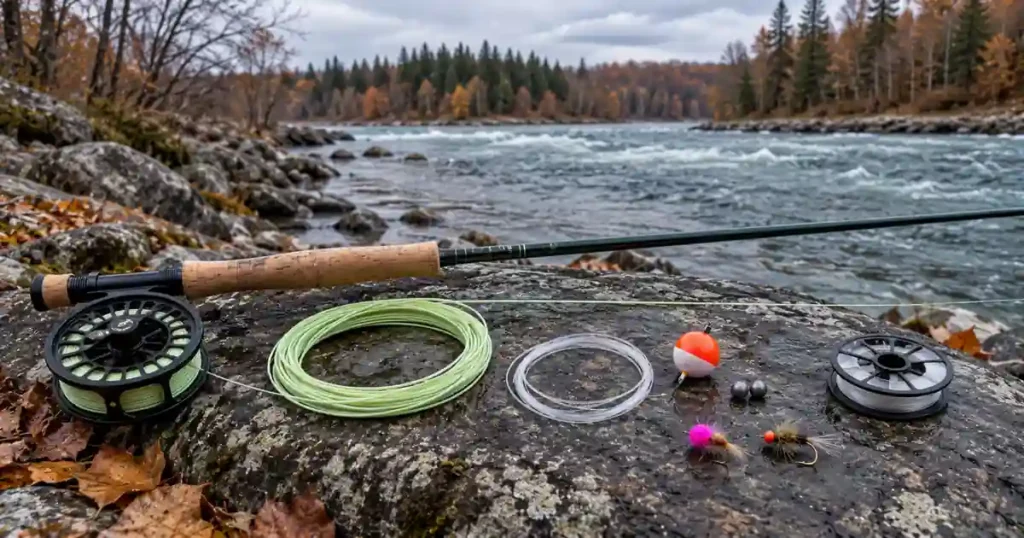
10′ 7-weight rod → 7/8-class reel → floating indicator line → leader → indicator → weight → tippet → fly
That is a framework, not a universal prescription.
Rod: Why a 10-Foot 7-Weight Works
The extra foot compared with a typical 9-foot trout rod helps with:
- Mending
- Holding more line off conflicting currents
- Managing longer leaders
- Controlling an indicator drift
A 7-weight also has enough backbone for many weighted steelhead rigs without making the outfit unnecessarily heavy for moderate tributaries.
Current examples include the Redington Wrangler 10′ 7-weight, which Redington positions for big indicators and mending, and the ECHO ION XL 10′ 7-weight, which ECHO currently identifies specifically as a steelhead nymphing model.
Prices below were checked on September 14, 2026 and can change.
The Wrangler was listed at $199.99, while the ION XL was listed at $299.99.
For anglers who want a more expensive single-hand option, the Orvis Recon 10′ 7-weight is currently positioned by Orvis for steelhead and big stillwater trout. It was listed at $698 when checked.
You do not need the Recon price tier to build an effective steelhead fly fishing setup. The upgrade only makes sense if its fit, warranty, construction, and intended use justify the cost for you.
Reel: Capacity Before Prestige
A steelhead reel should balance the rod and hold the complete line system without crowding the spool.
A 7/8 or similar-size reel is common, but model labels vary.
The current Orvis Hydros IV, for example, is rated for 7–9-weight lines and uses a larger arbor with a fully sealed drag system.
That does not make it the only correct steelhead reel. It simply illustrates the features worth checking.
Prioritize:
- Enough capacity
- Dependable drag
- Reasonable rod balance
- Large arbor where useful
- A design you can operate with cold hands
Line: Why Indicator Tapers Help
A standard weight-forward floating line can work, but an indicator-specific taper can make heavy rigs easier to cast.
The current Scientific Anglers Mastery Anadro Indicator is one example. Scientific Anglers lists it as 1.5 line sizes heavy, with a long rear taper intended for long mends and turning over heavier rigs.
It was listed at $79.95 when checked.
The important lesson is not that you need this exact line.
It is that a steelhead indicator line may intentionally be heavier than a delicate trout line. That extra mass helps move the indicator, weight, and flies.
Basic Steelhead Nymph Rig
A straightforward order is:
- Floating fly line
- Tapered or purpose-built leader
- Adjustable strike indicator
- Weight where legal and appropriate
- Tippet
- Fly
- Optional second fly only where legal and useful
The indicator should be adjustable because water depth changes throughout a run.
Use only enough weight to reach the intended zone while preserving a controllable drift. Adding weight endlessly can make the rig difficult to cast and can turn presentation into snag management.
Steelhead Fly Fishing Setup for Swinging Flies
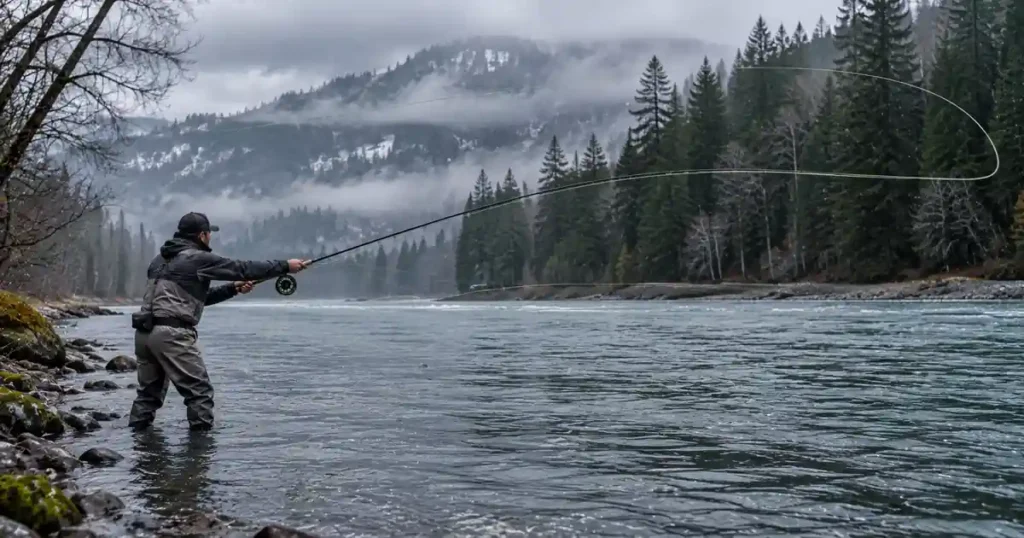
A swing-oriented steelhead fly fishing setup is built around casting a line across the river and allowing the current to carry the fly through likely holding water.
There are three practical rod paths.
Single-Hand Swing
A conventional 7- or 8-weight can swing flies effectively on smaller or medium-sized rivers.
This route makes sense if you:
- Already own an appropriate single-hand rod
- Fish rivers with limited casting room
- Only swing part of the time
- Do not need the reach of a full Spey rod
Single-hand Spey casts can help when vegetation or high banks limit your backcast.
Switch Rod
A switch rod sits between a single-hand rod and a full Spey rod.
It can be useful for anglers who want:
- Two-handed casting
- A shorter rod than traditional Spey equipment
- More versatility on medium-sized rivers
- A setup that can sometimes cross over between swinging and indicator work
That versatility does not mean every switch rod handles every line system well. Use the rod manufacturer’s grain recommendations.
Spey Rod
A dedicated Spey rod becomes most useful when:
- Rivers are broad
- Long swings are common
- Two-handed casting is the main method
- You regularly fish sink tips and larger flies
- Backcast room is limited
The longer rod is not automatically “better.” It solves specific casting and line-control problems.
Skagit vs. Scandi
For a beginner, keep the difference simple.
| System | Best Fit | Main Strength |
|---|---|---|
| Skagit | Larger flies, heavier tips, deeper presentations | Compact power |
| Scandi | Smaller flies, lighter tips, cleaner presentation | Smoother, lighter delivery |
A Skagit-style steelhead fly fishing setup is often the easier choice when you need to turn over heavy sink tips and larger winter flies.
The current RIO Elite Integrated Skagit Max Power is one current example. RIO lists it at $129.99 and designs it for large flies, heavy sinking tips, and shorter Spey rods.
Do not select the head by the rod’s simple “7-weight” label alone. Two-hand rods are typically matched by grain recommendations, and the correct head weight can vary significantly between models.
Sink Tips
A sink tip helps control fly depth during the swing.
Choose the tip based on:
- River depth
- Current speed
- Fly weight
- Presentation
- Rod and line compatibility
You do not always need the fastest-sinking tip available.
Too much sink can make the fly hang up constantly or prevent a smooth swing through shallower water.
Leader, Tippet, and Rig Details
The leader is where indicator and swing systems separate most clearly. In any steelhead fly fishing setup, leader design should follow the presentation rather than a fixed formula copied from another river.
Indicator Leader
A steelhead indicator leader may be longer than the leaders many anglers use for ordinary trout dry-fly fishing.
Its job is to help the fly reach depth while keeping the indicator adjustable.
A basic structure can be:
Tapered leader → tippet → fly
with the indicator and legal weight positioned according to depth and local rules.
Do not use one fixed leader formula everywhere. Water clarity, fish pressure, fly size, current, and local regulations all matter.
Our guide to choosing the right fly fishing tippet explains how diameter and strength affect presentation.
Swing Leader
A swing leader after a sink tip is often much shorter than an indicator leader.
The tip controls much of the depth, while the shorter leader connects the tip to the fly.
With floating Scandi-style work, longer leader systems can be appropriate depending on fly size and presentation.
Again, follow the line-system and rod recommendations rather than copying one internet formula.
Backing
Backing gives the reel reserve capacity beyond the fly line.
A 20- to 30-pound backing range is commonly used for steelhead, but the correct amount depends on your reel, fly line, shooting system, and spool capacity.
Check the reel manufacturer’s capacity chart before filling the spool.
For all the connections between backing, fly line, leader, tippet, and fly, our guide to fly fishing knots for beginners covers the main knot families you need to understand.
Common Steelhead Fly Fishing Setup Mistakes
Buying the Rod Before Choosing a Method
A rod optimized for indicator fishing is not automatically the best tool for a dedicated swing angler.
Using Light Trout Gear Because You Already Own It
A light trout setup may struggle with:
- Heavy indicators
- Weighted rigs
- Sink tips
- Larger flies
- Strong steelhead in heavy current
Use gear that matches the water and technique.
Buying a Reel With Too Little Capacity
Your reel needs room for:
- Backing
- Fly line or running line
- Shooting head where relevant
An overfilled spool can create line-management problems.
Ignoring Rod and Reel Balance
A very light reel can make a long 10-foot rod feel tip-heavy.
A slightly heavier reel may balance a longer rod more comfortably.
Using a Delicate Trout Line for a Heavy Indicator Rig
A presentation-oriented dry-fly taper is not designed around turning over an indicator, weight, and multiple flies.
Use a line suited to the rig.
Choosing Skagit Grain Weight by Guessing
Follow the rod manufacturer’s recommended grain window.
Two rods carrying the same nominal line-weight label can prefer different heads.
Overcomplicating the Leader
Start simple.
Add complexity only when it solves a depth, turnover, or presentation problem.
Adding Too Much Weight
More weight is not automatically better.
Use enough to reach the intended zone while maintaining a fishable drift.
Buying a Spey Rod Because It Looks Like “Real” Steelhead Gear
Two-hand equipment is excellent when the water and technique justify it.
It is unnecessary for many indicator anglers on smaller tributaries.
Ignoring Regulations
Steelhead seasons, hook rules, fly limits, weight restrictions, and legal rig configurations vary by location.
Always check the current regulations for the exact river you plan to fish.
Steelhead FAQs
What Weight Fly Rod Is Best for Steelhead?
A 7-weight is a useful starting point for many steelhead situations, especially indicator fishing on Great Lakes tributaries. An 8-weight can make more sense for larger rivers, heavier flies, stronger current, or anglers who want more lifting power.
Is a 7-Weight or 8-Weight Better for Steelhead?
Neither is universally better. A 7-weight is often easier to fish all day and works well for many indicator rigs. An 8-weight offers more power for heavier flies, bigger water, and stronger wind.
What Size Fly Reel Do You Need for Steelhead?
A reel in the 7/8 class or an equivalent model is common, but you should verify line compatibility, backing capacity, drag, and rod balance. Reel size labels are not standardized enough to rely on the number alone.
What Fly Line Should You Use for Steelhead?
For indicator nymphing, a weight-forward floating or indicator-specific line is a practical starting point. For two-handed swinging, use a Skagit or Scandi system matched to the rod’s recommended grain window.
Do You Need a Spey Rod for Steelhead?
No. A single-hand rod can handle indicator fishing and can also swing flies. Spey rods become most valuable when two-handed casting and covering broad water are central to your fishing.
What Is the Difference Between a Steelhead Nymph Rig and Swing Setup?
A nymph rig usually uses a floating line, longer leader, indicator, weight, and one or more flies where legal. A swing setup typically uses a single-hand or two-hand line system with a sink tip or leader and a shorter terminal leader to move a streamer across the current.
Final Steelhead Fly Fishing Setup Takeaway
A reliable steelhead fly fishing setup starts with the method.
For many Great Lakes indicator anglers, a 10-foot 7-weight, appropriately sized reel, and floating indicator line make a practical starting system. For dedicated swinging, build around a single-hand, switch, or Spey rod and match the Skagit or Scandi system to the rod’s recommended grain range.
Choose the method first, make the rod and reel work together, match the line to the casting job, and build the terminal rig last. That approach produces a steelhead fly fishing setup that works as a system instead of a collection of unrelated gear.
Sources Used :
- Michigan Department of Natural Resources — Steelhead — confirms steelhead as migratory rainbow trout and distinguishes Great Lakes life history.
Direct URL: https://www.michigan.gov/dnr/education/michigan-species/fish-species/steelhead - NOAA Fisheries — Steelhead — authoritative species information for Pacific steelhead and Oncorhynchus mykiss.
Direct URL: https://www.fisheries.noaa.gov/species/steelhead - Minnesota Department of Natural Resources — How to Gear-Up for Steelhead Fishing — supports common 7/8 reel sizing, floating line use, backing, and leader/tippet context for Great Lakes steelhead.
Direct URL: https://www.dnr.state.mn.us/fishing/trout/lake-superior-steelhead-gear.html - Redington / Far Bank — WRANGLER 7100-4 — current 10′ 7-weight specifications, indicator/mending use case, $199.99 research price, and warranty information.
Direct URL: https://farbank.com/products/redington-wrangler-7100-4 - ECHO Fly Fishing — ION XL — current 10′ 7-weight steelhead nymphing model and $299.99 research price.
Direct URL: https://echoflyfishing.com/project/echoionxl/ - Orvis — Recon Freshwater Fly Rod — current 10′ 7-weight steelhead model, $698 research price, and current specifications.
Direct URL: https://www.orvis.com/product/recon-freshwater-fly-rod/3L9A2151.html - Orvis — Hydros Reel — Hydros IV current 7–9-weight rating, larger arbor, and fully sealed drag specifications.
Direct URL: https://www.orvis.com/product/hydros-reel/3M3R.html - Scientific Anglers — Mastery Anadro Indicator — current $79.95 price, 5–9-weight availability, 1.5-size-heavy design, long rear taper, and indicator/heavy-rig use.
Direct URL: https://scientificanglers.com/product/mastery-anadro/ - RIO Products / Far Bank — Elite Integrated Skagit Max Power — current $129.99 price and design for larger flies, heavy sink tips, and shorter Spey rods.
Direct URL: https://farbank.com/products/rio-elite-integrated-skagit-max-power