
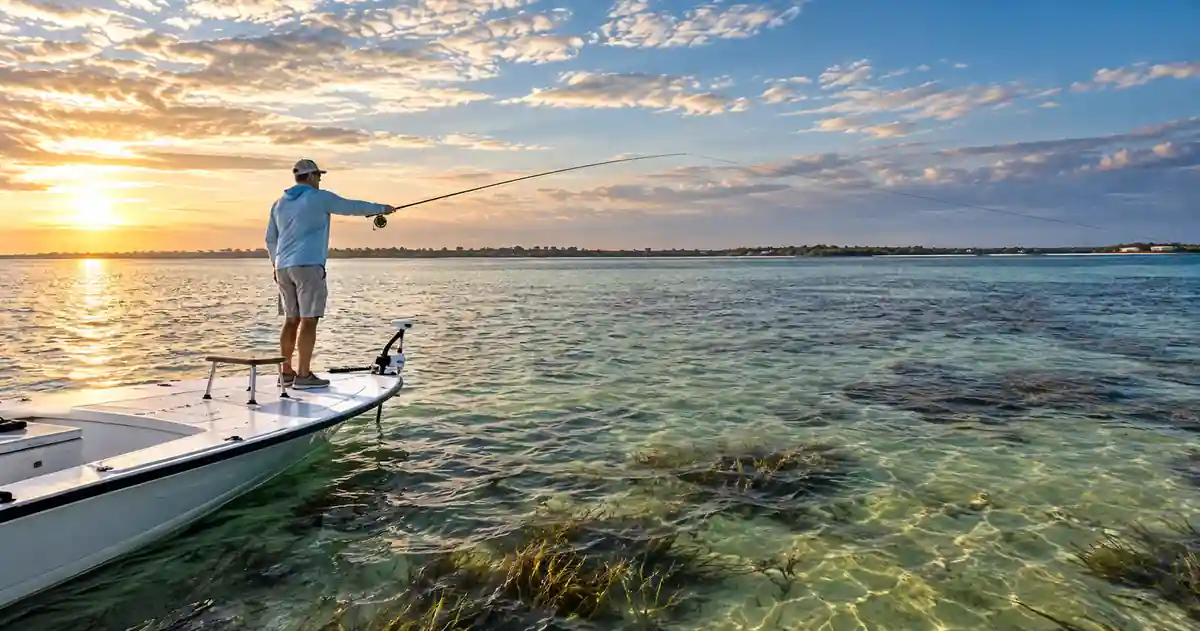
Fly Fishing in Destin Florida: What to Expect
Destin sits beside a mix of saltwater environments.
Depending on where and how you fish, you can encounter:
- Choctawhatchee Bay
- Grass flats
- Sandy shallows
- Oyster habitat
- Bayous
- Pass water
- Gulf beaches
- Nearshore coastal water
- Protected sound water
Saltwater fly fishing often requires more attention to:
- Wind
- Tide
- Water clarity
- Fish movement
- Boat positioning
- Casting speed
A freshwater trout angler accustomed to slow presentations may find that a moving redfish or school of jacks offers only a brief casting window.
Table of Contents
Best Fly-Fishing Waters Around Destin
“Where to fish” needs to be separated from “where you can legally and practically access the water.”
These are broad fishing zones, not secret spots.
Choctawhatchee Bay
Choctawhatchee Bay is the main inshore environment around Destin.
Potential targets include:
- Redfish
- Spotted seatrout
- Black drum
- Jack crevalle
- Sheepshead
- Flounder
- Seasonal tarpon opportunities
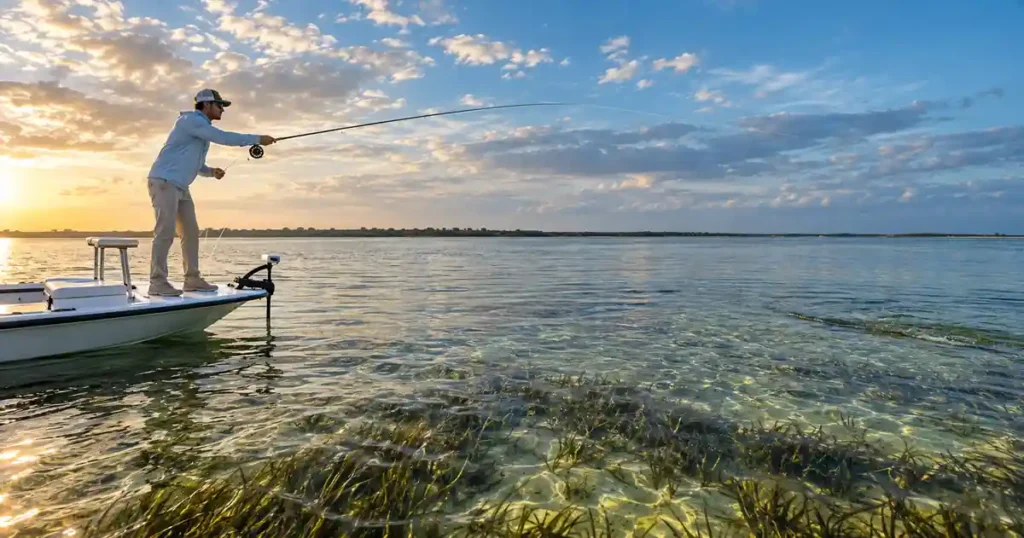
Shallow areas can create sight-fishing opportunities, particularly from a skiff.
But an attractive flat on a map does not mean you can legally walk to it.
East Pass and Nearshore Gulf
East Pass connects Choctawhatchee Bay with the Gulf.
The broader pass and nearshore environment can attract:
- Jacks
- Spanish mackerel
- Other coastal species
- Migratory fish seasonally
This water can also involve:
- Stronger current
- Heavy boat traffic
- Deeper water
- More difficult access
- Rapidly changing conditions
Do not assume a productive boat-fishing area is suitable for shore fishing.
Gulf Beaches
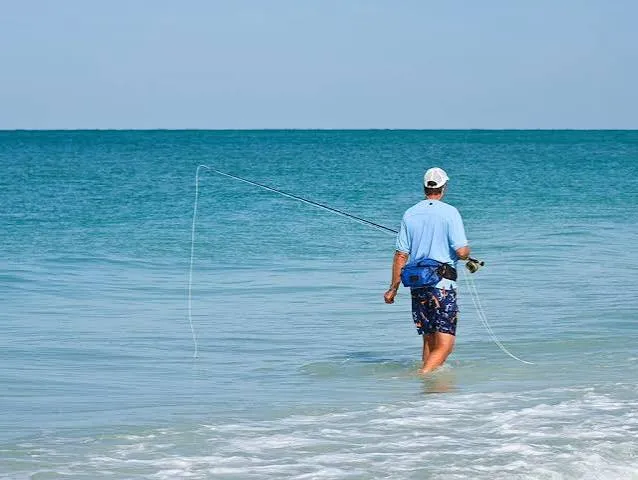
The Gulf shoreline can create seasonal fly-fishing opportunities.
Your success can depend heavily on:
- Surf
- Wind
- Water clarity
- Current
- Crowds
- Seasonal fish movement
Verify current public access and local rules before fishing.
Santa Rosa Sound and Nearby Protected Water
Protected inshore areas around Destin and Fort Walton Beach create additional possibilities.
These areas can be useful for:
- Kayak fishing
- Small boats
- Inshore species
- Fishing away from open-Gulf conditions
Always distinguish the fishery from legal launch or shoreline access.
Main Fly-Fishing Species in Destin
Redfish
Redfish are one of the most natural targets for Destin-area inshore fly fishing.
They may use:
- Shallow flats
- Oyster edges
- Shorelines
- Grass
- Other inshore habitat
Sight fishing can involve spotting:
- Fish
- Tails
- Wakes
- Nervous water
Redfish can be present through broad parts of the year, but that does not mean the fishing is equally easy in every season.
Spotted Seatrout
Spotted seatrout, often called speckled trout, are another important Choctawhatchee Bay species.
They can relate to:
- Grass
- Drop-offs
- Bait concentrations
- Current
- Seasonal temperature changes
Current regulations are region-specific and should be checked directly with Florida FWC.
Tarpon
Tarpon are a much more specialized fly target.
Summer is the main planning period for migratory coastal tarpon in the Florida Panhandle, but timing depends on water temperature, weather, and fish movement.
Tarpon require:
- Stronger tackle
- Heavier leaders
- Good line management
- Quick casting
- Careful handling
Florida manages recreational tarpon primarily as catch-and-release fish.
Jack Crevalle
Jacks can provide aggressive fly fishing when schools are active.
They are powerful fish and can put much more pressure on tackle than smaller inshore targets.
Black Drum
Black drum can also create shallow-water fly opportunities.
They are often approached differently from fast-moving jacks or tarpon, making them another useful sight-fishing target.
Other Seasonal Opportunities
Depending on season and conditions, the broader Destin area may also offer:
- Spanish mackerel
- Cobia
- Flounder
- Sheepshead
- Other coastal species
Treat these as opportunities rather than guaranteed targets.
Fly Fishing in Destin Florida by Season
Season is useful for planning, but it does not guarantee fish.
| Season | Main Planning Opportunities | Important Variables |
|---|---|---|
| Winter | Inshore redfish and resident species | Cold fronts, wind, temperature |
| Spring | Increasing inshore activity and seasonal migration | Wind, warming water, fronts |
| Summer | Tarpon and mixed inshore fishing | Heat, storms, wind |
| Fall | Redfish and mixed coastal opportunities | Fronts, bait, tides |
Winter
Cold fronts can change shallow-water conditions quickly.
Fish may move toward deeper or more stable water after strong temperature drops.
Spring
Warming water can expand opportunities.
The broader Panhandle also sees seasonal coastal movements such as cobia migration.
Summer
Summer is the clearest period for anglers planning specifically around tarpon.
It also brings:
- High heat
- Strong sun
- Afternoon thunderstorms
- Heavy recreational boat traffic
Early starts can help reduce some of those issues.
Fall
Fall can offer productive inshore conditions as temperatures moderate.
Redfish are a particularly natural target during this period.
DIY Fly Fishing vs. Hiring a Guide
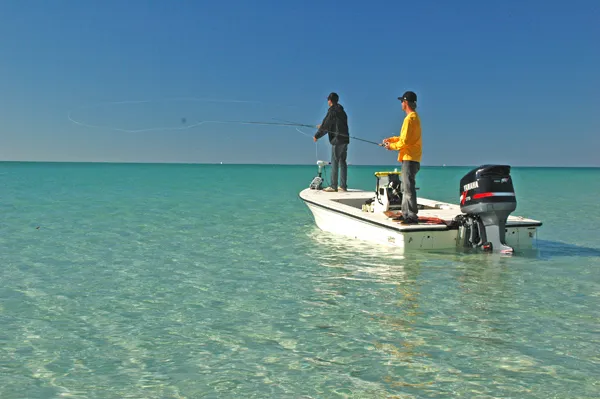
Destin can be fished independently, but a guide can solve several problems at once.
DIY Fishing
DIY makes sense if you:
- Have a kayak or boat
- Understand tides
- Can research public access
- Are comfortable casting in wind
- Have enough time to explore
The main advantage is flexibility.
The disadvantage is that a short vacation can disappear quickly while you learn access and fish movement.
Hiring a Guide
A fly guide can help with:
- Reaching shallow flats
- Boat positioning
- Fish finding
- Fly selection
- Tide planning
- Saltwater casting
A guide cannot guarantee fish.
Before booking, confirm:
- Fly fishing is offered
- Species are realistic for your dates
- Trip duration
- Tackle included
- Experience requirements
- License coverage
- Weather/cancellation policy
- Current pricing
Verified Public Access and Launch Resources
Public access does not mean every location is automatically a productive fly-fishing spot.
Meigs Beach Park
Meigs Beach Park currently provides small-boat access to Choctawhatchee Bay and a beach area where fishing is among the listed activities.
Ross Marler Park
Ross Marler Park on Okaloosa Island currently includes:
- Boat ramps
- Trailer parking
- Fishing platform
- Park amenities
A fishing platform does not automatically mean the surrounding water is ideal for fly casting.
Joe’s Bayou
Joe’s Bayou is another current public launching resource.
Think of it as a boat-access resource, not a guaranteed shore-fishing location.
Remember:
Fishing water ≠ shore access ≠ boat launch ≠ wading access.
Florida Saltwater Fishing License Basics
If you are visiting Florida from another state or country, check licensing carefully.
Nonresident anglers age 16 and older generally need the appropriate recreational saltwater fishing license unless a valid exemption applies.
That requirement generally applies even if you plan to release every fish.
Fishing With a Licensed Charter
Passengers fishing from a properly licensed for-hire vessel may be covered by that vessel’s license.
Confirm this with your guide before the trip.
Current Regulations for Key Species
Regulations change, so always check Florida FWC before fishing.
Redfish
Current Panhandle regulations should be verified for:
- Open season
- Slot size
- Daily bag limit
- Vessel limit
Spotted Seatrout
The Panhandle has region-specific rules, including seasonal closure provisions.
Check:
- Current open season
- Size slot
- Bag limit
- Vessel rules
Tarpon
Tarpon are managed as catch-and-release except under limited record/tag provisions.
For ordinary fly fishing:
- Plan to release tarpon
- Minimize handling
- Keep larger fish in the water
- Follow current FWC handling rules
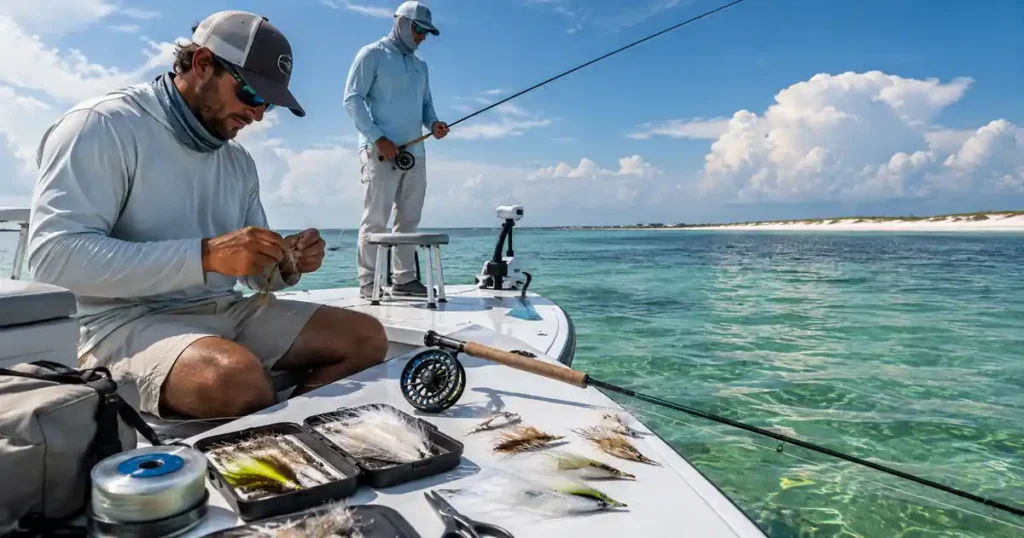
Gear for Destin Saltwater Fly Fishing
There is no single ideal rod because a redfish flat and adult tarpon fishery require very different equipment.
Rod
For general inshore fishing, middle-weight saltwater fly rods are common.
Move heavier when:
- Flies are larger
- Wind increases
- Fish become larger
- Tarpon become the target
Reel
Saltwater reels benefit from:
- Suitable capacity
- Reliable drag
- Corrosion-resistant construction
- Correct rod and line compatibility
Our guide to choosing the right fly fishing reel explains the main reel-selection factors.
Fly Line
Line choice depends on:
- Rod weight
- Water temperature
- Fly size
- Presentation
- Target species
Leader and Tippet
Leader strength changes significantly by species.
A redfish leader and a tarpon leader should not automatically be treated as interchangeable.
Flies for Destin’s Inshore Species
Useful saltwater categories include:
Shrimp Patterns
Relevant to many shallow-water species.
Crab Patterns
Useful on flats and around bottom-oriented feeding.
Baitfish Patterns
Can be relevant to:
- Redfish
- Seatrout
- Jacks
- Mackerel
- Tarpon
Surface Flies
Poppers and similar surface patterns can work for some species and conditions.
Match flies to:
- Target species
- Size
- Sink rate
- Water clarity
- Hook strength
- Presentation
If saltwater fly categories are new to you, our guide to choosing the right fly fishing flies gives you the general foundation.
Saltwater Casting and Presentation
Saltwater casts often need to happen quickly.
Practice Casting Into Wind
Work on:
- Tighter loops
- Controlled hauling
- Different casting angles
- Fewer false casts
Practice Accuracy
A 90-foot cast is less useful if you cannot put the fly accurately in front of a fish at 40 feet.
Manage Loose Line
Loose line can catch around:
- Feet
- Boat hardware
- Coolers
- Cleats
Keep your casting space organized.
Lead Moving Fish
Do not throw the fly directly onto the fish.
Place it where the fish can intercept it.
Weather, Tides, and Safety
Check:
- Tide
- Wind
- Rain
- Lightning
- Heat
- Tropical weather
- Access alerts
- Beach conditions
Heat
Carry water and use sun protection.
Lightning
Do not remain exposed on open water when thunderstorms threaten.
Wading
Shallow saltwater can still contain:
- Drop-offs
- Soft bottom
- Current
- Marine hazards
Do not assume shallow water is easy or safe to wade.
Destin Fly Fishing Trip Checklist
Before leaving:
- Florida saltwater license or confirmed exemption
- Current FWC rules
- Tide
- Weather
- Access
- Rod
- Saltwater-capable reel
- Correct line
- Leaders and tippet
- Flies
- Polarized glasses
- Hat
- Sun protection
- Drinking water
- Pliers
- Offline directions
- Guide confirmation if booked
Saltwater fishing can expose weak connections quickly, so review our fly fishing knots for beginners if you are not yet comfortable rebuilding your leader and fly connections.
Common Destin Trip-Planning Mistakes
Assuming Every Flat Has Public Access
Many productive flats require a boat.
Treating a Guide’s Fishing Area as a Shore Spot
Charter water is not automatically shore-accessible water.
Ignoring Wind
Wind can determine whether you can cast effectively.
Using Light Trout Gear for Tarpon
Scale your tackle to the target species.
Using Old Regulations
Florida regulations change.
Treating Seasonal Timing as a Guarantee
Tarpon and other migratory fish do not follow exact appointment dates.
Fishing Catch-and-Release Without a License
Catch-and-release usually does not remove the licensing requirement.
Not Confirming Charter Coverage
Ask your guide whether passengers are covered by the vessel’s license.
FAQs
Can You Fly Fish in Destin, Florida?
Yes. Destin and Choctawhatchee Bay offer saltwater fly opportunities for redfish, spotted seatrout, black drum, jacks, seasonal tarpon, and other coastal species.
What Fish Can You Catch on a Fly in Destin?
Common targets include redfish, spotted seatrout, black drum, jack crevalle, and seasonal tarpon. Other species can become relevant depending on season and conditions.
When Is the Best Time to Fly Fish Destin?
There is no universal best month. Summer is most relevant for tarpon planning, while redfish and other inshore species can provide opportunities through broader parts of the year.
Can You Fly Fish Choctawhatchee Bay?
Yes. Choctawhatchee Bay supports inshore fly fishing, although many productive areas are easier to reach by skiff, kayak, or boat.
Do I Need a Florida Fishing License to Fly Fish in Destin?
Generally yes for nonresident anglers age 16 and older unless a valid exemption applies.
Should I Hire a Fly Fishing Guide in Destin?
A guide can be useful if you have limited time, lack boat access, are new to saltwater fly fishing, or want help understanding tides and fish positioning.
Final Takeaway
Successful fly fishing in Destin Florida starts with choosing the right water and access method.
Decide whether you will fish Choctawhatchee Bay, Gulf beaches, protected inshore water, or from a guided skiff. Then match your target species, season, gear, and flies to that environment.
Before fishing, verify access, weather, tides, licensing, and current Florida regulations.
Sources Used — Not Part of the Article:
- Florida Fish and Wildlife Conservation Commission — Visitors’ Licenses
https://myfwc.com/license/recreational/visitors/ - Florida Fish and Wildlife Conservation Commission — Saltwater Recreational Licenses and Permits
https://myfwc.com/license/recreational/saltwater-fishing/ - Florida Fish and Wildlife Conservation Commission — Red Drum
https://myfwc.com/fishing/saltwater/recreational/red-drum/ - Florida Fish and Wildlife Conservation Commission — Spotted Seatrout
https://myfwc.com/fishing/saltwater/recreational/spotted-seatrout/ - Florida Fish and Wildlife Conservation Commission — Tarpon
https://myfwc.com/fishing/saltwater/recreational/tarpon/ - Destin-Fort Walton Beach — Marinas and Boat Ramps
https://www.destinfwb.com/explore/water-adventures/marinas-and-boat-ramps/ - Destin-Fort Walton Beach — Meigs Beach Park
https://www.destinfwb.com/listing/meigs-beach-park/50336/ - Flies and Fins Charters — Choctawhatchee Bay Fly Fishing
https://www.fliesandfinscharters.com/