
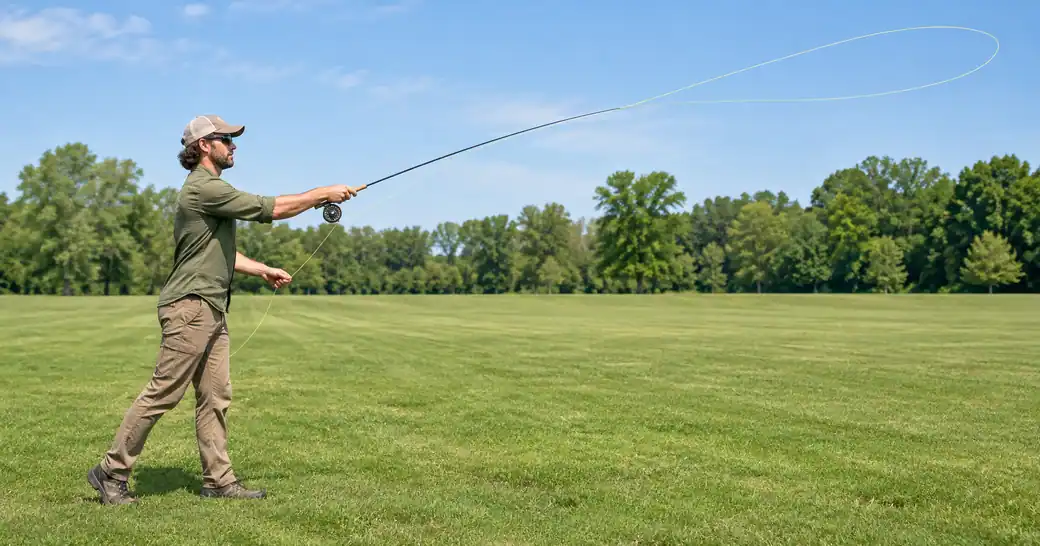
fly fishing casting: Fix Timing, Slack and Line-Control Problems
When a practice cast falls short, use this fly fishing casting check: watch the line just before pickup, just before you start forward, and as the loop unrolls. Film one short series from the side, then another from behind at a safe offset. Compare repeatable results before you decide whether to change the start, the pause, or the stroke.
Table of Contents
Set up a fly fishing casting baseline you can repeat
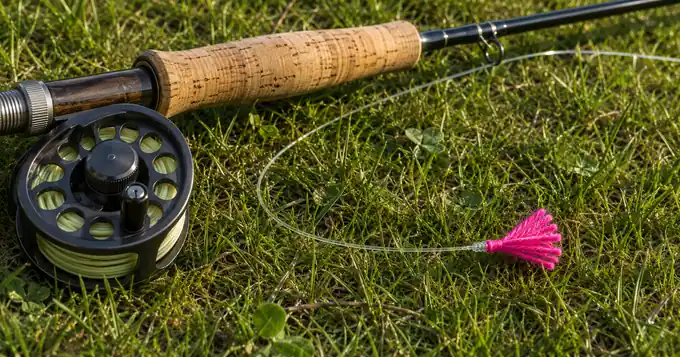
Practice in an open area with space ahead and behind, away from people, animals, roads, and power lines. Wear eye protection and use a small tuft of yarn with no hook. Choose a comfortable length of line and mark the same starting spot and target for each trial. Work in light wind so a gust is less likely to hide what changed.
As an Amazon Associate, we earn from qualifying purchases. FlyFishingScout may earn a commission on qualifying purchases at no extra cost to you.
🛡️ Wear eye protection during hookless practice. Dewalt DPG82 Concealer Anti-Fog Dual Mold Safety Goggle – 1 Pair The adjustable strap lets you fit the goggles before you start. Check that they sit comfortably and leave a clear view of the line. Check Goggle Price ➜
Start with the pick-up and lay-down cast, one back cast followed by a forward delivery. Straighten the line on the grass before each repetition. Keep the line length, yarn, rod, and target the same for a short set of casts. If those pieces keep changing, it is hard to tell whether an adjustment helped.
Set the phone on a stable support outside the path of the rod, line, and yarn. Use the widest view that still makes the line visible. Set up the side view first so you can see both the back and forward loops, then make a second set from a rear offset to view where the back cast travels. For the starting movement, see the basic pickup sequence.
Use a short practice set to find a distance you can repeat comfortably. Place a soft marker beyond the yarn’s starting position and stand in the same spot for every rep. Before recording, take two easy casts to see whether the phone can capture the loop without someone walking into the area. Then make three filmed casts with the same amount of line beyond the rod tip. If you pull out more line after a miss, start a fresh set and record the new length. This keeps a change in your fly fishing casting technique from being confused with the extra time a longer loop takes to unroll.
Diagnose fly fishing casting problems in order
Replay a few misses, then a cast that landed cleanly. Start at the first visible difference. A messy landing can begin with loose line on the grass or with a midair reversal before the back loop has extended. If you focus on the landing alone, those faults can look alike.
| What you see | What to check in the clip | One change to try |
|---|---|---|
| The rod moves before the line follows | At pickup, look for a curve of loose line on the grass. Watch when it disappears. | Straighten the line and lower the tip before starting. Compare how quickly the line moves. |
| The back loop is still unrolling when the rod starts forward | Watch the frame just before the forward stroke. Look at the line, then check when the hand changes direction. | Allow a little more time for the back loop to extend at the same line length. |
| The back line straightens but falls noticeably before the forward stroke | Check whether a long pause or a low back cast caused the line to drop. Compare with a clean rep. | If the pause is the first clear difference, begin forward slightly earlier on the next set. |
| The line crosses itself on the forward cast | Check for an abrupt push, especially if your hand changes speed suddenly. Look for a dip in the rod-tip path if the video shows it. | Try a smoother build of speed with the same line length. If it persists, bring the clips to an instructor. |
| The back loop sweeps off your intended casting path | Use the rear-offset view to see whether the line repeatedly travels to one side as the rod changes direction. | Check the direction of the back cast against the forward target and retest with a consistent casting plane. |
Treat the table as a set of hypotheses. With the fly line failing to extend, several problems can leave the same pile on the grass. For loop control troubleshooting, use the first discrepancy you can see in the clip. Fly Fishers International’s faults and fixes guide separates timing, force, arc, slack, and tracking for that reason.
🧶 Make the practice fly easier to spot. Red Heart Super Saver Yarn for Crocheting & Knitting, White, Single Tie a small tuft of white yarn directly to your practice leader so it stands out against dark grass. A scrap from home works if it’s easy to see. Keep the tuft size the same across your sets. See Practice Yarn & Check Price ➜
Two misses can land in the same pile, so compare the moment each one first goes wrong. In one clip you may see the line stay still while the rod begins moving. In another, the line comes up cleanly but is still traveling backward as you reverse the rod. Try a tidier starting layout for the first pattern and a small timing change for the second. Keep the target distance and line length steady in both trials. If the difference is hard to see, move the camera farther to the side during your next fly fishing casting set so the line stands out against a simpler background.
Use two clips for fly fishing casting timing practice
In the side clip, pause the replay just as the back cast stops, then step through until the loop has mostly extended. Look for when your forward stroke begins relative to that point. At the same line length, compare the good cast and the miss. That makes fly fishing casting practice more repeatable when you go back to the same drill. If your line is longer next time, observe it again instead of treating the pause as a fixed count.
Try a short comparison: make three casts as usual, then three with just one change aimed at the fault you saw. Put an object on the ground outside the line path to mark the target distance. Compare whether the yarn and leader extend more cleanly at roughly the same distance. A single lucky cast is a weak signal.
With the rear-offset clip, pick a dry landmark beyond the target and compare where the forward and back loops travel relative to that direction. The camera angle will affect what looks straight. Review the same view before and after a change so the comparison is fair.
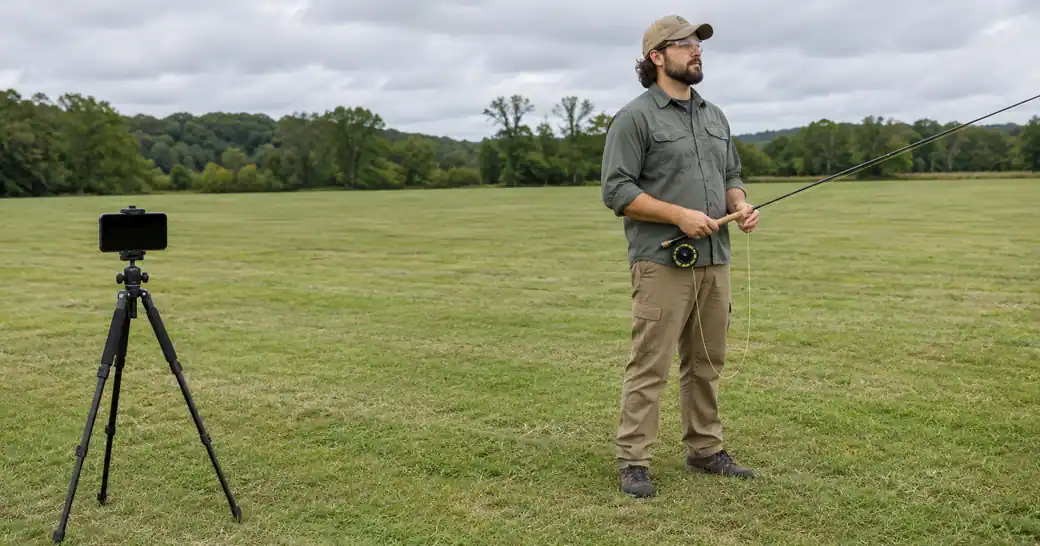
📱 Keep your camera position repeatable. UBeesize Phone Tripod Pro S The compact phone stand helps you hold the same angle across both practice sets. Use a stable surface outside the rod and line path, and check your framing before casting. See Tripod & Check Price ➜
Keep your baseline clip and one representative miss. At the next fly fishing casting session, film a three-cast set under similar conditions before working on anything else. If your landings still bunch up but the pickup and timing now look repeatable, mark that change as progress and review the loop or direction with an instructor. Save the two clips and a short note about what you changed. A focused question about one visible difference is easier to answer than a long recording of different casts.
Score your next fly fishing casting practice set
Use this beginner casting observation checklist on the same short cast across practice sessions. Date the clip and keep one clean rep plus one representative miss. That gives you something to compare the next time the fault appears.
- Baseline: line length ___, wind ___, target ___, camera position ___ .
- Pickup: was the line ready to move as the rod started? ___ .
- Timing: was the back loop still extending when the forward stroke began? ___ .
- Delivery: did the leader and yarn extend without crossing or piling up? ___ .
- Change tested ___ . Number of clean deliveries before ___ and after ___ .
Keep the change when it improves several casts. A written fly fishing casting log lets you see which adjustment still works at the start of the next practice session. If it makes the next set worse, return to the baseline before testing another idea. If the same fault survives your timing and slack checks, a qualified casting instructor can compare your two clips and check mechanics in person. For when to move on to other casts, see the guide to casting techniques.
References
Fly Fishers International — Pick-Up and Lay-Down Cast
Fly Fishers International — Common Casting Faults and Fixes