
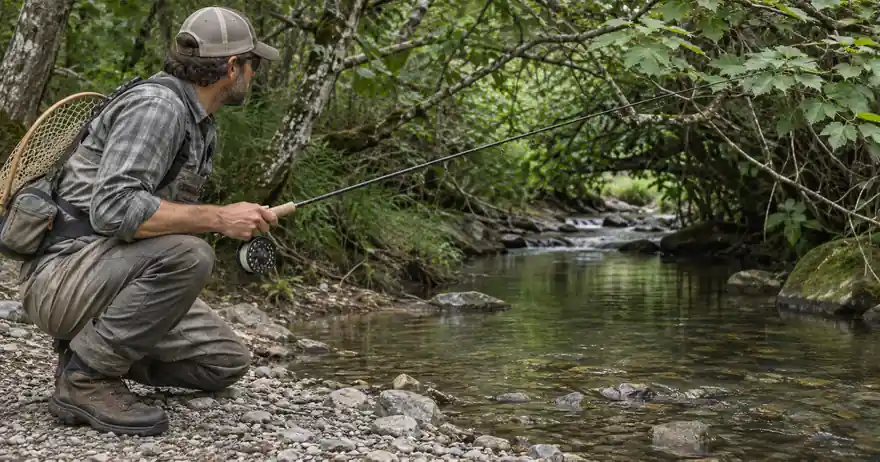
fly fishing rod: Match Weight, Length and Action to Your Fishing
Choose a fly fishing rod by writing down the flies you cast most, the distance you normally fish, the space above and behind you, and the line you already own. Use the worksheet below to turn those details into a rod specification you can compare in a shop, including how to test two candidates before paying for one.
Table of Contents
Build Your Fly Fishing Rod Worksheet
Think of a water you fished recently or a place you expect to visit regularly. Use your normal casting distance rather than the longest cast you hope to make. If you split your time between two waters, make one worksheet for each and decide which scenario the new rod must handle best.
| Record this | What to write down |
|---|---|
| Typical fly | Two or three familiar patterns, including the bulkiest or heaviest one you use often. |
| Delivery distance | An estimate from your boots to the likely landing spot. Include a close target that comes up on almost every trip. |
| Casting space | Open, low branches, steep bank behind you, or a narrow opening to one side. |
| Water and wind | Small sheltered creek, broad exposed river, bank of a pond, or another specific situation. Note whether a crosswind is common. |
| Gear on hand | Full line model, taper and printed weight, reel model and backing capacity, and leader style. |
| Write a shortlist | Two plausible line ratings or lengths and the practical difference you want to test. |
A usable result could read: “A short fly fishing rod for small dry flies at 20 to 30 feet, with an open side lane but branches behind me. Compare a moderate 3-weight around 7 feet 6 inches with a slightly longer 4-weight. I already own a 4-weight line, so swapping to a 3-weight may mean replacing the line too.”
Add your usual fishing spot to your fly fishing rod worksheet, then list the three flies you cast most there. Record any oversized pattern separately so an occasional cast carries the right weight in your decision.
Match Fly Fishing Rod Weight to the Fly
The weight on a fly fishing rod is a line rating. It does not tell you how heavy the rod feels in your hand or how much a fish can weigh. The AFFTA single-hand fly-line specification gives a 5-weight a nominal target of 140 grains and a 6-weight a target of 160 grains, measured over the first 30 feet excluding the level tip. Actual lines can be built heavier than the nominal target, and the part of the head outside the tip on a short cast may be much shorter than 30 feet.
Start with the maker’s recommended line range and then look at what you are asking it to move. A small sparse dry and a wind-resistant foam bug can fish the same water and ask very different things of the line. Lead eyes add mass. Thick hair, foam or hackle adds air resistance. A long light leader can also struggle to straighten with a bulky fly. If your current setup fails only with the largest pattern, test a more suitable leader and taper before replacing a rod that handles the rest of your day.
As an Amazon Associate, we earn from qualifying purchases. FlyFishingScout may earn a commission when you buy through these links, at no extra cost to you.
🎣 For mixed trout fishing. ECHO Carbon XL 590-4 This 9-foot, four-piece 5-weight is a moderate-action option for dries, nymphs, and light streamers. Check the 5-weight on Amazon
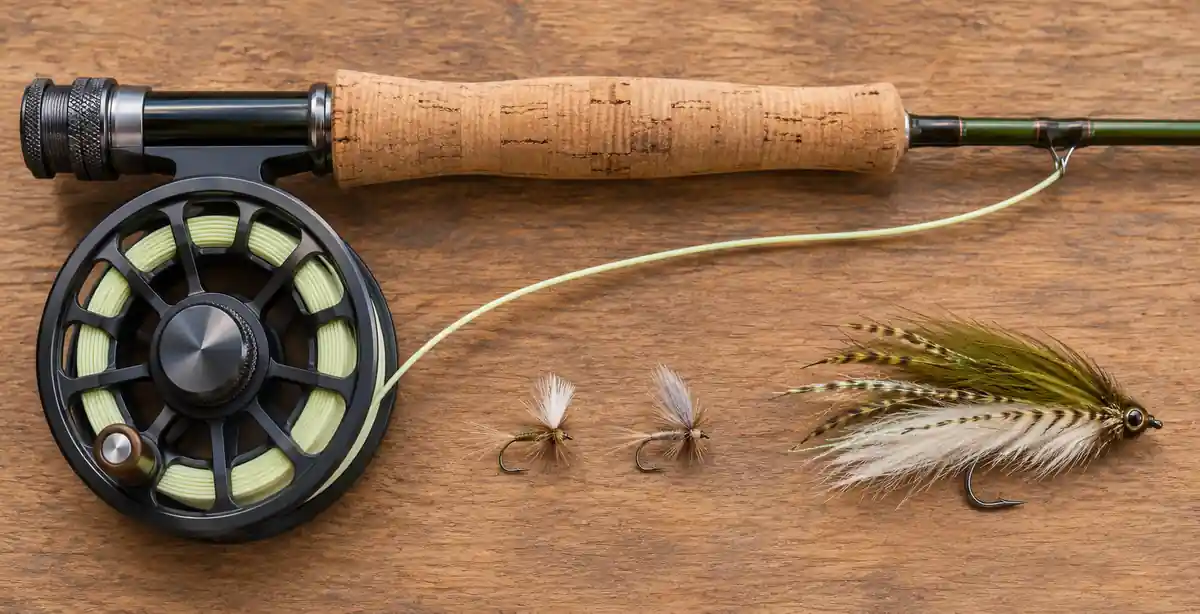
Look up the actual taper and head weight of a line you own, especially when the box mentions a heavier head. The site’s fly-line guide explains line types and weights in more detail.
When comparing a fly fishing rod with one you own, write down the full designation of each line you use. Two lines labeled 5-weight can have different tapers. If a demo feels easier, ask which line is on the reel before drawing conclusions about the rod.
Choose Fly Fishing Rod Length for Your Casting Space
Sketch the bank, where you stand, and where the fly should land. Mark the nearest branches and whether brush blocks your casting side. A shorter fly fishing rod can be easier to move between close obstacles. More length can help when you need to lift line off a near current or reach across a seam. Even a short rod needs room for the fly and line behind it, so compare the available side lane and whether an anchored cast is practical.
🌿 For tight creeks. Redington Classic Trout 376-4 This moderate-action, 7-foot-6-inch 3-weight suits short casts with small dries where branches limit rod movement. See the 3-weight on Amazon
For an open bank, choose a length to test based on your need to control line after the fly lands. A rod that feels fine in a shop may offer too little reach for your regular drift. If your fishing is mainly under cover, try handling the rod at the side angle you would actually use. Record whether the tip has room through the whole stroke.
Before choosing fly fishing rod length, think about where you stand after you finish the cast. If you usually fish from a low gravel bar, extra reach may help with line control. If brush crowds your shoulder, handle the shorter candidate from your usual stance.
Compare Fly Fishing Rod Action at Short Range
Action describes the way the rod bends under load. Labels such as moderate and fast are useful descriptions from a maker, but the feel of a fly fishing rod also depends on the line, how much of it is out, and your casting stroke. Compare candidates of the same rated weight with the same compatible line if the shop allows it. For different line weights, use comparable tapers in their matched ratings and remember that you are testing two rod-and-line combinations.
Use a hookless yarn fly, glasses and a practice area clear of people and obstacles. Make five casts to a near target and five to your normal fishing distance. Count how often the leader straightens and the yarn lands in a target about the size of a doormat. Note how many false casts you needed and how much effort you used. If both rods get similar results, pick the one that repeats the cast more easily from the stance you usually fish.
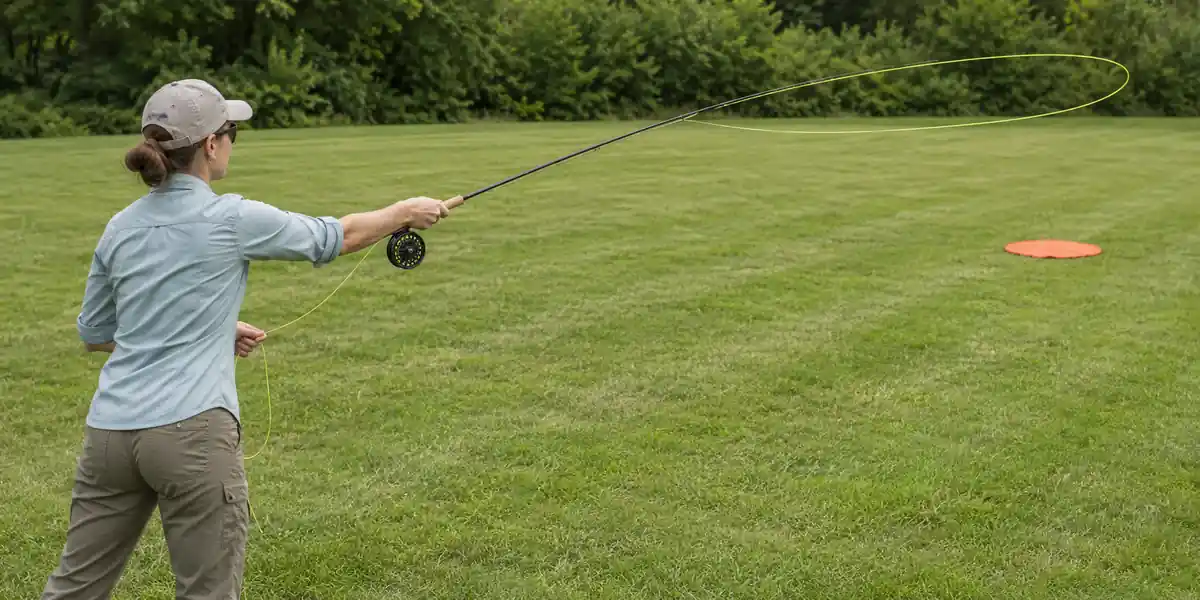
Compare fly fishing rod action by alternating the order of the two rods on grass. Cast one first at the near target and the other first at your normal distance. Use the same hookless yarn and record misses as well as hits.
Compare Two Real Specifications
A hypothetical creek angler casts small dries at short range under tree cover. The Redington Classic Trout 376-4 gives this angler a 7-foot-6-inch, 3-weight, four-piece example with moderate action. Its length is a practical point to test around tight casting lanes. If the short rod makes it hard to keep line off a troublesome current, try a longer candidate before committing.
A second hypothetical angler normally fishes a more open bank, casts small-to-medium streamers and often deals with a breeze. The Redington Wrangler 690-4 is a 9-foot, 6-weight, four-piece example from the maker’s medium-fast lineup. It gives the angler a second specification to consider when larger flies are a regular part of the job. If the lightest flies and close casts still make up most of the day, keep a lighter combination on the comparison list.
🎣 For larger flies on open banks. Redington Wrangler 690-4 This 9-foot, four-piece 6-weight has a medium-fast action. Consider the freshwater rod if small-to-medium streamers are part of your usual rotation. Check the freshwater 6-weight on Amazon
These two models are specification examples. For a wider look at formats and materials, see the fly rod overview. Use the worksheet here to take your own short list into a shop.
Check What Comes With a Rod-Only Purchase
Before ordering a fly fishing rod, verify the full model code, length, line rating and number of sections. Read the listing’s included-items section. A rod tube or sleeve may come with a rod-only listing, while a reel, line and backing usually belong to an outfit. Confirm each item on the exact listing, since similar product names can appear on both.
Write down the total for any line, reel, backing or leader you need alongside the price of the rod itself. If you already own those parts, verify the reel’s capacity for the exact line and backing. If several pieces need replacing, compare your total against a matched rod and reel combo. Use your near-target test and your regular flies to decide which setup is worth buying.
Before ordering a fly fishing rod, photograph the model label on the demo if the shop allows it. Match it to the listing and write down which line felt best. Recheck what is included and the return terms before your first on-water outing.
References
Trout Unlimited — Finding the Right Fly Rod for You
AFFTA — Approved Fly Line Weight Specifications