
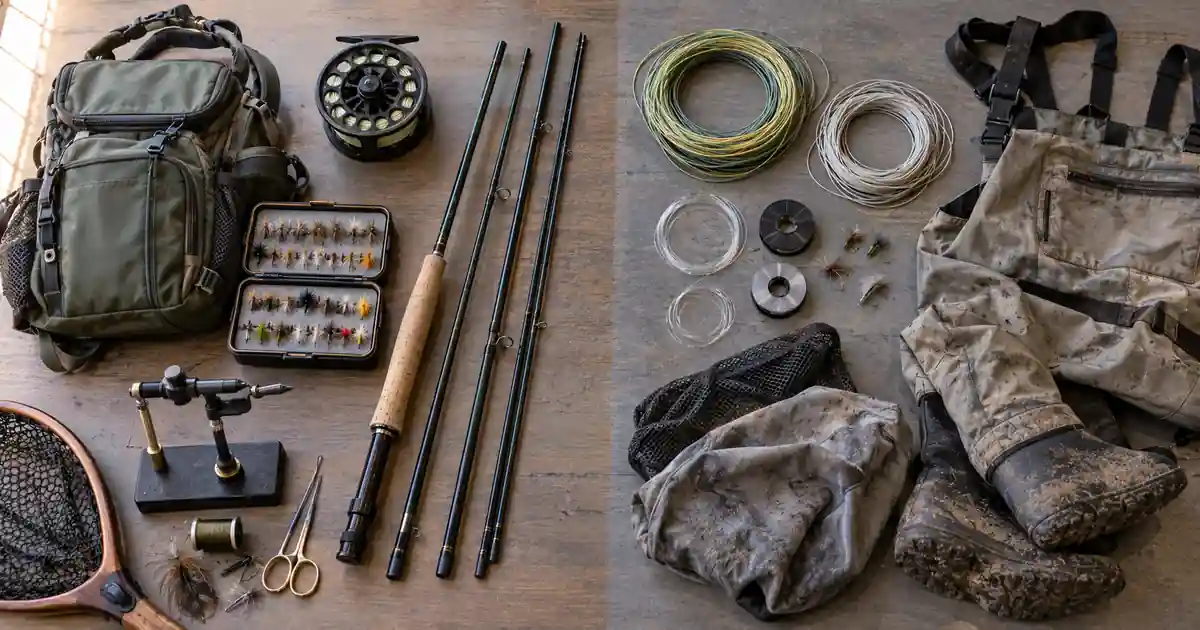
Used Fly Fishing Gear: What to Buy Used and What to Avoid
Buying used fly fishing gear can be a smart way to stretch your budget, especially for durable equipment such as rods, reels, vises, packs, and fly boxes. The key is knowing which problems you can inspect before purchase and which problems may stay hidden until you are already on the water.
For most beginners, rods and reels are the strongest second-hand candidates when condition is clear. Fly lines, leaders, tippet, and waterproof waders deserve more caution because wear, age, storage, leaks, or coating damage can be difficult to judge from a listing.
Use this five-part check before paying:
Inspectability → Wear → Repairability → Warranty → Savings
The best used fly fishing gear is not simply the item with the biggest discount. It is equipment you can evaluate confidently, still repair if necessary, and buy cheaply enough that the remaining risk makes sense.
Table of Contents
Used Fly Fishing Gear: Quick Answer
As a general rule, used rods, reels, fly-tying vises, packs, vests, and fly boxes can be good purchases when you can inspect their important wear points. Wading boots deserve a case-by-case decision. Used waders and old fly lines carry more hidden-condition risk, while leaders and tippet are usually inexpensive enough to buy new.
| Gear | Used-Buy Outlook | Main Risk |
|---|---|---|
| Fly rod | Good candidate with inspection | Blank, ferrule, guide, or repair damage |
| Fly reel | Good candidate with inspection | Drag wear, corrosion, frame or spool damage |
| Fly-tying vise | Often a good candidate | Jaw wear or mechanical looseness |
| Pack or vest | Usually reasonable | Zippers, buckles, straps, worn fabric |
| Wading boots | Case-by-case | Sole wear, stitching, fit, contamination concerns |
| Waders | Higher risk | Hidden leaks, seam wear, delamination, poor fit |
| Fly line | Usually safer new | Coating wear, cracking, memory, storage history |
| Leaders and tippet | Usually buy new | Age and storage history |
If you are completely new to the sport, first understand what fly fishing is and the gear beginners need so a low price does not tempt you into buying equipment that does not fit the type of fishing you actually plan to do.
What Used Fly Fishing Gear Is Worth Buying?
The easiest way to judge used fly fishing gear is to group it by how clearly you can inspect the important failure points.
Lower-Risk Candidates When Properly Inspected
These are often the strongest second-hand choices:
- Graphite or fiberglass fly rods
- Fly reels
- Fly-tying vises
- Packs
- Vests
- Fly boxes
- Durable accessories
A used rod with cosmetic cork wear may still fish perfectly. A used reel with surface scratches may still have years of life left if the frame is straight, the spool turns correctly, and the drag works smoothly.
The condition matters more than whether the item looks new.
Case-by-Case Purchases
Be more selective with:
- Wading boots
- Landing nets
- Older discontinued rods
- Older reels with limited parts support
- Gear with known saltwater exposure
These products can still be excellent purchases, but you need more information before deciding.
Usually Better Purchased New
For many beginners, the safer default is to buy these new:
- Fly line
- Leaders
- Tippet
- Waders
That does not mean every used example is bad. It means the possible savings often come with more uncertainty than they do with a rod or reel.
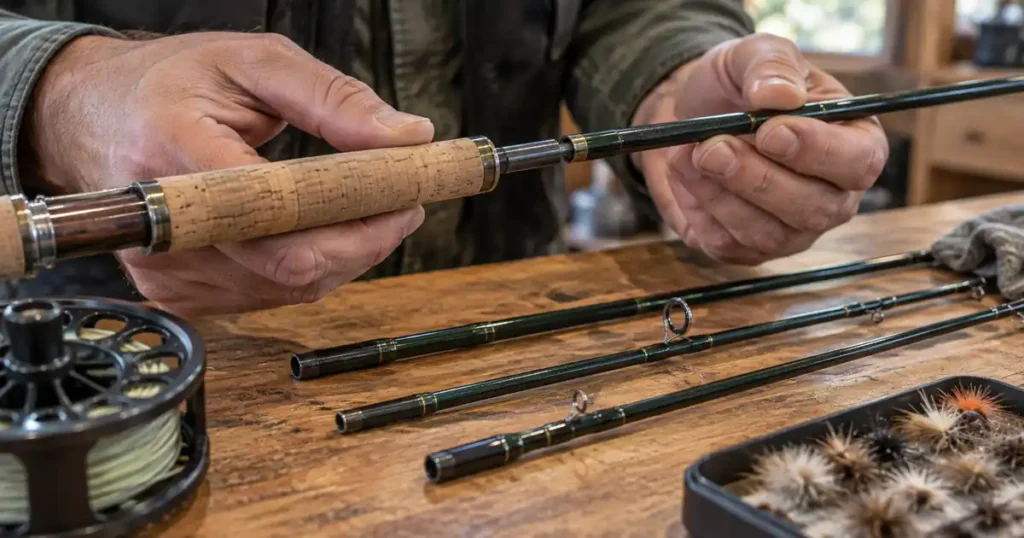
Used Fly Fishing Gear: Fly Rods
Fly rods are among the most attractive used fly fishing gear purchases because most of the important components can be inspected before you buy.
A previous owner’s normal cosmetic wear is not automatically a problem. Structural damage is.
Check the Blank
Inspect every rod section under good light.
Look for:
- Cracks
- Deep impact marks
- Splintering
- Unusual flat spots
- Repairs
- Areas where finish damage exposes deeper material
Small cosmetic scratches are different from damage that may compromise the blank.
If an online seller shows only one full-length photo from several feet away, ask for close-ups.
Check the Ferrules
Assemble the rod.
The sections should fit securely without obvious rocking or excessive looseness.
Look closely around ferrules for:
- Cracks
- Splits
- Damage from forcing sections together
- Obvious repairs
Do not force a section that does not fit correctly.
Check Every Guide
Inspect the guide frames and inserts.
A bent guide may be repairable, but a cracked or grooved guide can damage fly line.
Run a soft cloth carefully through the guides. If fibers repeatedly catch on one spot, inspect that area more closely for a sharp edge.
Inspect the Reel Seat and Cork
Cork can become dirty, pitted, or dark with normal use. That is mostly cosmetic unless the grip is badly damaged or loose.
Check the reel seat for:
- Secure hardware
- Damaged threads
- Corrosion
- Cracks
- Loose components
Ask About Repairs
Ask whether:
- The tip was replaced
- A rod section was broken
- Any guides were replaced
- The blank was repaired
- The manufacturer performed previous service
A repaired rod is not automatically a bad purchase, but the history should be reflected in the price and disclosed before you buy.
Confirm the Exact Model
Do not buy a discounted rod until you confirm:
- Line weight
- Length
- Number of pieces
- Model generation
- Intended use
A cheap 8-weight is not a bargain if you need a 5-weight trout rod.
Used Fly Fishing Gear: Fly Reels
A quality fly reel can remain useful for years, which makes reels another strong category for used fly fishing gear.
Before buying, first make sure the reel fits your intended rod, line, and fishing style. Our guide to choosing the right fly fishing reel explains the main sizing and performance factors.
Test the Drag
Turn the drag through its adjustment range.
You want resistance that changes predictably rather than:
- Locking suddenly
- Slipping unpredictably
- Grinding
- Producing severe hesitation
A reel that has been stored for years may need service even if it looks clean.
Inspect the Frame and Spool
Check for:
- Bent edges
- Cracks
- Deep impact marks
- Excessive spool wobble
- Rubbing between spool and frame
- Missing screws or hardware
Spin the spool and listen.
A small amount of sound can be normal depending on the reel design, but scraping or obvious misalignment deserves attention.
Check the Reel Foot
The reel foot should sit flat and should not be badly bent or damaged.
A compromised reel foot can create problems even if the rest of the reel works properly.
Ask About Saltwater Use
Saltwater use does not automatically make a reel unsuitable.
What matters is maintenance.
Ask whether the reel was:
- Rinsed after saltwater use
- Stored dry
- Serviced when needed
Look for corrosion around hardware, frame openings, spool surfaces, and the reel foot.
Check Parts and Spare Spools
For an older reel, ask whether the manufacturer still supports:
- Spare spools
- Drag components
- Handles
- Screws
- Service
A discontinued premium reel may be less appealing if a simple broken part can no longer be replaced.
Do Not Pay Extra for Unknown Fly Line
If a seller says a reel includes an expensive fly line, treat that as a bonus only after inspecting the line.
An old or cracked line may need immediate replacement and should not be valued like a new one.
Used Fly Fishing Gear to Usually Buy New
Some used fly fishing gear creates more uncertainty because the most important wear is difficult to see or the cost of buying new is relatively modest.
Fly Lines
A fly line is a wear item.
Problems can include:
- Cracking
- Damaged coating
- Excessive memory
- Cuts
- Dirty or rough surfaces
- Unknown storage in heat
- Unknown age
A nearly unused line from a trusted seller can still be worthwhile, but beginners are usually better served by starting with a known-condition line that properly matches the rod.
Leaders and Tippet
Leaders and tippet are consumables.
Age, UV exposure, heat, and poor storage can weaken material, and the possible savings are usually small.
Buying fresh material also lets you choose the correct diameter and strength. See our guide to choosing the right fly fishing tippet if you are unsure what you need.
Waders
Used waders require more caution than most hard goods.
Possible problems include:
- Tiny pinhole leaks
- Seam wear
- Delamination
- Worn neoprene stockingfeet
- Abrasion
- Repairs
- Zipper problems on applicable models
- Poor fit
A pair can look clean in photographs and still leak after several minutes in water.
Fit creates another problem. Waders that are too short, too tight through the knees, or poorly matched to your foot size can wear prematurely and make movement uncomfortable.
Buying used can make sense when the condition, fit, repair history, and price are unusually clear, but beginners should not assume a premium-brand used wader is automatically better value than a properly fitting new option.
Wading Boots
Used boots are easier to evaluate than waterproof waders, but inspect them carefully.
Check:
- Sole wear
- Separation between sole and upper
- Stitching
- Toe and rand damage
- Laces
- Hardware
- Interior wear
- Fit
Also check the current rules and invasive-species guidance for the waters you plan to visit, especially before moving boots between different watersheds.
How to Inspect Used Fly Fishing Gear Before You Buy
A systematic inspection keeps used fly fishing gear shopping from becoming guesswork.
In Person
Use this sequence:
- Confirm the exact model, size, length, weight, and generation.
- Inspect the item under good light.
- Assemble the rod if applicable.
- Check ferrules.
- Inspect every guide.
- Test reel drag through its range.
- Check spool alignment.
- Look for corrosion.
- Test zippers, straps, buckles, and closures.
- Ask about repairs.
- Ask about saltwater exposure.
- Confirm everything included in the sale.
- Check current warranty and repair terms.
- Compare the price with a current new option.
Do not let the seller rush the inspection because another buyer is supposedly waiting.
Buying Online
Ask for photographs of the exact item, not a stock image.
For rods, request:
- Full rod
- Cork
- Reel seat
- Each ferrule
- Tip section
- Guides
- Any scratches or repairs
- Model markings
For reels, request:
- Front and back
- Reel foot
- Spool removed if practical
- Frame interior
- Areas of corrosion
- Any dents or impact marks
Ask direct questions:
- Has it been repaired?
- Has it been used in saltwater?
- Does the drag work normally?
- Does the spool rub?
- Are all original sections included?
- Is a case or tube included?
- Can the item be returned if the description is inaccurate?
Keep the seller’s written answers.
Where to Buy Used Fly Fishing Gear
Where you buy used fly fishing gear changes the amount of inspection, support, and buyer protection you receive.
Specialist Fly Shops and Used-Gear Dealers
Specialist retailers can be attractive because staff may understand:
- Rod models
- Reel sizing
- Condition
- Repairs
- Intended use
Examples of this model include specialist shops with dedicated used rod and reel inventories and trade-in marketplaces for rods, reels, and tying vises.
The advantage is not that every specialist-used item is risk-free. The advantage is that you may receive a clearer description, condition grading, and a defined store policy.
Read that policy carefully before buying.
Local Fly Shops
A local shop can let you:
- Handle the item
- Assemble a rod
- Test a reel
- Ask questions
- Compare used and new alternatives
Inventory will usually be smaller than a large online marketplace, but being able to inspect the actual product can be valuable.
General Online Marketplaces
Large peer-to-peer marketplaces can provide:
- More inventory
- Older models
- Lower asking prices
- Negotiation opportunities
They can also create more uncertainty.
Evaluate:
- Seller history
- Actual-item photos
- Written condition description
- Return terms
- Payment protections
- Shipping method
Do not assume every private seller offers the same return rights.
Clubs and Local Angling Communities
Fishing clubs, local groups, and trusted anglers can be good places to find second-hand equipment.
The benefit is often the ability to inspect gear locally and learn its history.
Still perform the same inspection you would use with a stranger.
Is the Used Price Actually a Good Deal?
A discount alone does not make used fly fishing gear good value.
Calculate the real cost:
Used Price + Shipping + Immediate Repairs + Missing Parts + Replacement Consumables
Then compare it with:
Current New Price + Warranty + Return Rights + Included Accessories
For example, imagine a used reel costs much less than its original price, but it needs:
- New fly line
- A missing reel pouch
- Paid drag service
- Shipping
The real savings may be much smaller than the listing suggests.
Compare With Today’s Price, Not Old MSRP
A seller may advertise an item as heavily discounted based on its original launch price.
But the current new model may be:
- Discounted
- On clearance
- Replaced by a less expensive alternative
- Bundled with warranty coverage
Check what you could buy new today.
Value Missing Components
For rods, check whether the sale includes:
- Rod tube
- Sock
- All sections
For reels:
- Pouch
- Spare spool if advertised
- Necessary hardware
Missing accessories do not always matter, but they should affect what you are willing to pay.
Warranty, Repairs, and Replacement Parts
Warranty is one of the most commonly misunderstood parts of buying second-hand equipment.
Do not assume a manufacturer’s warranty transfers with the item.
Some fly-fishing manufacturers tie warranty coverage to the original owner, an authorized-dealer purchase, or proof of purchase. Others may still offer paid repair service to later owners, but those policies can differ by brand, product, age, and country.
Before paying for older premium equipment, ask:
- Is the model still supported?
- Does warranty coverage transfer?
- Is proof of purchase required?
- Will the manufacturer repair it for a fee?
- Are replacement sections or parts still available?
- What would a repair cost relative to the used purchase price?
Retailer policies are separate from manufacturer warranties.
A specialist dealer can inspect an item and still sell it without a warranty. That makes the store’s used-item return policy especially important.
For discontinued products, repairability can matter more than the logo on the item.
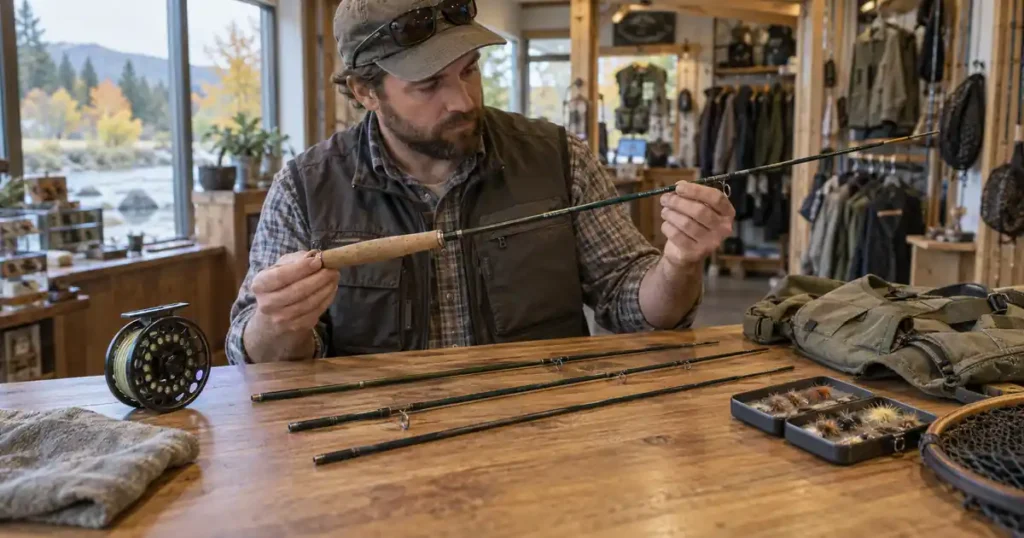
Common Mistakes When Buying Used Fly Fishing Gear
Avoid these mistakes when shopping for used fly fishing gear.
Buying the Brand Instead of the Condition
A famous rod with structural damage is still damaged.
A less prestigious rod in excellent condition may be the better purchase.
Buying the Wrong Specification
Do not let the discount convince you that a 9-weight is “close enough” when you need a 5-weight.
Buy according to your fishing.
Paying Almost-New Prices
If the used price is close to current new pricing, compare:
- Warranty
- Return rights
- Shipping
- Included accessories
- Condition certainty
New may offer better overall value.
Assuming Cosmetic Wear Means the Item Is Bad
Scratches, cork discoloration, and normal finish wear may have little effect on performance.
Learn to separate appearance from function.
Ignoring Structural Damage Because the Item Looks Good
The opposite mistake is more serious.
A polished rod with a damaged ferrule or a clean reel with a bent frame can still be a poor purchase.
Trusting “Barely Used” Without Evidence
Ask for detailed photos and specific answers.
Condition descriptions are subjective.
Ignoring Saltwater History
Saltwater exposure is not automatically bad, but poor cleaning and storage can accelerate corrosion.
Assuming the Warranty Transfers
Verify the current policy yourself.
Treating Old Fly Line as Full Retail Value
Unknown line age and storage reduce its value.
Forgetting Repair Costs
A cheap reel that immediately needs service may not be cheap.
Buying Used Waders Only Because the Brand Is Premium
Fit, leaks, seam condition, and repair history matter more than the original price.
Buying Unsupported Discontinued Gear
Before buying an older product, make sure you can live with limited repair or replacement options.
Waiting Too Long to Inspect a Delivered Item
Inspect online purchases immediately so you can address shipping damage or a condition mismatch while any applicable return period is still open.
FAQs About Used Fly Fishing Gear
Is Used Fly Fishing Gear Worth Buying?
Yes, especially for durable equipment such as rods, reels, vises, packs, and accessories when you can inspect the condition and the savings are meaningful. Consumables and waterproof apparel generally deserve more caution.
Is It Safe to Buy a Used Fly Rod?
It can be. Inspect the blank, ferrules, guides, reel seat, cork, and any previous repairs. Confirm that every section is present and that the rod’s line weight and length actually fit your intended fishing.
Should You Buy a Used Fly Reel?
A used reel can be a good purchase if the frame and spool are straight, the drag operates properly, corrosion is limited, and replacement parts or service remain available when needed.
Should You Buy Used Fly Fishing Waders?
Buying used waders carries more risk because small leaks, seam wear, delamination, and stockingfoot damage may not be obvious in photos. They can still make sense when condition, fit, repair history, and price are unusually clear.
Is It Worth Buying Used Fly Line?
Usually, beginners are better off buying new fly line because coating wear, cracking, memory, age, and storage history can be difficult to assess. A genuinely lightly used line with clear history may still be worthwhile at the right price.
Where Is the Best Place to Buy Used Fly Fishing Gear?
Specialist fly shops and used-gear dealers can make condition easier to evaluate, while local shops allow hands-on inspection. General marketplaces can offer more selection and lower prices but require more seller-by-seller due diligence.
Final Used Fly Fishing Gear Takeaway
The smartest way to shop for used fly fishing gear is to buy condition and function rather than a brand name or headline discount.
Rods, reels, vises, packs, and similar durable equipment can offer excellent value when their important wear points are visible and the product remains repairable. Waders, fly lines, leaders, and tippet deserve more caution because age and hidden wear can erase the savings quickly.
Before buying used fly fishing gear, verify the exact model, inspect the important failure points, check warranty and repair options, and calculate the true cost against a current new alternative. If the savings still justify the remaining risk, then the used item is doing what second-hand gear should do: giving you useful equipment for less money.
Sources Used :
- Trident Fly Fishing — Used Fly Rods — current used-rod inventory, inspection language, and retailer condition-rating system.
Direct URL: https://www.tridentflyfishing.com/collections/used-fly-rods - Trident Fly Fishing — Used Fly Reels — current used-reel inventory and condition-grading examples.
Direct URL: https://www.tridentflyfishing.com/collections/used-fly-reels - Trident Fly Fishing — Used Tackle Return Policy — used items are currently sold as-is with no warranty; the page also sets a seven-day return window for qualifying unused used items.
Direct URL: https://www.tridentflyfishing.com/pages/used-tackle-return-policy - Trident Fly Fishing — Returns — confirms separate return treatment for used tackle and special restrictions for fly lines once rigged, used, tried, or modified.
Direct URL: https://www.tridentflyfishing.com/pages/returns - TCO Fly Shop — Used Fly Fishing Gear / Second Cast — current marketplace and trade-in program for used rods, reels, and vises.
Direct URL: https://www.tcoflyfishing.com/pages/used-fly-fishing-gear - Far Bank — Warranty Policy — current Redington policy ties qualifying new rod and reel warranty coverage to the original owner, reinforcing the need to verify warranty transferability before buying used.
Direct URL: https://farbank.com/pages/warranty-repair-policy - Simms Fishing — Warranty Information — current wader warranty and repair terms, including proof-of-purchase requirements for authorized-dealer warranty claims and separate paid repair treatment after the first year.
Direct URL: https://www.simmsfishing.com/pages/warranty