
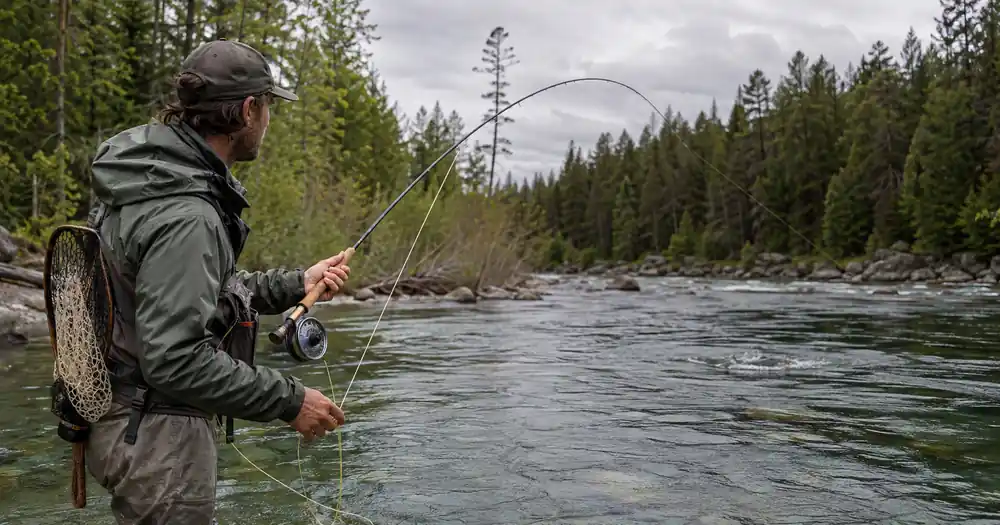
Fly Fishing Reeling: How to Reel In a Fish Correctly
Fly fishing reeling is not simply a matter of turning the reel handle after you hook a fish. With smaller trout, you may bring the fish closer by stripping line with your line hand. The reel becomes more important when a fish makes a sustained run, clears the loose line, or needs the drag system to help control the fight.
The basic rule is simple: maintain tension first, control loose line second, and use the reel when the fish and situation require it. Proper fly fishing reeling is about staying connected without creating unnecessary slack or using more pressure than your leader and tippet can handle.
Table of Contents
Fly Fishing Reeling: The Basic Process
Use this sequence after you hook a fish:
- Set the hook and establish controlled tension.
- Keep loose fly line under control.
- Watch what the fish does next.
- Strip in line if the fish stays close and manageable.
- If the fish makes a sustained run, let it clear loose line safely toward the reel.
- Use the reel and drag once the fish is on the reel.
- Recover line when the fish slows or swims toward you.
- Use rod pressure to guide the fish into landing position.
- Prepare the net before the final approach.
- Land the fish efficiently rather than deliberately exhausting it.
The fish often determines when you need the reel. Orvis teaches that many smaller fish can be stripped in, while a fish that takes off strongly may pull loose line from your hands and effectively put itself on the reel.
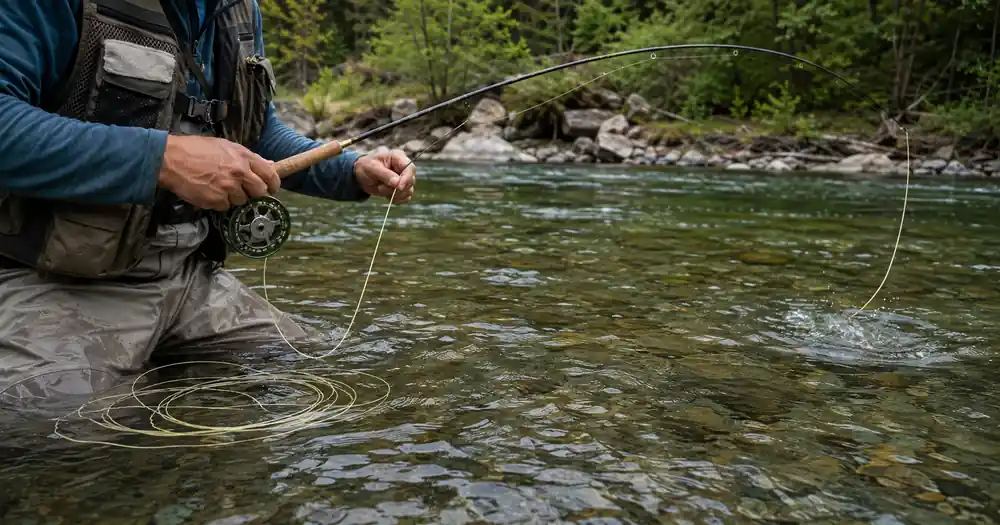
First Priority: Keep Tension on the Fish
After the hookset, your first job is to stay connected.
Keep the rod loaded enough to maintain pressure while your line hand controls loose line. Too much slack can give the fish an opportunity to shake the hook free, but that does not mean pulling as hard as possible.
Think in terms of controlled pressure, not maximum pressure.
Your rod, tippet, hook, current, and the fish itself affect how much pressure the setup can handle. If the fish surges away, you may need to let line slip or allow the drag to give line. If it turns and comes toward you, recover line quickly enough to stay connected.
During fly fishing reeling, watch the fish more than the reel. Its direction and speed tell you whether to give line, recover line, or change rod angle.
Should You Strip the Fish In or Use the Reel?
You do not have to put every hooked fish on the reel.
When Stripping the Fish In Makes Sense
Stripping means pulling fly line toward you with your line hand while keeping the rod under tension.
It often works well when:
- The fish stays relatively close.
- The fish is manageable on your tackle.
- You have only a moderate amount of loose line outside the reel.
- Stripping recovers line faster than winding it onto the spool.
Orvis demonstrates this approach with smaller fish that are not making a strong run.
Keep loose line organized. Avoid standing on it or letting loops wrap around boots, pack straps, rod handles, rocks, or other obstacles.
When to Put a Fish on the Reel
The reel becomes useful when the fish makes a sustained run or when getting loose line back onto the spool will improve control.
You usually do not need to force the transition. If a stronger fish runs, it may pull the loose fly line through the guides until the line is coming directly from the reel.
At that point, the drag can help manage resistance, and excess line is no longer lying around your feet.
The key rule in fly fishing reeling is: do not sacrifice line tension just because you want the fish on the reel.
How to Get a Fish on the Reel Without Losing Tension
Trying to reel through a large pile of slack can create problems. Keep pressure on the fish while allowing the transition to happen in a controlled way.
- Keep the rod loaded and watch the fish.
- Control loose fly line with your line hand.
- Do not deliberately create slack just to begin reeling.
- If the fish runs, allow controlled line to move through the guides.
- Watch for loops catching around your feet, reel, clothing, or equipment.
- Once the loose line has cleared, use the reel and drag.
If the fish stops before it has taken all the loose line, you can simply continue stripping it in.
There is no prize for getting a fish onto the reel. Good line control matters more than following a rigid procedure.
How to Use Fly Reel Drag During the Fight
The drag controls how much resistance the reel provides when a fish pulls line from the spool.
Once a fish is on the reel, use enough resistance to maintain useful pressure while still allowing line to leave during a hard run. If you want a deeper explanation of reel size, drag systems, arbor design, and capacity, see our guide to choosing the right fly fishing reel.
There is no universal drag setting for every fly fishing reeling situation. Appropriate resistance depends on tippet strength, hook hold, target species, current, fish size, and the tackle you are using.
If a fish surges away, let the drag give line rather than trying to overpower the run. Avoid dramatically tightening the drag during a hard run because a sudden increase in resistance can add extra load to the tippet and hook connection.
What to Do When the Fish Runs Away
When a fish accelerates away, maintain controlled pressure and let it take line when necessary.
If you are still controlling the fish by hand, let line slip through your fingers rather than clamping down abruptly. If the fish is on the reel, allow the drag to give line.
Keep loose line clear. A loop around a boot, reel handle, or other object can suddenly stop the line and create more pressure than you intended.
Fly fishing reeling is reactive: what you do next depends on what the fish is doing now.
What to Do When the Fish Swims Toward You
A fish moving toward you creates the opposite problem: you need to recover line quickly enough to prevent slack.
If loose line is still outside the reel, fast stripping may be the quickest way to regain contact. If the fish is already on the reel, reel steadily to pick up line.
The exact method matters less than the result. Keep the connection.
Use Rod Pressure to Guide the Fish
The rod is not only a shock absorber. Its angle can also help influence the direction of the fish.
A common mistake is assuming the rod should always be held straight overhead. In reality, rod position changes with the fish, current, obstacles, and landing area.
Side pressure can help turn or steer a fish instead of simply pulling upward. Orvis discussions of playing fish in current specifically describe changing rod angle and using side pressure when conditions allow.
Avoid pointing the rod directly at the fish during an ordinary fight because doing so removes much of the rod’s ability to flex and cushion changes in pressure.
Do not treat any single rod angle as a universal rule. Use smooth, controlled changes that fit the situation.
Reeling In a Fish in Moving Water
Current adds another force to the fight.
A trout directly downstream in heavy current can be difficult to bring back because the moving water works against you. When practical, use rod angle and side pressure to guide the fish toward softer water or a better landing position.
If changing position would help, move only when footing is safe. Do not cross deep or fast water simply to follow a fish. Wading safety takes priority.
Sometimes a strong fish will go downstream despite your efforts. Stay controlled and adapt rather than trying to stop it with excessive force.
This is where good fly fishing reeling becomes situational rather than mechanical.
Bring the Fish Into Landing Range
As the fish tires, gradually shorten the distance while maintaining enough pressure to stay in control.
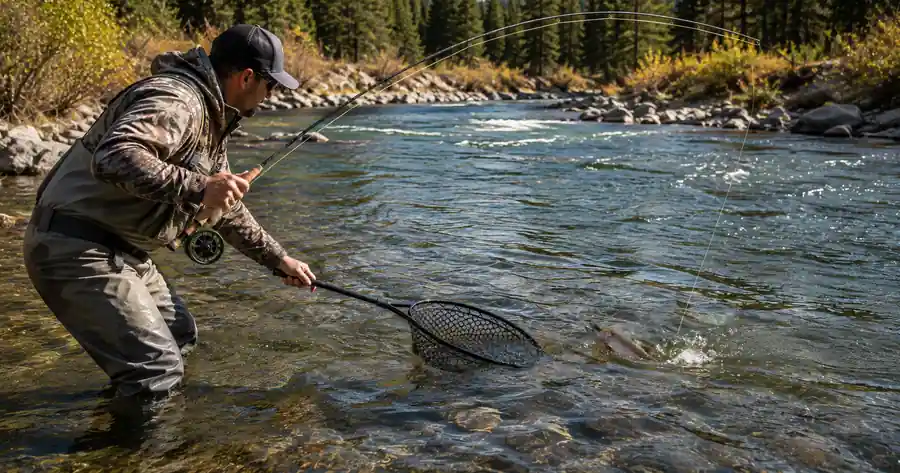
Choose a practical landing area when possible, and have the net ready before the fish is directly at your feet. If you still need a suitable net, our guide to choosing the right fly fishing landing net explains net size, rubber mesh, handle length, and carrying options.
Instead of repeatedly swiping at the fish, position the net and guide the fish toward it.
For fish you plan to release, aim to land them efficiently rather than deliberately extending the fight to exhaustion.
Left-Hand vs. Right-Hand Fly Reel Retrieve
There is no universal correct hand for operating a fly reel.
Many right-handed casters use a left-hand retrieve so they can keep the rod in the right hand and reel with the left. Others prefer to reel with the right hand and switch the rod to the left when necessary.
Orvis explicitly treats both methods as valid and recommends choosing what feels most comfortable.
For fly fishing reeling, consistency matters more than tradition. You should be able to control the rod and reel without fumbling during a fight.
If you want to change retrieve direction, check the instructions for your specific reel because conversion procedures vary.
Common Fly Fishing Reeling Mistakes
Trying to Put Every Fish on the Reel
A small fish that stays close may be easier to control by stripping line. Forcing a reel transition can create slack.
Letting Loose Line Become Disorganized
Fly line around boots, rocks, straps, or the reel itself can snag during a run.
Reeling While Ignoring the Fish
Watch the fish first. Its movement determines whether you should give line, recover it, or change pressure.
Fighting a Strong Run With the Reel Handle
If a fish is taking drag, allow the reel to release line rather than trying to win a tug-of-war by cranking harder.
Overtightening the Drag
Too much resistance can overload light tippet or a marginal hook hold.
Using Too Little Pressure for Too Long
Playing a fish extremely gently can extend the fight. Use controlled pressure appropriate to your tackle.
Holding One Rod Angle Throughout the Fight
Change rod angle as the fish moves, enters current, approaches obstacles, or nears the net.
Fighting a Fish to Exhaustion
If you intend to release the fish, aim for efficient control and landing rather than deliberately tiring it until it can no longer resist. NOAA Fisheries specifically advises against fighting released fish to exhaustion.
Quick Fly Fishing Reeling Checklist
- Keep controlled tension.
- Control loose fly line.
- Watch the fish.
- Strip line if the fish stays close.
- Let a sustained run transition toward the reel.
- Use drag when the fish is taking line from the spool.
- Recover line when the fish comes toward you.
- Change rod angle when it helps guide the fish.
- Move only when wading conditions are safe.
- Prepare the net early.
- Land the fish efficiently.
FAQs
Do You Have to Use the Reel When Fly Fishing?
No. Many smaller or manageable fish can be landed by stripping line with your line hand. The reel becomes more useful when a fish makes a sustained run, reaches the reel, or when putting loose line back on the spool improves control.
When Should You Put a Fish on the Reel?
Use the reel when the fish runs strongly enough to clear loose line or when getting excess line onto the spool will improve control. Do not deliberately create slack just to put a fish on the reel.
Should You Reel While a Fish Is Taking Drag?
Usually, let the reel give line while the fish is pulling strongly enough to take drag. Recover line when the fish slows, stops running, or moves toward you.
How Do You Keep Tension When Reeling In a Fish?
Keep the rod loaded, control loose line with your line hand, and react when the fish changes direction. Give line when necessary and recover slack quickly when the fish comes toward you.
Which Hand Should You Reel With in Fly Fishing?
Use whichever hand feels most natural. Many right-handed casters reel with the left so they do not have to switch the rod between hands, while others prefer right-hand retrieve. Both methods can work.
Should You Strip or Reel In a Trout?
It depends on the trout and the situation. A smaller trout that stays close can often be stripped in efficiently. A stronger trout that makes a sustained run may be easier to manage with the reel and drag.
Final Takeaway
Good fly fishing reeling is about control, not simply turning the handle.
Maintain tension first. Keep loose line organized. Strip in a manageable fish when that is easiest, and let a stronger run transition naturally onto the reel when needed. Use drag and rod pressure to control the fish without trying to overpower it.
Watch the fish throughout the fight, recover line when it comes toward you, and guide it toward a prepared landing position. If you plan to release the fish, use appropriate tackle and land it efficiently rather than intentionally fighting it to exhaustion.
Sources Used — Not Part of the Article:
- Orvis Learning Center — Recognizing Strikes and Playing Fish — Orvis playing-fish guide
- Orvis Learning Center — Tips on Landing and Netting Fish, with Jesse Haller — Orvis landing and netting guide
- Orvis Learning Center — The Seven Deadly Sins of Playing and Landing Fish — Orvis playing and landing fish guide
- Orvis — Fly Fishing Reeling Technique — Orvis reeling-technique guide
- Orvis Learning Center — Should You Reel With Your Right or Left Hand? — Orvis retrieve-hand guide
- NOAA Fisheries — Catch and Release Fishing Best Practices — NOAA catch-and-release guidance