
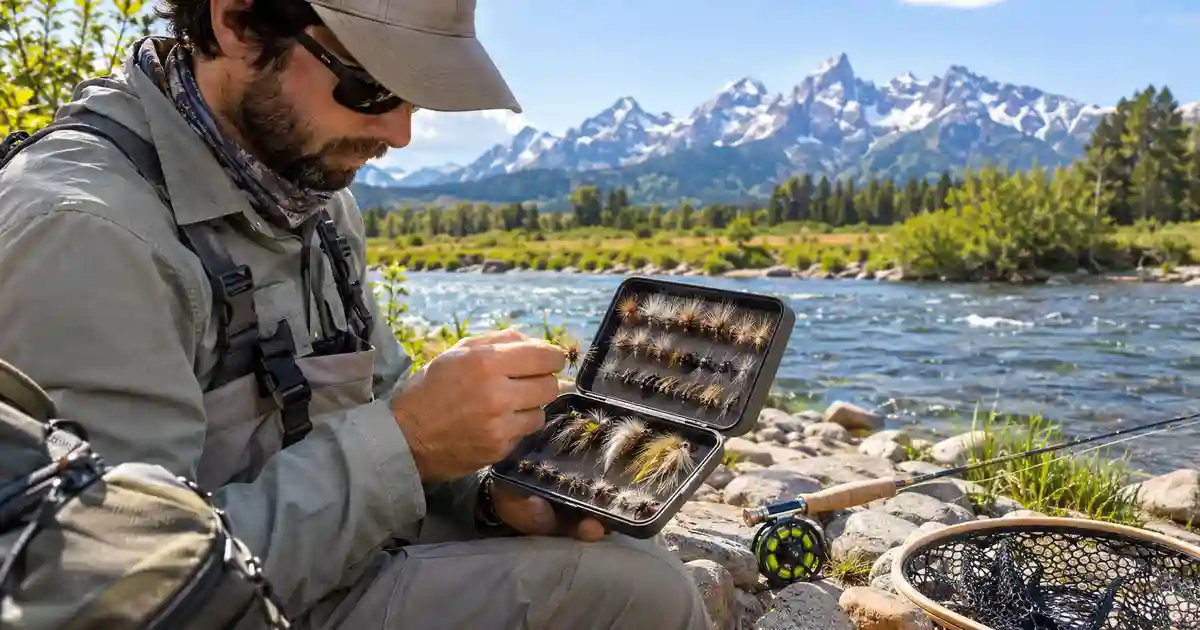
Wyoming Fly Fishing Flies: What to Use by River and Season
The best Wyoming fly fishing flies depend on which river you plan to fish and when you arrive. For the Snake River around Jackson Hole, bring seasonal dry flies, a few dependable nymphs, and streamers. For the upper Green River, build around summer mayflies, caddis, stoneflies, and terrestrials. Below Fontenelle Dam, small nymphs and tailwater food such as midges and sow bugs often deserve more room. The Shoshone changes enough between its forks and lower tailwater that one fly list cannot cover every section.
Use this as a packing guide, not a prediction of a guaranteed hatch. Runoff, reservoir releases, weather, fish activity, and fishing regulations can change your options. Local reports and official rules should be your final check before a trip.
Table of Contents
Wyoming Fly Fishing Flies: Quick River-and-Season Picks
If you need to pack before you know the day’s water conditions, start with several Wyoming fly fishing flies that cover surface insects, subsurface insects, and small baitfish. Then make the final choice using the exact river and a recent local report.
| Destination | Summer starting point | Cooler-weather or variable-water backup | Main decision |
|---|---|---|---|
| Snake River near Jackson | Caddis, PMD, stonefly or hopper dries | Pheasant Tail, Zebra Midge, Pat’s Rubberlegs, small streamers | Check runoff, clarity, and whether trout are rising |
| Upper Green near Pinedale | PMD, caddis, golden stone, hopper | Mayfly and stonefly nymphs, small streamers | Snowmelt timing differs from the regulated tailwater |
| Green below Fontenelle | Caddis or BWO dries when fish rise | Sow bug, Baetis, midge, worm and sculpin-type patterns | Match release-driven flow and check seasonal closures |
| Lower Shoshone tailwater | Relevant caddis, PMD, or attractor dries when activity supports them | Sow bugs, Pheasant Tails, Princes, midges | Current local reporting favors nymphing in early November |
| North or South Fork Shoshone | Stonefly and caddis-style attractors, PMDs when present | Princes, Pheasant Tails, worms, streamers | Check each fork’s own water clarity and report |
These are useful categories, not fixed shopping orders. A trout taking tiny emergers should change which Wyoming fly fishing flies you choose, regardless of how many patterns your box holds. If you only have one afternoon, a small balanced selection beats a large assortment with no suitable size or depth option.
How to Choose Wyoming Fly Fishing Flies by Hatch and Water
A hatch chart tells you which insects may be present during a typical season. It does not tell you whether trout are eating adults on top, emerging insects in the film, or nymphs near the bottom right now. Choose Wyoming fly fishing flies by watching the river first, then selecting the closest useful profile and presentation.
Dry flies belong in the plan when trout rise or sizable insects are active. On Wyoming rivers, useful patterns include Parachute Adams or BWO imitations, Sparkle Duns, Elk Hair Caddis, Stimulators, and foam hoppers. The right size matters: a large terrestrial may draw a response in summer, but it is a poor substitute when fish selectively sip small mayflies.
Nymphs cover the time when surface feeding is limited. Pheasant Tails, Zebra Midges, Princes, Baetis imitations, sow bugs, and stonefly nymphs give you different sizes, profiles, and sink behaviors. A fly must reach the feeding lane without constantly snagging the bottom or being dragged unnaturally.
Streamers such as a Woolly Bugger, Kreelex, Sculpzilla, or compact baitfish imitation provide a different approach when water conditions and fish behavior make it sensible. They are not obligatory on every outing. In clear low water, start with a controlled presentation and avoid repeatedly casting large flies over visibly nervous fish.
When sorting Wyoming fly fishing flies by size, a useful starting range is #16–22 for many small midges and BWOs, roughly #14–18 for some caddis and PMDs, and larger sizes for selected stoneflies and hoppers. These are starting ranges drawn from local recommendations, not guaranteed matches. Carry at least two sizes of the patterns likely to matter most on your river.
If you are still learning the difference between nymphs, dries, and streamers, our guide to types of fly fishing flies covers those basic categories in more detail.
Snake River Wyoming Fly Fishing Flies
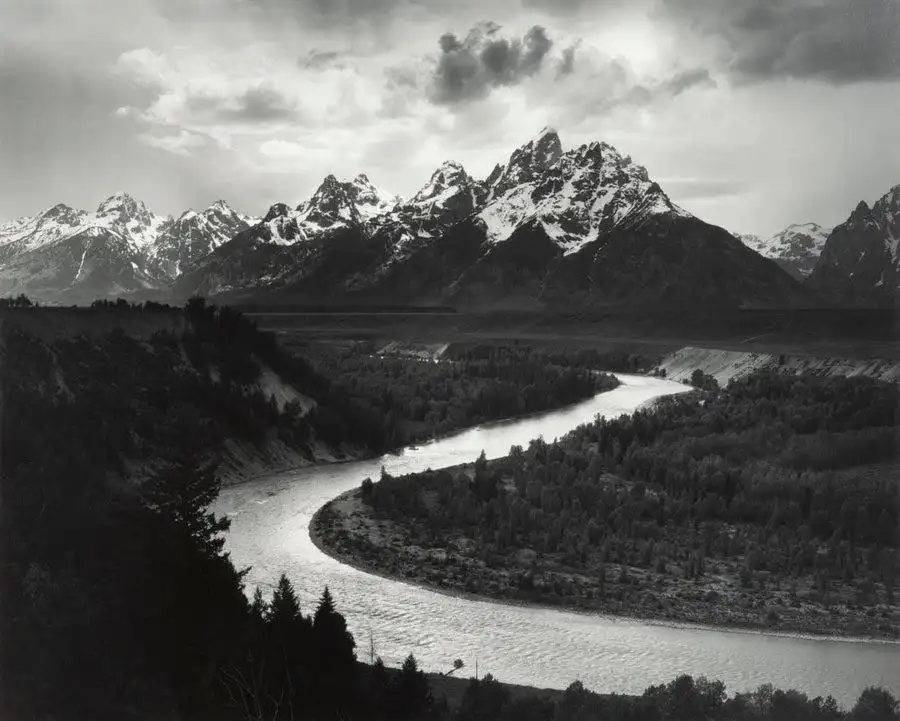
For the Snake River around Jackson Hole, Wyoming fly fishing flies should account for snowmelt, broad and sometimes swift channels, and the seasonal opportunities for cutthroat trout. An October 29, 2026 WorldCast Anglers report described low, clear winter-level flows and recommended small dries, nymph rigs, and streamers. That is a useful late-fall snapshot, not a forecast for next summer.
Spring and Early-Season Patterns
Before and around runoff, small midges and Blue-Winged Olives can be useful, along with stonefly nymphs and occasional larger early insects. Start with Zebra Midges (#16–20 in the checked local list), Pheasant Tail-style nymphs (#14–16), and small mayfly dries when fish rise. A darker, heavier nymph may be more useful in colored water than a delicate dry.
Do not rely on a date for runoff to end. Snowpack and weather shift the timing, and some sections may be unsuitable or unsafe even when a hatch chart says a pattern should work.
Summer Snake River Patterns
After flows settle, caddis, stoneflies, Pale Morning Duns, and later terrestrials can make dry-fly fishing attractive. A Parachute Caddis in tan (#12–16), a PMD/Sparkle Dun in a suitable small size, and a golden stone or Stimulator-style dry cover different situations. The checked Orvis report lists Schroeder’s Parachute Hopper in tan (#10–14), although that does not make hoppers a reliable choice every month.
Among summer Wyoming fly fishing flies, a hopper with an appropriately rigged nymph below can search two feeding levels when local rules permit that configuration. Adjust the dropper depth to the actual water and avoid presenting a multi-fly rig where it creates tangles or poor control.
Fall Snake River Patterns
Fall may bring smaller mayflies, including BWOs and mahogany-style patterns, while some terrestrials remain relevant early in the season. Sparkle Duns, small Zebra Midges, Pheasant Tails, and a compact Kreelex or other streamer make a balanced backup. Snake River Angler’s October 2026 reporting described productive dry-fly and streamer fishing on specific lower reaches; do not transfer that claim to every reach.
🎣 Smart Dry-Fly Choice: Flies Direct Adams Assortment
Flies Direct Adams Assortment Trout Fishing Flies (1-Dozen) Black
Fishing a Wyoming trout river when fish are rising? This 12-fly Adams assortment provides a classic mayfly-style dry-fly profile in multiple hook sizes. It’s a useful backup for suitable surface activity, though you may still need smaller BWO imitations or different caddis patterns for selective trout.
👀 View on Amazon & Check Current Offers
| Snake pattern | Example size from local reporting | When it earns space |
|---|---|---|
| Parachute Hopper | #10–14 | Suitable late-summer terrestrial activity |
| Parachute Caddis | #12–16 | Visible caddis and appropriate surface feeding |
| Sparkle Dun | #16–20 | Small mayfly or emerger activity |
| Zebra Midge | #16–20 | Small subsurface offerings, especially cooler periods |
| Pheasant Tail Jig | #14–16 | General mayfly-nymph backup |
| Kreelex | #4–10 | Streamer option when conditions justify it |
The listed sizes are examples from the October 29 report, not an exact prescription for every hatch.
Green River Wyoming Fly Fishing Flies
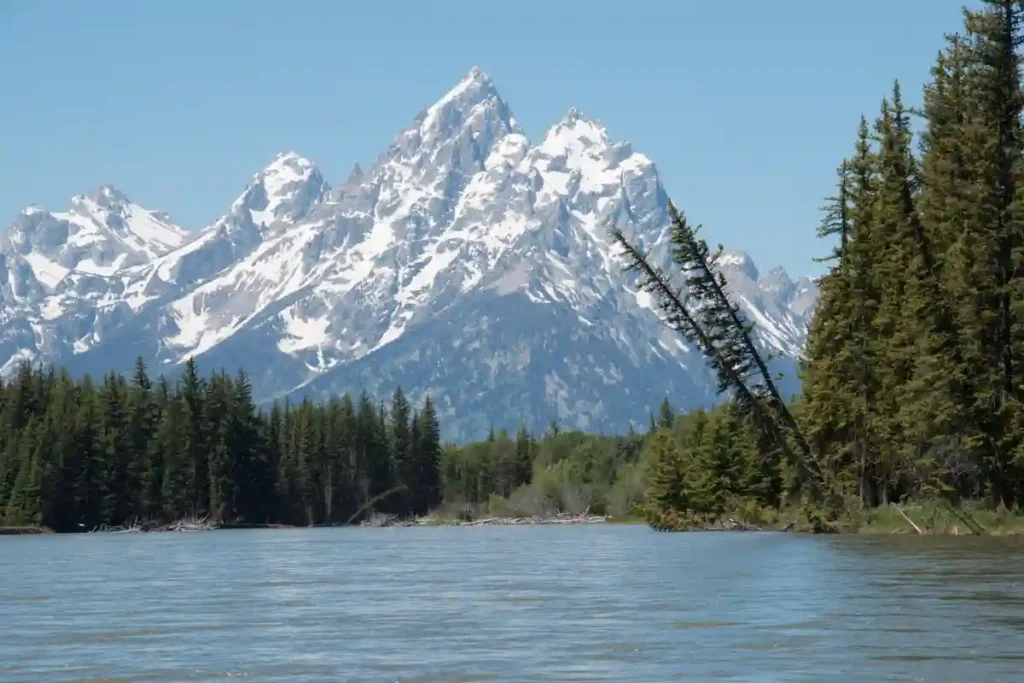
Choosing Wyoming fly fishing flies for the Green River requires one additional distinction: the upper river near Pinedale and the regulated water below Fontenelle Reservoir should not share an identical fly calendar. They have different flow patterns and different local reports. Our Green River fly fishing in Wyoming guide covers the broader river sections, access, and trip-planning questions.
Upper Green River Near Pinedale
The upper Green is strongly influenced by snowmelt. Local upper-river sources describe golden stones around late June and July, PMDs and Yellow Sallies through summer, caddis during warmer months, and terrestrials from mid- to late summer. Consider a Stimulator or stonefly dry in the larger sizes, Elk Hair Caddis around #14–18, PMD comparaduns around #16–18, and a hopper around #8–12 when the riverside insects support it.
Carry a Pheasant Tail, stonefly nymph, and compact streamer among your Wyoming fly fishing flies for periods when fish are not taking dries. The exact onset and strength of a hatch vary between years. Watch the water rather than buying a full set for a single predicted weekend.
Green River Below Fontenelle
The tailwater needs a different box. A current Beehive Fishing Company report describes sow bugs, Baetis, worms, and midges as important subsurface choices under relatively low, consistent releases; it also describes some terrestrial dry-fly windows and sculpin-, baitfish-, and crayfish-style streamer fishing. These are local report observations, not claims that the same flies will perform throughout the year.
A practical selection of Wyoming fly fishing flies for Fontenelle starts with sow bugs or scuds, small midges, Baetis nymphs, a worm, and one or two compact streamers. Add a BWO or caddis dry when surface insects or rising fish justify it. Weight and drift may be more important than carrying several colors of the same nymph.
Important closure: Wyoming’s 2026 regulations close the Green River from Fontenelle Dam downstream about one mile to the USGS gauge/cable crossing at Weeping Rocks Campground from October 1 through December 31. This is a specified reach, not a closure of the entire Green River. Other downstream sections have additional rules, so identify the exact water before fishing.
Shoshone River Wyoming Fly Fishing Flies
The Shoshone is another place where Wyoming fly fishing flies need a section label. The North Fork, South Fork, and Lower Shoshone Tailwater near Cody appear separately in local reports. One report cannot establish current conditions across all three.
North Fork Shoshone
North Fork Anglers’ November 2, 2026 report lists Pheasant Tails, North Fork Specials, Princes, worm patterns, Chubby-style dries, and streamers among its fly options. However, it also advises fishing another watershed for now because of concerns about recent conditions and fish numbers. That caution matters more than the pattern list if you are choosing where to go this week.
During suitable warmer-weather conditions, caddis or stonefly-style attractors and weighted nymphs may be reasonable starting points. Confirm clarity, flows, and the current recommendation rather than assuming a summer hatch guarantees a worthwhile outing.
South Fork Shoshone
The same November report describes clear water above Valley School and recommends nymph rigs and streamers. Local fly suggestions include Golden Stones, PMDs, Yellow Sallies, Jigged Princes, Walt’s Worms, and other attractor nymphs. A small selection of stonefly or attractor dries may make sense when insects and surface feeding are actually present.
For a visitor, this means carrying versatile nymphs and one or two streamers as a baseline, with seasonal dries added only after checking the current report. River clarity can change quickly after rain or snow.
Lower Shoshone Tailwater
North Fork Anglers’ November 2 report states that nymphing had been the most consistent method, with flows reported at 276 cfs at that time. Its suggested flies include sow bugs, Purple and Jigged Princes, Pheasant Tails, midge pupae, and worms. BWO and midge dry flies are worth retaining for real surface activity, and its list also includes Sculpzilla and Slump Buster streamers.
For Wyoming fly fishing flies on the lower tailwater in cooler weather, prioritize small subsurface patterns before filling your box with large summer dries. Do not treat the reported flow as current on the day you arrive; verify it again and assess whether it is safe to wade.
⭐ Smart Nymph Choice: Flies Direct BH Prince Nymph Assortment
Flies Direct BH Prince Nymph Assortment Trout Fishing Flies (1-Dozen)
Need a compact selection of Prince Nymphs for subsurface trout fishing? This dozen-fly set includes beadhead Prince patterns in several sizes, making it a practical option when local Shoshone reports recommend Prince-style nymphs. The set does not replace the smaller midges and sow bugs that may also be needed on the tailwater.
🎣 View on Amazon & Check Current Offers
Wyoming Fly Fishing Flies by Season
Seasonal planning helps you decide what to pack first, but a hatch chart should be treated as an estimate. Water temperature, snowmelt, elevation, and dam releases can move insect activity by weeks. The most useful Wyoming fly fishing flies are those that match both the expected season and the day’s actual feeding behavior.
| Season | Dry-fly possibilities | Subsurface priorities | Main caution |
|---|---|---|---|
| Winter | Midges or occasional BWOs when fish rise | Small midges, Baetis nymphs, sow bugs on suitable tailwaters | Ice, cold exposure, winter access limits and closures |
| Spring | BWOs, early stoneflies when present | Midges, Pheasant Tails, stonefly nymphs and some streamers | Runoff timing and water clarity |
| Summer | PMDs, caddis, stoneflies, hoppers and other terrestrials | Mayfly and caddis nymphs, stonefly patterns | Warm water and changing flows |
| Fall | BWOs, smaller mayflies, remaining terrestrials early on | Midges, Baetis, Pheasant Tails and streamers | Reach-specific closures and spawning-season rules |
Winter: Small offerings matter more than a large foam hopper in many colder periods. Focus on legally open, safely accessible water and adjust to any visible surface feeding.
Spring: Pair BWOs or midges with subsurface patterns and keep a stonefly nymph available. Snowmelt may make an otherwise promising reach unsuitable.
Summer: This is when a wider dry-fly selection often earns its space. PMDs, caddis, and terrestrials can be relevant, but a trout feeding on nymphs may ignore the most convincing hopper.
Fall: Smaller mayflies, nymphs, and streamers can be important, with local differences. Also check spawning-related closures before choosing a reach. Do not use a fall fly recommendation to justify fishing in a closed area.
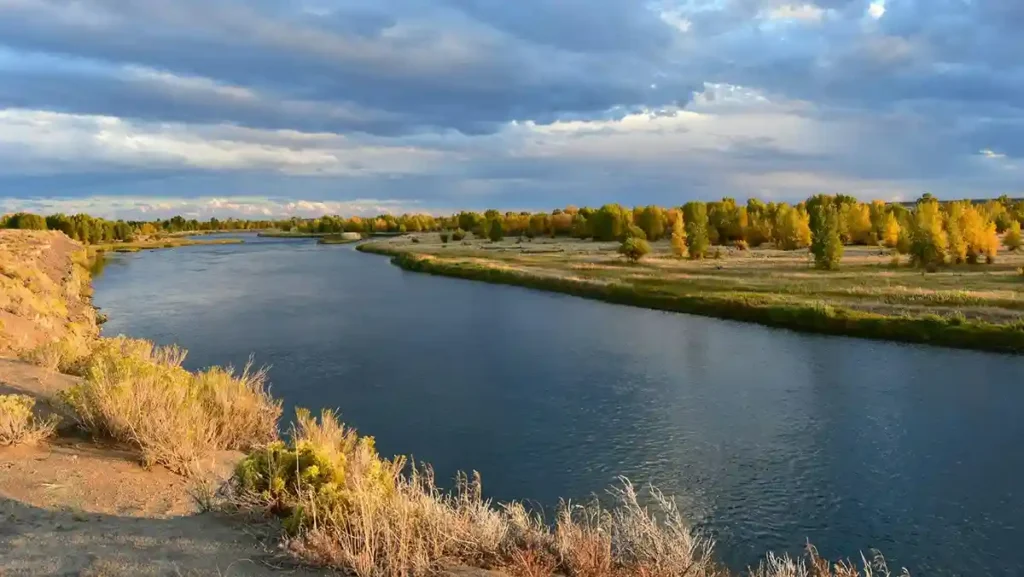
Build a Compact Wyoming Trout Fly Box
You don’t need to buy every pattern mentioned in a hatch chart. A 22-fly starting assortment can cover several likely situations on a short trip, provided you choose the actual patterns and sizes for your river. This is an editorial packing example, not a commercial kit or a guarantee of success.
| Category | Quantity | Example allocation |
|---|---|---|
| Dry flies | 8 | Two small BWO or Sparkle Duns, two caddis, two stonefly/Stimulator styles, two hoppers or other appropriate terrestrials |
| Nymphs | 10 | Two midges, two Pheasant Tails, two Princes or stonefly nymphs, two Baetis variants, two sow bugs/scuds or other river-specific nymphs |
| Streamers | 4 | Two small Woolly Buggers or similar profiles, two local sculpin/baitfish styles |
| Total | 22 | Adjust to season and river |
If your destination is the lower Green tailwater in cool weather, move some dry-fly spaces to midges, sow bugs, and Baetis. If your trip is a summer Snake River dry-fly outing, expand the caddis, PMD, and terrestrial options instead. For the Shoshone, consult the exact fork’s report before buying additional flies.
🎣 Smart Streamer Choice for Wyoming Trout
RoxStar Fly Shop Wooly Bugger Flies Assortment — 24 Pack
Want more streamer options for Wyoming trout? This 24-fly assortment includes beadhead and non-beadhead Woolly Buggers in multiple colors and sizes.
The variety lets you adjust your streamer presentation for different water conditions. A full assortment may be more than you need for a short trip.
👀 Check Price on AmazonAs an Amazon Associate, we earn from qualifying purchases.

Pack multiple sizes before multiple colors. Having the right general pattern in a different size can be more useful than six identical large flies. Also inspect hooks, floatant needs for your dry flies, and whether you have enough tippet for the size range you’re carrying.
Before buying an assortment of Wyoming fly fishing flies, inspect its actual pattern list. A box advertised for trout could contain too few BWOs or midges for a cold-weather tailwater, or too many generic attractors for selective fish. Purchasing a smaller number of individually chosen patterns from a local fly shop may be a better match.
Check Water Conditions, Regulations, and Access
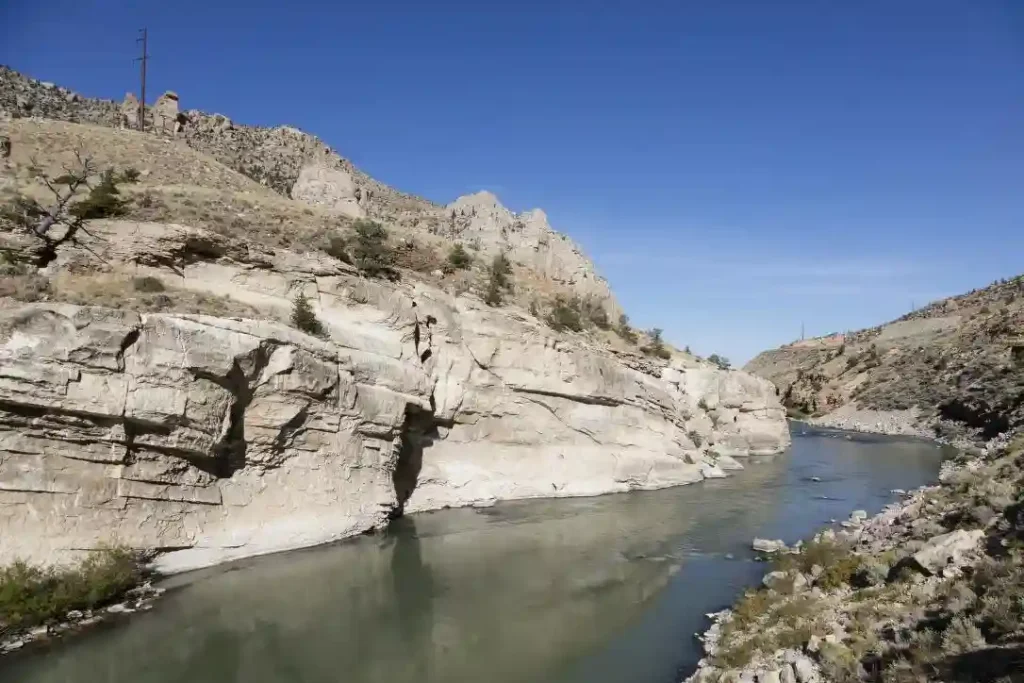
The Snake, Green, and Shoshone rivers occupy different parts of Wyoming, and the named sections can be far apart. Use a statewide map only for geographic orientation. It does not show legal access, open fishing reaches, boat ramps, or current water conditions.
Before any outing, check three things: the latest local fishing report for the exact section, current flow and weather conditions, and the fishing regulations from the responsible agency. A current report may favor nymphing even when a seasonal guide suggests a good dry-fly hatch.
Wyoming Game and Fish publishes statewide regulations and section-specific exceptions. A valid license does not override local closures or artificial-flies-only rules. For the Green below Fontenelle, the October 1–December 31 closure reaches from the dam to the Weeping Rocks gauge/cable crossing; do not mistake it for a statewide or river-wide ban.
Grand Teton National Park also has special Snake River rules. Its fishing guidance states that cutthroat trout caught in the Snake River must be released immediately from November 1 through March 31. The park also identifies a December 15–March 31 access closure for a specified stretch between the Buffalo Fork confluence at Moran and Menors Ferry at Moose. Check the current park page before entering the water, because not every Snake River reach has identical restrictions.
Summer heat deserves attention even when a river remains legally open. In a September 2026 advisory, Wyoming Game and Fish advised anglers to pause catch-and-release fishing when water temperatures approach 70°F, land fish promptly, and keep them wet. Carry a stream thermometer when heat may be a concern, and do not fish stressed trout simply because a local report lists productive patterns.
For safe travel, remember that changing releases, snowmelt, slick rocks, and swift channels can make a familiar river difficult to wade. Check access permissions rather than assuming a public river has public banks everywhere. Clean, drain, and dry wading equipment when moving between waters to reduce the spread of aquatic invasive species.
Wyoming Fly Fishing Flies FAQs
What Wyoming flies should I bring in July?
Start with PMDs, caddis, suitable stonefly dries, and a few hoppers where terrestrial activity is present. Add Pheasant Tails, midges, and a streamer or two. Confirm the river and current runoff situation before finalizing the box.
Can I use the same flies on the Snake and Green rivers?
Some patterns overlap, including BWOs, caddis, Pheasant Tails, and hoppers. But the Snake River around Jackson Hole, upper Green near Pinedale, and Fontenelle tailwater have different flows and feeding opportunities. Change the proportions and sizes rather than assuming one box fits all three equally well.
Which nymphs should I pack for Wyoming trout?
Pheasant Tails, Zebra Midges, Princes, Baetis nymphs, and stonefly imitations provide a flexible foundation. Sow bugs or scuds become especially relevant on some tailwaters. Choose weight and size for the actual water.
Do I need streamers for a fall Wyoming trip?
Not for every outing, but one or two compact patterns can expand your options when trout are not rising and conditions suit a subsurface moving fly. Follow local rules and avoid disturbing spawning fish.
How many flies should I bring for a short trip?
A carefully selected 20–25 flies may be sufficient for some short trips, but a specific hatch or changing conditions can require more of one size. Use the 22-fly example as a starting allocation rather than a universal limit.
Final takeaway: Choose Wyoming fly fishing flies by the river section and season first, then refine your selection using current reports, visible insects, and safe water conditions. Pack a balanced box, check local regulations, and make changes at the river instead of buying every pattern on a statewide list.
References:
- WorldCast Anglers / Orvis — Snake River Fishing Report
- Snake River Angler — Fishing Reports
- Reel Deal Anglers — Upper Green River Fly Fishing
- The Fly Fishing Place — Green River Wyoming Hatch Chart
- Beehive Fishing Company — Wyoming Fishing Reports
- North Fork Anglers — Fishing Reports
- Orvis — Shoshone River Fishing Report
- FlyFishFinder — Wyoming Fly Fishing Hatch Chart
- Wyoming Game & Fish — Fishing Regulations
- Wyoming Game & Fish — Green River Voluntary Closure Lifted
- Wyoming 2026 Fishing Regulations — Area 4 Exceptions
- National Park Service — Fishing in Grand Teton National Park
- FlyFishingScout — Green River Fly Fishing Wyoming: Access, Sections, and Trip Planning
- FlyFishingScout — Fly Fishing Lures: Types of Flies and How to Choose Them