
Redington Classic Trout Fly Fishing Rod: Specs, Pros, and Cons
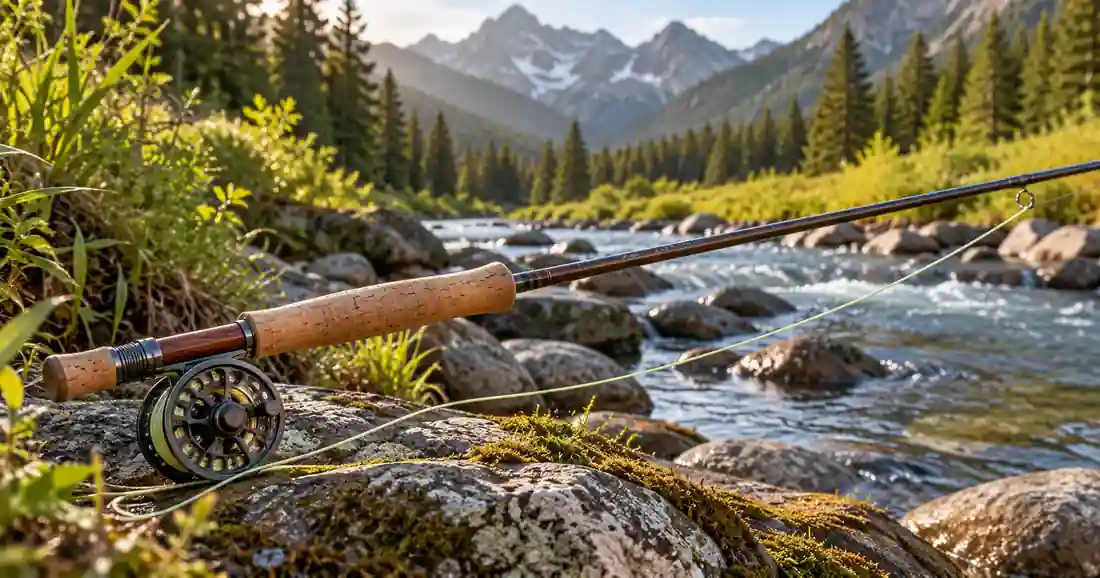
The redington classic trout fly fishing rod is a moderate-action trout rod aimed at anglers who value presentation, feel, and a more traditional casting tempo over maximum line speed. The family spans light small-creek models through a 6-weight, with several lengths that change how each version fishes.
At roughly the $200 rod-only price tier, the Classic Trout sits above the cheapest beginner rods but well below premium trout rods. Its strongest case is dry-fly fishing, light nymphing, spring creeks, and small-to-medium rivers.
Its main limitation is equally clear: anglers who regularly cast heavy indicator rigs, large streamers, or long distances into strong wind may prefer a faster or more powerful rod.
Table of Contents
Redington Classic Trout Fly Fishing Rod: Quick Verdict
The redington classic trout fly fishing rod is best for trout anglers who want a smooth, moderate-action rod for dry flies, light nymphs, and technical presentations. The 8-foot 6-inch 5-weight is an especially logical dry-fly-oriented choice, while lighter models suit small water. Consider a faster rod if wind, heavy rigs, or large streamers dominate your fishing.
| Specification | Current Details |
|---|---|
| Price | About $199.99 for current rod-only models; pricing can change |
| Action | Moderate |
| Line weights | Current family spans 2-weight through 6-weight |
| Lengths | About 7’6″ to 9’0″, depending on model |
| Construction | Primarily 4-piece; selected configurations also have 6-piece travel versions |
| Blank | Dark clay brown |
| Reel seat | Rosewood insert with custom-machined components |
| Guides | Titanium oxide stripping guides |
| Setup aid | Alignment dots |
| Case | Divided ballistic nylon rod tube |
| Warranty | Original-owner coverage for defects in materials and workmanship |
| Current stock | Varies substantially by configuration |
The most important buying decision is not whether the Classic Trout family is generally good. It is whether a specific length and line weight fit the water and presentations you use most.
Redington Classic Trout Fly Fishing Rod Specs
The redington classic trout fly fishing rod family is built around a moderate action. That is the defining specification because it shapes how the rod loads, how much feedback you feel during the casting stroke, and which presentations suit it best.
Action
Redington currently describes the Classic Trout as a moderate-action rod.
A moderate rod bends deeper under load than a typical fast-action rod. In practical terms, that can make short and medium casts easier to feel because the blank gives more feedback through the stroke.
The deeper flex can also help cushion light tippet when a fish suddenly pulls against the rod.
The trade-off is that moderate action is not optimized for producing maximum line speed. If your normal fishing involves strong wind, large weighted flies, or aggressive distance casting, the Classic Trout may feel less authoritative than a faster design.
Blank and Reel Seat
Current Classic Trout models use a dark clay brown blank with a matching rosewood reel-seat insert and custom-machined reel-seat components.
Those details give the rod a traditional trout aesthetic rather than the brighter, more technical appearance of many modern rods.
Appearance does not improve fishing performance, but it may matter if you prefer understated, classic-looking equipment.
Guides and Alignment Dots
The current specification includes titanium oxide stripping guides and alignment dots.
Alignment dots make assembling the sections faster because you can line up the guides without repeatedly rotating individual pieces.
It is a small feature, but useful on multi-piece rods.
Rod Tube
Current rod-only Classic Trout models include a divided brown ballistic nylon rod tube.
That gives the sections basic protection during vehicle storage, travel, and everyday transport without requiring you to buy a separate tube immediately.
Four-Piece vs. Six-Piece Options
Redington’s current Classic Trout information notes both standard four-piece construction and backpacking-oriented six-piece configurations within the family.
A four-piece rod is already practical for most vehicles and airline trips.
A six-piece version becomes more useful when packed length matters significantly, such as:
- backpacking;
- motorcycle travel;
- compact luggage;
- trips where rod-tube length is restricted.
More sections do not automatically make the rod better. Choose the six-piece option when compact packing solves a real problem.
Warranty
Redington product pages use “lifetime warranty” language, but the current Far Bank warranty policy provides an important qualification.
Qualifying Redington rods are covered for the original owner against defects in materials and workmanship.
Accidental damage, misuse, neglect, normal wear, lost sections, intentional damage, and similar problems do not automatically qualify for free replacement. Depending on the cause, a repair fee may apply.
That distinction is more useful than reading “lifetime warranty” and assuming every broken rod will be repaired free.

Redington Classic Trout Fly Fishing Rod Models Explained
The redington classic trout fly fishing rod should be selected by water size and presentation rather than simply buying whichever line weight is most common.
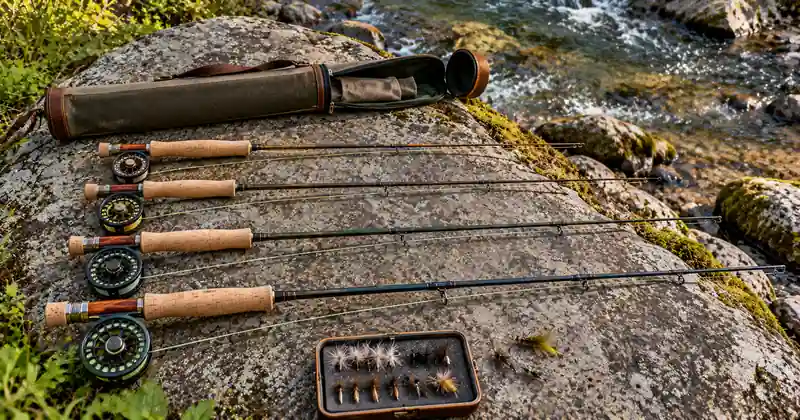
The current rod family extends from very light creek rods through a 9-foot 6-weight, and those models do not all solve the same problem.
3-Weight: Small Creeks and Light Presentations
The 7-foot 6-inch 3-weight is designed around small water and lighter presentations.
It makes sense when you fish:
- narrow creeks;
- short casting distances;
- small dry flies;
- smaller trout;
- tight banks or vegetation.
Its advantage is not long-distance power.
The attraction is a compact rod that can make light presentations and keep smaller fish engaging.
A 3-weight becomes less useful when you regularly fish larger rivers, weighted nymph rigs, bulky terrestrials, or streamers.
4-Weight: Dry Flies and Technical Trout Water
The Classic Trout family includes multiple 4-weight lengths, giving this line class more flexibility.
An 8-foot 4-weight favors smaller water and dry-fly accuracy.
A longer 9-foot 4-weight gives you additional reach for mending and line control while still keeping the lighter feel of a 4-weight.
This category can make sense for anglers who mostly fish:
- dries;
- light nymphs;
- spring creeks;
- clear technical trout water.
Its limitation is heavier tackle. Once large indicators, significant added weight, or larger streamers become normal, a 5- or 6-weight becomes easier to justify.
5-Weight: Most Versatile Trout Option
For many anglers, the Redington Classic Trout 5 weight is the most useful part of the lineup.
The 8-foot 6-inch 5-weight is particularly suited to dry-fly-oriented fishing on small-to-medium streams. Its shorter length keeps the rod relatively compact while the 5-weight line class adds versatility beyond a 3- or 4-weight.
The 9-foot 5-weight is the more conventional all-around trout shape because those extra six inches add useful reach for:
- mending;
- indicator fishing;
- line control;
- reaching across competing currents.
If you mostly fish dry flies with occasional light nymphs, the 8-foot 6-inch model is an appealing choice.
If you want one rod to cover a wider mix of trout techniques, the 9-foot model is the more versatile configuration when you can find it.
6-Weight: Larger Flies, Bigger Water, and Wind
The 9-foot 6-weight is the heaviest configuration currently listed in the Classic Trout rod family.
Moving to a 6-weight gives you more line mass for:
- larger flies;
- bigger rivers;
- moderate wind;
- heavier trout presentations;
- larger fish.
However, the Classic Trout remains a moderate-action design.
If your real priority is casting large articulated streamers, heavy sink tips, or aggressive long-distance rigs, moving to a faster 6-weight may make more sense than simply choosing the heaviest Classic Trout.
Redington Classic Trout Fly Fishing Rod Pros and Cons
The redington classic trout fly fishing rod has a clear personality. Its strongest qualities and its main limitations largely come from the same feature: moderate action.
Pros
- Presentation-oriented action: The moderate blank suits anglers who value casting feel and controlled delivery.
- Useful trout-specific configurations: The lineup covers tiny creeks through larger trout water.
- Light-tippet friendly: Deeper flex can help absorb sudden load changes compared with a much stiffer blank.
- Several rod lengths: You can choose compact creek rods or longer versions with improved reach and line control.
- Travel options: Four-piece construction is practical, while selected six-piece configurations improve packability.
- Rod tube included: Basic rod protection comes with the rod.
- Traditional styling: The clay-brown blank and rosewood insert give it a classic appearance.
- Accessible price tier: Roughly $200 is considerably below premium trout-rod pricing.
Cons
- Not optimized for maximum line speed: Faster actions generally make more sense for repeated wind and power casting.
- Heavy rigs are not its strongest use: Large indicators, substantial added weight, and bulky streamers reduce the advantages of the moderate taper.
- Shorter versions sacrifice reach: An 8-foot or 8-foot 6-inch rod gives up some mending and high-stick reach versus a 9-foot rod.
- Stock varies: Direct manufacturer availability currently differs significantly by configuration.
- Moderate action is a preference: Anglers accustomed to fast rods may find the Classic Trout slower than they like.
The right conclusion depends on whether those traits match your fishing rather than simply counting the number of pros and cons.
How the Redington Classic Trout Fly Fishing Rod Handles Different Techniques
The redington classic trout fly fishing rod is most convincing when the technique rewards feel and presentation.
Dry Flies
Dry-fly fishing is the clearest strength.
The moderate action, lighter line weights, and shorter configurations all make sense for controlled presentations at normal trout distances.
The 4-weights and 8-foot 6-inch 5-weight are especially logical when dry flies are the priority.
On technical water, a rod that loads comfortably with less line outside the tip can be more enjoyable than a very stiff blank designed mainly for high line speed.
Nymphs
The Classic Trout can fish nymphs, but the type of nymphing matters.
Light nymphs, dry-dropper rigs, and modest indicator setups fit the rod reasonably well.
A 9-foot configuration helps because additional rod length improves reach, mending, and line control.
Heavy indicator rigs with substantial weight move farther away from the rod’s presentation-oriented strengths.
Dry-Dropper Rigs
A light dry-dropper rig is a sensible match.
The rod can make a controlled dry-fly presentation while carrying a small nymph beneath it.
As the dropper gets heavier or the rig becomes more wind resistant, a faster or heavier rod becomes more appealing.
Small Streamers
Small Woolly Bugger-style patterns and modest baitfish imitations are realistic uses for the 5- and 6-weight configurations.
Large articulated streamers, heavy sinking systems, and aggressive streamer setups are different.
Those applications generally reward greater power and quicker recovery.
Wind and Longer Casts
The Classic Trout can cast beyond small-stream distances, but maximum line speed is not its central design goal.
In open, windy conditions, you may need to slow your casting tempo and work more carefully than you would with a faster rod.
If long casts and significant wind describe most of your fishing rather than occasional conditions, another rod family is likely a better match.
Is the Redington Classic Trout Fly Fishing Rod Good for Beginners?
The redington classic trout fly fishing rod can be a good beginner rod, but it is not automatically the best first rod for every beginner.
Its moderate action provides noticeable feedback throughout the cast. That can help a new caster learn to feel the rod load instead of rushing the stroke.
It is particularly appealing for a beginner who expects to fish:
- trout;
- small or medium rivers;
- dry flies;
- light nymphs;
- moderate casting distances.
The concern is versatility.
If your first rod needs to handle windy lakes, heavy indicator rigs, larger streamers, and broad rivers, a 9-foot medium-fast or fast 5-weight may cover those jobs more easily.
Beginners should also remember that the rod is only one piece of the system. FlyFishingScout’s guide to fly fishing gear for beginners explains how the rod, reel, fly line, leader, tippet, flies, and basic tools fit together.
What Line and Reel Fit the Redington Classic Trout Fly Fishing Rod?
A redington classic trout fly fishing rod should normally start with a fly line matching the rod’s rated line weight.
A 4-weight rod generally starts with a 4-weight line.
A 5-weight generally starts with a 5-weight line.
A 6-weight generally starts with a 6-weight line unless the rod or line manufacturer provides a specific reason to use a different pairing.
Floating Line as the General Trout Starting Point
For dry flies and general trout fishing, a floating line is the simplest starting point.
Line taper can then reflect the technique.
A presentation-oriented taper can complement dry-fly fishing, while a more aggressive taper may help turn over heavier rigs.
Do not buy a specialty line merely because the rod has moderate action.
FlyFishingScout’s guide to choosing the right fly fishing line explains line weight, taper, floating versus sinking lines, and how fly and rig size affect the choice.
Choose Reel Size for the Rod and Line
Choose a reel whose manufacturer explicitly supports your fly-line weight and provides enough capacity for the line and appropriate backing.
For ordinary trout fishing, there is little reason to prioritize the most powerful drag system available.
Physical reel weight also matters. An unnecessarily heavy reel can make a short 3- or 4-weight outfit feel awkward.
FlyFishingScout’s guide to choosing the right fly reel explains reel sizing, capacity, drag, arbor design, and rod balance in more detail.
Who Should Buy the Redington Classic Trout Fly Fishing Rod?
The redington classic trout fly fishing rod makes the most sense for anglers who know they value a moderate, presentation-oriented trout rod.
Buy It If…
Consider the Classic Trout if you:
- primarily target trout;
- fish dries and light nymphs;
- prefer a rod that gives noticeable loading feedback;
- fish small-to-medium streams;
- use light tippet regularly;
- like traditional rod styling;
- want to stay near the $200 rod-only price tier;
- can find the configuration that actually fits your water.
For dry-fly-oriented all-around trout fishing, the 8-foot 6-inch 5-weight is an especially logical option.
For tiny creeks, look toward the lighter 3-weight models.
For more reach and general line control, a 9-foot 4- or 5-weight makes more sense when available.
Consider Something Else If…
The Classic Trout is less suitable if you:
- strongly prefer fast-action rods;
- regularly fish significant wind;
- throw large streamers;
- use heavy indicator rigs most days;
- prioritize maximum distance;
- need a specific configuration that is currently difficult to source.
Do not buy a shorter Classic Trout merely because it is available if the 9-foot version better matches your fishing.
The configuration matters more than buying immediately.
Redington Classic Trout Fly Fishing Rod FAQs
Is the Redington Classic Trout a Moderate-Action Rod?
Yes.
Redington currently specifies the Classic Trout family as moderate action.
That means it bends deeper than a typical fast-action rod and emphasizes feel and presentation rather than maximum stiffness and line speed.
Is the Redington Classic Trout 5 Weight Good for Trout?
Yes, particularly when your fishing involves dry flies, light nymphs, and normal small-to-medium river distances.
The 8-foot 6-inch 5-weight leans toward dry-fly use, while the 9-foot 5-weight provides additional reach for more general trout techniques when available.
Is the 4-Weight or 5-Weight Better?
Choose the 4-weight when dry flies, lighter presentations, and smaller water dominate your fishing.
Choose the 5-weight when you want more versatility for nymphs, modest streamers, and larger rivers.
Neither is universally better.
Is the Redington Classic Trout Good for Beginners?
It can be.
The moderate action provides useful casting feedback, and the 5-weight configurations cover a large amount of ordinary trout fishing.
A beginner who expects heavy rigs, frequent wind, or larger streamers may prefer a more powerful 9-foot rod.
Can the Redington Classic Trout Cast Streamers?
Yes, within reason.
Small streamers are practical with the 5- and 6-weight versions.
Large articulated streamers, heavy sinking systems, and bulky patterns are better matched to a more powerful rod.
Does the Redington Classic Trout Have a Lifetime Warranty?
Redington product pages use lifetime-warranty language, but the current policy should be read carefully.
For qualifying Redington rods, the original-owner warranty covers defects in materials and workmanship.
Accidental damage, normal wear, misuse, lost sections, and similar problems can fall outside free warranty coverage and may require a repair fee.
The redington classic trout fly fishing rod is a strong fit for anglers who want a moderate-action trout rod with a traditional feel at roughly the $200 level. Its strongest configurations are the lighter creek and dry-fly models plus the versatile 5-weights.
The main buying rule is simple: choose the configuration for your water. A 7-foot 6-inch 3-weight and a 9-foot 6-weight may share the Classic Trout name, but they solve very different problems.
If dries, light nymphs, technical trout water, and casting feel are your priorities, the redington classic trout fly fishing rod deserves consideration. If wind, heavy rigs, and large streamers define most of your fishing, choose a faster or more powerful rod instead.
Sources Used
Redington / Far Bank — Classic Trout Collection
Used to verify the current rod family, configurations, $199.99 manufacturer pricing, stated use cases, and manufacturer-direct availability by model.
Redington Classic Trout Collection
Redington / Far Bank — Classic Trout 586-4
Used to verify the 8’6″ 5-weight configuration, moderate action, four- and six-piece availability within the family, dark clay brown blank, rosewood reel-seat insert, titanium oxide stripping guides, alignment dots, rod tube, and warranty language.
Redington Classic Trout 586-4
Redington / Far Bank — Classic Trout 376-4
Used to verify the 7’6″ 3-weight specification and its small-creek positioning.
Redington Classic Trout 376-4
Redington / Far Bank — Classic Trout 480-4 and 490-4
Used to verify current 4-weight lengths and the manufacturer’s dry-fly, spring-creek, light-nymph, and light-tippet positioning.
Redington / Far Bank — Classic Trout 590-4 and 690-4
Used to verify the 9′ 5-weight and 9′ 6-weight configurations and manufacturer positioning for all-around trout and larger flies/fish.
Far Bank — Warranty Policy and Repair FAQ
Used to clarify that qualifying Redington rods are covered for the original owner against defects in materials and workmanship, while non-warranty breakage can involve repair charges.
Far Bank Warranty Policy
FlyFishingSetup — Redington Classic Trout Review: 8ft 6in 5wt
Used only as independent secondary context for the practical trade-offs of the 8’6″ moderate-action 5-weight, particularly dry-fly use, short-to-medium water, nymphing reach, and wind. FlyFishingScout does not represent this source’s testing or observations as its own.
Independent Redington Classic Trout Review