
What Is Fly Fishing? A Beginner’s Guide to Getting Started
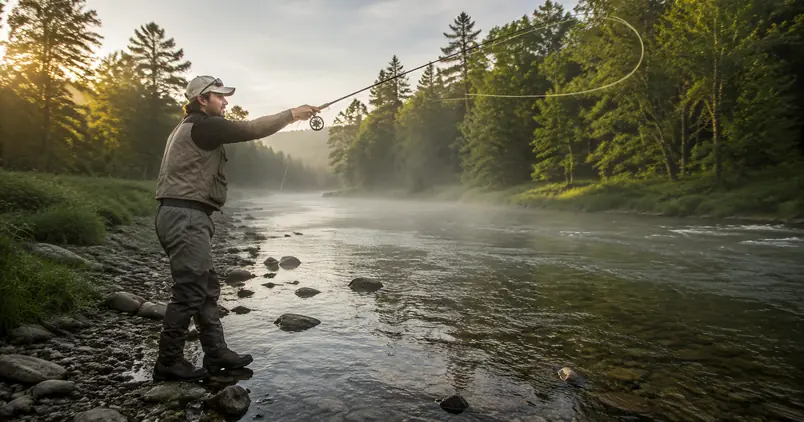
Fly fishing is a method of angling that uses a specialized rod and fly line to cast an artificial fly that is usually too light to cast with conventional tackle. Instead of a weighted lure pulling a thin line through the air, the heavier fly line carries the fly toward the target.
The equipment and casting motion may look complicated at first, but the basic idea is simple: choose a fly that represents something a fish might eat, place it where the fish can find it, and make it move or drift naturally.
This guide explains how fly fishing works, how it differs from conventional fishing, what equipment beginners need, and how to prepare for a first day on the water.
Table of Contents
What Is Fly Fishing in Simple Terms?
Fly fishing is a way of catching fish with an artificial fly and a specialized fly rod, reel, and line.
The “fly” is a hook dressed with materials such as thread, feathers, fur, foam, wire, or synthetic fibers. It may imitate an insect, but it can also resemble a baitfish, leech, crustacean, frog, or another food source.
What makes fly fishing distinct is not simply the use of an artificial fly. The key difference is how that fly is delivered.
In conventional fishing, the weight of a lure, sinker, or bait helps pull a relatively light line through the air. In fly fishing, the fly may weigh almost nothing, so the fly line provides the mass needed for the cast. The angler moves the rod in a controlled stroke that sends a loop through the line and carries the fly forward.
That mechanical difference influences almost every part of the sport, including the rod, reel, line, casting technique, and way the fly is presented.
How Does Fly Fishing Work?
A basic fly fishing sequence has four parts:
- Cast the fly.
- Present it naturally.
- Detect the fish taking it.
- Hook, fight, and land the fish.
Each part can become highly technical, but beginners do not need to master everything before they start.
The fly line provides the casting weight
A conventional lure has enough weight to pull fishing line behind it during a cast. Most artificial flies do not.
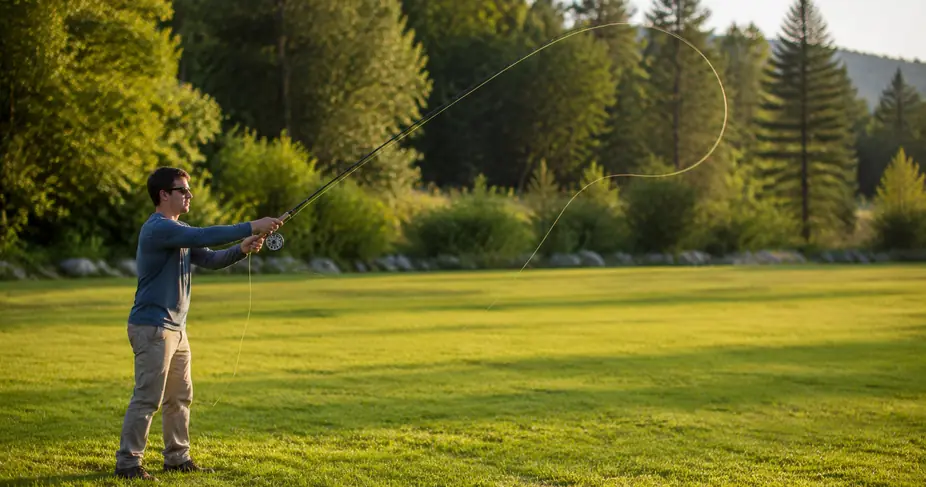
Fly line is thicker and has more mass than conventional monofilament or braided fishing line. During the casting stroke, the rod bends under the load of the moving line and then straightens, helping transfer energy into the cast. A loop travels through the fly line, leader, and tippet before delivering the fly.
This is why waving only the rod tip usually produces a poor cast. The rod and line must work together.
It is also why the rod and fly-line weight should be compatible. A properly matched system makes it easier to feel the rod load and form a controlled loop.
The angler presents the fly like natural food
Casting gets the fly to the water, but presentation is what makes it convincing.
Depending on the fly and fishing method, the angler may try to:
- Float a dry fly on the surface.
- Drift a nymph below the surface.
- Swing a wet fly across the current.
- Retrieve a streamer so it moves like prey.
- Place a terrestrial pattern near overhanging vegetation.
- Move a saltwater fly to imitate a fleeing baitfish or crustacean.
A long cast is not automatically a good cast. Placement, depth, speed, and line control often matter more than distance.
In moving water, different currents can pull sections of the line at different speeds. Anglers adjust the line to reduce unnatural drag and help the fly drift more freely. In still water, they may retrieve the fly with short or long pulls to create movement.
What happens when a fish takes the fly?
A take may look like a dry fly disappearing, a line or indicator pausing, or a sudden pull during a retrieve.
The appropriate hook-setting motion depends on the fly, species, and technique. In many freshwater situations, the angler tightens the line and lifts the rod. With some retrieved flies, especially in saltwater, a controlled pull with the line hand may be more appropriate.
Once hooked, the rod helps absorb sudden movement while the angler controls loose line or uses the reel. The fish can then be brought close enough to land safely.
Whether a fish may be kept—and how it must be handled or released—depends on the location, species, season, and current regulations.
Fly Fishing vs. Regular Fishing
“Regular fishing” is not a precise technical category. People usually use the phrase to mean spin fishing, baitcasting, or fishing with bait.
All of these methods can catch fish effectively. The right choice depends on the water, target species, conditions, and the kind of experience the angler wants.
| Feature | Fly Fishing | Conventional Fishing |
|---|---|---|
| Main casting weight | The fly line | The lure, sinker, or bait |
| Typical offering | Artificial fly | Lure, bait, jig, or other rig |
| Line | Thick, specialized fly line connected to a leader | Thin monofilament, fluorocarbon, or braided line |
| Rod and reel | Fly rod and fly reel | Spinning, baitcasting, or conventional rod and reel |
| Casting motion | Controlled stroke that forms a loop in the line | The weighted terminal tackle pulls line from the reel |
| Presentation | Often emphasizes controlled drifts or lifelike movement | Varies widely by lure, bait, rig, and technique |
| Initial learning curve | Casting and line management require practice | Basic casting is often quicker to learn |
According to Fly Fishers International, the simple mechanical distinction is that fly fishing uses the line to carry the fly, while conventional fishing uses the lure’s weight to carry the line.
Fly fishing is not inherently more sporting, ethical, or effective. It is simply a different system. Some anglers enjoy it because casting, reading the water, selecting flies, and controlling presentation create a close connection between technique and the behavior of the fish.
What Is a Fly?
Artificial flies are not limited to imitations of winged insects. They can represent food found on the surface, underwater, or near the bottom.
There are many types of fly fishing flies, but beginners can understand most common patterns through three broad groups.
Dry flies
Dry flies are designed to float on the surface or sit in the surface film. They may imitate adult aquatic insects, ants, beetles, grasshoppers, or other food found on top of the water.
Because the angler can often see both the fly and the fish taking it, dry-fly fishing provides immediate visual feedback. The challenge is keeping the fly floating naturally without the line pulling it across the surface.
Nymphs and other subsurface flies
Nymphs represent immature aquatic insects and other small organisms that fish eat below the surface.
The fly may be lightly weighted, combined with added weight where legal, or fished beneath a strike indicator. The goal is usually to place it at the correct depth and let it move with the current.
Other subsurface patterns include wet flies, emergers, eggs, worms, and imitations of aquatic creatures such as scuds.
Streamers
Streamers generally imitate larger moving food such as baitfish, leeches, or crayfish. Instead of allowing the fly to drift passively, the angler commonly retrieves or swings it to create motion.
These three groups are a starting point, not a complete classification system. The best fly selection depends on the fish, water, season, available food, and local rules.
A local fly shop can usually recommend a few suitable patterns without requiring a beginner to learn advanced entomology.
How the Fly Fishing Setup Connects
Fly fishing equipment makes more sense when viewed as one connected system:
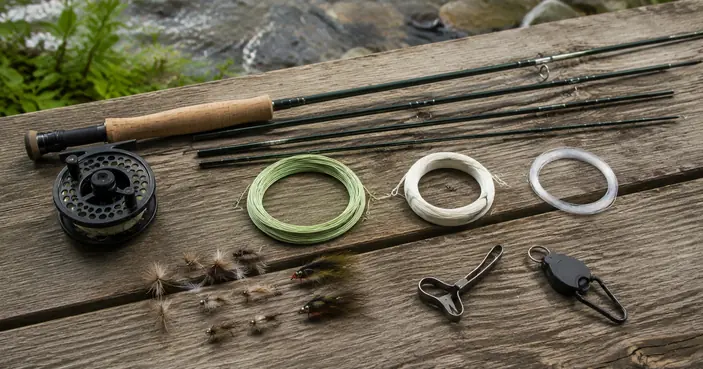
Rod → reel → backing → fly line → leader → tippet → fly
Fly rod
The rod helps control the line, form the cast, manage the presentation, and fight a hooked fish.
Fly rods are classified by weight, commonly written as “wt.” The number does not directly describe the physical weight of the rod. It indicates the fly-line class the rod is designed to cast.
The appropriate rod depends on factors such as the target species, expected fish size, fly size, wind, and type of water.
Fly reel
The reel stores the backing and fly line. It also helps manage line and may provide adjustable resistance, called drag, when a fish runs.
A reel can be extremely important for large or powerful fish. With smaller fish at short distances, the angler may control much of the loose line by hand before using the reel.
Backing
Backing is thin line attached to the reel before the fly line.
It helps fill the reel spool and provides extra line if a fish runs farther than the length of the fly line. Beginners may rarely see their backing while fishing, but it remains an important part of a properly assembled reel.
Fly line
Fly line provides the mass needed to cast the fly. Lines come in different weights, tapers, and densities.
Some float, some sink, and others combine floating and sinking sections. Beginners do not need to understand every design immediately, but the line should be appropriate for the rod and intended fishing method.
Leader
The leader connects the thick fly line to the much thinner material near the fly.
A standard tapered leader gradually decreases in diameter. Its thicker end helps receive energy from the fly line, while its thinner end allows a more delicate connection to the fly.
Tippet
Tippet is the thin material at the end of the leader to which the fly is tied. Anglers can replace or extend it as flies are changed and the leader becomes shorter.
The terms leader and tippet are often confusing to new anglers. The simplest distinction is that the leader makes the transition from thick fly line to fine material, while the tippet forms the final connection to the fly.
Fly
The fly is the last component in the system and the part presented to the fish.
Its size and weight must suit the leader, tippet, rod, and line. A tiny dry fly and a large wind-resistant streamer create very different casting demands.
What Equipment Do You Need to Fly Fish?
Fly fishing gear displays can make the sport seem more complicated than it is. A beginner needs a functional, matched setup—not every specialized accessory.
What you need to begin
| Need now | Purpose |
|---|---|
| Matched fly rod, reel, and fly line | Provides the basic casting and line-management system |
| Backing | Adds reserve line and helps fill the reel |
| Leader and tippet | Connect the fly line to the fly |
| Small selection of suitable flies | Gives the fish an artificial food or attractor to take |
| Nippers or small line cutters | Trims knots and tippet |
| Eye protection | Protects the eyes and reduces glare when polarized |
| Fishing license or required permit | Keeps the trip compliant with applicable regulations |
Useful additions may include forceps, a suitable landing net, sun protection, weather-appropriate clothing, water, and basic safety supplies.
What can usually wait
Most beginners do not immediately need:
- Multiple fly rods and reels.
- Several specialized fly lines.
- Hundreds of flies.
- Premium packs or vests.
- Expensive fishing-specific clothing.
- Fly-tying tools and materials.
- Waders for every type of water.
- Advanced accessories for techniques they have not learned.
Waders and wading boots can be useful in rivers, but they are not universal requirements. Many anglers begin from an accessible bank, dock, boat, or shoreline.
Choose safety and function before convenience or appearance.
Where Can You Go Fly Fishing?
Fly fishing is strongly associated with cold mountain streams, but it can be practiced in many environments.
Possible locations include:
- Small creeks.
- Large rivers.
- Ponds.
- Natural lakes.
- Reservoirs.
- Warm-water fisheries.
- Coastal flats.
- Bays and estuaries.
- Open salt water.
The National Park Service notes that fly fishing can take place in settings ranging from seashores to streams. However, public access does not automatically mean fishing is permitted, and individual waters may have special rules.
For a first outing, look for an accessible location with:
- Legal public access.
- A manageable target species.
- Enough open space for casting.
- Stable footing.
- Information from a local shop, club, or wildlife agency.
- Regulations that are easy to understand.
A pond or lake with open shoreline can sometimes be easier for casting practice than a narrow, brush-covered stream.
What Fish Can You Catch on a Fly Rod?
Fly fishing is not only for trout.
Trout are popular targets because they often feed on aquatic insects that artificial flies can imitate. However, fly anglers also pursue bass, panfish, carp, pike, salmon, steelhead, striped bass, redfish, bonefish, tarpon, and many other freshwater and saltwater species.
The same outfit will not suit every fish. A small-stream trout setup is different from equipment designed to cast large flies to powerful saltwater species.
Before choosing fly fishing equipment, answer three questions:
- What fish are available locally?
- What kind of water will you fish?
- What size flies will you need to cast?
Those answers provide a better starting point than choosing a rod simply because it is described as beginner-friendly.
How to Start Fly Fishing: A Simple First-Day Plan
Learning how to start fly fishing becomes easier when the process is divided into manageable steps.
1. Choose a local fishery and target species
Start with the water, not the shopping list.
Find a legal, accessible place to fish and learn which species live there. Then check the current season, license requirements, permitted methods, hook restrictions, harvest limits, and access rules.
The U.S. Fish & Wildlife Service explains that requirements differ between states. Rules may also vary between individual parks, refuges, rivers, and managed waters.
2. Borrow, rent, or choose a matched outfit
A preassembled outfit can remove much of the uncertainty about matching a fly rod and reel with the correct line.
Borrowing or renting equipment may also help you decide whether you enjoy the activity before buying a complete setup.
If you purchase equipment, base the decision on your target fish, water, and fly size. Avoid choosing solely by price, appearance, or a general claim that one rod can handle everything.
3. Learn how the setup connects
Before reaching the water, practice assembling the rod and identifying the backing, fly line, leader, and tippet.
You do not need to learn every fly fishing knot. Start with:
- One dependable knot for connecting tippet to the leader.
- One dependable knot for attaching the fly.
For example, Scientific Anglers teaches the double surgeon’s knot for connecting leader and tippet and the improved clinch knot for attaching a fly. Other reliable knots can perform the same jobs.
Practice at home using thicker cord if fine tippet is initially difficult to see or handle.
4. Practice one basic cast safely
Learning how to cast a fly rod is easier in an open space than in a crowded fishing area.
Use a short piece of visible yarn instead of a hook while practicing. Wear eye protection, check the space behind you, and stay clear of people, animals, trees, vehicles, and power lines.
Focus on:
- Smooth acceleration rather than force.
- A controlled stop.
- Allowing the line to straighten behind you.
- Forming a consistent loop.
- Making accurate short casts.
Do not try to keep the line in the air through repeated false casts. Extra false casting creates more opportunities for tangles and poor timing. The objective is to place the fly, not perform the longest casting sequence.
5. Get local guidance
A short lesson can help a beginner understand casting timing and correct problems before they become habits.
Possible sources of assistance include:
- Local fly shops.
- Fly fishing clubs.
- Fly Fishers International-affiliated groups.
- Introductory community classes.
- Certified casting instructors.
- Professional guides.
You do not need to hire a guide to begin, but local guidance can help with access, fly selection, regulations, and seasonal conditions.
6. Keep your first session simple
Choose one fly or technique instead of trying to learn several methods simultaneously.
Fish close enough to control the line. Watch how current or wind affects the presentation. Check the fly and leader for knots or tangles, and pay attention to where the line travels during the cast.
Success on the first day does not have to mean catching a fish. Assembling the setup correctly, making controlled casts, avoiding tangles, and understanding how the fly moves are useful first-session goals.
Common Beginner Mistakes to Avoid
Buying gear before choosing the fish and water
Equipment should match the fishing situation. A general recommendation cannot account for every species, water type, fly size, or local condition.
Using mismatched equipment
A rod, reel, and line should work as a balanced system. Mismatched line and rod weights can make casting unnecessarily difficult.
Trying to cast too far
Fish are not always on the opposite bank. Accurate short casts and controlled presentations are more useful than uncontrolled distance.
Using too much force
A fly rod is designed to bend and release energy. Trying to overpower the cast often produces wide loops, tailing loops, and poor timing.
Practicing with an exposed hook
A hook creates an unnecessary risk during casting practice. Use yarn or another soft, hookless substitute until you are practicing in an appropriate fishing setting.
Carrying too much equipment
More accessories create more decisions and more items to lose. A small fly selection and a simple setup let beginners concentrate on casting, presentation, and observation.
Ignoring the space behind the cast
Branches, tall grass, fences, people, and other obstacles can catch the fly or create a safety hazard. Check both the forward target and the backcast area.
Skipping current regulations
Licenses, seasons, hook rules, harvest limits, access, and species protections can change. Verify them through the relevant state wildlife agency and the authority managing the specific water.
Expecting immediate mastery
Basic fly casting can be learned in stages, but consistent accuracy and line control require practice. Treat early mistakes as feedback about timing, setup, or presentation.
Frequently Asked Questions
Is fly fishing hard to learn?
The basic concepts are not difficult, but casting and line management require practice. Beginners can learn a functional short cast before mastering advanced techniques. Starting with matched equipment, open practice space, and one simple fishing method reduces the learning curve.
Is fly fishing expensive to start?
It can become expensive, but beginners do not need multiple rods, premium accessories, or a large fly collection. A functional matched outfit, leader, tippet, a few suitable flies, nippers, and basic safety equipment are enough to start. Borrowing or renting can reduce the initial commitment.
Do you need waders to fly fish?
No. Waders are useful when safely entering cold or deeper water, but many places can be fished from shore, a dock, or a boat. Some anglers also wet-wade in appropriate warm conditions with suitable footwear. Never enter water simply because other anglers are wading.
Can you fly fish from shore?
Yes. Ponds, lakes, reservoirs, rivers, and saltwater shorelines may all offer bank-fishing opportunities. Look for legal access, room behind you to cast, and water where fish can be reached without unsafe wading.
Is fly fishing only catch and release?
No. Fly fishing describes the fishing method, not whether a fish must be released. Some waters require release, while others allow legal harvest. Follow current regulations and use appropriate fish-handling practices for the species and conditions.
Final Takeaway
Fly fishing uses the mass of a specialized line to cast and present a lightweight artificial fly. Once that distinction is clear, the equipment and casting method become much easier to understand.
Start by choosing a local fishery and target species. Then find a matched setup, learn how the line, leader, tippet, and fly connect, and practice a controlled cast in a safe open space. You do not need to know everything before your first trip—only enough to fish legally, safely, and with a simple plan.