
Fly Fishing Tackle Box: How to Choose the Right Fly Box
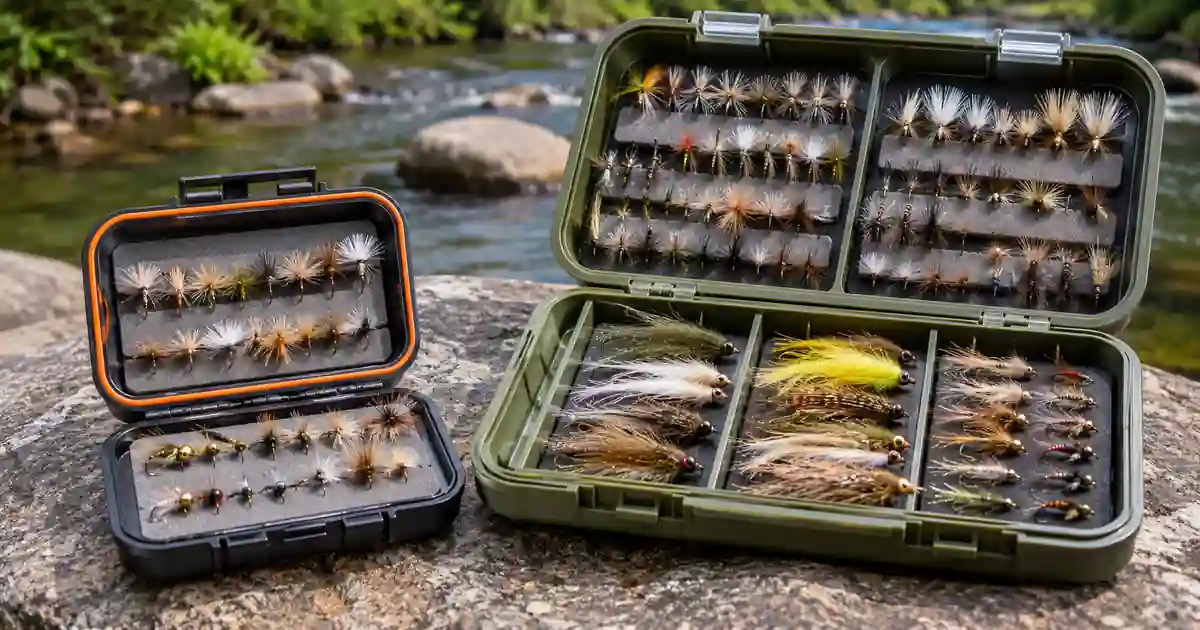
A fly fishing tackle box should protect the flies you actually use, fit the pack you already own, and let you find the right pattern without scattering hooks. For most anglers, a dedicated fly box is more practical than a conventional divided lure tray because fly hooks can be retained individually. The right design depends on fly size, interior clearance, and how you carry it.
Before shopping, lay out the dry flies, nymphs, and streamers you carry for a normal trip. Check which ones require space above their wings or below large hooks. A box that lists a high fly capacity may still be wrong for a handful of bulky deer-hair or articulated patterns.
Table of Contents
What Makes a Fly Fishing Tackle Box Different?
A dedicated fly box uses slots, foam, magnetic surfaces, or other retention systems designed for individual fly hooks. A general tackle box uses open compartments intended for assorted lures, terminal tackle, and hardware. A fishing gear bag carries both boxes and other tools, but is not itself a substitute for secure internal fly storage.
Think in terms of three jobs: protecting delicate dressings, holding hooks in place, and allowing convenient access. Dry flies with upright wings need clearance; tiny nymphs benefit from a consistent slot layout; large streamers need room for long hooks and materials. No one insert performs equally for every fly.
Fly Fishing Tackle Box Inserts: Foam, Silicone, and Magnets
Foam slits can be inexpensive and familiar; their longevity depends on foam quality, hook placement, and how often a fly is moved. Molded silicone retention can provide distinct, repeatable slit positions. Magnetic areas are useful for temporarily holding small metal hooks while changing flies, but the magnetic surface alone may be insufficient for large or oddly shaped patterns.
Affiliate disclosure: As an Amazon Associate, we earn from qualifying purchases. FlyFishingScout may earn a commission on qualifying purchases at no extra cost to readers.
🧲 Compare silicone retention. fishpond Tacky Original Fly Box (check the size option) — Fishpond describes silicone fly retention and a magnetic closure for the Tacky Original family. The Amazon listing can show single- and double-sided options; confirm the version, dimensions and fly clearance selected before ordering. Do not assume it is a sealed waterproof box. 👀 Check Tacky Original Options ➜
| Storage style | Useful for | Watch for | Buying check |
|---|---|---|---|
| Foam slit insert | Nymphs, wet flies, mixed small patterns | Foam wear and hook crowding | Slit depth and replacement options |
| Molded silicone slits | Repeated organized hook placement | Whether long flies overlap | Slot spacing and capacity for your size of fly |
| Open compartments | Bulky streamers or separate tackle | Tangling materials and loose hooks | Compartment dimensions and lid closure |
| Magnetic pad | Quick temporary handling of small hooks | Limited secure transport for bulky flies | Pad area and manufacturer-supported use |
Fishpond sells both silicone-retention and Dynamic Foam variants of its Pescador range; those materials are not interchangeable specifications. Use the exact product page and model SKU rather than assuming every box in the brand family has the same insert.
Fly Fishing Tackle Box Depth for Dry Flies and Streamers
For a fly box for dry flies, internal height matters as much as fly count. Close the lid gently over a representative upright-wing dry fly before buying if a local shop will allow it. If hackle, wings, or stacked hackle touch the lid, a deeper box may preserve the shape better. Compact slim-profile boxes can be excellent for small wets and nymphs but a poor match for tall dries.
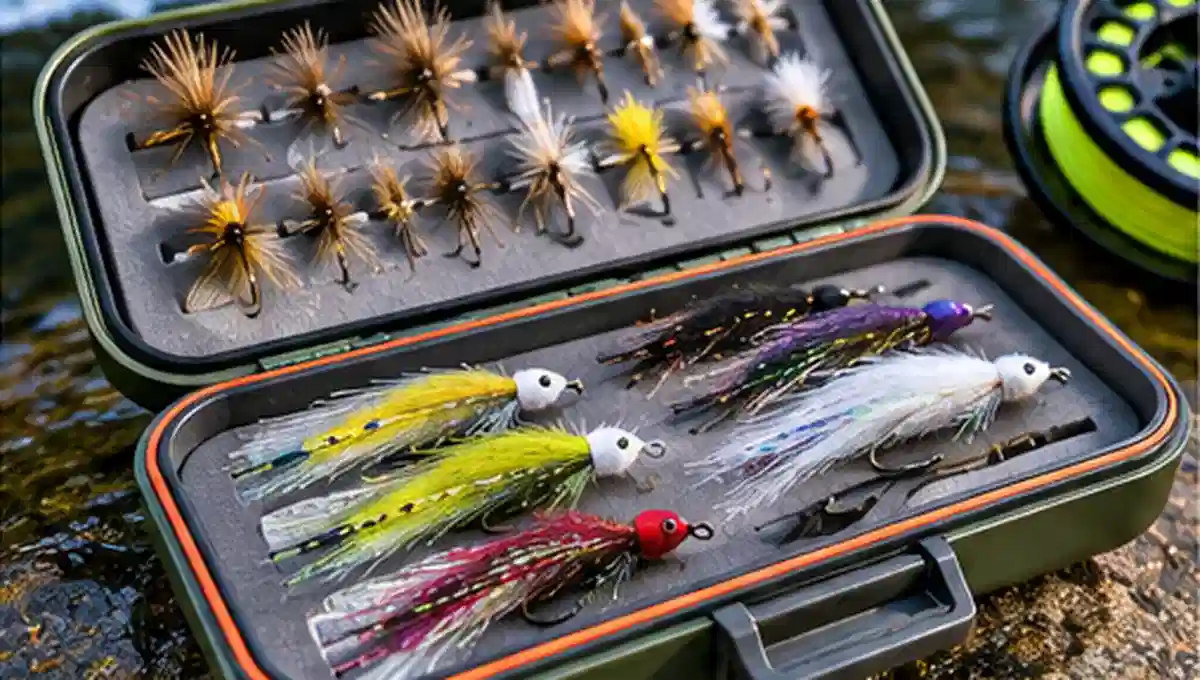
📦 Allow space for bigger flies. ALICHINO Two-Sided Waterproof Fly Box for Nymphs and Streamers — This foam-insert box is an alternative when you carry larger subsurface patterns. Compare its listed outside size and internal height with your streamers and pack before ordering. 👀 Check Streamer Fly Box ➜
A streamer fly box needs room for longer hooks, tails, bulky materials, and sometimes weighted heads. Avoid jamming articulated flies tightly beside delicate patterns. Consider an intentionally deeper compartment box or a larger dedicated streamer format. Measure total fly length, not only the hook shank.
Do not interpret a manufacturer claim such as “up to 91 flies” as a promise that 91 of your own flies will fit. Capacities usually depend on how the retention system is laid out and how much room each fly occupies.
How to Compare a Waterproof Fly Fishing Tackle Box
A waterproof tackle box should be judged by its actual lid seal and closure specification, not appearance. Fishpond describes a waterproof gasket and latchless closure on certain Pescador models, while its different models vary by insert, dimensions, and capacity. Check the exact model before treating those claims as transferable.
💧 Compare a gasketed design. fishpond Tacky Pescador Fly Box — Burnt Orange — The Pescador design offers a gasketed, latchless fly-storage option for anglers who want more water protection. Check the exact box size and closure condition; a waterproof claim is not a reason to leave damp flies sealed inside. 👀 See Pescador Fly Box ➜
Waterproof or water-resistant marketing claims are not automatically submersion ratings. Inspect the gasket, remove grit, close the lid fully, and dry wet flies before storing them for long periods. Even a sealed box can trap moisture introduced with damp hooks. No fly box should be assumed to prevent rust forever.
| Verified model example | Published exterior dimensions | Retention and configuration | Key limitation |
|---|---|---|---|
| Fishpond Tacky Pescador Small, standard variant | 5 × 3.125 × 1 in | Silicone fly-retention system; waterproof closure | Different small clear/LowPro editions may have different capacities |
| Fishpond Tacky Pescador Large, standard version | 8.8 × 4.9 × 1.96 in | Silicone system; recycled plastic shell | May not fit a small chest pocket |
| Fishpond Pescador Large, Dynamic Foam SKU TPFB-L-DF-SG | 8.8 × 4.9 × 1.96 in | Recycled EVA foam; optional page compatibility | Insert is foam, not the standard silicone version |
These model examples are comparisons of stated designs, not a durability test or universal buying ranking. Dimensions are manufacturer-published exterior dimensions; always verify the specific version and its actual internal clearance.
Choosing a Fly Fishing Tackle Box That Fits Your Pack
Measure the pocket opening and the available flat space inside your vest, sling, chest pack, or waist bag. Compare both dimensions with the box including its closed lid and hinge. A box can technically fit while still being awkward to retrieve with one hand or while standing in current.
- For quick walks, one pocket fly box with a tightly chosen selection can reduce weight and searching.
- For mixed days, separate dry-fly and subsurface boxes protect delicate flies and make changes easier.
- For a boat or vehicle, reserve storage can be larger than the small day box you carry to the bank.
- For long articulated streamers, prioritize depth and anti-tangle spacing over headline fly capacity.
Test access with the same pack, clothing, and shoulder position you will actually use. A box that catches on a pocket zipper or needs two hands every time can be frustrating even if its materials are excellent.
Fly Fishing Tackle Box Organization That Saves Time
Organize your fly fishing tackle box by fishing job before grouping patterns by brand or novelty name. For example, keep shallow dry flies together, then one row for nymphs and one for heavier subsurface flies. Within a group, arrange by size or profile and maintain enough separation to avoid damaging hackle and tails.
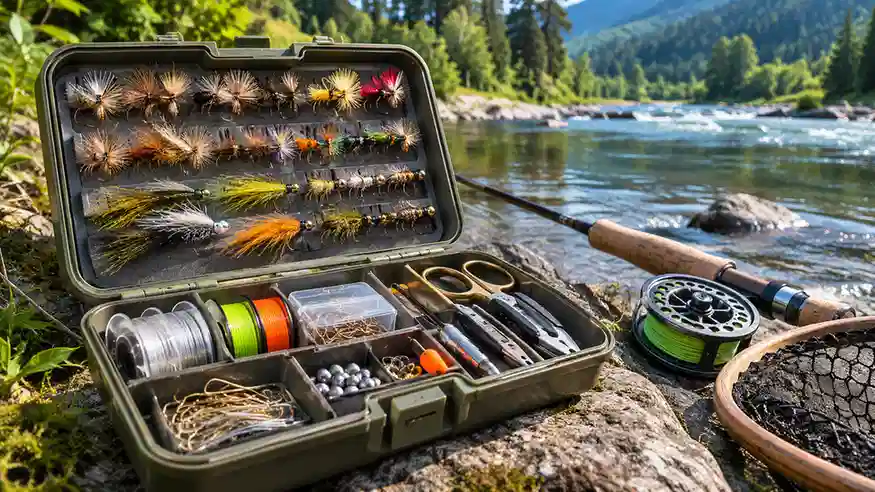
Put the patterns you actually use most where they are easiest to see. If you fish both trout and bass, a second small box may be simpler than a crowded all-purpose arrangement. Store reserve duplicates separately at home, in a vehicle, or on a boat.
After a trip, let the box air out, check for damp flies, remove crushed materials, and replace any damaged inserts when the maker offers replacements. This is a practical maintenance habit, not a guarantee against corrosion.
Fly Fishing Tackle Box FAQs and Final Decision
Should I carry one big box or several small fly boxes?
One large box simplifies inventory but may be bulky and harder to reach. Several small boxes let you separate fragile dries from heavy streamers, although carrying too many can slow down decisions. Start with one day box and add a second only when a distinct job justifies it.
Is a silicone fly box better than a foam fly box?
The better fit depends on actual fly size, insert layout, and replacement needs. Choose from manufacturer-confirmed retention features and test with your own patterns rather than assuming every silicone box outperforms every foam box.
Can I use a general fishing tackle tray?
Yes, for certain bulky flies or gear kept in separate compartments. For frequently changed small flies, a dedicated slotted fly box usually makes secure individual storage and retrieval more straightforward.
The best fly fishing tackle box is the smallest design that safely accommodates your normal flies, fits your existing carry system, and provides accessible organization. Check actual model dimensions and materials before ordering; for packing accessories beyond boxes, see Fly Fishing Accessories and Fly Fishing Gear Bag.