
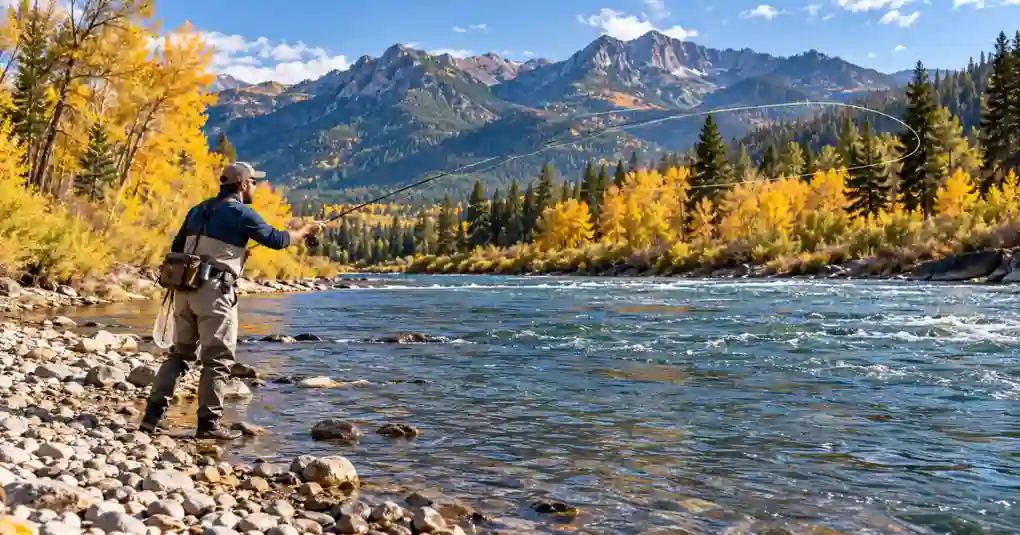
Fly Fishing Missoula Montana: Best Rivers and Where to Start
Fly fishing Missoula Montana means choosing among four very different trout waters, not simply driving to whichever river has the most familiar name. The Bitterroot offers broad valley water and a well-known spring stonefly opportunity. The Blackfoot is a rocky, often faster river where a guided float can make sense. The Clark Fork provides bigger water and convenient regional options, while Rock Creek is especially appealing to anglers who want to explore on foot.
For your first trip, the right river depends on how you want to fish, when you can visit, and where you can enter the water legally. This guide compares the four fisheries, explains seasonal runoff and summer restrictions, and shows how to decide between a do-it-yourself outing and a licensed guide. Regulations and emergency restrictions were checked in October 2026; recheck Montana Fish, Wildlife & Parks (FWP) before every trip.
Table of Contents
Fly Fishing Missoula Montana: Which River Should You Choose?
Start with the fishing experience, not a catch-size promise. For fly fishing Missoula Montana, Rock Creek is an obvious river to investigate if you prefer smaller water and walk-and-wade fishing. The Blackfoot is a strong candidate for a scenic guided float, while the Bitterroot offers a mix of valley sections and familiar spring insect activity. The Clark Fork suits anglers interested in a larger river with multiple distinct reaches. None is automatically the easiest or safest on a particular day.
| River | Character | Start here if you want | First thing to verify |
|---|---|---|---|
| Bitterroot | Broad valley river with changing channels and side water | A varied dry-fly trip, possible wading or guided floating | Runoff, access, flow, and section rules |
| Blackfoot | Rocky river with canyon and swift-water sections | A scenic, properly guided float | Current boating restrictions, river flow, and launch conditions |
| Clark Fork | Large river running through Missoula and beyond | Bigger-water fishing and flexible regional planning | Which reach, legal entry, and safe boating conditions |
| Rock Creek | Smaller canyon stream with freestone riffles | Independent wade-focused fishing | Road conditions and seasonal vessel-fishing rules |
Use the regional map to understand where the waters lie around Missoula. It is not a map of approved parking, public fishing access, safe wading, or legal boat launches. For each river, select a current FWP Fishing Access Site or another lawfully accessible entry point before setting out.
The biggest planning mistake in fly fishing Missoula Montana is treating all four rivers as interchangeable. One may be high and cloudy after snowmelt while another offers a more workable reach. A lower river can be warmer in August than an upstream tributary. A river that is excellent for experienced boaters may be a poor choice for a novice wading alone.
The Bitterroot River: Spring Dry-Fly Fishing
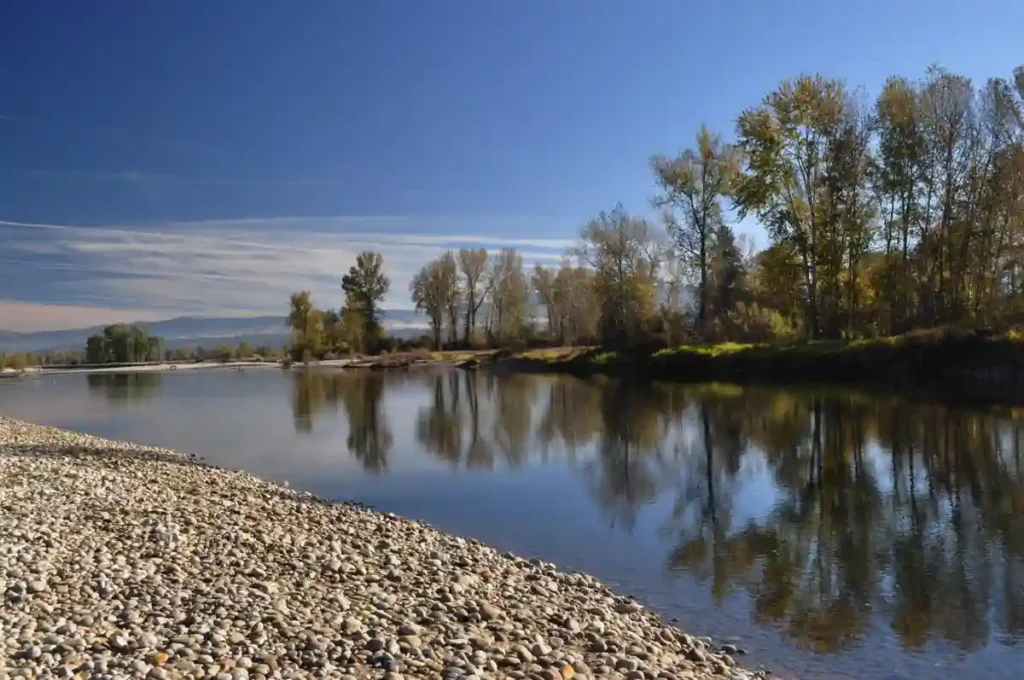
For fly fishing Missoula Montana on the Bitterroot, begin by identifying the section of river you can lawfully reach. The Bitterroot flows through a broad valley south of Missoula before joining the Clark Fork. Its changing channels, gravel bars, slower margins, and faster runs give anglers different types of trout habitat. That variety is useful for a trip, but it also makes it important to identify which section you intend to fish. A report from one gauge or access point does not describe the entire river.
Skwalas and the Spring Decision
The Bitterroot is associated with spring Skwala stoneflies and rising trout. Local shops often discuss March and April as desirable periods, but an insect hatch is not proof that your selected water is legally open. Montana’s Western District has a general stream season beginning on the third Saturday in May, with water-specific exceptions; read the current Bitterroot entries before planning any early-season fishing. Water temperature, clarity, and flow can also shift the practical hatch window.
For fly fishing Missoula Montana in spring, avoid booking a week solely because a historic hatch chart shows Skwalas. Ask about actual river conditions, check the legal exception for your section, and keep other activities available if a storm makes the river unfishable.
Wading vs Floating the Bitterroot
Depending on the reach and conditions, the Bitterroot can offer bank and wade opportunities or a guided drift-boat day. Gravel bars may look inviting, but side channels can deepen suddenly, and spring flows can carry branches and debris. Do not cross a strong channel to reach a rising fish. Use a verified public site and assess whether the footing and flow are within your skill.
A guide can be useful when you want to cover several runs without managing shuttles and rowing. DIY anglers can focus on one safely accessible stretch instead of chasing every hatch report. During low summer flows, pay attention to warm water and fish-handling stress. Early and late sessions are not an excuse to disregard an active emergency closure.
The Blackfoot River: Canyon Floats and Wild Trout
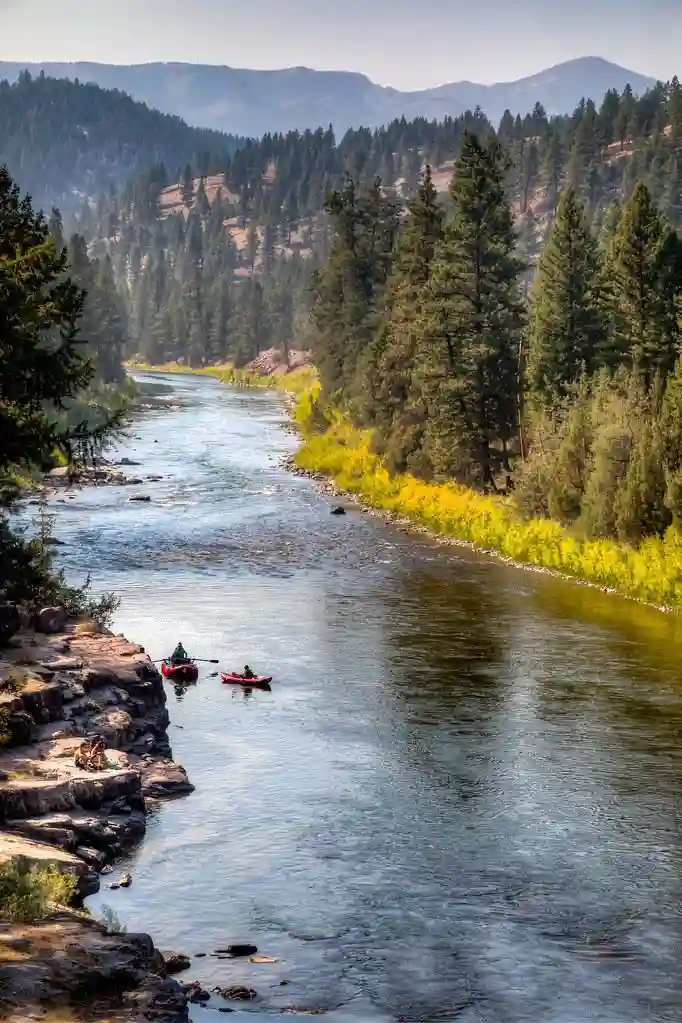
The Blackfoot joins the Clark Fork east of Missoula and features boulders, riffles, runs, and sections that demand respect from boaters. Fly fishing Missoula Montana on the Blackfoot often calls for more careful float planning than a relaxed bank session on sheltered water. For a visitor interested in a scenic river day, it is an attractive candidate, but the experience depends heavily on the stretch and flow. A river photograph does not tell you whether the reach is suitable for an inexperienced rower.
Hatches and Seasonal Character
Local reports commonly describe early-season nymphing and streamer opportunities, with larger stonefly activity after snowmelt begins to settle. Salmonflies and golden stoneflies attract attention, followed by summer terrestrials and fall mayflies or October caddis. Those are patterns worth investigating, not fixed dates that guarantee feeding fish. Higher flows can move a hatch or make presentation harder even when insects are emerging.
For fly fishing Missoula Montana on the Blackfoot, think of seasonal recommendations as questions to ask a guide or local shop: Is this reach clear enough? Are fish holding near the banks or in deeper runs? Is the water temperature appropriate for fishing and release?
Guided Floats and Access Limits
A guided float is often a more sensible introduction to technical Blackfoot water than renting a boat without local knowledge. Confirm that the operator is licensed, has the relevant commercial river permissions, and is using a reach open to the proposed activity. Montana FWP’s Blackfoot recreation program includes additional requirements for certain commercial uses and for camping within its managed river corridor.
On October 23, 2026, it would be especially unwise to rely on a September report alone for a construction-related float restriction. Check the latest FWP notices and the guide’s intended put-in and take-out shortly before fishing. Even on an otherwise open river, a legal launch does not ensure the water is safe for every party.
Fly Fishing Missoula Montana: Clark Fork River
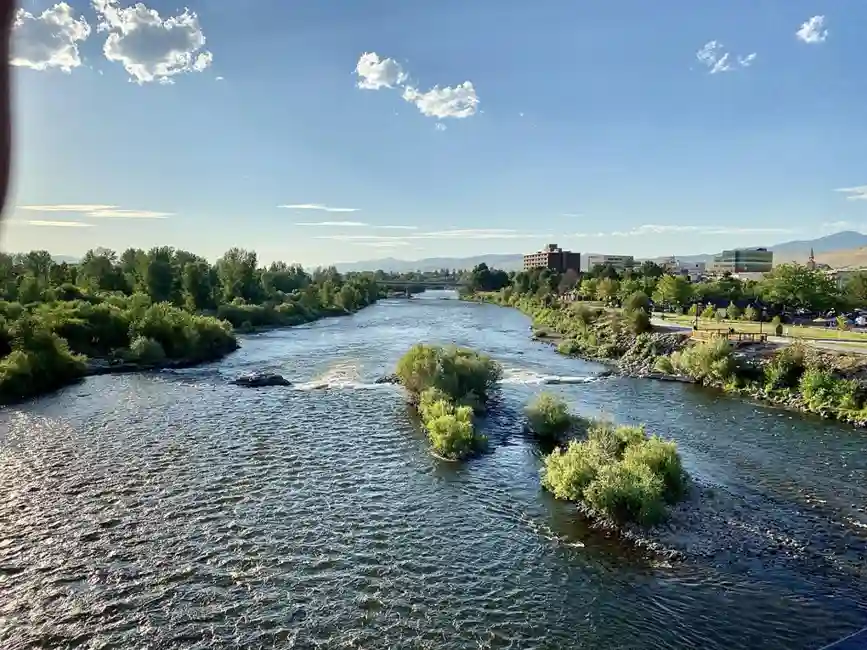
Fly fishing Missoula Montana on the Clark Fork offers a convenient city base, but downtown proximity does not mean every bank is publicly accessible. The Clark Fork runs through Missoula and beyond. The river has multiple reaches with different current, bank development, structure, and tributary influence. You can use the city as a base, yet choosing a practical fishing reach still requires a separate access and safety decision.
Downtown and Outlying Reaches
The river through town is visible and convenient for orientation. Access, however, must be from a lawful entry point such as a designated fishing access area or another valid public right-of-way. Outside the city, the channel can be wider and feel more like classic large-river trout fishing. Public access sites and guide launch plans should be checked for the precise reach being considered.
The Clark Fork can be a good alternative for someone who wants broader water or a guided float, but its size is a drawback for anglers who cannot safely read currents or manage a boat. A short, well-presented cast from a safe bank may be more useful than a long cast into an unfamiliar main channel.
Timing and Presentation
As snowmelt rises, the Clark Fork can become fast or discolored. During more settled periods, caddis, mayflies, and terrestrials may help guide fly choice. Cooler fall conditions can bring blue-winged olives and streamer opportunities. Match the water and actual hatch rather than assuming the same fly works across every reach.
For fly fishing Missoula Montana with the Clark Fork as your main target, compare river gauges upstream and downstream of Missoula instead of looking at one flow reading in isolation. Also confirm whether an emergency heat-related restriction applies to your reach. An upstream restriction does not automatically establish the rule downstream, or vice versa.
Fly Fishing Missoula Montana: Rock Creek Wade Fishing
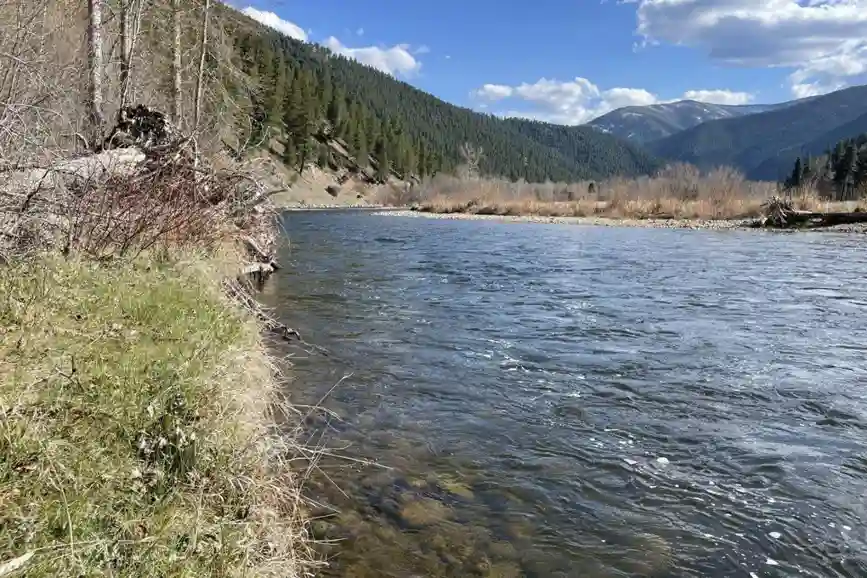
Rock Creek enters the Clark Fork east of Missoula and offers a smaller, more intimate river experience. For visitors who enjoy moving slowly through riffles, pools, and pocket water, it is often the first local stream worth researching. Fly fishing Missoula Montana on Rock Creek is especially appealing when you want to study small changes in current and make controlled casts rather than cover miles from a drift boat.
Wade Water, Not an Automatic Easy River
Rock Creek is narrower than the region’s big rivers, but boulders, slick rocks, steep banks, and fast flows can still make wading hazardous. In high water, stay out of channels that are too deep or strong to cross safely. The road through the corridor can be rough or affected by weather, so a mapped pull-off is not enough to confirm a reliable access plan.
Use the FWP access map to identify public sites and verify on-site signs. Walk downstream or upstream only where legal access allows. On busy days, give other anglers room and be prepared to try another legally accessible location rather than crowding a run.
A Critical Boat-Fishing Restriction
As reflected in current fall 2026 fishing guidance, fishing from a boat or vessel on Rock Creek is prohibited July 1 through November 30. That wording matters: a closure to fishing from boats is not automatically the same as a closure to every form of floating or a full closure to fishing. Montana distinguishes these categories in its regulatory definitions. Check the official water-specific rules before planning a float, and don’t interpret the restriction as permission to launch anywhere.
The wade-fishing character can be a major reason to choose Rock Creek in summer and fall. At the same time, angling pressure, cold spring water, and changing flows may limit how much of the creek is practical for a beginner. Concentrate on safe entries and a small number of suitable runs, not a long itinerary of unverified roadside stops.
Hatches and Simple Tackle
For fly fishing Missoula Montana with Rock Creek as your primary stream, choose legal access and suitable water before choosing a hatch pattern. Rock Creek is known for stonefly activity around early summer, followed by caddis, smaller mayflies, and late-season patterns. A versatile 4- or 5-weight trout outfit can suit many conditions, with heavier equipment considered if fly size or conditions require it. Carry a small selection of dry flies, nymphs, and streamers appropriate to what you observe. The appropriate rig remains subject to any water-specific regulations.
Fly Fishing Missoula Montana: Seasons, Runoff, and Hatches
Seasonal planning is central to fly fishing Missoula Montana because a productive hatch window, fishable flow, and legal opening are three separate conditions. The region’s freestone rivers change with snowpack, rain, summer heat, and shorter autumn days. A fishing report is a dated snapshot, not a reservation of good conditions for a future week.
| Period | Why anglers consider it | Principal uncertainty | Practical response |
|---|---|---|---|
| March–April | Possible Skwala and early mayfly activity | Water-specific early-season legality, cold or rising flows | Verify the exact open section and flexible dates |
| May–June | Increasing insect activity, including stoneflies | Snowmelt runoff and high water | Check gauges and keep a guided or alternate-water plan |
| July–August | Caddis, mayflies, terrestrials and accessible summer days | Warm water, low flows, hoot-owl restrictions | Check FWP restrictions daily and avoid stressing trout |
| September–October | Cooler conditions, fall mayflies and streamers | Variable storms, cold mornings, changing flows | Bring layers and remain flexible |
| November and winter | Select legal opportunities for experienced anglers | Freezing conditions and section-specific closures | Read current regulations rather than assuming year-round access |
Spring: Verify the Exception Before the Hatch
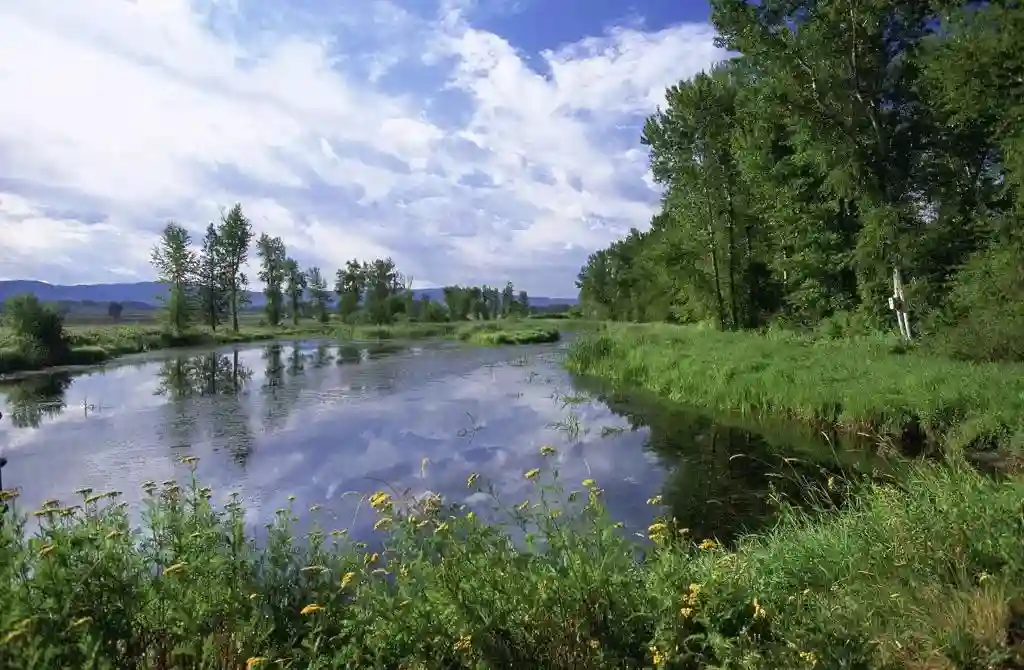
Spring Skwala talk can create demand for Missoula trips before the general Western District stream opener. This does not make all water open in March. Montana specifically instructs anglers to read the district regulations and then check Exceptions to Standard Regulations for the selected stream. For fly fishing Missoula Montana during early spring, an accurately identified river section is more important than an enticing calendar date.
Runoff: Expect Rivers to Change
Spring snowmelt often produces fast, discolored water and unsafe wading. An upstream section may settle at a different time from a lower reach; even the same river can change quickly after rain. If visibility, debris, or flow makes the planned outing poor, accept that another legal water or a non-fishing day may be the better choice. Do not treat a boat trip as a guaranteed workaround for dangerous flow.
Summer: Watch Temperature and Time-of-Day Rules
Summer fly fishing Missoula Montana plans need a daily water-temperature and closure check. Montana uses hoot-owl restrictions to protect fish during certain warm-water conditions. Where issued, they prohibit fishing from 2 p.m. until midnight in the specified stretch. In August 2026, restrictions on portions of the lower Bitterroot and upper Clark Fork were lifted after conditions improved; that change demonstrates why neither an old closure nor an old reopening should be applied to a later week without checking.
Even where angling remains legal, avoid unnecessary fish handling in warm water. Land fish promptly with suitable tackle, keep them wet, and do not insist on a photo if handling stress is becoming a problem.
Fall: A Different Kind of Trip
September and October can offer cooler water, fewer summer visitors in some areas, and opportunities involving mayflies, caddis, and streamers. However, cold fronts and early snow can alter road conditions, and a short-day itinerary leaves less daylight to recover from delays. For a fall fly fishing Missoula Montana trip, build in time for the drive back and check conditions near the specific river rather than using the downtown forecast alone.
Fly Fishing Missoula Montana: Wading, Floats, and Legal Access
Montana’s Stream Access Law allows public recreational use of qualifying rivers and streams up to the ordinary high-water mark. It does not create a general right to enter posted private land or cross private property to reach the water. For fly fishing Missoula Montana, understanding that distinction is as important as learning where trout hold.
Find a Lawful Entry Point First
Use Montana FWP’s Fishing Access Site program and FishMT Explore to find public access information. An access site may have its own rules, seasonal closures, site fees, or boating limitations. Bridge and road right-of-way access may be possible in certain circumstances under Montana law, but it is not an invitation to park unsafely or cross any adjoining private parcel. Respect signs and use recognized legal entry rather than relying on a casual online pin.
After entering lawfully, remaining within the public recreational-use area does not grant the right to walk across fields, camp wherever you like, or use adjacent facilities. Be courteous around fences, livestock, other anglers, and landowners. A mapped river and an accessible river are not the same thing.
Wading Requires Its Own Safety Check
Wade only when you can assess footing, depth, and current. Use a wading belt and appropriate boots; consider a staff where needed. Cold water, submerged logs, drop-offs, and unpredictable flows create real risk. If a river is too strong, turn around. A guide or a boat does not remove the need to understand the water.
A narrow creek may be more manageable for a careful beginner than a big main stem, but neither is automatically safe. For tight banks and overhanging vegetation, our guide to fly fishing casting techniques can help explain why a controlled roll cast may be more practical than forcing a long overhead back cast.
Floating Means More Than Finding a Ramp
For fly fishing Missoula Montana by boat, confirm whether your desired reach permits the activity, whether a legal put-in and take-out exist, and whether the group has suitable boats and rescue skills. The Blackfoot and other local rivers have sections with commercial-use or boating restrictions. Fishing from a vessel and floating through a river may be treated differently under particular rules. Verify the exact activity and reach; never infer permission from the appearance of a boat launch.
Fly Fishing Missoula Montana: Guides and Trip Planning
A guide can be valuable for a first fly fishing Missoula Montana visit because the decision involves four different rivers, variable flow, legal access, and unfamiliar water. But a guided day is not automatically necessary for someone with good wading skills who has confirmed a manageable public access point.
When a Guide Is Worth Considering
A guided float can make sense when your preferred water is large or technically demanding, when rowing and shuttles would consume the trip, or when you want focused instruction. A walk-and-wade guide may be more suitable if casting and reading smaller water are your priorities. Ask the guide which activity the booking actually includes; guided fishing is not always synonymous with fishing from a drift boat.
How to Evaluate a Missoula Guide
Before paying a deposit, ask for the outfitter’s name and Montana license number, then verify current status through the Montana Board of Outfitters’ license lookup. Confirm the intended river and any required commercial-use authorization, guide-to-client ratio, equipment and transportation provided, trip duration, insurance-related questions, and cancellation policy. An outfitter that advertises trips on the Blackfoot should still be able to identify the actual legal section used on your date.
Also ask what happens during spring runoff, a heat restriction, or an access closure. The strongest answer is a clear contingency process, not a guarantee of large trout. Confirm whether fishing licenses and the required pass are included; do not assume they are. Rates, gratuities, and equipment inclusions should be stated by the provider in writing.
DIY Trip Framework
A self-directed fly fishing Missoula Montana itinerary should start with a small number of verified access options rather than a crowded driving plan. Consider booking accommodation in Missoula and choosing a river each morning based on current restrictions, flow, and your comfort level. Allow an alternate day for rain or high water. Carry your license, check emergency closures again before fishing, and learn how to reach help if your plans change.
For fly fishing Missoula Montana as part of a longer road trip, use FlyFishingScout’s best fly fishing destinations in the US to compare regional travel timing rather than assuming Montana is the only suitable stop. If your main priority changes to a different species or country, our broader best fly fishing destinations guide offers a separate starting point.
Sample Three-Day Plan
Day 1: Visit a fly shop, verify current regulations and access, and choose a conservative wading session on suitable legal water. Day 2: Take a licensed guided float or guided walk-and-wade outing matched to the conditions. Day 3: Return independently to a suitable public access area or switch rivers if weather and flow suggest a better option. This is an adaptable structure, not a claim that any particular reach will be open or fishable on those days.
Fishing Regulations, Restrictions, and River Safety
Montana’s posted 2026 fishing regulations are valid from March 1, 2026, through February 28, 2027, subject to revisions and emergency action. In the Western District, the general river-and-stream season begins on the third Saturday in May and ends November 30, unless the specific water is listed under an exception. Many popular Missoula fisheries require checking those exceptions, so a general district date should never be the last step in your research.
License and AIS Requirements
Anglers age 12 and older generally need a Montana fishing license. Most anglers also need a Conservation License and the Angler Aquatic Invasive Species Prevention Pass (AISPP); some bundled license products include particular elements, and children age 11 or younger are exempt from the listed purchase requirements but must still follow fishing regulations. Check the current Montana FWP licensing page for your residency and license duration.
Emergency Rules Are Reach-Specific
Hoot-owl rules, full fishing closures, construction restrictions, and restrictions on floating or fishing from boats can affect different stretches. As checked October 23, 2026, FWP’s current emergency waterbody page did not list the four Missoula-area rivers under an active drought-related angling closure. That is a time-stamped observation, not proof of next summer’s status. Check the appropriate state page immediately before every fishing day.
Respect Fish and Other River Users
Use appropriate tackle to avoid exhausting trout, release fish efficiently when required or chosen, and keep them in water where possible. Do not disturb spawning fish or enter closed areas. Large river corridors also carry drift boats, paddlers, wildlife, and landowners; allow space and avoid occupying narrow launch ramps longer than necessary.
For a first fly fishing Missoula Montana trip, safe, legal, and repeatable fishing is a better goal than an exact catch count. Carry weather layers, water, communication, a realistic return plan, and an alternative activity if conditions become unsuitable.
Fly Fishing Missoula Montana: FAQs and Trip Checklist
Which River Should a Beginner Start With?
If you prefer walking and making short casts, research a manageable, legal Rock Creek access point first. If you want coaching and a float, consider a guided Blackfoot or Bitterroot outing depending on water conditions. The correct answer changes with flow, weather, access, and your experience.
What Is the Best Month for Fly Fishing Near Missoula?
There is no universal month. Spring Skwala fishing can be attractive on suitable legally open sections, early summer can be affected by runoff, midsummer may bring warm-water restrictions, and fall can provide cooler conditions. Confirm both the current rules and the particular river’s flow before traveling.
Can I Fish Rock Creek From a Boat in Summer?
Current 2026 guidance prohibits fishing from boats or vessels on Rock Creek from July 1 through November 30. That is a specific fishing restriction, not a statement that all boating or wading is prohibited. Read the official rules before planning any float.
Is the Clark Fork Easy to Access From Downtown?
It passes through Missoula, but city proximity is not permission to enter every bank. Find a lawful public entry, respect property boundaries, and consider current, depth, and hazards before wading.
Do I Need a Guide for Fly Fishing in Missoula?
Not necessarily. A guide may help with unfamiliar reaches, safe float logistics, and instruction. Skilled anglers can fish independently where legal access and conditions allow. Verify the outfitter’s current license if you book a guided trip.
What Licenses Do Visitors Need?
Anglers 12 and older generally need a fishing license, and most need the Conservation License and AIS Prevention Pass as applicable. Check Montana FWP for current residency, age, and package details; a license does not override seasonal or emergency closures.
First-Trip Checklist
- Choose between a wading-focused day and a properly guided float.
- Compare the Bitterroot, Blackfoot, Clark Fork, and Rock Creek by your preferred style.
- Check the current district regulations and named-river exceptions.
- Review emergency waterbody and access-site restrictions the day you fish.
- Locate a lawful entry and evaluate water conditions before wading or launching.
- Verify guide credentials, inclusions, and cancellation terms before booking.
- Carry a valid license and required pass, weather gear, and a safe return plan.
Fly fishing Missoula Montana becomes much easier to plan when you match river, season, fishing style, and lawful access. Pick one primary river for your preferred experience, keep another legal option available, and make your final choice using current water conditions rather than an old fishing report.
References
- Montana Fish, Wildlife & Parks — 2026 Fishing Regulations
- Montana Fish, Wildlife & Parks — Fishing Licenses & Permits
- Montana Fish, Wildlife & Parks — Stream Access in Montana
- Montana Fish, Wildlife & Parks — Fishing Access Sites
- Montana Fish, Wildlife & Parks — Current Waterbody Restrictions
- Montana Fish, Wildlife & Parks — Blackfoot River Recreation
- Montana Fish, Wildlife & Parks — Drought and Hoot-Owl Restrictions
- Montana Board of Outfitters — License Lookup and Outfitter Regulation
- Destination Missoula — Fishing
- The Missoulian Angler — Montana Fly Fishing Seasons
- Missoula Montana Fly Fishing — Blackfoot River Fly Fishing and Seasons
- Orvis Fishing Reports — Rock Creek, Montana
- eRegulations — Montana General Fishing Regulations, Boat and Float Definitions
- Montana FWP — Fish Early: Hoot-Owl Restrictions, August 2026
- The Outdoor Wire — Hoot-Owl Restrictions Lifted on Some Montana Streams, August 2026