
Fly Fishing Clothing: What to Wear in Every Season
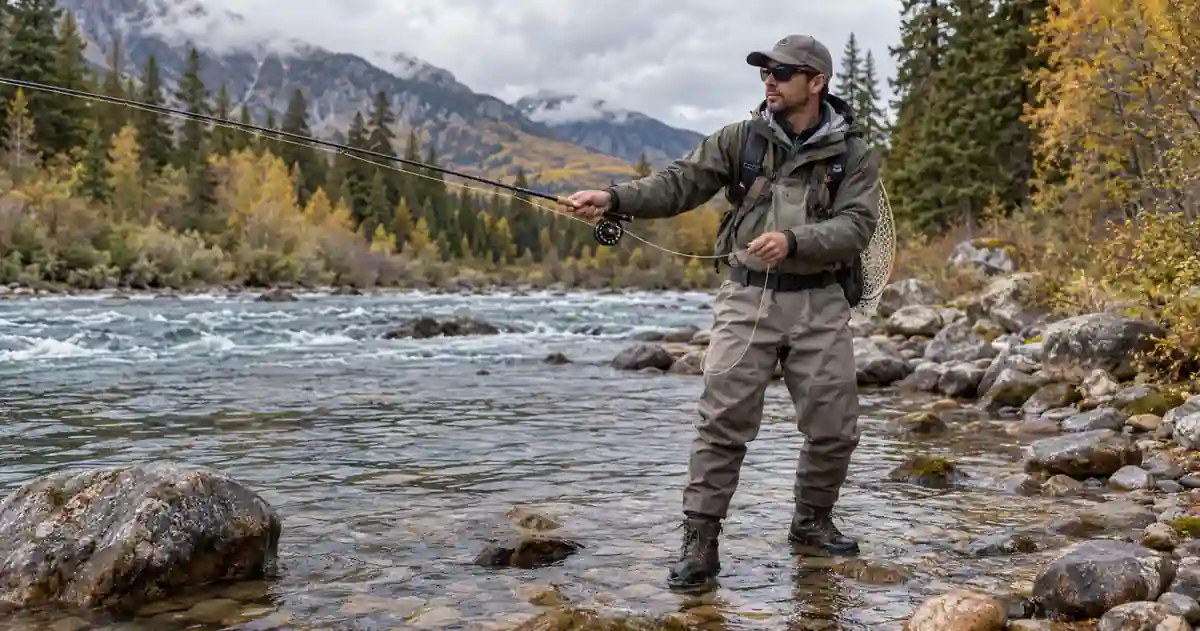
Fly fishing clothing should help you manage three things at the same time: water, weather, and movement. For most anglers, the best approach is not to buy a complete fishing-specific wardrobe. Start with a moisture-managing base layer, add insulation when needed, use a waterproof shell for rain and wind, and choose waders or wet-wading clothing according to the water.
The most useful way to plan fly fishing clothing is:
Water → Weather → Activity → Layers → Protection
That order matters because a warm afternoon does not guarantee warm water. A summer tailwater can still be cold enough that waders and proper underlayers make sense, while a shallow warm stream may be comfortable for wet wading.
Dress for the conditions you will actually encounter rather than the season name alone.
Table of Contents
Fly Fishing Clothing: Quick Answer
For warm summer fishing, wear lightweight quick-drying clothing, a long-sleeve sun shirt or hoodie, a hat, polarized sunglasses, and suitable wet-wading or wader layers.
In spring and fall, add a moisture-wicking base layer, light insulation, and a waterproof shell.
In winter, use warmer base and mid layers under breathable waders and protect your hands, head, and feet without creating excessive bulk.
| Conditions | Base Layer | Insulation | Outer Layer | Lower Body |
|---|---|---|---|---|
| Warm summer | Lightweight quick-dry layer | Usually minimal | Packable shell if needed | Quick-dry pants or wet-wading setup |
| Variable spring | Synthetic or wool base | Light fleece | Waterproof shell | Waders when water is cold |
| Cool fall | Moisture-managing base | Fleece or light insulation | Rain/wind shell | Waders with suitable underlayers |
| Winter | Thermal base | Warm mid layer | Waterproof/wind-resistant shell | Waders with insulating lower layers |
If you are still learning which equipment is clothing and which equipment is part of the fishing system, start with what fly fishing is and the basic gear you need.
How to Build a Fly Fishing Clothing Layering System
A useful layering system has separate jobs.
The base layer manages moisture, the mid layer provides insulation, and the outer layer blocks rain and wind. Waders then add a water barrier for your lower body when conditions require them.
Base Layer
The base layer sits closest to your skin. Its main job is to move moisture away from the body and dry reasonably quickly.
Common options include:
- Polyester and other synthetic performance fabrics
- Merino wool
- Wool/synthetic blends
For cold or wet conditions, cotton is a poor base-layer choice because it holds moisture and can leave you cold and clammy.
A base layer should fit close enough to manage moisture but should not restrict casting, walking, or kneeling.
Mid Layer
The mid layer adds warmth.
Useful options include:
- Fleece
- Lightweight synthetic insulation
- Heavier thermal layers in colder conditions
Choose insulation according to the temperature and your activity level.
A steep hike to the river can make a heavy mid layer feel excessive, while standing nearly motionless in cold water can make the same layer valuable later.
Carry a removable layer when conditions are likely to change.
Outer Layer
The outer layer protects against rain and wind.
A waterproof shell is not the same thing as an insulating jacket. A thin shell may keep rain and wind out while providing very little warmth by itself.
For variable weather, that separation is useful because you can add or remove insulation without giving up weather protection.
Adjust for Activity
Your body produces much more heat while hiking, rowing, climbing a bank, or covering water quickly than while standing in one run.
A flexible clothing system lets you remove a layer before a long walk and put it back on when you stop moving.
Avoid packing so many bulky layers under waders that your movement becomes restricted.
Fly Fishing Clothing for Spring
Spring fly fishing clothing should handle cold water, changing air temperatures, wind, and rain.
A practical system may include:
- Lightweight or midweight moisture-wicking base layer
- Light fleece or similar insulating layer
- Waterproof shell
- Breathable waders when the water is cold
- Wool or synthetic socks
- Hat
- Polarized sunglasses
Spring mornings can feel much colder than afternoons. Instead of starting with one extremely heavy garment, use layers you can remove as the day warms.
Water temperature deserves special attention. Snowmelt, tailwaters, and early-season rivers can remain cold even when the air feels pleasant.
If you will be wading, check the weather and current water conditions before leaving home. High spring flows can also make water that is normally manageable much more difficult to enter safely.
Fly Fishing Clothing for Summer
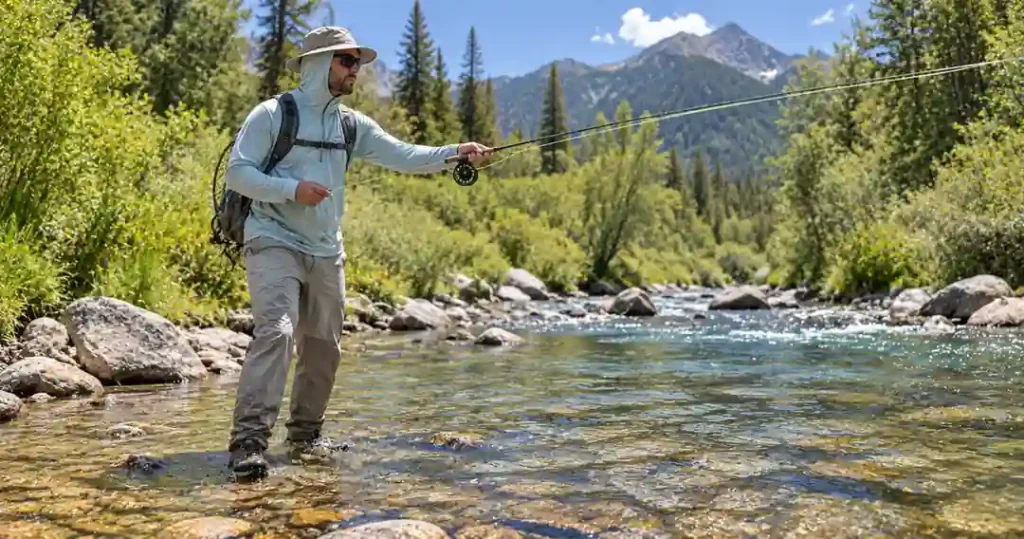
Summer layers should emphasize sun protection, ventilation, quick drying, and freedom of movement.
A practical warm-weather outfit can include:
- Lightweight long-sleeve sun shirt or hoodie
- Quick-drying pants
- Brimmed hat or cap
- Polarized sunglasses
- Lightweight socks
- Appropriate wading footwear
- Packable rain shell when storms are possible
Long sleeves can be more useful than bare arms during long sunny days because they provide continuous coverage without requiring you to reapply protection to the covered skin.
A current example is the Simms SolarFlex Hoody. The manufacturer rates the current version UPF 50+ and designs it with hood and hand coverage for hot-weather fishing.
That makes it a useful example of what fishing-specific sun clothing can add, but you do not need this exact product if you already own lightweight clothing with verified sun protection.
Wet Wading in Summer
Wet wading can be comfortable when the water and weather are genuinely warm enough.
That does not mean shorts and sandals are always ideal. Quick-drying pants can add protection from:
- Sun
- Brush
- Insects
- Scrapes
Use footwear that provides the traction and support needed for the river bottom.
Do not decide to wet wade based only on the air temperature. Water may remain cold even during a hot afternoon.
Fly Fishing Clothing for Fall
Fall layers should be easy to adjust through large temperature changes.
A cold morning can become a comfortable afternoon, then cool quickly near sunset.
A versatile system might include:
- Moisture-wicking base layer
- Light fleece
- Packable insulating layer when needed
- Waterproof shell
- Breathable waders
- Wool or synthetic socks
- Light gloves
- Warm hat in colder conditions
Keep one dry layer protected inside your pack or vehicle when practical.
Fall is also a good time to avoid overcommitting to heavy insulation. If you hike a long distance in full winter layers, sweat can become a problem before you ever reach the water.
Build the system so you can vent, remove, and replace layers throughout the day.
Fly Fishing Clothing for Winter
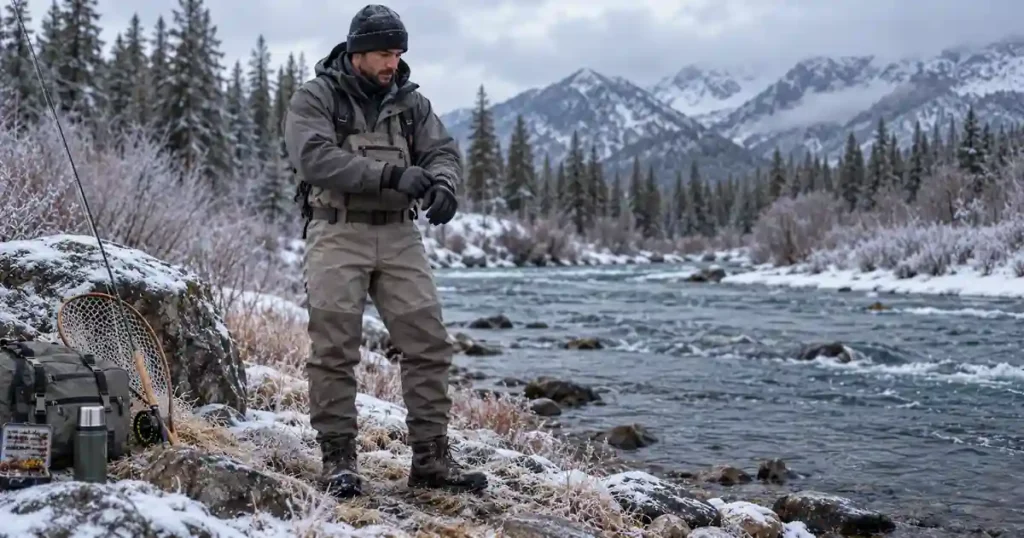
Winter layers need to manage cold air, cold water, wind, and moisture without making you so bulky that casting and wading become difficult.
A typical system may include:
- Moisture-managing thermal base layer
- Fleece or synthetic insulating mid layer
- Waterproof and wind-resistant shell
- Breathable waders
- Insulating lower-body layer
- Warm socks
- Beanie
- Gloves that still allow reasonable line control
Base and Mid Layers
For a synthetic base-layer example, the current Patagonia Capilene Midweight Crewneck uses 100% recycled polyester fabric with a wicking finish and a low-bulk design intended for layering.
The reason to consider this type of product is the function, not the logo:
- Moisture management
- Low bulk
- Layering compatibility
- Enough warmth for the conditions
Merino or other suitable wool-based layers can also work well.
Keep Your Feet From Becoming Too Tight
Adding more socks is not always better.
If thick socks make the stockingfoot bootie and wading boot too tight, comfort and circulation can suffer.
Choose enough insulation for the conditions while leaving your feet room to move.
Protect Hands and Head
A warm hat adds useful coverage with little bulk.
Gloves are more complicated because anglers still need to manage fly line, knots, and hooks. Choose a system that balances warmth with dexterity and carry a dry spare pair when conditions justify it.
Winter fishing also raises the consequences of an unexpected swim or deep wade.
Check:
- Weather
- Water temperature
- River level
- Current
- Access
before fishing, and do not treat ordinary winter clothing as protection for unsafe immersion.
Fly Fishing Clothing for Rain and Wind
Rain and wind can turn a mild fishing day uncomfortable quickly.
The most useful fly fishing clothing for wet weather combines a waterproof shell with whatever insulation you need underneath.
Standard Rain Shell vs. Wading Jacket
A general outdoor rain shell can work perfectly well for many beginners.
A fishing-specific wading jacket becomes more useful when you regularly fish in sustained rain or deeper water because it may provide:
- Shorter cut that stays higher above the water
- Higher storage pockets
- Cuffs designed to limit water entry
- Hood adjustment
- Casting-oriented articulation
The current Simms G3 Guide Wading Jacket is a clear premium example.
The 2026 version uses a three-layer GORE-TEX shell, a hem that ends around the waist, higher hand pockets for wading, an adjustable storm hood, and articulated construction intended to preserve casting movement.
Those are useful fishing-specific features, but they come at a premium price.
A beginner who fishes only occasionally in rain may get better value from a waterproof outdoor shell already in the closet.
Keep Rain Protection Accessible
A perfect rain jacket at the bottom of a packed car is useless when a storm reaches the river.
If rain is plausible, keep the shell in your fishing pack, boat, or another quickly accessible location.
What to Wear Under Waders
What you wear under waders can matter as much as the waders themselves.
Most uninsulated breathable waders are primarily a barrier between you and the water. They are not a complete cold-weather insulation system.
For warmer conditions, use a lightweight moisture-managing layer under the waders rather than bare skin or heavy cotton pants.
For colder conditions, add low-bulk insulation.
A simple progression is:
Warm conditions: lightweight synthetic layer
Cool conditions: thermal base layer
Cold conditions: thermal base + fleece or another suitable insulating layer
Avoid jeans under breathable waders. Denim holds moisture, adds bulk, and can create unnecessary abrasion inside the wader.
If you still need the waders themselves, our guide to choosing the best fly fishing waders for your budget covers the buying decision separately.
Socks Under Stockingfoot Waders
Choose wool, synthetic, or blended socks that manage moisture.
In cold conditions, some anglers use a thin liner with a warmer outer sock.
The important part is maintaining enough room inside the bootie and wading boot.
More insulation is not helpful if the result is a painfully tight boot.
Fly Fishing Clothing for Wet Wading
Wet-wading clothing should dry quickly and protect you from the environment without holding unnecessary water.
Depending on conditions, useful pieces include:
- Quick-dry pants or shorts
- Lightweight synthetic underwear
- Wading socks or gravel guards where appropriate
- Secure wading footwear
- Sun shirt or hoodie
- Hat
- Polarized sunglasses
Long quick-drying pants are often a practical choice when the bank has brush, insects, or intense sun.
Wet wading is not the same as casual swimming. Slippery rocks, current, sudden depth changes, and cold water still require judgment.
Check the water before leaving the waders behind.
Fly Fishing Clothing for Sun Protection and Accessories
Sun protection is a functional part of your clothing system because anglers may spend hours on open water with little shade.
Sun Shirt or Hoodie
Look for:
- Long sleeves
- Comfortable ventilation
- Quick-drying fabric
- Verified UPF rating when sun protection is a major reason for buying
- Hood or collar coverage if useful
A UPF 50 fabric allows about 1/50 of the relevant UV radiation to pass through the material under the rating system, which is why a verified rating can be useful when comparing sun clothing.
Hat
A wide brim provides more coverage for the face, ears, and neck than a basic cap.
A cap can still work well when combined with a hood or neck gaiter.
Sunglasses
Choose sunglasses that block both UVA and UVB radiation.
Polarization is also especially useful for fishing because it reduces surface glare and can make underwater structure and fish easier to see.
Gloves
Sun gloves can add hand coverage in warm conditions.
In winter, insulating gloves should still let you control line and handle hooks carefully.
Many anglers use a combination of dexterity-focused gloves and a warmer backup pair.
Neck Gaiter
A neck gaiter can add sun, wind, or cold protection depending on the fabric.
It is optional rather than required fishing equipment.
Common Fly Fishing Clothing Mistakes
Your fishing clothing does not need to be expensive, but it should match the conditions.
Avoid these common mistakes.
Dressing Only for Air Temperature
Check water temperature and river conditions too, especially when wading.
Wearing Cotton as the Main Cold-Weather Layer
Cotton holds moisture and dries slowly.
Synthetic or wool-based layers are generally more practical for cold, wet fishing.
Wearing Too Many Bulky Layers Under Waders
Excess bulk can limit movement and make the entire system uncomfortable.
Assuming a Rain Shell Is an Insulating Jacket
A waterproof shell blocks weather.
Insulation underneath provides most of the warmth.
Wearing Nothing Under Breathable Waders in Hot Weather
A lightweight moisture-managing layer can be more comfortable than bare skin against the inside of the waders.
Ignoring Sun Protection
Long sleeves, a hat, sunglasses, and sunscreen on exposed skin all have a role during long sunny sessions.
Buying Fishing-Specific Clothing When You Already Own Suitable Outdoor Gear
A hiking rain shell, fleece, or base layer can often work well for fly fishing.
Buy specialized apparel when a feature solves an actual fishing problem.
Forgetting Dry Backup Clothing
A dry layer in the vehicle or a protected pack can be valuable after heavy rain, an unexpected slip, or a major temperature change.
FAQs About Fly Fishing Clothing
What Should a Beginner Wear Fly Fishing?
Start with weather-appropriate outdoor clothing that dries reasonably quickly.
Add:
- Hat
- Polarized sunglasses
- Suitable footwear
- Waterproof shell when needed
If you will wade in cold water, add breathable waders with appropriate moisture-managing layers underneath.
Do You Need Special Fly Fishing Clothes?
No.
Many hiking and outdoor layers work well for fly fishing.
Fishing-specific clothing becomes valuable when features such as a shorter wading-jacket cut, high pockets, UPF-rated hood, or casting-friendly articulation solve a real problem for you.
What Should You Wear Under Fly Fishing Waders?
Wear synthetic, wool, or wool-blend layers that manage moisture.
Use lightweight layers in warmer conditions and add low-bulk thermal insulation as the water and air get colder.
Avoid denim and other heavy cotton layers.
What Should You Wear Fly Fishing in Summer?
A summer setup usually includes:
- Lightweight long-sleeve sun shirt or hoodie
- Quick-dry pants or shorts
- Hat
- Polarized sunglasses
- Suitable footwear
- Lightweight rain shell when storms are possible
Decide between waders and wet wading according to the actual water temperature and conditions.
What Should You Wear Fly Fishing in Winter?
Use a thermal moisture-managing base layer, insulating mid layer, waterproof and wind-resistant outer shell, breathable waders, warm socks, a hat, and gloves.
Keep the system low-bulk enough for movement and check current cold-water and weather conditions before entering the river.
Is Cotton Good for Fly Fishing?
Cotton can be comfortable during dry casual use, but it is a poor choice as the main layer for cold or wet fly fishing because it holds moisture and dries slowly.
Synthetic and wool-based materials are generally more useful for moisture management and insulation.
Final Fly Fishing Clothing Takeaway
Good fly fishing clothing starts with conditions, not the calendar.
Check the water, weather, and activity level first. Then build a base layer for moisture management, add insulation when needed, and finish with rain, wind, sun, hand, head, and foot protection.
You do not need every piece to be fishing-specific. Buy specialized fly fishing clothing when the design solves a real problem—such as a wading-height rain jacket, a verified sun-protective shirt, or clothing designed to fit comfortably under waders.
Before every trip, check current weather and water conditions and adjust the system instead of relying on one permanent outfit.
Sources Used :
- National Weather Service — Cold Water Hazards and Safety — confirms that warm air does not necessarily mean warm water and advises checking water temperature and preparing for cold-water conditions.
Direct URL: https://www.weather.gov/safety/coldwater - Centers for Disease Control and Prevention — Ultraviolet Radiation — current sun-protection guidance covering clothing, hats, sunglasses, and sunscreen.
Direct URL: https://www.cdc.gov/radiation-health/features/uv-radiation.html - Centers for Disease Control and Prevention — Yellow Book — Sun Exposure in Travelers — explains UPF ratings, including that UPF 50 allows approximately 1/50 of ambient UV radiation through the fabric.
Direct URL: https://www.cdc.gov/yellow-book/hcp/environmental-hazards-risks/sun-exposure-in-travelers.html - Simms Fishing — What to Wear Under Your Waders / Wader Care — current manufacturer guidance recommending synthetic or wool layers and advising against cotton and denim under waders.
Direct URL: https://www.simmsfishing.com/pages/wader-care - Simms Fishing — Men’s SolarFlex Hoody — current UPF 50+ rating, quick-drying fabric, hood coverage, and extended hand coverage.
Direct URL: https://www.simmsfishing.com/products/ms-solarflex-hoody - Patagonia — Men’s Capilene Midweight Crewneck — current 100% recycled polyester construction, wicking finish, and low-bulk layering design.
Direct URL: https://www.patagonia.com/product/mens-capilene-midweight-crewneck/44428.html - Simms Fishing — Men’s G3 Guide Wading Jacket — current 2026 three-layer GORE-TEX construction, waist-height cut, elevated wading pockets, storm hood, and articulated casting design.
Direct URL: https://www.simmsfishing.com/products/g3-guide-jacket