
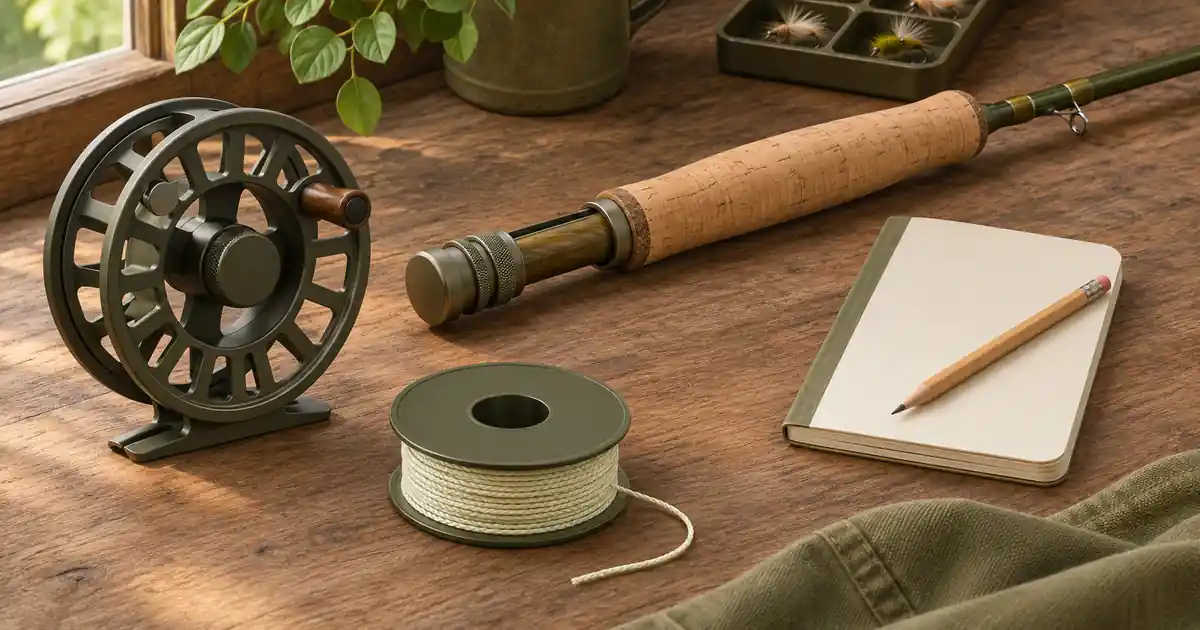
fishing fly fishing reel: Match Reel Size, Fly Line and Backing
If you searched for fishing fly fishing reel and already own a rod and line, set those two things on the table before shopping. Your rod rating gives you the first filter. The line’s exact model and profile determine which spool capacities are worth checking. Use the worksheet below to compare reels on the same assumptions, then confirm the fit with your actual equipment.
Table of Contents
Start the fishing fly fishing reel worksheet with the gear you own
Write down the rating printed on the rod blank and the fly line’s full label from its box or spool. For example, a RIO Premier Gold WF5F is a weight-forward, five-weight floating line. RIO lists a 47-foot head for that size. Record the whole model name, too. The head length is only part of the line, and lines with the same WF5F code can still occupy different amounts of spool space. If the line has lost its label, take it to a shop for identification before leaning on a chart.
If you reached this guide through a search for “fishing fly fishing reel,” start with the rod and line you already fish. A reel’s 4–6 range and the rod’s 5-weight marking describe different things. The reel range points you toward compatible line sizes. A separate capacity chart shows how much backing a specific spool can take with a given line. For broader help with reel styles and drag choices, see our fly fishing reel buyer’s guide.
Decode the capacity row for a fishing fly fishing reel
The Orvis Clearwater Large Arbor II booklet gives a useful comparison within one spool. It lists 125 yards of 20-pound Dacron with WF4, 100 yards with WF5, and 75 yards with WF6. That is a 25-yard difference between the WF5 and WF6 chart rows without changing the reel or its backing. In the “fishing fly fishing reel” worksheet, record the chart’s backing assumptions next to each figure. They are a starting point when fitting a particular coated line.
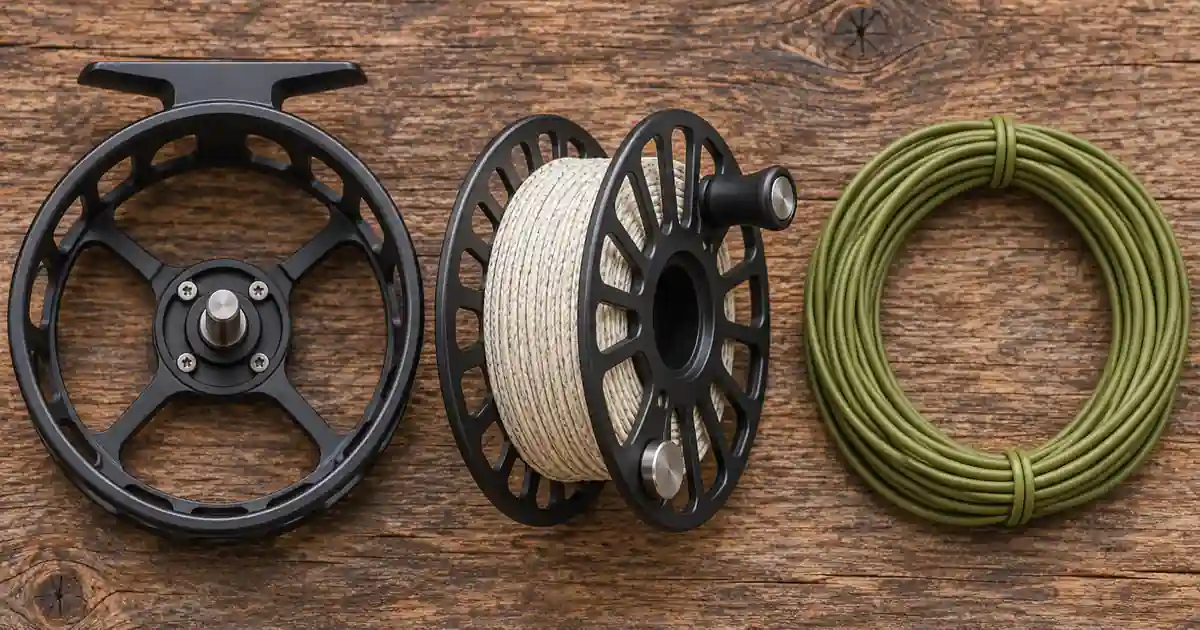
Suppose you have the 5-weight rod and Premier Gold WF5F above. Put the Clearwater II on the shortlist using the WF5 row as the reference. If you plan to use Cortland Micron White 20-pound backing, record that Cortland lists the Dacron braid at 0.015 inch in diameter. Orvis names the backing strength and material in the booklet and leaves its diameter unspecified. The Cortland figure describes the candidate backing only. Check usable clearance with the actual line and backing before buying or trimming. Our guide to the line-to-backing connection covers the connection once you know the spool fits.
On the “fishing fly fishing reel” shortlist, if a second reel’s table says “100 yards” without naming the line, backing diameter or backing strength, leave its usable capacity pending. You can compare published line ranges to narrow the list, but comparing bare yardage would mix assumptions. Ask the maker or seller for the conditions behind the number. If it cannot supply them, have a fly shop check the actual combination or choose a documented alternative.
As an Amazon Associate, we earn from qualifying purchases. FlyFishingScout may earn a commission on qualifying purchases at no extra cost to you.
🎣 Cortland Micron Backing 20 lb / 100 yd — A Dacron backing option for the worksheet. Use the chart to shortlist the reel, then fit the actual fly line and backing together before cutting. Check on Amazon (paid link) ➜
Check for line clearance and rod balance separately
A reel can have enough capacity and still feel wrong on the rod. To check the assembled setup, mount the actual reel and fasten its seat. Compare how it feels in your normal casting grip with the line loaded, especially if you are deciding between two different reel weights. Use a separate column in your “fishing fly fishing reel” notes for the printed reel weight. It does not include the effects of your line, backing, rod length, grip position or reel seat. Adding backing just to change balance can leave too little clearance for the fly line.
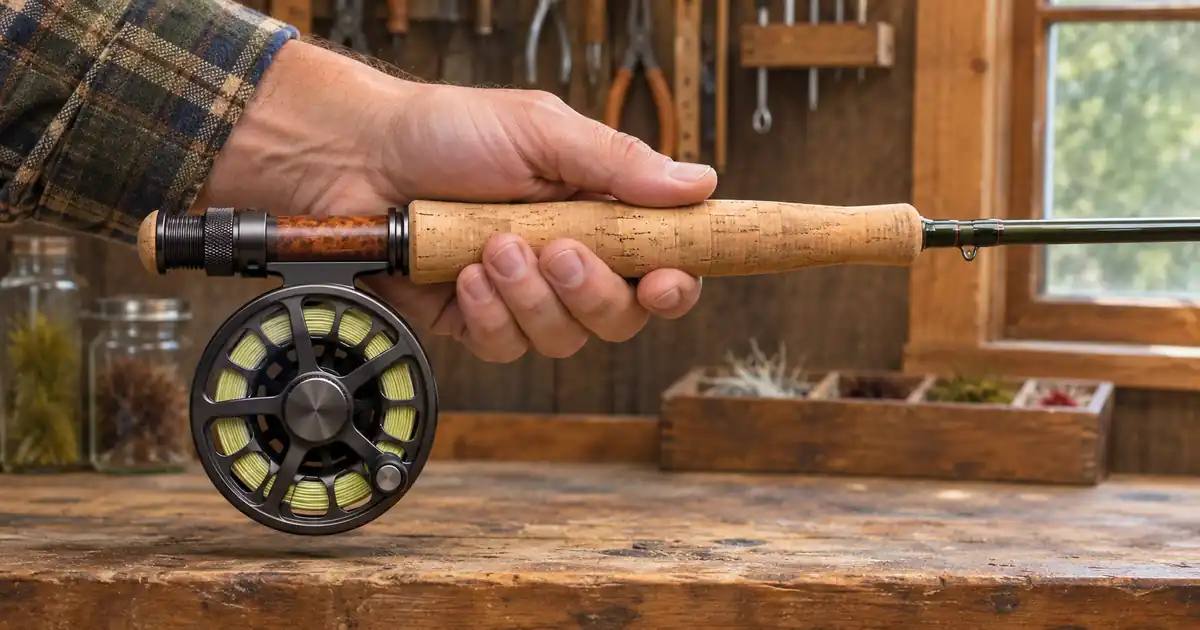
Ask the shop to fit the actual fly line with usable clearance below the spool rim and frame. If spooling yourself, consult the reel instructions and wind the line and backing evenly. Rotate the spool in the frame and check line lay across the full width. If it rubs or binds when the line piles slightly to one side, correct the fill before fishing. The exact margin depends on spool and frame design.
🎣 Redington Behemoth Fly Reel (5/6) — A 5/6 reel candidate with a large arbor. Check the loaded weight and the manufacturer’s capacity entry for the fly line you already own. Check on Amazon (paid link) ➜
Copy this fishing fly fishing reel compatibility checklist
Rod and line. What is the rod’s marked line rating, and what are the fly line’s manufacturer, model, line code and profile?
Reel and spool. Which reel generation and spool size are on the listing? Does a capacity table for that model describe your actual line type?
Backing. How many yards does the chart list with that line? Record the chart’s stated material and strength, plus the diameter of the backing you want to use when the maker publishes it. Keep the chart figure and fitted result in separate fields.
Final fit. Can the shop or your own fitting confirm clearance, reel-seat security, and a comfortable grip? If one candidate has a missing chart assumption, leave it pending before committing to the purchase.
Turn the chart into a decision you can check at the bench
Give each candidate its own row in the fishing fly fishing reel worksheet. Record the exact spool, the line code used in the manufacturer’s chart, and the amount and type of backing named in that row. In a separate column, write down what you plan to load. This keeps a documented number from turning into a promise about a different fly line. If the specification covers only a generic weight-forward line, mark the result as a provisional match.
A common decision is whether to move from a smaller reel to the next size up because the line barely fits. First check what is causing the tight fit. If the line clears when wound evenly but rubs when it overlaps on one side, examine the line lay and the amount of backing. If the line occupies nearly all the usable spool with far less backing than your fishing calls for, look for another spool with a documented capacity for that type of line. Keep the reel-seat and loaded-balance checks in the comparison.
On a used reel, ask whether the installed spool matches the reel model and generation. Photos of the reel and the inside of the spool are more useful than a description that says only ‘5/6.’ If you expect to switch between a floating line and another profile, check both separately. One setup may work with the chart’s backing assumption while the other needs a different spool or a shop fitting.
🎣 Maxcatch AVID Fly Fishing Reel — An alternate reel family for the same worksheet. The listing groups several line weights and colors, so select the actual 5/6 option and confirm its spool details before ordering. Check on Amazon (paid link) ➜
Write down the fitted result for future line changes
After the reel is loaded, record the line model, the backing material and the amount actually installed if the shop can measure it. File the fitted combination under “fishing fly fishing reel” in your gear notes so you can find it when you change lines. If you later change the line, start from the fitted combination you know and measure again. Do not assume the previous backing amount will carry across to a line with a different taper, length or coating.
Before leaving the shop or packing for a trip, turn the loaded spool slowly and check for rubbing against the frame. Strip a short length of line onto a clean surface and wind it back in with light, even tension. Confirm that the handle is on your preferred retrieve side, the spool seats securely, and the drag works in the correct direction. A shortlist is useful only if it leads to a setup you can actually use.
References
Orvis Clearwater Large Arbor reel capacity booklet