
Fly Fishing Accessories: Essential Tools Every Angler Needs
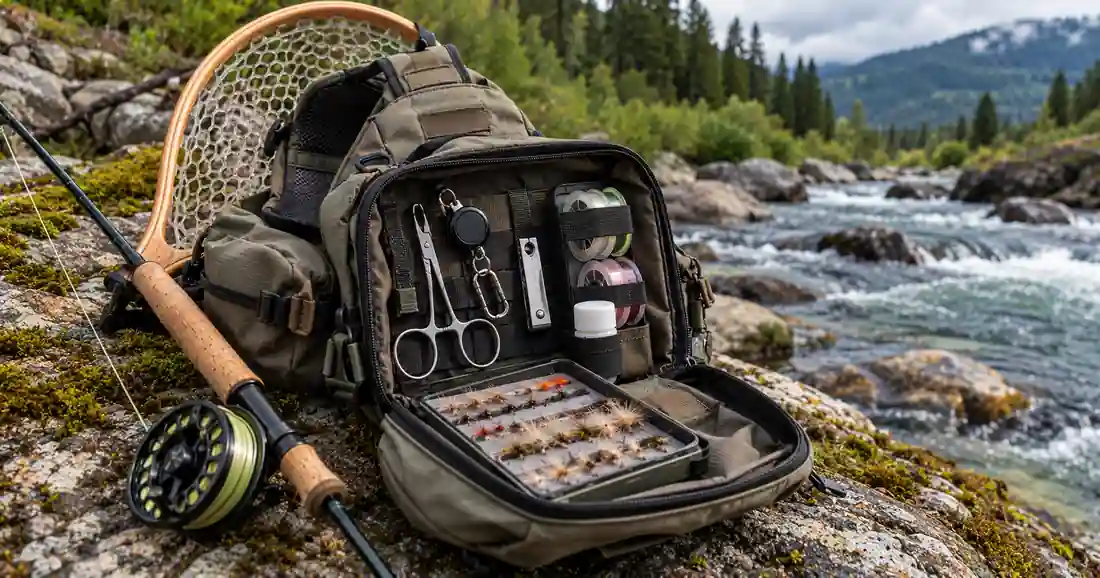
Fly fishing accessories should make common jobs easier, not turn your vest or pack into a collection of gadgets. Once your rod, reel, fly line, leader, and tippet system are sorted, the most useful accessories are the tools you actually reach for on the water: nippers, forceps, a fly box, and a few technique-specific items such as floatant or strike indicators.
The easiest way to choose fly fishing accessories is by the problem they solve. Start with tools for cutting, gripping hooks, storing flies, and rebuilding rigs. Add presentation tools only when your fishing style needs them, then consider convenience upgrades such as zingers, tippet holders, and larger carry systems.
Table of Contents
Fly Fishing Accessories: Quick Essential List
Not every accessory deserves the same priority. This quick guide separates items you are likely to use often from items that depend on technique or personal preference.
| Accessory | Main Job | Priority |
|---|---|---|
| Nippers | Cut tippet and leader tags | Carry almost every trip |
| Forceps or hemostats | Grip and remove hooks | Carry almost every trip |
| Fly box | Store and organize flies | Carry almost every trip |
| Tippet | Rebuild or extend the leader | Carry almost every trip |
| Floatant | Help suitable dry flies stay on the surface | Technique-dependent |
| Strike indicators | Suspend or track many nymph rigs | Technique-dependent |
| Added weight | Adjust nymph depth where legal | Technique-dependent |
| Zinger or retractor | Keep small tools attached and accessible | Convenience |
| Landing net | Help land and control fish | Situational but useful |
| Pack, sling, vest, or pockets | Carry the rest of the system | Depends on how much you bring |
For most beginners, the first four items solve more real problems than a large bundle of specialty gadgets.
How to Choose Fly Fishing Accessories Without Overbuying
The best way to choose fly fishing accessories is to work backward from the task. Ask what you repeatedly need to cut, hold, store, rig, float, sink, land, or carry.
Start With the Task
A tool earns space when it solves a job you actually perform.
Nippers solve repeated cutting. Forceps help with hook removal and small-hook handling. A fly box protects and organizes flies. Tippet lets you rebuild the terminal end of your leader.
Those are easy to justify because the job exists on most fishing days.
Separate Essential From Convenient
A zinger can make nippers easier to reach, but the zinger does not perform the cutting. A magnetic net release can improve net carry, but it is not the net itself.
This distinction matters when you are building a setup on a budget.
Buy the tool first. Add the convenience system when you know the problem is worth solving.
Buy for Your Technique
Different techniques change which fly fishing accessories matter.
Dry-fly anglers may use floatant constantly. Nymph anglers may rely on indicators and legal added weight. Streamer anglers may care more about larger forceps, stronger pliers, and deeper fly boxes.
Do not copy another angler’s vest item for item if you fish differently.
Avoid Paying for Features You Will Not Use
Premium materials, replaceable cutters, elaborate attachment systems, and waterproof storage can all be useful, but only when they solve a real problem for your fishing.
If you are still building the rest of your setup, FlyFishingScout’s guide to fly fishing gear for beginners covers the broader rod-to-trip system so you can separate core gear from optional accessories.
Fly Fishing Accessories: Nippers, Forceps, and Zingers
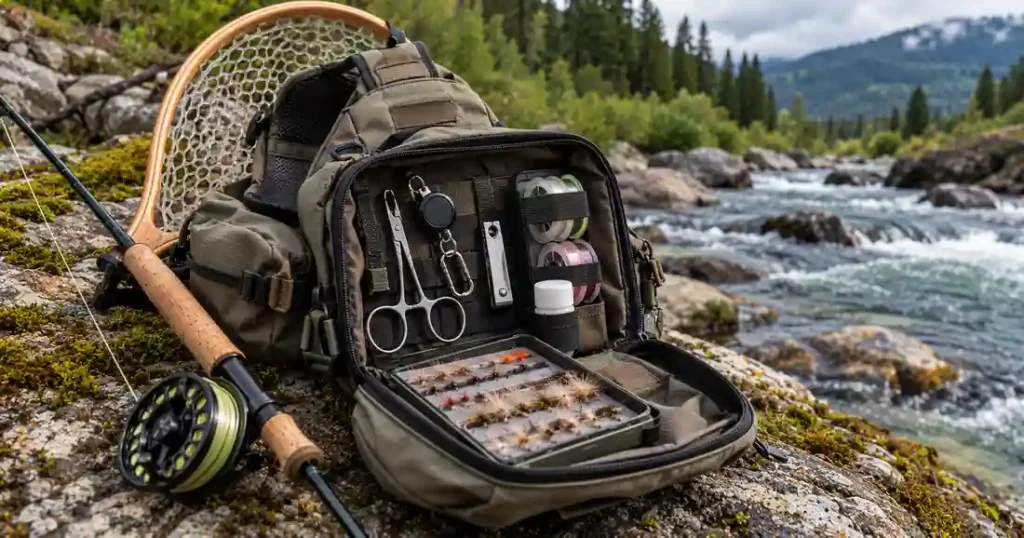
Among fly fishing accessories, nippers and forceps are two of the easiest tools to justify because they solve repeated on-water tasks.
Nippers
Nippers are compact cutters used to trim leader and tippet material after tying knots or changing flies.
A useful pair should:
- cut the tippet sizes you commonly use cleanly;
- be easy to hold with wet or cold fingers;
- have a secure attachment point;
- stay reasonably accessible.
You do not need premium nippers to start. A simple sharp cutting surface is more important than decorative materials or complicated extra features.
If the blades begin pinching or fraying fine tippet instead of cutting cleanly, sharpen, replace the cutting surface where possible, or replace the tool.
Forceps or Hemostats
Forceps help grip small hooks, remove hooks, pinch some barbs where appropriate, and manage small rigging tasks.
Useful features include:
- jaws that align properly;
- a locking mechanism that opens and closes smoothly;
- enough length for the fish and hooks you normally handle;
- corrosion-resistant materials;
- comfortable finger loops or grip surfaces.
For ordinary trout fishing, basic locking forceps are usually enough. Larger pliers make more sense when hooks, wire, or saltwater tackle demand heavier jaws.
Zingers and Retractors
A zinger or retractor keeps a frequently used tool attached to your vest, pack, or lanyard while letting you pull it into working position.
They are convenient for nippers, small forceps, and similar tools.
A retractor is not essential. If your nippers already live in an easy pocket, you may not need one. The benefit is speed and reducing the chance of dropping or losing a small tool.
What Features Actually Matter
For these fly fishing accessories, function matters more than status.
Choose clean cutting, reliable grip, appropriate size, corrosion resistance, and secure attachment. If you are learning knots and want a clearer picture of where nippers and tippet tools fit into the rig, FlyFishingScout’s fly fishing knots guide explains the main reel-to-fly connections.
Fly Fishing Accessories: Fly Boxes and Tippet Storage
Storage fly fishing accessories should protect the flies and materials you actually use without encouraging you to carry far more than you need.
Choose a Fly Box for the Flies You Carry
A small trout fly does not need the same box depth as a bulky articulated streamer.
For general trout fishing, slit foam or silicone-style retention systems can organize dries, nymphs, and smaller streamers effectively.
For large streamers or saltwater flies, look for more depth so the materials and hooks are not crushed.
Small Trout Flies vs. Streamer Boxes
A thin box can be convenient for small nymphs and dries because it fits easily in a shirt pocket or compact pack.
Streamer boxes need more clearance between the lid and hook rows. If large flies are constantly bent, compressed, or tangled, the box is probably too shallow or too crowded.
Choose storage around fly dimensions, not around the largest box you can fit in your bag.
Tippet Spools and Holders
Tippet spools are more important than a tippet holder.
The material lets you rebuild the end of the leader and adjust diameter when changing flies or presentations. A holder simply keeps several spools together and easier to access.
Start with only the sizes you use regularly. Add a holder when managing multiple spools becomes annoying.
Why More Storage Is Not Always Better
A larger fly box or pack often encourages extra gear.
If you carry flies you never use, organizing them consumes space without solving a fishing problem.
Build a small useful selection first. Expand storage when your techniques or destinations create a reason.
Fly Fishing Accessories: Floatant, Indicators, and Weight
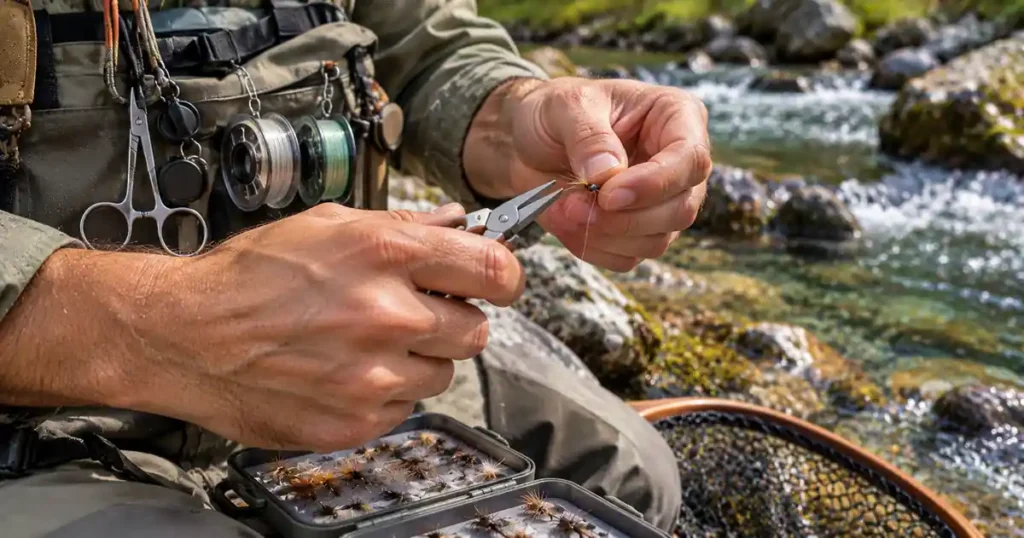
Some fly fishing accessories are highly useful for one method and almost irrelevant for another. Floatant, indicators, and added weight belong in that category.
Dry-Fly Floatant
Floatant helps suitable dry flies resist water and remain on or near the surface according to the product and fly material.
It is useful when dry-fly fishing is part of your day. If you only fish streamers, it may never leave the pack.
Different formulations serve different purposes, so do not assume every floatant is interchangeable.
Gel vs. Powder Use Cases
Gel or liquid-style floatants are commonly used to treat suitable dry flies before or during fishing.
Powder products can help dry wet flies and work into fine materials. Some products are specifically designed for delicate materials such as CDC, while others may mat those fibers.
Follow the manufacturer’s directions for the fly material you are using instead of applying one product to every pattern.
Strike Indicators
Strike indicators help anglers suspend and track many nymph rigs.
Choose size based on the amount of weight and the fly rig rather than always using the largest indicator available.
A large indicator can support heavier rigs, while a small light rig often fishes more naturally with a smaller indicator.
Added Weight Where Legal
Added weight can help sink a nymph rig to the desired depth.
Use only legal materials and methods for the water you are fishing. Regulations can vary, so local rules should override a generic gear list.
Add weight deliberately. The goal is enough depth for the presentation, not maximum weight.
Why These Are Technique-Specific
These fly fishing accessories should follow your method.
Dry-fly angler: floatant may be important.
Indicator nymph angler: indicators and legal weight may be important.
Streamer angler: none of those items may be central.
A good accessory system changes with the technique instead of treating every product as mandatory.
Fish Handling and Safety Tools
Some accessories matter because they improve control around fish, hooks, and moving fly line.
Landing Net
A landing net can help you bring a fish under control without chasing it around shallow water or trying to grab it prematurely.
For trout and similar fish, a rubber or rubberized bag can reduce hook tangles compared with some traditional mesh designs.
Choose a net large enough for the fish you realistically catch but small enough to carry comfortably.
Polarized Sunglasses
Polarized sunglasses reduce glare, which can help you see into the water.
They also create a physical barrier between your eyes and a hook. That makes eye protection one of the few accessories worth treating as close to essential whenever you are casting.
Hook Removal
Forceps are often enough for trout-sized hooks.
Use controlled pressure and avoid twisting or digging with the tool. Larger hooks or toothy species can justify longer or stronger pliers.
When Larger Pliers Are Appropriate
Saltwater fishing, heavy streamer hooks, wire, and some larger species can require tools with stronger jaws and better corrosion resistance than basic trout forceps.
Buy for the hook and environment you actually use.
What Does Not Replace Safe Handling
A net, forceps, or pliers cannot make careless handling safe.
Keep hooks controlled, protect your eyes, and avoid placing your hands where a fish can drive a hook into them.
Similarly, accessories such as wading staffs or traction devices do not replace judgment in moving water. If footwear and traction are part of your setup, FlyFishingScout’s guide to fly fishing wading boots covers that separate decision in depth.
Fly Fishing Accessories: Packs, Vests, and Carry Systems
Carry systems are fly fishing accessories only after you have something worth carrying. Many beginners can start with pockets and a small fly box.
Pockets May Be Enough
For short sessions, you may only need:
- one small fly box;
- tippet;
- nippers;
- forceps;
- one technique-specific item such as floatant.
If that fits comfortably in your clothing, a dedicated pack can wait.
Sling Pack
A sling pack can carry more gear while moving out of the casting area behind your shoulders when positioned correctly.
It is useful when you want room for multiple boxes, water, a rain layer, and tools without wearing a traditional vest.
Chest Pack
A chest pack keeps small items close and accessible.
It works well for anglers who carry a compact selection of tools and flies and want quick access while wading.
The trade-off is limited capacity and the possibility of crowding the front of your body if you overload it.
Vest
A fly-fishing vest spreads storage across many pockets.
It can work well when you like dedicated locations for leaders, tippet, fly boxes, floatant, and tools.
The downside is that empty pockets tend to invite extra equipment.
Lumbar Pack
A lumbar or waist pack keeps much of the load off your chest and shoulders.
It can provide more capacity than pockets while remaining easy to rotate for access.
Consider how high the pack rides if you wade deeply.
Choose Access, Not Maximum Capacity
The best carry system is the smallest one that comfortably holds what you genuinely need.
Prioritize:
- easy access to nippers and forceps;
- secure fly-box storage;
- sensible tippet organization;
- a place for water and weather gear when needed;
- a safe way to carry a net.
More capacity is not automatically more useful.
Accessories You Can Wait to Buy
Not all fly fishing accessories need to be purchased at the beginning.
The following items may become useful later, but most beginners can wait until they understand the problem each one solves.
Premium Nippers
Basic sharp nippers can cut ordinary tippet. Premium cutters may add replaceable blades, harder materials, ergonomics, or other refinements, but those advantages matter more after you know what bothers you about a basic pair.
Multiple Fly Boxes
One small organized box can cover many first trips.
Add separate dry-fly, nymph, streamer, or saltwater boxes when your fly collection actually needs that organization.
Elaborate Tool Docks
Magnetic docks, holsters, and accessory stations can be convenient, but simple clips and pockets often work.
Upgrade after accessibility becomes a recurring frustration.
Leader Straighteners
A leader straightener can be useful, but it is not a prerequisite for learning to fish.
Good leader storage and careful handling solve much of the same problem for beginners.
Several Floatant Types
If you fish dry flies regularly, you may eventually carry gel, powder, and drying products for different jobs.
Start with one product appropriate for your common fly materials and learn how to use it correctly.
Specialty Pliers
Heavy pliers belong in systems using hooks, wire, or species that justify them.
Do not carry oversized tools for small trout hooks simply because they look durable.
Large Packs
A large pack solves the problem of carrying more gear. It can also create the problem of carrying too much gear.
Wait until food, water, extra clothing, cameras, or longer trips create a real capacity need.
Fly Fishing Accessories FAQs
What Fly Fishing Accessories Do Beginners Actually Need?
Most beginners can start with nippers, forceps, a small fly box, and the tippet needed for their leader system.
Add floatant, indicators, weight, a landing net, or a dedicated pack when your technique and water justify them.
Do You Really Need Fly Fishing Nippers?
You need a reliable way to cut leader and tippet cleanly.
Fly-fishing nippers are compact and convenient, which makes them one of the easiest accessories to recommend. You do not need an expensive pair to begin.
What Are Forceps Used for in Fly Fishing?
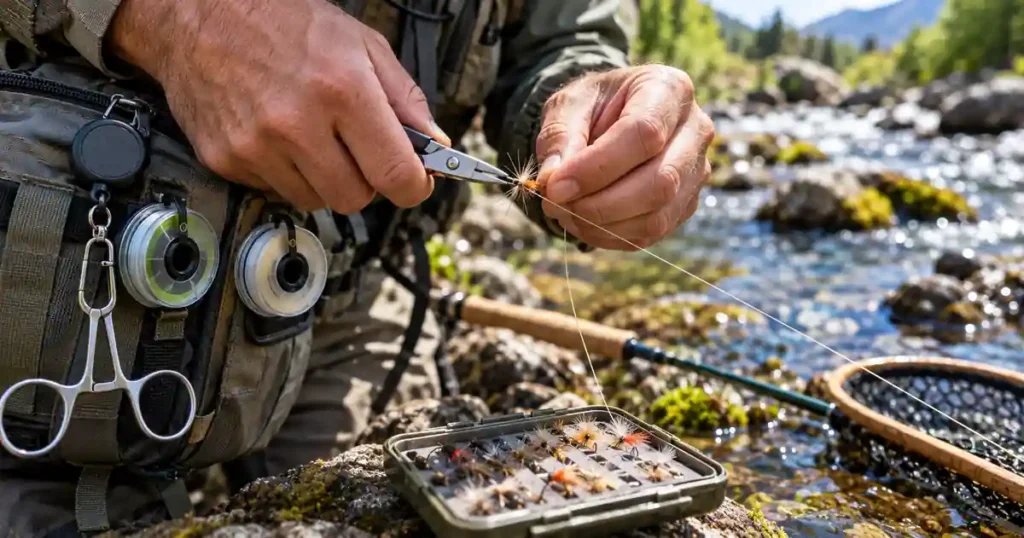
Forceps or hemostats help grip and remove hooks and can assist with small rigging tasks.
Basic locking forceps are sufficient for many trout anglers. Larger or stronger pliers are more appropriate for heavier hooks and some saltwater uses.
Do You Need Floatant for Fly Fishing?
Only when the presentation calls for it.
Floatant is most useful for dry-fly fishing and some surface-oriented applications. If you mainly fish subsurface flies, it may not be an everyday accessory.
How Many Fly Boxes Should You Carry?
Carry enough storage for the flies you realistically expect to use.
One compact box may be enough for a beginner. Separate or deeper boxes become useful when you carry large streamers, saltwater patterns, or several specialized fly selections.
Do You Need a Vest or Pack?
No.
Pockets can hold a minimal setup. Buy a vest, chest pack, sling, or lumbar pack when your fly boxes, water, clothing, and tools exceed what you can comfortably carry without one.
Fly Fishing Accessories: Final Takeaway
The most useful fly fishing accessories are the ones that solve repeated problems.
Start with nippers, forceps, a fly box, and appropriate tippet. Add floatant, indicators, weight, or other presentation tools when your technique requires them. Use a zinger, pack, net-release system, or larger carry setup when convenience becomes worth the extra gear.
Buy by the job: cut, grip, store, rig, present, land, and carry. That approach keeps fly fishing accessories practical instead of turning them into a shopping list.
Sources Used
Trident Fly Fishing — Fly Fishing Accessories
Used to cross-check the main accessory categories, including fly boxes, nets, nippers, forceps, indicators, floatants, and the distinction between everyday tools and technique-specific equipment.
Orvis — Tools for Fly Fishing
Used to cross-check commonly carried streamside tools such as nippers, hemostats, floatant, indicators, leaders, tippet, and specialized convenience tools.
Orvis — Fly Fishing Accessories
Used to cross-check the current accessory categories and practical roles of nippers, hemostats, floatant, split shot, strike indicators, fly boxes, zingers, packs, and polarized sunglasses.
Loon Outdoors — Rogue Nippers
Used to verify a current basic nipper example with stainless-steel blades, compact cutting surface, grip treatment, and an eye-cleaning needle. Current manufacturer-listed price is approximately $9.50 and may change.
Loon Outdoors — Rogue Forceps
Used to verify a current basic forceps example with locking handles, stainless-steel construction, 5.5-inch length, and rust-resistant finish. Current manufacturer-listed price is approximately $20 and may change.
Loon Outdoors — Loon Dust
Used to verify a current powder-floatant example and its manufacturer-stated compatibility with dry flies and CDC. Current manufacturer-listed price is approximately $7 and may change.
Loon Outdoors — Rogue Series
Used to verify the current Rogue Zinger example, currently manufacturer-listed around $16.