
Nymph Fishing Flies: Types, Patterns, and How to Choose
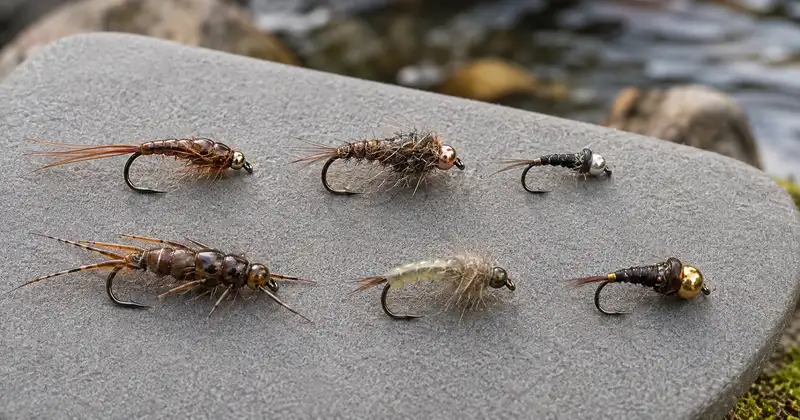
Nymph fishing flies are subsurface flies used to imitate immature aquatic insects and other small underwater food sources. The easiest way to choose them is not by memorizing famous pattern names. Start with the food fish are likely seeing, match the approximate size and profile, choose enough weight for the depth and current, and then select a pattern that fits the job.
For a beginner, a useful decision order is simple: Food → Size/Profile → Weight → Water → Pattern. That keeps the focus on what the fly needs to do instead of which pattern happens to be popular.
Table of Contents
What Are Nymph Fishing Flies?
In biological terms, a nymph is an underwater stage in the development of certain aquatic insects. Fly Fishers International defines a nymph as an underwater stage of an aquatic insect and a pupa as an intermediate stage associated with insects such as caddis and midges.
In everyday fly-fishing language, however, the shopping category is broader. Fly shops commonly group true mayfly and stonefly nymph imitations with caddis larvae and pupae, midge patterns, scuds, worms, and other subsurface flies.
That means the label nymph flies is useful for organizing a fly box even though not every pattern in the category imitates a biologically true nymph.
If you are still sorting out how nymphs differ from dry flies, wet flies, streamers, and other fly categories, see our guide to the main types of fly fishing lures.
Types of Nymph Flies You Will See
| Nymph Group | Common Food Imitated | Typical Profile | Main Selection Question |
|---|---|---|---|
| Mayfly-style | Mayfly nymphs | Often slim | Does the size and shape resemble local mayflies? |
| Stonefly-style | Stonefly nymphs | Usually larger and more robust | Are stoneflies present, and what size are they? |
| Caddis patterns | Caddis larvae or pupae | Varies | Which life stage is relevant? |
| Midge patterns | Midge larvae or pupae | Often very slim | Do conditions call for a smaller profile? |
| Scuds and similar flies | Aquatic crustaceans or other prey | Curved or compact | Is that food actually present? |
| Attractor/searching nymphs | Suggestive rather than exact | Varies | Do you need a general searching fly? |
These groups are practical, not rigid. Some patterns suggest one specific food source, while others are deliberately impressionistic.
Mayfly Nymph Patterns
Mayflies have a true nymph stage, so mayfly imitations are one of the classic groups of fly fishing nymphs.
The Pheasant Tail is a familiar example with a relatively slim profile. A Hare’s Ear has a rougher, buggier appearance and is often used as a broader searching pattern.
Ask whether you need a slim or buggy profile, what approximate size matches the food, and how much weight the water requires.
Stonefly Nymph Patterns
Stoneflies also have a true nymph stage. Their nymphs are often larger and more robust than common mayfly or midge imitations, although exact size varies by species and location.
Patterns such as Pat’s Rubber Legs are sold as stonefly-style nymphs. They make the most sense where stoneflies are genuinely part of the food base.
Caddis Larva and Pupa Patterns
Caddis do not have a true nymph stage. Their underwater development includes larval and pupal stages, but anglers and fly shops often group caddis larva and pupa imitations with nymph flies because they are fished below the surface. Fly Fishers International identifies caddis pupae and midges separately from true nymph terminology.
When choosing a caddis pattern, think about which stage you are trying to represent. A larva-style fly and an emerging pupa do not necessarily need the same shape or presentation.
Midge Patterns
Midges also have larval and pupal stages rather than a true nymph stage. Midge patterns are often slim and small.
The Zebra Midge is a familiar example. Current Orvis nymph listings include a TH Zebra Midge alongside mayfly, stonefly, caddis, and other subsurface patterns.
Do not assume you always need the smallest fly available. Match the size to the food and conditions you observe.
Scuds and Other Subsurface Patterns
Scuds are small freshwater crustaceans rather than insect nymphs. They still commonly appear in nymph boxes because trout may feed on them where they are present. Fly Fishers International also identifies scuds as small freshwater crustaceans used as trout food.
The practical question is simple: Is this food source relevant where you fish?
Attractor and Searching Nymphs
Attractor patterns use flash, contrast, color, shape, or movement to suggest food rather than copy one insect precisely. Familiar examples include the Prince Nymph and Copper John.
Umpqua’s current Copper John listing offers the pattern in multiple colors and sizes and identifies trout among its intended species. It is a useful example of a pattern family with several commercial variations rather than one exact match for every river.
Searching patterns can be useful when you have no clear hatch clue, but they are starting options, not guaranteed winners.
Weighted vs. Unweighted Nymph Flies
Weight changes how quickly and easily a fly reaches depth.
A lighter or unweighted nymph can make sense in shallow water, slower seams, or when the rest of the rig supplies enough weight. A weighted fly becomes more useful when you need to reach deeper water or get through faster current.
Current Orvis guidance makes the same general distinction: weighted nymphs help in deeper or faster water, while lighter or unweighted options can suit shallower or slower situations.
Bead-Head and Jig-Style Nymphs
A bead can add weight near the front of the fly. Brass and tungsten are both used in fly construction, so verify the bead material on a specific product rather than guessing.
Jig-style nymphs use jig hooks and are common in tight-line and Euro-nymphing systems. Current Orvis listings include multiple jigged and tungsten-head nymphs, including Pheasant Tail, Copper John, and caddis styles.
You do not need specialized Euro flies simply because they are popular. Buy them when their weight, hook style, and intended presentation match how you actually fish.
How to Choose Nymph Fishing Flies
Use these five decisions in order.
1. Identify the Likely Food
Start with the water rather than the fly box.
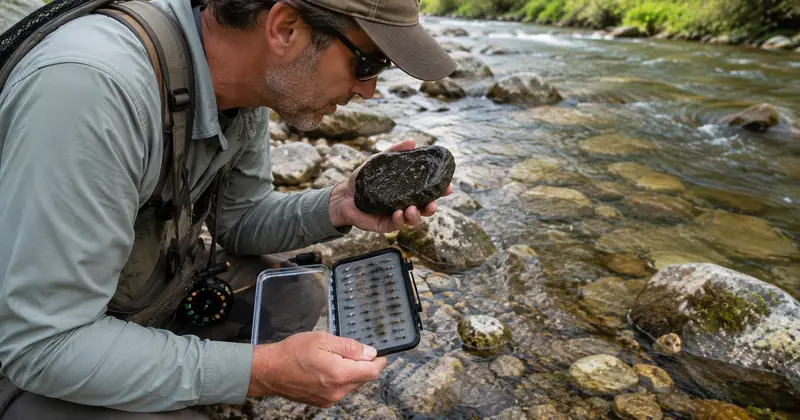
Where it is lawful and practical, examine aquatic life in the water or beneath loose rocks without damaging habitat. Look for approximate size, slim or bulky shape, general color, and whether mayflies, stoneflies, caddis, midges, scuds, or other food sources seem common.
You do not need to identify every insect by scientific name. Your goal is to find a reasonable match.
2. Match Size and Profile
Size and silhouette are often better starting points than tiny color differences.
A slim natural is better matched by a slim fly than by a bulky pattern simply because the bulky one is famous. A larger stonefly-style natural calls for a different profile from a small midge.
Fly size also has to work with the rest of your setup. If that part is unclear, our guide to choosing the right fly fishing tippet explains how tippet size, fly size, and fishing situation fit together.
3. Choose Enough Weight
A fly can look perfect but still be ineffective if it never reaches the depth where fish are feeding.
Consider water depth, current speed, where fish appear to be holding, whether your rig already includes added weight, and whether you are indicator nymphing, using a dry-dropper, or fishing a tight-line system.
Deeper or faster water often calls for more weight. Shallow or slow water may call for less. More weight is not automatically better because excessive weight can increase snagging or make a shallow presentation awkward.
4. Match the Fly to Your Presentation
An indicator rig can use weighted flies, added weight, or a combination. A dry-dropper adds another constraint because the dry fly must support the nymph below it. Tight-line and Euro-style systems often rely more heavily on weighted flies for depth control and contact.
You do not need to master every nymphing method before buying flies. You simply need to know how you expect the fly to reach and move through the water.
5. Choose the Pattern Last
Several nymph fly patterns may fill the same basic role. If two flies have similar size, profile, weight, sink behavior, and presentation, the practical difference may be smaller than their names suggest.
Give a reasonable pattern an appropriate depth and presentation before assuming the fly itself is the problem.
Familiar Nymph Fly Patterns and Their Roles
These examples are not a ranking of the best nymph flies for trout.
| Pattern | Broad Role | Profile | Useful Buying Consideration |
|---|---|---|---|
| Pheasant Tail | Mayfly/general nymph | Slim | Choose size and weight for the water |
| Hare’s Ear | General buggy imitation | Fuller | Useful when you want a broad searching profile |
| Zebra Midge | Midge-oriented subsurface fly | Very slim | Best considered when small food is relevant |
| Pat’s Rubber Legs | Stonefly-oriented nymph | Larger and leggy | Most useful where stoneflies are present |
| Copper John | Attractor/searching nymph | Slim with flash | Compare size, weight, and color |
| Prince Nymph | General attractor | Moderate | Useful as a searching option |
Orvis currently lists versions of Zebra Midge, Pat’s Rubber Leg Stone, Pheasant Tail, Prince Nymph, Hare’s Ear, Copper John, and other established subsurface patterns.
Use the role of each pattern to decide what is missing from your box instead of trying to own every variation.
Does Color Matter When Choosing a Nymph?
Yes, but color should not automatically be the first decision.
Natural colors can help a fly resemble local food. Flash or brighter accents can make an attractor pattern more noticeable. But if your fly is drifting well above the fish, changing from brown to olive may solve nothing.
A practical order is:
- Depth
- Size
- Profile
- Presentation
- Color or attractor details
Choosing Trout Nymph Flies for Different Water
| Water Situation | Useful Starting Approach |
|---|---|
| Shallow, slower water | Lighter or unweighted nymph |
| Deeper run | Weighted or bead-head nymph |
| Faster current | More weight may help the fly reach depth sooner |
| Clear, calm water | Natural size/profile and a less intrusive setup |
| Reduced visibility | A stronger silhouette or modest attractor element may help |
| Visible aquatic food | Match the food group, size, and life stage |
These are starting points rather than guarantees. Depth and current work together, so the same fly can behave differently in different water.
Building a Simple Nymph Fly Box
A compact selection of nymph fishing flies should give you different functions rather than just a high fly count.
A beginner can build around:
- A slim mayfly-style nymph
- A buggy general-purpose nymph
- A small midge pattern
- A caddis larva or pupa pattern where relevant
- A stonefly option where stoneflies are common
- An attractor/searching nymph
- More than one weight level
It is also sensible to carry backups of flies you use often because subsurface fishing puts flies near snag-prone structure.
Once you choose a fly, you still need a reliable connection to the tippet. Our guide to fly fishing knots for beginners covers the core knots used throughout a fly-fishing setup, including the final connection to the fly.
Current Product Example: Orvis Essential Trout Nymph Assortment
For anglers who would rather start with a ready-made selection, the Orvis Essential Trout Nymph Assortment is a current product example worth comparing with buying flies individually.
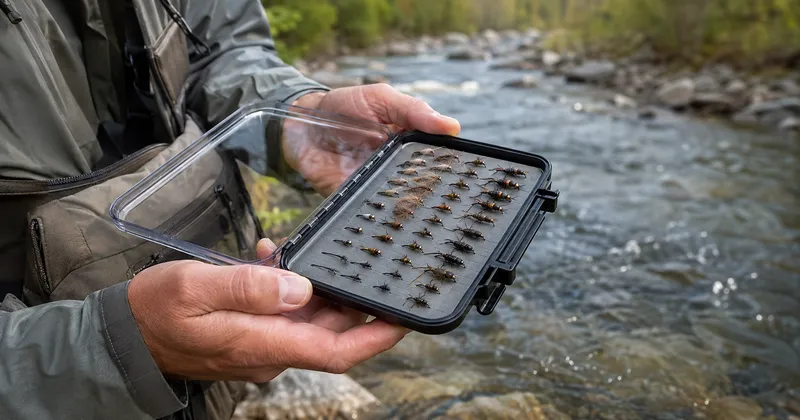
Orvis currently lists the assortment with 20 flies—two each of 10 patterns—in a six-compartment polycarbonate case. The listed mix includes Zebra Midge, Hare’s Ear, Prince-style, Pheasant Tail-style, Copper John-style, stonefly, jig, and other subsurface patterns.
View the current Orvis Essential Trout Nymph Assortment
Why It May Suit Some Beginners
The set provides several different profiles and pattern roles in one box. That can be convenient if you are starting with little or no nymph inventory.
Limitations to Consider
It is still a fixed assortment. Its sizes and weighting may not match every river, hatch, or fishing method, and you may still need lighter, smaller, larger, or more locally specific flies.
Treat it as a convenient starting point, not a universal answer. Check the current product details and contents before buying because assortments can change.
How to Evaluate a Nymph Assortment Before Buying
Use the same criteria with any commercial pack:
- Target species: Does it match the fish you pursue?
- Food groups: Does it cover useful mayfly, caddis, midge, stonefly, scud, or attractor roles?
- Size range: Are there meaningful size differences?
- Weight range: Can you adapt from shallow to deeper water?
- Duplicates: Are they useful backups or excessive repetition?
- Hook and bead style: Are standard, jig, weighted, or unweighted options included?
- Technique fit: Does the assortment match how you actually nymph?
- Local relevance: Are these patterns useful where you fish?
A smaller assortment with useful variety can be a better purchase than a large box full of redundant patterns.
Common Nymph Selection Mistakes
- Buying only famous patterns: Popularity does not tell you whether a fly matches your water.
- Carrying only one size: A size change can matter more than a pattern change.
- Carrying only one weight: This limits your ability to adapt to depth and current.
- Assuming heavier is always better: Too much weight can create unnecessary snags or poor shallow-water presentation.
- Changing color before checking depth: Make sure fish can encounter the fly first.
- Buying redundant assortments: A high fly count is not the same as useful variety.
- Ignoring local aquatic food: The same box is not equally useful everywhere.
- Blaming the fly too quickly: Depth, drift, and presentation may be the real problem.
Quick Nymph Selection Checklist
Before tying on a fly, ask:
- What food is likely present?
- What approximate size matches it?
- Is the profile slim or bulky?
- How deep are the fish?
- How much weight do I need?
- What presentation will I use?
- Which pattern fills that role?
- Does the fly work with my tippet and tackle?
Following that order makes nymph selection much more systematic.
FAQs
What Is the Difference Between a Nymph and a Fly?
A fly is the broad term for an artificial lure used in fly fishing. A nymph fly is one type of subsurface fly designed to imitate an immature aquatic insect or, in common angling usage, another small underwater food source.
What Nymph Flies Should a Beginner Carry?
Start with functional variety: a slim mayfly-style fly, a buggy general nymph, a small midge, a caddis option, a stonefly imitation where relevant, an attractor pattern, and more than one weight level.
What Are Good Nymph Patterns for Trout?
Familiar patterns include Pheasant Tail, Hare’s Ear, Zebra Midge, Prince Nymph, Copper John, and appropriate stonefly patterns. None is universally best. Choose according to food, size, water depth, current, and presentation.
Should I Buy Weighted or Unweighted Nymphs?
If you fish varied water, carrying both gives you more flexibility. Weighted flies can help in deeper or faster water, while lighter or unweighted flies may fit shallow or slower conditions better.
How Do I Choose the Right Size Nymph?
Compare your fly with the natural food when possible. Match approximate size and profile rather than relying on one fixed hook size for every river or season.
Are Euro Nymphs Different From Regular Nymphs?
Many flies intended for Euro-style fishing use slim bodies, jig hooks, and dense beads to sink efficiently and work with tight-line techniques. “Euro nymph” describes a fishing-oriented design category, not a separate type of aquatic insect.
Final Takeaway
Choosing nymph fishing flies becomes much easier when you choose by function instead of pattern fame.
Start with the food fish are likely seeing. Match the approximate size and profile, choose enough weight for the water, consider the presentation, and then select the pattern.
When buying individual flies or a prepared assortment, prioritize useful differences in food type, size, profile, and weight rather than simply buying the box with the highest fly count.
Sources Used — Not Part of the Article:
- Fly Fishers International — Fly Fishing Glossary — definitions and terminology for nymphs, pupae, caddis, midges, scuds, and flies.
Fly Fishers International — Fly Fishing Glossary - Orvis — Fly Fishing Nymph Flies — current nymph categories, pattern examples, and weighted-versus-unweighted guidance.
Orvis — Fly Fishing Nymph Flies - Umpqua Feather Merchants — Copper John Barr’s — current manufacturer information for the Copper John pattern and available variants.
Umpqua — Copper John Barr’s - Orvis — Essential Trout Nymph Assortment — current product example and listed assortment contents.
Orvis — Essential Trout Nymph Assortment