
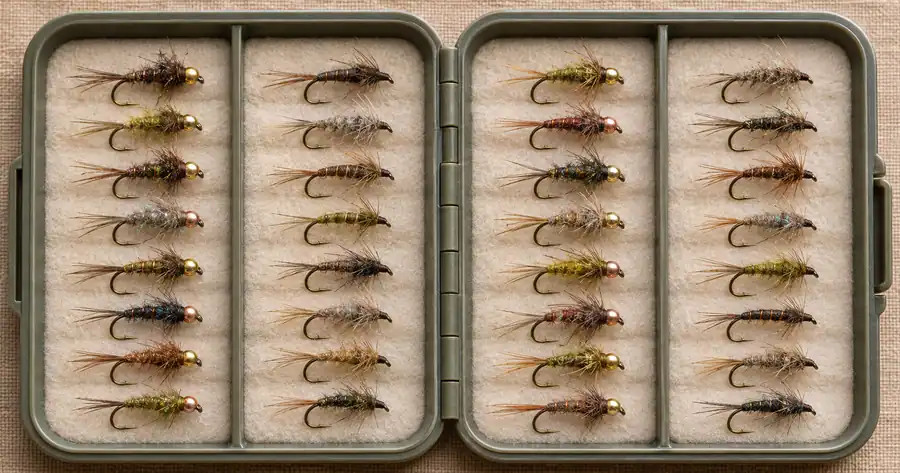
fishing flies nymphs: Compare Sizes, Weights and Assortments
A search for fishing flies nymphs brings up boxes with anything from a handful of patterns to dozens of copies. Compare the actual contents before you compare price per fly. A 72-fly box can give you four choices with many replacements. A smaller package can be a better value if it contains more of the sizes you will use. Below are three U.S. supplier listings and a way to check their gaps against your next trip.
Table of Contents
Fishing Flies Nymphs: Compare Three Real Listings
Prices below appeared on the suppliers’ pages when checked on November 15, 2026, in U.S. dollars before tax or shipping. Prices and availability can change. Hook sizes shown are the suppliers’ sizes for the named versions. A listing’s silence about weight is recorded as missing information.
| Configuration | Quantity and declared contents | Weight information and listed price |
|---|---|---|
| Wild Water Nymph Fly Assortment, Qty. 24, flies only | Six each: Gold Ribbed Hare’s Ear #12, Bead Head Gold Ribbed Hare’s Ear #14, Bead Head Purple Prince #14, Olive Electric Caddis #16 | Two patterns named as bead heads. Bead material, diameter and finished weight unspecified. $19 |
| Wild Water Nymph Fly Assortment 72 Flies, Low Profile Fly Box | Eighteen each: Gold Ribbed Hare’s Ear #12, Bead Head Gold Ribbed Hare’s Ear #12, Bead Head Purple Prince #14, Olive Electric Caddis #16 | Two patterns named as bead heads. Bead material, diameter and finished weight unspecified. $53 shown |
| Umpqua Tailwater Master Fly Assortment | 78 flies in 26 patterns in an Essential Box. Examples include Tungsten Zebra Midges, Black Beauty, Griffith’s Gnat and Blue Wing Olive. | Tungsten identified for named patterns. Individual hook sizes and bead dimensions were not stated in the supplier’s contents list. $189.99 |
The two Wild Water boxes each have four named configurations. The larger box gives you a case and three times as many flies. It also swaps the #14 bead-head Hare’s Ear for a #12. If the #14 is the fly you want, that substitution matters more than a few cents per fly. The Umpqua assortment has a different purpose. Its contents span tailwater presentations and include surface and emerger patterns, so it makes more sense to compare it as a mixed box than as 78 interchangeable nymphs.
Affiliate disclosure: As an Amazon Associate, we earn from qualifying purchases. FlyFishingScout may earn a commission on qualifying purchases at no extra cost to you.
Compare a smaller mixed assortment 🎣 BASSDASH The Essential 33-Piece Trout Collection — This set includes a Bead Head Hare’s Ear, a Caddis Nymph and a Pheasant Tail Nymph, along with wet flies and streamers. If you only need nymphs, count those patterns separately when comparing the box. Check current price ➜
Work Out the Cost of the Flies You Can Use
Imagine a shopping basket for fishing flies nymphs where the only listed option you need is the #16 Olive Electric Caddis. The smaller Wild Water pack gives you six at a displayed box cost of $19, or about $3.17 per target fly if the other flies have no value to you. The 72-fly pack gives you 18 at a displayed box cost of $53, or about $2.94 per target fly before tax or shipping. If you need six for the season, the lower initial spend matters more than the bulk unit figure. An individually sold fly could make more sense than either package.
Change the question and the preferred pack can change. If you specifically want the listed #14 bead-head Hare’s Ear, that variant appears in the smaller pack. The larger pack lists a #12 bead-head Hare’s Ear instead. If the fly shop has a matching single, compare the price for the number you actually plan to fish.
Fishing Flies Nymphs: Read Bead Size and Hook Size Separately

The hook number tells you about the hook. Bead diameter, where supplied, is a separate measurement, usually in millimeters. Even with the same stated diameter, bead material and construction affect weight. A slotted bead has a cutout, and a pattern may carry additional material under the body. A fly’s full profile, the current and the leader can all affect its depth. A photograph is a poor way to tell two otherwise similar bead heads apart.
When comparing weighted and unweighted nymph listings, put each in one of three groups based on what the supplier confirms: explicitly weighted, explicitly unweighted, or unspecified. “No bead named” belongs in the last group unless the maker confirms the body is also unweighted. Ask that question when you need a fly to stay shallower. If you are building a box around specific bead options, buy a small labeled selection first so you can test a meaningful difference.
See how different nymph patterns are built 📘 Tying & Fishing Tailwater Flies — Pat Dorsey’s step-by-step photos show how nymphs and other fly patterns are tied. Use them to compare construction before buying a replacement, and check the individual listing for its stated weight. Check current price ➜
There is a similar distinction between a larger number of flies and broader nymph assortment size and weight coverage. Two #14 flies with different beads may cover different depth needs. Two packs that list the same #14 pattern and omit the bead details may tell you too little to compare. Write down what is stated before you buy. The nymph fishing flies guide explains pattern families if the names on the listing are unfamiliar.
Fishing Flies Nymphs: A Purchase Checklist for Your Water
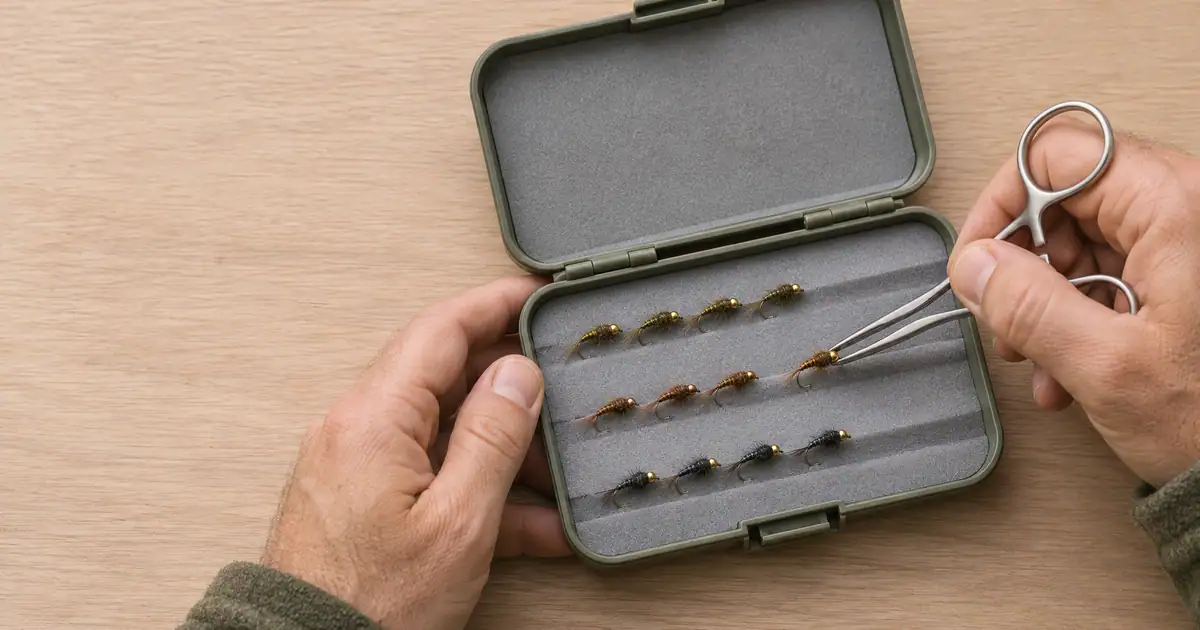
- Write down one situation you expect to fish, such as a narrow, slow creek where you want a compact fly, or a stronger current where you need more depth.
- List your target hook sizes. Confirm the seller supplies those sizes on individual patterns.
- Decide whether you need a known unweighted version, a stated bead material, or just a clearly identified replacement for a fly you already use.
- Count how many flies actually fill that need. Count spares separately from new sizes or weighting choices.
- For mixed kits, separate the nymphs from dries and emergers before comparing prices. If you already have a box, check the fly box guide for a way to keep the labels with each row.
Consider a beginner who mostly fishes smaller water and already has several #12 flies. Buying more #12s in a larger box may solve no problem. A few clearly labeled #14 or #16 flies could fill a real gap. An angler repeatedly fishing the same pattern and losing it often may get more value from a bulk pack. Before paying for either, record the maker’s full product name and variation so you can reorder the same fly if it earns a place in your box. If you need the rigging side after buying, see the beginner guide to fly fishing presentations.
Ask for Details Before Buying a Weight-Specific Set
For fishing flies nymphs sold by variant, check what changes when you select the size from a dropdown. Sometimes the selected hook number changes and the page still shows one stock photo for every version. Ask whether the bead diameter changes with the hook, whether the stated material applies to each size and whether the hook is barbed. If you are fishing a water with hook restrictions, verify those rules before buying.
A useful final check for fishing flies nymphs is to copy the seller’s variant list into a simple inventory. Give each pattern one row and put hook size, bead details and quantity in separate columns. When the order arrives, label the fly box before mixing the contents with older stock. This saves a second identification job the next time you need a replacement.
Keep small nymphs and spares organized 🎣 Fishpond Tacky Daypack Fly Box — The compact box uses a slotted silicone insert. Group nymphs by hook size or bead type and keep copies in adjacent slots. Flies are sold separately. Check current price ➜
Compare two nymphs before you buy a full assortment
If you already own two similar nymphs, you can use them to decide which variation your next box should include. Pick a single pattern and size if possible, with only one declared difference, such as a bead on one and a confirmed unweighted build on the other. Mark them A and B on your fly box insert or on two small packets. Record the product descriptions while you still have them, especially if the patterns look similar when wet.
Use a clear container of water at home for a quick side-by-side observation. Tie a short piece of the same tippet to each fly, wet both dressings, and lower them just below the surface before comparing how they settle. You are looking for a repeatable difference under the same conditions. Write down which settled first and what each fly looked like on the way down. If the result changes from one attempt to the next, record that the test was inconclusive.
At the water, compare each fly in turn through the same manageable lane from a safe position. Use the same rig setup and a similar cast and drift. Note which fly repeatedly hangs up and which passes through with fewer interruptions. Change the drift or depth setting only after comparing the two. A still-water observation helps you see differences in construction, while the drift comparison tells you how those flies behave with your own setup.
For a search like fishing flies nymphs, this test turns a broad shopping list into a specific order. If one version filled a gap, buy a few copies in that size before purchasing a larger box. If both behaved similarly, use your budget to try a different hook size or a pattern with a documented alternative build. Keep those notes with the flies so the next reorder is straightforward.
The best way to compare fishing flies nymphs is to ask what you can actually distinguish and replace once they are in the box. Buy more copies when you know which version you use. Pay for more variety when the listing identifies what that variety gets you.