
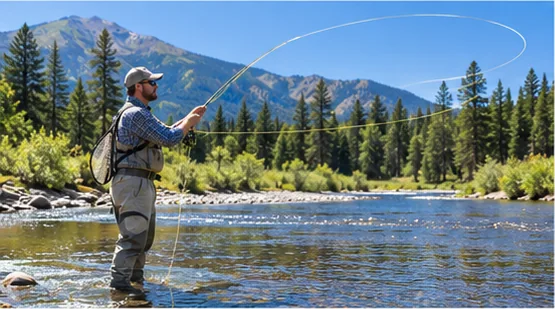
Fly Fishing Techniques: Essential Methods for Beginners
The three foundational fly fishing techniques are dry fly fishing on the surface, nymph fishing below it, and streamer fishing that moves a larger imitation through the water. You do not need a different rod for every method. You need to know what the fish may be eating, where they are holding, and whether your fly looks or moves as intended.
This beginner guide compares the methods, gives you a simple way to choose one, and shows how casting, line control, and reading water make each work. For full casting mechanics, visit our dedicated casting techniques guide; this article is about making fishing decisions after the line is in the water.
Table of Contents
Fly Fishing Techniques: The Three Core Methods at a Glance
| Method | Where the fly works | Typical presentation | Beginner clue | Main challenge |
|---|---|---|---|---|
| Dry fly | On the surface | Drift with the current | Visible rises or insects on top | Preventing unnatural drag |
| Nymph | Below the surface | Controlled drift in a feeding lane | Fish holding in riffles or runs | Depth and detecting a subtle take |
| Streamer | Subsurface, moving | Strip, pause, swing, or controlled drift | Cover, edges, baitfish-style food | Choosing speed and managing line |
These fly fishing methods overlap rather than compete. Dry flies are useful when fish will look up; nymphs help you explore feeding zones beneath the surface; streamers offer a moving target. A method becomes a poor choice when its depth, speed, or presentation does not match the water. Treat conditions as clues, not guarantees.
Affiliate disclosure: FlyFishingScout may earn a commission on qualifying purchases at no extra cost to you. As an Amazon Associate, we earn from qualifying purchases.
🎣 Practice more than one presentation. BASSDASH Fly Fishing Assorted Flies Kit (64 pcs) — This assortment includes dry flies, wet flies, nymphs and streamers in a magnetic fly box. It gives beginners several methods to practice, but select a fly for the local water rather than assuming every pattern fits every situation. 👀 See Fly Assortment & Price ➜
Fly Fishing Techniques for Dry Flies: Control the Drift
Of the common dry fly fishing techniques, the simplest starting point uses a fly riding on the surface, often suggesting an emerging or adult insect. First watch for repeated rises, floating insects, or a feeding lane. Then approach slowly enough to avoid casting your line over the fish. Present the fly a little upstream of where the fish is feeding so it can drift naturally into view.
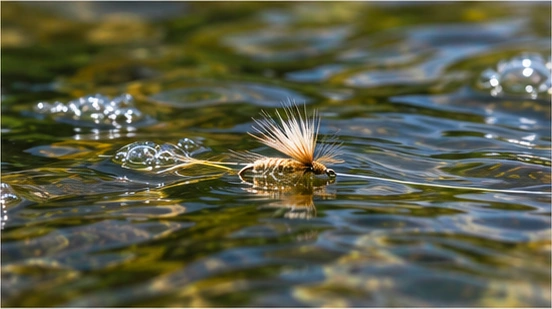
Try a short upstream-and-across presentation
On a manageable stream with clear casting space, choose a foam line, bubble trail, or other small current feature as your target. Cast a dry fly upstream of that feature, allow it to move with the current, and gather slack as it approaches. Watch whether the fly runs ahead, skates sideways, or drags behind adjacent foam. An unnatural wake is feedback about line tension, not necessarily the fly pattern.
As a practice drill, make five short casts into the same lane without aiming for extra distance. Score each by whether the fly travels with nearby bubbles for several seconds. Change only your casting angle or line placement between attempts. This is often more productive learning than switching patterns after every unsuccessful drift.
Correct drag without jerking the fly
If faster water pulls a belly into your floating line, lift and reposition a controlled section of line upstream or downstream as appropriate; this is mending fly line. Try to move the line without moving the fly. A reach cast can place line to the side before it lands, but learn the basic drift first. Orvis illustrates why the direction of the current, not a fixed rule to always mend upstream, determines the useful correction.
Fly Fishing Techniques for Nymphs: Reach the Feeding Depth
Nymph fishing presents underwater insect imitations through places trout may feed below the surface. A beginner-friendly approach is one nymph under a small indicator, fished on a floating line with a leader and tippet that suit the water. Depth and drift matter as much as fly color. Do not assume the bottom of every pool is the right target or load the rig with more weight than you can cast and control safely.
🟠 Make a nymph drift easier to follow. Oros Strike Indicator 6-Pack (Small, Orange) — These small screw-on foam indicators help show unexpected pauses during indicator nymphing. The maker recommends suitable line of about 5X or 5 lb test or stronger for this size; check the actual rig and local rules before use. 👀 Check Indicators & Price ➜
Start with one fly and one current lane
Choose a short, approachable run and cast slightly upstream. Watch the indicator or leader as it drifts toward you. Keep contact by gathering excess line, but do not pull the nymph faster than the water around it. If the indicator races ahead or angles across the lane, adjust your position or mend; if the fly never reaches likely depth, review your rig and legal weighting options.
For a practical nymph fishing techniques exercise, fish the same lane six times. On the first two drifts note the indicator’s speed; on the next two, improve line placement; on the last two, adjust depth only if the first tests suggest it is necessary. Change one variable at a time so you can tell whether presentation improved.
Recognize a possible take
Watch for an unexpected pause, dart, or change in the indicator’s motion rather than waiting for a dramatic plunge. Some stops are snags. Respond with a controlled lift, not a wild backward sweep. For hook, indicator, weight, and leader positions, see our nymph setup walkthrough instead of treating this overview as a full rigging recipe.
Fly Fishing Techniques for Streamers: Make the Fly Move
Streamers usually suggest fish, leeches, crayfish, or other substantial prey. Their action can come from pulling in line by hand, allowing the current to swing the fly, or letting it drift before retrieving. Unlike a dead-drifted dry fly, a streamer often benefits from purposeful changes in speed. That does not make fast stripping always correct.
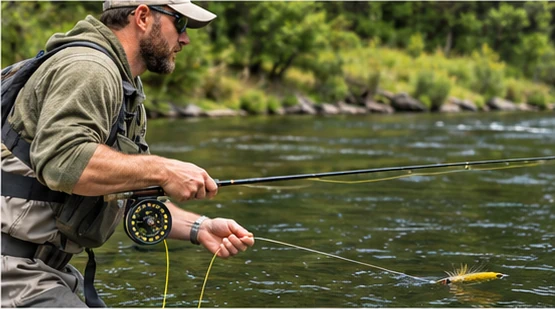
Use a controlled strip–pause exercise
Pick a safe bank with room to cast, and aim near an edge or structure without hooking vegetation. Make three casts with slow, even strips; three with shorter pulls and clear pauses; and three with a gentle swing where current allows. Keep the rod tip low and connected enough to feel the line tighten. Note which motion you can reproduce cleanly, not just whether you catch a fish.
When practicing streamer fishing techniques, match the fly and leader to the target species, avoid large exposed hooks near other people, and look behind you before every cast. Bigger or heavier flies may require a casting adjustment; our casting guide covers those mechanics in detail.
Fly Fishing Techniques: Casting, Mending, and Presentation
Casting is transportation; fly presentation is what the imitation does once it arrives. A technically smooth cast can still put a dry fly into the wrong lane or pull a nymph across the current. With many fly fishing techniques, improving your angle or shortening line is a better first fix than throwing farther.
- For dry flies: use a short accurate cast, watch the drift, and manage slack without dragging the imitation.
- For indicator nymphs: place the drift upstream, follow the indicator and mend only enough to preserve the chosen lane.
- For streamers: maintain enough contact to control strip and pause timing, and recover line before the next cast.
- For limited backcast space: learn a safe roll cast rather than forcing line into trees or bystanders.
- For mixed currents: move your feet or change your angle where access is lawful and wading is safe, instead of relying on extreme mends.
A useful practice session can be done with yarn on a leader in an open field. Place two targets at comfortable distances. Make five accurate deliveries to each, then five deliveries that leave deliberate slack. After that, practice only a reach cast or roll cast. Keep hooks off the practice line and avoid people, roads, and overhead wires.
Reading Water Before Choosing Fly Fishing Techniques
Look for three things: food reaching the fish, a place to rest from stronger current, and protection from predators or disturbance. Current seams, the softer water beside rocks, pool heads, and edges can be useful holding areas, but none guarantees fish. Watch the water rather than guessing from the widest or deepest stretch.
A thirty-second water-reading routine
- Stand safely on the bank and identify two different current speeds; note where they join.
- Watch for insects or repeated surface activity. A consistent rise can favor a dry fly trial.
- If fish are not visible on top, evaluate a nymph drift through a controlled subsurface lane.
- If there is open space near structure or baitfish-like movement, consider a streamer.
- Decide on one measurable presentation goal before making the first cast.
For example, on a small trout stream with a riffle feeding into a moderate run, start by watching for surface feeding. If none appears, begin with a simple nymph drift along the seam. If the run includes a clear undercut bank with safe casting room, a streamer may cover that edge. This is a decision example, not a prediction about a specific river.
Fly Fishing Techniques for Beginners: A Seven-Session Plan
The following progression keeps fly fishing techniques for beginners manageable. One short session can happen in the backyard, and the others in appropriate water with a valid license. Do not judge success only by fish landed.

- Session 1 — accuracy: cast yarn toward two grass targets without false-casting excessively.
- Session 2 — reading current: watch foam lanes from shore and identify faster and slower water.
- Session 3 — dry fly: aim for five drifts with no visible skating or wake.
- Session 4 — nymph: use one fly and repeat one lane while changing only the line control.
- Session 5 — streamer: compare an even retrieve against a strip-and-pause cadence.
- Session 6 — choices: select a method using observed surface activity and available water.
- Session 7 — review: write down what was controlled, what dragged, and what to practice next.
Do not buy three completely different setups before learning what you enjoy. Fly Fishers International’s beginner curriculum starts with a basic floating weight-forward line system and builds from rigging and casting to water-reading and fish handling. Our beginner setup guide explains equipment without turning each method into a separate shopping list.
🪶 Organize flies as your skills grow. Fishpond Tacky Original 2X Fly Box — The slim silicone-slot fly box holds up to 336 smaller fly patterns and has a magnetic closure. Flies are not included, and you may not need this extra box if a starter assortment’s included case already meets your needs. 👀 View Fly Box & Price ➜
Safety and Responsible Use of Fly Fishing Techniques
Before entering water, check flow, depth, temperature, footing, nearby obstructions, weather, and the route back to shore. A wading staff, secure footwear, and a properly worn flotation device where appropriate reduce some risk but do not make strong current safe. Fishing from shore is often the right decision. Respect private land and posted restrictions, and check your state’s current license, season, species, tackle, and catch limits before fishing.
When releasing fish, minimize handling, use wet hands, keep the fish supported in the water as much as practical, and avoid squeezing or touching gills. Temperature stress matters for trout; if water is too warm or restrictions are in effect, choose a different location or activity. Do not assume that catch-and-release means a fish faces no harm.
Common Questions About Fly Fishing Techniques
Which technique should a beginner learn first?
Start with the method that matches safe, accessible water near you. Dry flies make drift errors visible; simple indicator nymphing teaches depth and line control; streamers make retrieve timing easy to observe. There is no single universal first choice.
Can a floating fly line work for all three?
A general floating weight-forward setup can teach basic surface, nymph, and some streamer presentations. Larger or deeper-water streamers may eventually need different gear, but those refinements are not essential for a first practice day.
When should I mend my fly line?
Mend when line speed starts pulling your dry fly or indicator out of the intended lane. Move the line as gently as you can without moving the fly. Mending is less central when you deliberately retrieve a streamer under direct contact.
How do I know when to change flies?
First confirm correct depth, drift or retrieve, and whether the water shows a feeding clue. Make one practical correction at a time. Change pattern when you have a reason to think the existing imitation is unsuitable, not after every empty cast.
Putting Your Fly Fishing Techniques Together
Choose one technique based on the food and water in front of you, make a short controlled presentation, and evaluate how the fly behaved. Build a reliable drift, depth, or retrieve before chasing distance or new gear. That simple feedback loop is how the main fly fishing techniques become useful skills rather than names on a list.